
AeroGenie - مساعد الطيار الذكي الخاص بك.

الرائج الآن
Categories
Gatwick’s £2.2 Billion Second Runway Approved for 2029 Opening
Gatwick’s £2.2 Billion Second Runway Approved for 2029 Opening
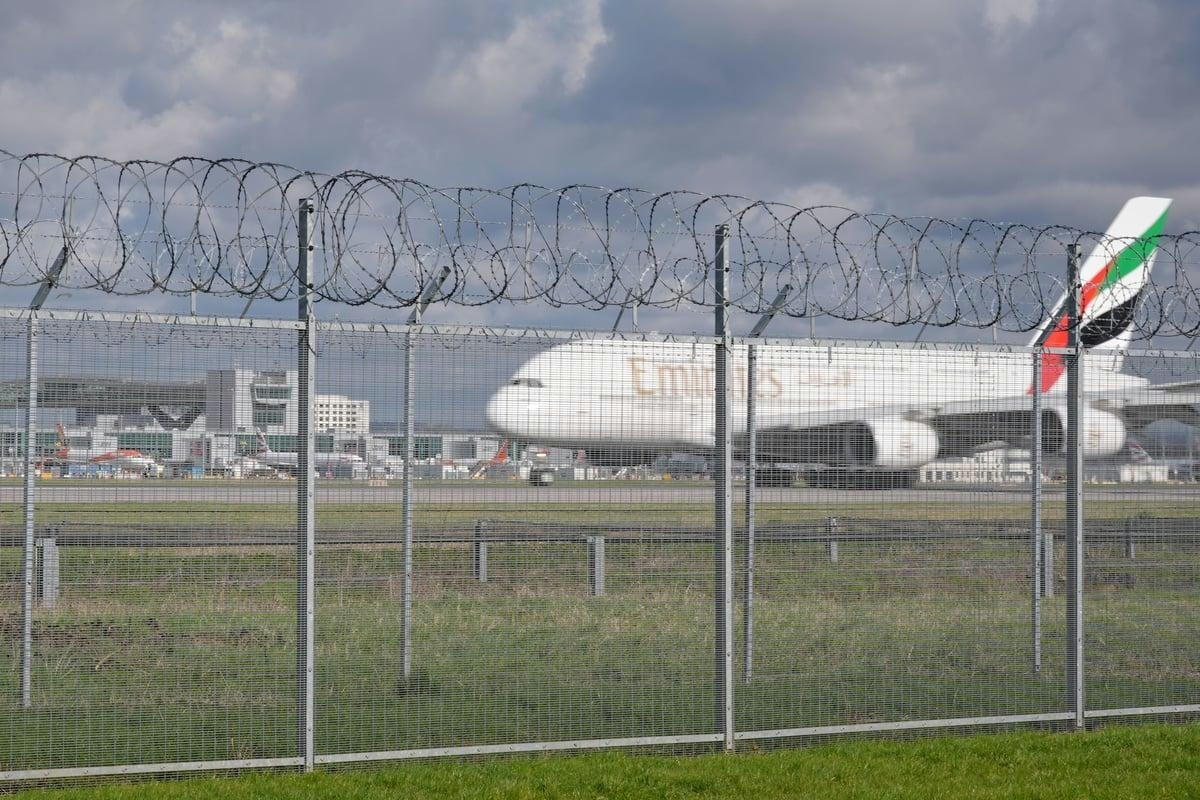
Gatwick Airport’s ambitious £2.2 billion project to construct a second runway has received formal approval from Transport Secretary Heidi Alexander, marking a significant milestone in the expansion of the West Sussex airport. The privately financed development, which underwent a rigorous year-long examination under the Planning Act 2008, is slated to open in 2029. Upon completion, the new runway is expected to increase Gatwick’s annual passenger capacity to 80 million, substantially enhancing its role as a major UK aviation hub.
Project Details and Economic Impact
The expansion involves relocating Gatwick’s existing emergency runway 12 metres north to accommodate narrow-bodied aircraft such as the Airbus A320 and Boeing 737. This modification will enable the airport to handle an additional 100,000 flights annually. Officials project that the development will generate approximately 14,000 new jobs and contribute up to £1 billion in additional economic activity, underscoring its significance for regional and national growth.
Environmental and Community Commitments
Approval was contingent upon Gatwick’s agreement to implement a series of stringent measures aimed at mitigating environmental and community concerns. These include enhanced noise controls and an improved insulation scheme for residents living near the airport. The airport has also committed to ensuring that 54% of passengers use public transport to access the site before the new runway becomes operational. Although these “mode share” targets are not legally binding, government ministers view them as critical to addressing local worries about congestion and environmental impact.
Residents affected by increased aircraft noise will be offered compensation packages, which may cover the cost of triple-glazing or, for those opting to relocate, contributions towards estate agent fees and stamp duty. These provisions form part of a broader strategy to alleviate the concerns of local communities and environmental advocacy groups.
Controversy and Government Position
Despite these measures, the expansion has faced criticism from climate campaigners. Zack Polanski, leader of the Green Party, condemned the decision as a “disaster for the climate crisis,” reflecting broader apprehensions about the environmental consequences of increased air traffic. Nevertheless, government officials maintain that the project is legally sound, capable of withstanding environmental challenges, and compliant with the UK’s carbon budget commitments.
The scheme had initially been rejected by the Planning Inspectorate but gained approval after Gatwick revised its plans to incorporate more comprehensive noise mitigation strategies and public transport targets. The government has emphasized the economic benefits and mitigation efforts, framing the runway as essential to the UK’s long-term connectivity and prosperity. While reactions from competing airports remain uncertain, a government source described the plan as a “no-brainer” for growth, with the first flights from the new runway expected by 2029.
Unique mixed-propulsion eVTOL completes transition flight testing

Are C-17 Globemaster Engines Derived from Boeing 757?

Why the Airbus A350’s Cabin Is Quieter Than Other Aircraft

AI and AI Express Plan to Increase Capacity Amid IndiGo Flight Disruptions
Kazakhstan and France Agree on Airbus Aircraft Deliveries
Europe’s Emerging Talent Drives Aviation Innovation
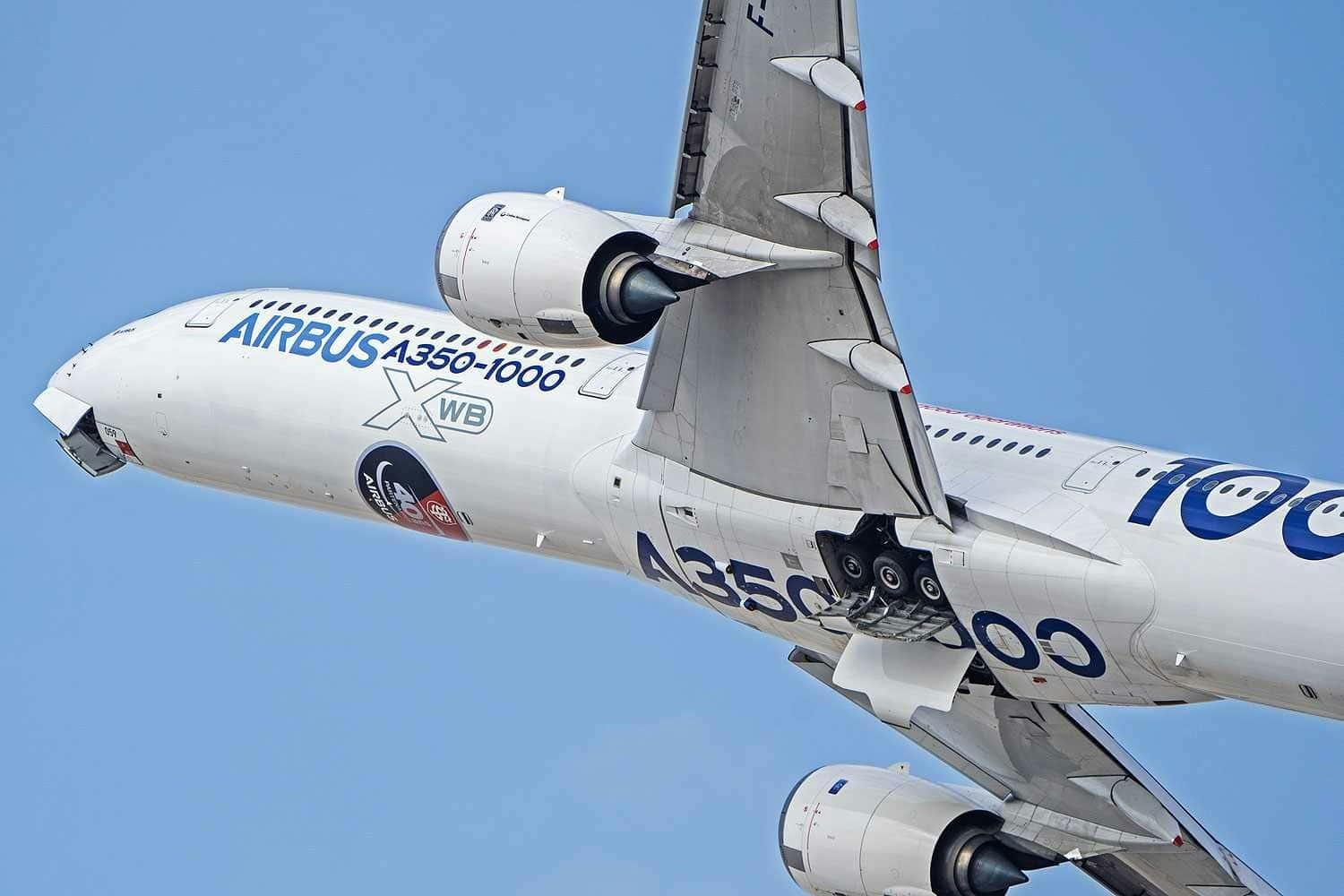
Airbus Receives New Order for A350-1000

The Leading Widebody Aircraft in Service Today
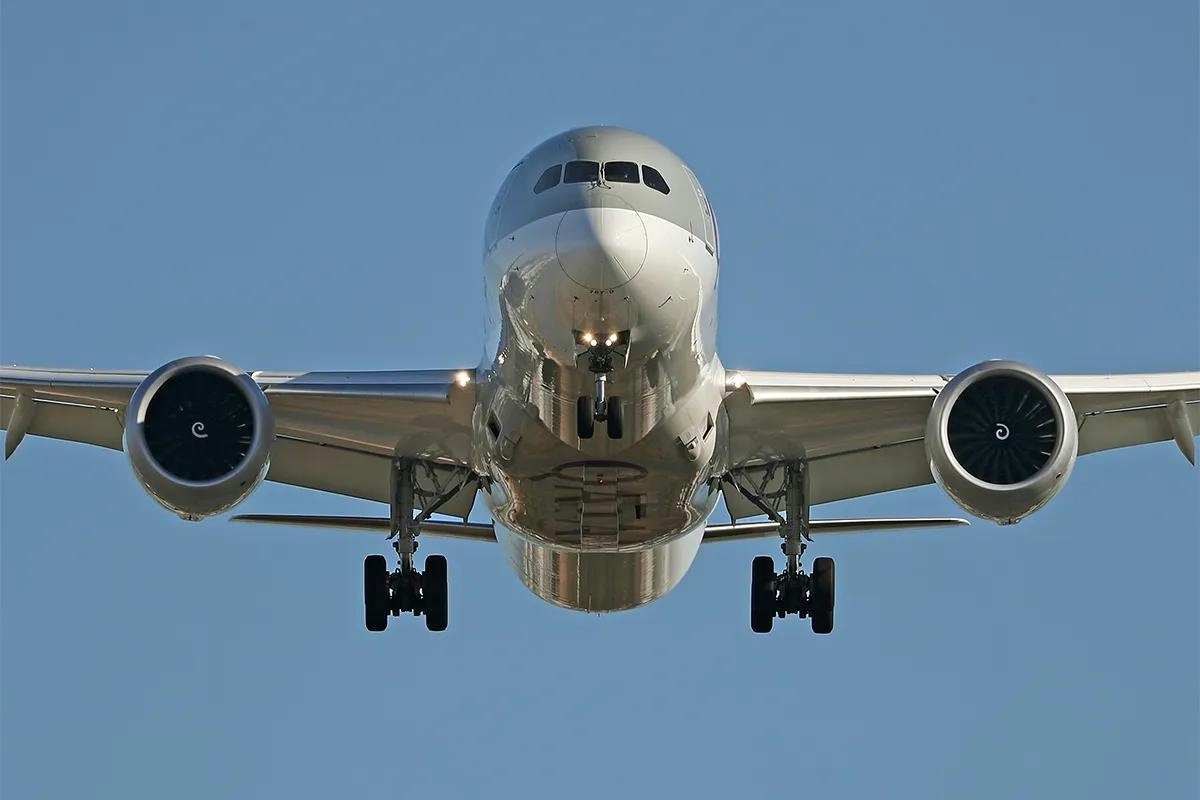
The Fastest Boeing Jet Currently in Service
