
AeroGenie — ваш интеллектуальный второй пилот.

В тренде
Categories
Aircraft Deliveries Reach Seven-Year High as Airbus and Boeing Advance 2025 Goals
Aircraft Deliveries Reach Seven-Year High Amid Ambitious 2025 Targets
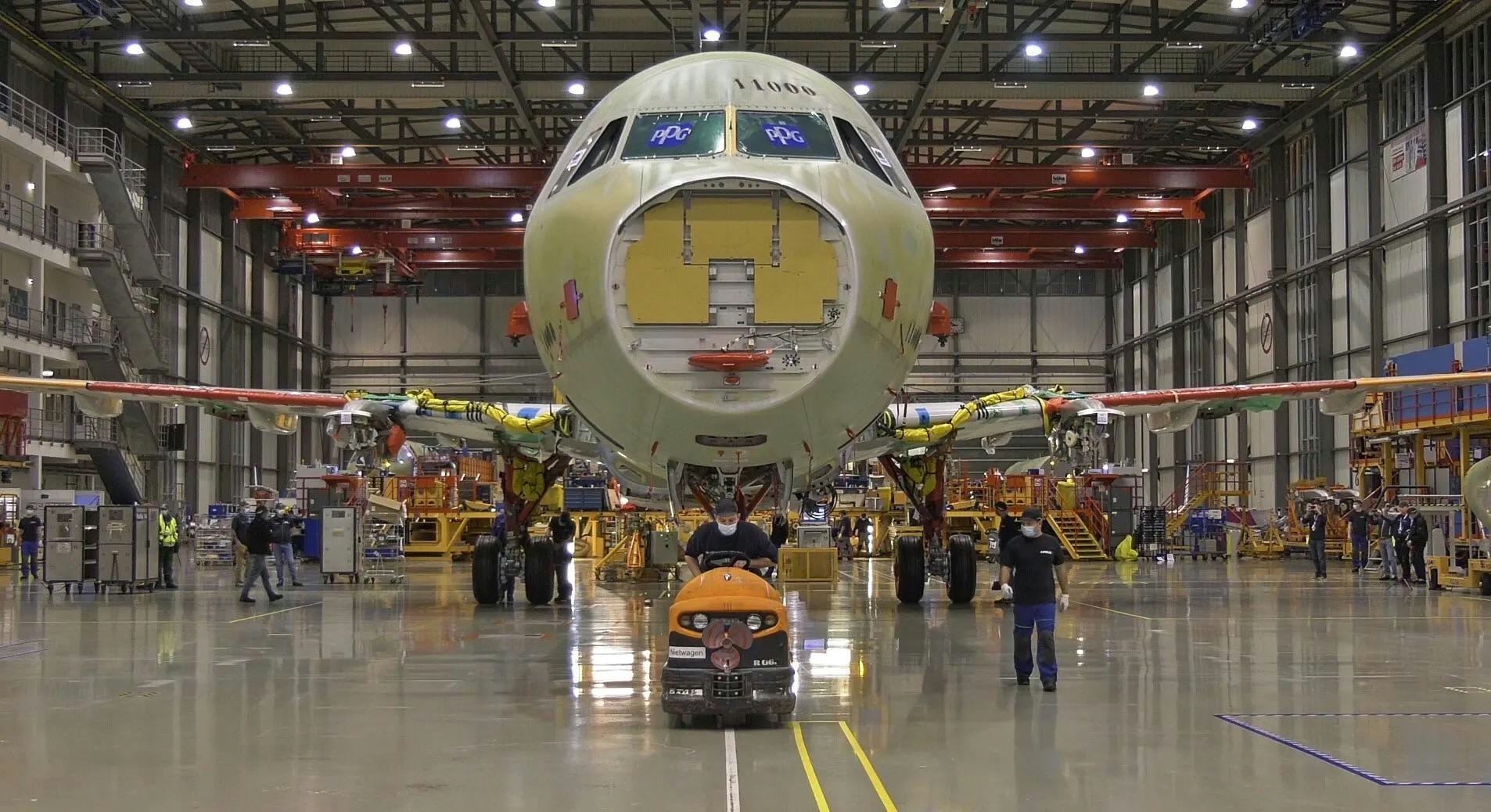
Global aircraft deliveries surged to their highest October level since 2018, with manufacturers handing over 132 aircraft last month, according to data from ADS. This represents a 67% increase compared to October of the previous year and marks the second-strongest October on record, just behind the 138 deliveries recorded in 2018. The rise in deliveries comes as Airbus and Boeing intensify efforts to meet their ambitious 2025 production goals, despite ongoing challenges within the aerospace sector.
Delivery Trends and Order Activity
While deliveries have accelerated, aircraft orders remained subdued in October. ADS reported 127 new orders, a 12% decline from the same month last year and the lowest October total since 2021. Demand for widebody aircraft was particularly weak, with only nine orders placed—a 47% drop year on year. Industry analysts suggest that some customers may be postponing announcements ahead of the Dubai Airshow, a key event where major deals are traditionally unveiled.
The global order backlog remains substantial, standing at 16,133 aircraft, which equates to over 16 years of production at current rates. This backlog is valued between £225 billion and £260 billion to the UK economy. Narrowbody jets dominate the backlog with 13,314 orders, while the widebody segment has expanded by 19% year on year to 2,819 aircraft.
By the end of October, Airbus and Boeing had collectively delivered more than 1,000 aircraft, marking a 25% increase compared to the same period last year. This year-to-date performance aligns with ADS’s high-growth forecast of 1,340 deliveries by year-end, contingent on the industry’s traditional surge in the fourth quarter.
Supply Chain Challenges and Market Dynamics
The October delivery surge reflects two distinct trends. Widebody deliveries rose by 109% year on year, driven by strong activity in Boeing’s 787 and 777F programs, alongside Airbus’s A350. Meanwhile, single-aisle deliveries increased by 60%, as production of the A320neo and 737 MAX models continued to stabilize.
Despite these gains, manufacturers continue to grapple with persistent supply chain constraints. Engine availability remains a significant bottleneck for Airbus’s planned increases in A320neo production rates. Boeing’s 777X program, now seven years behind schedule, remains focused on flight testing and certification milestones through 2025. Financial difficulties at key suppliers such as Spirit AeroSystems have further complicated production timelines, causing delays that ripple across the industry.
Market reactions have been mixed. Boeing’s strongest delivery numbers in seven years have drawn investor attention, while Airbus is working to catch up after a backloaded delivery schedule earlier in the year. Competitors like Embraer are maintaining production targets despite supply shortages, and major airlines, including Emirates, continue to expand their fleets with new orders from both Airbus and Boeing.
A notable development in the ADS data is the widening gap between aircraft and engine orders. In October, 232 engine orders were recorded—significantly outpacing the 127 aircraft orders. This divergence highlights ongoing customer hesitancy, particularly among lessors, to commit to engine selections amid tight supply and extended turnaround times for engine shop visits. Deliveries of LEAP and GTF engines continue to lag behind airframe production, underscoring persistent bottlenecks within the manufacturing system.
As Airbus and Boeing advance toward their 2025 delivery targets, the industry’s capacity to manage supply chain disruptions and fulfill commitments will remain under close observation.

Beta Stock Rises 9% Following $1 Billion Deal with Air Taxi Company Eve Mobility
United Airlines Retires Oldest Boeing 777-200 to Victorville Storage

DGCA Investigates AI-Controlled Jet Operating with Expired Airworthiness Certificate

ELRA Calls on Airlines to Comply with Equipment Leasing Act

Boeing Clears Stored Aircraft, Plans Faster Deliveries in 2026
AutoFlight Unveils Solar-Powered Floating Vertiport for eVTOL Air Taxis

Archer and Karem Aircraft Partner to Develop Military-Grade Rotor Technology for Next-Generation VTOL

Locatory Highlights Digital Systems and AI in MRO Operations

Paul Terstegge Appointed CEO of Transavia
