صورة

أيروجيني — مساعدك الذكي للطيران.

اسأل عن أي شيء. قم بتحليل كل شيء. تصرف فورًا.

الرائج الآن

Categories

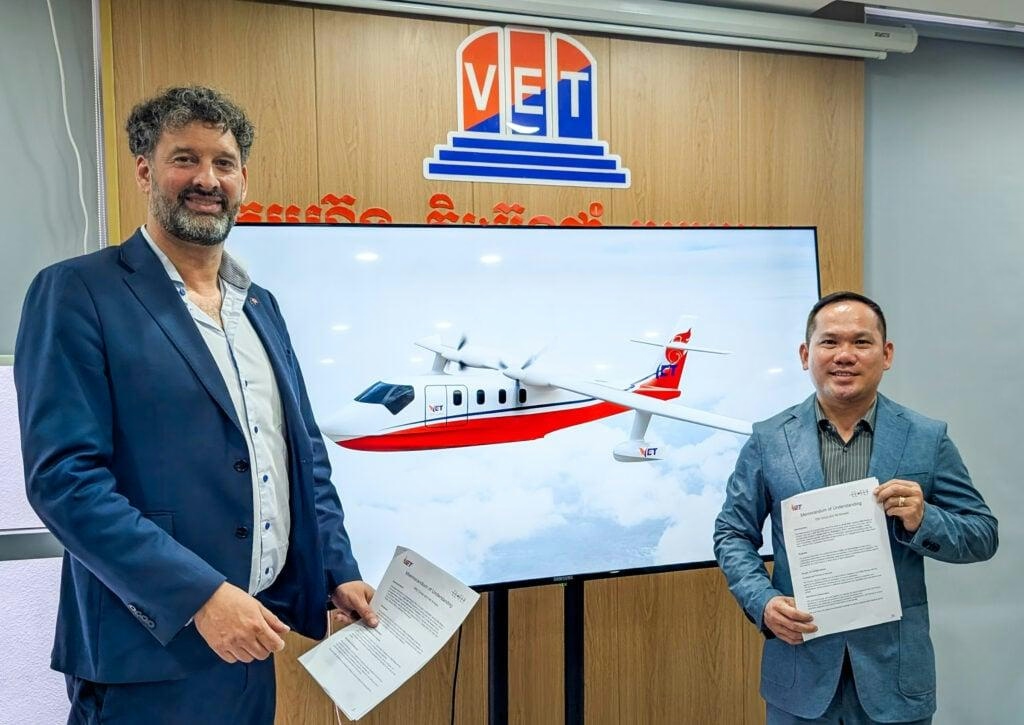
Elfly Signs $50 Million Deal with VET Airways
July 10, 2025By ePlane AI
Elfly Signs $50 Million Deal with VET Airways
0
0
Elfly Group
NOEMI Electric Seaplane
VET Airways

Elfly Signs $50 Million Deal with VET Airways for Electric Seaplanes

Elfly Group, the Norwegian pioneer behind the all-electric NOEMI (No Emissions Electric Seaplane), has formalized a memorandum of understanding (MoU) with Cambodia’s VET Airways for the sale of five NOEMI aircraft, valued at $50 million. This agreement represents a significant advancement in the introduction of environmentally friendly and versatile air transport solutions to Southeast Asia, providing access to both conventional airports and remote coastal areas while minimizing environmental impact.

Expanding Market Presence and Product Potential

With this latest commitment, Elfly’s total soft orders have reached 52 NOEMI aircraft, amounting to an estimated combined value of $550 million. The company reports a surge in global interest for its amphibious seaplane concept, with additional expressions of interest potentially elevating future orders to $3 billion. Elfly has secured MoUs from customers in Denmark, Greece, Indonesia, Panama, and now Cambodia, highlighting the aircraft’s appeal in regions characterized by challenging geography or extensive coastlines.

The NOEMI is engineered as an amphibious aircraft capable of taking off and landing on both water and traditional runways. This dual capability makes it particularly suitable for island nations and areas with limited infrastructure. Elfly plans the first flight of its full-scale prototype in 2027, aiming for commercial service entry by 2030.

Neak Oknha Suo Vireak, CEO of VET Airways’ parent company, Vireak Buntham Express Co. Ltd., emphasized the market potential in Asia, stating, “The amphibious NOEMI can fly straight from airports to the coast and outcompete road transport, which is important as we are looking into using it in our logistics network too.”

Challenges and Industry Context

Despite the positive momentum, Elfly faces significant challenges ahead. Regulatory approval remains a critical obstacle, particularly in meeting the stringent requirements of the European Union Aviation Safety Agency (EASA) for the NOEMI prototype. The company must also ensure the successful development and rigorous testing of its electric seaplane to satisfy safety and performance standards.

Market reactions to the deal have been mixed. Some industry experts express skepticism regarding the feasibility and scalability of electric seaplanes, especially given the traditionally cautious stance of the business jet sector. Concurrently, competitors may intensify their efforts to develop electric aircraft or seaplane technologies in response to Elfly’s progress.

Broader industry dynamics also present potential risks. Ongoing tariff disputes and military conflicts could disrupt the global aerospace sector, affecting supply chains and market stability.

Nonetheless, Elfly’s agreement with VET Airways underscores a growing demand for sustainable aviation solutions across diverse markets. As the company advances its vision, the NOEMI project remains at the forefront of efforts to transform regional air mobility with cleaner, more adaptable aircraft.

More news
Oneworld Names Ole Orvér as CEO

Oneworld Names Ole Orvér as CEO

Oneworld Appoints Ole Orvér as Chief Executive Officer Oneworld has announced the appointment of Ole Orvér as its new Chief Executive Officer, effective April 1, 2026. A Swedish aviation veteran with over twenty years of experience, Orvér assumes leadership at a critical juncture for the global airline alliance, which is confronting intensifying competition and shifting partnership dynamics within the industry. Extensive Industry Experience and Leadership Prior to his appointment, Orvér served as Chief Commercial Officer at Finnair, a member airline of oneworld, where he led a comprehensive transformation of the carrier’s commercial and network strategies. His tenure was marked by the introduction of significant revenue growth initiatives and enhancements to customer loyalty programs. Orvér’s career also includes senior leadership roles such as Senior Vice President of Network Management at Qatar Airways, another oneworld member, as well as executive positions at Air Berlin, LOT Polish Airlines, and SAS Scandinavian Airlines. Orvér holds a degree in Economics from Mid Sweden University and has completed the Strategic Thinking and Leadership Growth Program at the Wharton School of the University of Pennsylvania, underscoring his strong academic foundation in business and leadership. Strategic Priorities Amid Rising Competition Orvér succeeds Nathaniel Pieper, who has transitioned to the role of Chief Commercial Officer at American Airlines. The oneworld Governing Board, composed of chief executives from member airlines, expressed appreciation for Pieper’s leadership and contributions during his tenure. As CEO, Orvér will focus on deepening integration among oneworld’s member airlines, fostering collaboration on technological innovation, and enhancing customer benefits. These objectives are particularly urgent as the alliance faces mounting pressure from rival groups SkyTeam and Star Alliance, both of which are expected to intensify efforts to counter oneworld’s initiatives and expand their memberships. Industry analysts will be closely monitoring how Orvér leverages his extensive alliance experience to shape oneworld’s commercial strategy and technological development. His leadership will be pivotal in maintaining the alliance’s relevance and competitive position in an evolving global aviation landscape. Reporting directly to the oneworld Governing Board, Orvér will guide the alliance through this pivotal period of transformation and competition.
ABL Delivers Second 737 MAX 8 to TUI

ABL Delivers Second 737 MAX 8 to TUI

ABL Delivers Second 737 MAX 8 to TUI, Marking a Key Milestone ABL Aviation has completed the delivery of its second Boeing 737 MAX 8 aircraft to TUI Airline, fulfilling a two-aircraft agreement that reflects a shared commitment to fleet modernization. The initial aircraft was delivered in December 2025, marking the beginning of a partnership focused on advancing TUI’s strategy to operate a younger, more fuel-efficient fleet. Both aircraft are equipped with CFM LEAP-1B27 engines, aligning with TUI’s objectives to reduce emissions and enhance operational efficiency while ensuring passenger comfort. This latest delivery represents TUI Airline’s 50th and 55th 737 MAX 8 aircraft, a significant milestone as the airline continues to invest in modernizing its fleet. Additionally, TUI is expanding its fleet strategy by incorporating the 737-10 model, signaling sustained confidence in the long-term prospects of the 737 MAX family. Industry Context and Strategic Implications Ali Ben Lmadani, Founder and CEO of ABL Aviation, emphasized that the transaction underscores the company’s strong execution capabilities and its relationship-driven approach to asset management. TUI Airline CEO Marco Ciomperlik described the deliveries as reinforcing the airline’s dedication to eco-efficiency, customer comfort, and operational reliability. The broader market environment presents a complex mix of opportunities and challenges. As Boeing increases production of the 737 MAX 8, lessors such as ABL must navigate ongoing supply chain pressures to maintain delivery schedules. While TUI’s fleet expansion reflects optimism about the aircraft’s future, other carriers have encountered difficulties. For instance, Allegiant Air reported a full-year capacity decline attributed to delays in receiving 737 MAX 8 deliveries from Boeing. Competition within the commercial aircraft market remains intense. Airbus continues to lead in total aircraft deliveries, exerting pressure on Boeing and its partners. This evolving landscape highlights the critical importance of strategic fleet decisions for both airlines and lessors. Despite these industry dynamics, the successful completion of ABL’s agreement with TUI demonstrates the resilience and adaptability of both companies as they operate within a rapidly changing aviation sector.
How Operational Pressure Drives Airlines to Adopt Agentic AI

How Operational Pressure Drives Airlines to Adopt Agentic AI

How Operational Pressure Drives Airlines to Adopt Agentic AI Airlines today face escalating operational pressures, including rising costs, geopolitical instability, shortages of aircraft and parts, and increasingly stringent safety and regulatory requirements. These challenges continuously test the resilience of the industry, where disruptions such as aircraft on ground (AOG) events can immediately halt revenue streams while fixed costs persist. In such scenarios, teams must urgently source parts, validate suppliers, ensure airworthiness, and coordinate logistics under severe time constraints. With the International Air Transport Association (IATA) projecting global net margins at a mere 6.6% in 2025, even minor operational shocks risk eroding profitability and damaging reputations through network disruptions and diminished passenger confidence. Despite aviation’s foundation in advanced engineering, many supply chain workflows remain entrenched in outdated methods, relying heavily on email threads, spreadsheets, and sequential approvals. This cautious approach stems from the industry’s safety-critical nature and a fragmented data ecosystem that spans airlines, maintenance, repair and overhaul providers (MROs), original equipment manufacturers (OEMs), brokers, and logistics companies. Nevertheless, the imperative to modernize is intensifying. IATA forecasts the delivery of only 1,254 aircraft in 2024 against a record backlog of 17,000, with supply chain challenges expected to cost airlines over $11 billion in 2025. The Emergence of Agentic AI in Aviation In response to these pressures, airlines are increasingly adopting agentic artificial intelligence (AI) systems—advanced technologies capable of reasoning, planning, and autonomously executing compliant actions across complex workflows. Unlike traditional automation, which primarily analyzes data and offers recommendations, agentic AI operates within defined guardrails, logs its decisions, and escalates to human operators when uncertainty or risk arises. This evolution is driven not only by the pursuit of efficiency but also by the necessity to maintain competitiveness. Leading carriers such as Delta, United, and Southwest have publicly acknowledged their use of AI in areas including baggage handling, marketing, and operational optimization. Meanwhile, travel platforms like Expedia recognize AI agents as a significant competitive threat. Platforms exemplifying this new paradigm, such as OrbitronAI’s NovaOS, integrate deterministic controls with adaptive intelligence to unify commercial strategy, compliance, maintenance, and logistics. The objective is not to supplant human expertise but to augment it, enabling supply chain professionals to coordinate outcomes across fragmented, multi-party environments with enhanced speed and consistency. Transforming Compliance and Sourcing with AI Supplier compliance remains a critical bottleneck in airline procurement. Traditional Know Your Customer (KYC) processes depend on static, point-in-time document reviews that often fail to capture changes in supplier status or jurisdictional risk. This results in delays across maintenance, IT, ground handling, and catering as teams navigate extensive paperwork and approvals. Agentic AI transforms compliance into a continuous, agent-managed process by monitoring supplier risk in real time through analysis of jurisdictional exposure, trading history, and behavioral signals. This approach reduces last-minute escalations, accelerates routine checks, and improves overall risk visibility. Similarly, sourcing spare parts and maintenance services continues to be a fragmented and time-consuming process. Requests for quotations (RFQs) circulate via email and portals, with responses arriving inconsistently. Specialists spend considerable time reconciling availability, lead times, pricing, and supplier legitimacy. Agentic AI compresses these cycles by automating routine tasks and enabling faster, more reliable sourcing decisions. Challenges and Strategic Implications The rapid adoption of agentic AI introduces new challenges, particularly in cybersecurity and reputational risk. Airlines must ensure that AI integration adheres to ethical standards and regulatory compliance. Market reactions to AI adoption have been mixed, with some sectors experiencing volatility while logistics and software industries demonstrate resilience. Competitors are responding by developing advanced natural language booking tools and securing AI capabilities to drive growth, underscoring the strategic importance of agentic AI in the future of aviation. In an industry where operational disruptions can swiftly impact financial performance, agentic AI is emerging as a vital tool. It enables airlines to navigate complexity, maintain compliance, and sustain competitiveness in an increasingly dynamic and challenging environment.
Bentley Uses Sustainable Aviation Fuel for Luxury Car Deliveries

Bentley Uses Sustainable Aviation Fuel for Luxury Car Deliveries

Bentley Integrates Sustainable Aviation Fuel in Luxury Vehicle Deliveries Bentley Motors has taken a decisive step toward reducing its environmental impact by adopting sustainable aviation fuel (SAF) for all customer vehicle deliveries transported by air. This initiative targets one of the most carbon-intensive segments of the company’s logistics operations. While airfreight constitutes a relatively small portion of Bentley’s overall distribution network, it remains indispensable for urgent shipments and regions where alternative transport methods such as sea or land are impractical. Addressing Aviation Emissions in Automotive Logistics The aviation sector’s significant carbon footprint has long presented a challenge for automakers committed to credible climate goals, especially when compared to the comparatively lower emissions associated with maritime shipping. Bentley’s transition to certified SAF for its airfreight operations is designed to achieve meaningful reductions in lifecycle emissions without compromising the premium delivery standards expected by its clientele. Aimee Kelly, Bentley’s Head of Sustainability, emphasized that this move represents a measurable and evidence-based effort to reduce emissions in areas of the logistics network where air transport remains essential. Industry Challenges and Broader Implications Bentley’s adoption of SAF occurs amid ongoing industry challenges, including the relatively high cost of sustainable aviation fuel compared to conventional jet fuel and the limited availability of production facilities. These factors may affect the scalability and long-term sustainability of such initiatives. Furthermore, the company is likely to face heightened scrutiny from environmental advocates and discerning customers who will evaluate Bentley’s overall sustainability strategy beyond this prominent development. The luxury automotive sector is closely monitoring Bentley’s approach, as competitors may accelerate their own environmental initiatives to maintain competitive positioning. The sustainable aviation fuel market is anticipated to expand significantly in the coming years, potentially improving accessibility and cost-effectiveness. By incorporating SAF into its airfreight logistics, Bentley not only addresses immediate emissions concerns but also underscores its broader commitment to sustainable innovation within the luxury automotive industry.
Archer Aviation’s UK AI Flight Hub and NVIDIA Partnership Shift Investment Outlook

Archer Aviation’s UK AI Flight Hub and NVIDIA Partnership Shift Investment Outlook

Archer Aviation’s UK AI Flight Hub and NVIDIA Partnership Shift Investment Outlook Archer Aviation has inaugurated a new UK Engineering Hub in Bristol and announced plans to integrate NVIDIA’s IGX Thor platform into its forthcoming aircraft. This initiative aims to advance AI-driven, safety-critical, and autonomy-ready flight systems. The company’s strategy includes collaborations with UK defense partners and Anduril, designed to enhance Archer’s capabilities in both commercial air-taxi services and dual-use defense technologies across global markets. Strategic Innovation and Emerging Challenges By leveraging Bristol’s established aerospace talent alongside NVIDIA’s advanced aviation AI technology, Archer is positioning itself at the forefront of innovation in uncrewed aircraft systems. This strategic pivot, however, introduces new challenges. Regulatory scrutiny is anticipated to intensify as Archer expands its AI footprint within the UK. Concurrently, competition is increasing, with emerging AI hardware firms such as the UK-based Fractile competing for influence in the rapidly evolving aerospace and AI sectors. These developments may compel competitors to accelerate their own AI investments and seek new strategic partnerships to maintain competitive advantage. Investment Implications and Market Response From an investment standpoint, Archer’s focus on AI and defense aligns with its broader vision of transitioning electric air taxis and dual-use platforms from prototypes to scalable, regulated businesses. Despite this, the company faces significant obstacles. Archer currently reports no revenue, with cumulative losses amounting to $627.4 million and ongoing shareholder dilution. While the Bristol hub and NVIDIA partnership deepen its technological ambitions, they do not alter the immediate investor concerns, which remain centered on progress toward FAA type certification, funding clarity, and credible launch timelines for key routes including Abu Dhabi, Miami, and Los Angeles. Market reactions to Archer’s announcements have been mixed. Some investors remain optimistic about the company’s potential for innovation and long-term growth, whereas others voice concerns regarding its strategic focus and execution risks. Archer’s stock performance over the past year has been weak, compounded by factors such as the ongoing Joby lawsuit, limited management tenure, and high CEO compensation despite persistent unprofitability. Fair value estimates for Archer’s shares vary widely—from $7.84 to $78.41 per share—reflecting divergent investor perspectives on its future prospects. As the aerospace and AI sectors continue to evolve, Archer’s ability to navigate regulatory challenges, outpace emerging competitors, and deliver on its ambitious roadmap will be critical in determining whether its AI-driven strategy can translate into sustainable growth and meaningful investor returns.
COMAC Faces Delays as Supply Chains and Sanctions Restrict Output and Western Access

COMAC Faces Delays as Supply Chains and Sanctions Restrict Output and Western Access

COMAC Faces Delays as Supply Chains and Sanctions Restrict Output and Western Access At the recent Singapore Airshow, the Commercial Aircraft Corporation of China (COMAC) once again drew significant attention, highlighting Asia’s pivotal role in the company’s strategic ambitions. However, this prominence also underscored the complex geopolitical and economic challenges that continue to impede COMAC’s efforts to penetrate Western markets. The Chinese manufacturer’s presence at the event showcased both its technological advancements and the strategic limitations shaping its future trajectory. Challenges in Production and Market Expansion The C919 programme, COMAC’s flagship narrow-body aircraft, has seen steady progress with increasing domestic deliveries. Yet, the broader operating environment has become markedly more complicated. Rising political and economic tensions between the United States and China, coupled with COMAC’s ongoing dependence on Western suppliers for critical aircraft systems, have created significant obstacles. In 2025, production and delivery schedules were disrupted by supply chain interruptions, regulatory barriers, and intensifying trade disputes. These factors have exposed the vulnerabilities inherent in the globally integrated aerospace manufacturing ecosystem. Sanctions and export controls imposed by Western governments have further constrained COMAC’s access to essential components, complicating its pursuit of European certification. This limitation hampers the company’s ability to compete directly with established industry leaders such as Boeing and Airbus in international markets. COMAC’s ambitions to expand beyond the Asia-Pacific region are now tempered by these restrictions, alongside the looming risk that escalating geopolitical tensions—particularly those related to Taiwan—could deepen supply chain fragilities and restrict market access even further. Strategic Recalibration and Domestic Focus In light of these challenges, COMAC has been compelled to adjust its production targets and moderate its growth expectations. The company is reassessing its long-term industrial strategy, increasingly turning to domestic suppliers to reduce reliance on foreign components. This shift toward greater self-sufficiency represents a significant strategic pivot, though it introduces new difficulties. COMAC must carefully balance the pursuit of independence with the imperative to uphold stringent quality standards and secure international certifications necessary for global competitiveness. Despite these headwinds, COMAC benefits from the robust scale and resilience of China’s domestic aviation market, which provides a vital cushion against international uncertainties. As the company moves into 2026, its path reflects a nuanced balancing act: expanding production while mitigating vulnerabilities, advancing self-reliance without sacrificing quality, and consolidating its position within Asia while maintaining its long-term aspiration for global recognition.
ePlane Seeks Up to $50 Million to Advance Air Taxi Development

ePlane Seeks Up to $50 Million to Advance Air Taxi Development

ePlane Pursues Up to $50 Million to Propel Air Taxi Innovation Chennai-based urban air mobility startup The ePlane Company is in advanced discussions to secure between $40 million and $50 million in new funding as it intensifies efforts to commercialize its electric air taxi platform. The forthcoming investment round is anticipated to be co-led by Speciale Invest, a venture capital firm known for backing deep-tech and engineering-focused enterprises. Advancing Urban Air Mobility with eVTOL Technology Founded by Professor Satya Chakravarthy of IIT Madras, ePlane is developing compact electric vertical take-off and landing (eVTOL) aircraft designed for short-distance urban travel. The company aims to address escalating congestion in major cities by offering point-to-point aerial mobility as a faster and more environmentally friendly alternative to conventional road transport. The proposed capital injection will support ePlane’s next developmental phase, emphasizing regulatory certification, extensive prototype testing, and operational preparedness. Unlike previous funding rounds that concentrated on product design, this round is intended to finance critical milestones such as expanding the engineering workforce, enhancing manufacturing capabilities, and ensuring compliance with rigorous aviation certification standards. A substantial portion of the funds will be dedicated to close collaboration with aviation regulators and preparation for commercial deployment—a process that demands exhaustive testing and documentation before public use can be authorized. Navigating Challenges Amid a Competitive Landscape ePlane’s fundraising initiative coincides with growing momentum in India’s advanced mobility sector and a global surge of interest in electric air taxis. Nevertheless, the company faces significant challenges on its path to commercialization. Regulatory approval remains a formidable obstacle, given the complexity and duration of certification processes in the aviation industry. Furthermore, ePlane must contend with rapid technological progress from international competitors such as Archer Aviation and Joby Aviation, both of which are advancing their eVTOL programs. The intensifying competition is underscored by recent legal disputes, including Archer’s request to dismiss a trade-secret lawsuit filed by Joby, highlighting the high stakes and tensions within the sector. Additional players like Vertical Aerospace are also progressing with their air taxi projects, contributing to a crowded and competitive market environment. This dynamic may foster skepticism among potential customers and regulators regarding the feasibility and safety of air taxis, thereby raising the bar for new entrants such as ePlane. Despite these hurdles, Speciale Invest’s continued support reflects investor confidence in ePlane’s long-term vision and engineering expertise. Should the funding round conclude successfully, it would provide the startup with the financial resources necessary to achieve key technical and regulatory milestones, advancing its ambitions to bring urban air mobility closer to commercial reality.
Gardner Aerospace Advances Supply Chain to Support Sustainable Aviation

Gardner Aerospace Advances Supply Chain to Support Sustainable Aviation

Gardner Aerospace Advances Supply Chain to Support Sustainable Aviation At the Advanced Engineering conference, Gardner Aerospace CEO Philipp Visotschnig presented a supplier-driven strategy to address the aviation industry's sustainability challenges. He emphasized that the sector’s forthcoming transformation will be influenced as much by advances in manufacturing, materials, and data management as by developments in aircraft and engine design. “We don’t build the aircraft. We build the parts that make flight possible with precision, reliability, and partnership,” Visotschnig remarked, underscoring Gardner’s pivotal role within the global supply chain that supports commercial aviation. Gardner Aerospace’s components are integral to nearly every major commercial aircraft, with operations spanning Europe and Asia and servicing all leading original equipment manufacturers (OEMs). Visotschnig outlined aviation’s evolution through four distinct phases: enabling flight, ensuring safety, expanding accessibility, and now, pursuing sustainability. He described the current phase as the most demanding yet: making flight sustainable. The Current Landscape of Aviation Supply Chains The aviation supply chain today is extensive and intricately connected, facilitating the transport of nearly five billion passengers annually on approximately 25,000 commercial aircraft. Production is dominated by industry giants such as Airbus and Boeing, supported by a limited number of engine and systems suppliers alongside over a thousand parts and service providers. Visotschnig highlighted the complexity of aircraft manufacturing, noting that a single defective component can disrupt entire production lines. While aviation delivers substantial economic and social benefits, it remains highly energy- and material-intensive. Visotschnig emphasized that emissions are the core issue, not aviation itself, advocating for sustainability efforts that enhance the system rather than impose restrictions. Although the majority of lifecycle emissions occur during aircraft operation, the supply chain contributes between 2% and 5% of total emissions, equating to millions of tonnes of CO₂ annually given the production of over 1,000 large commercial aircraft each year. Gardner Aerospace employs around 2,000 people across nine sites, producing more than 20,000 part numbers and delivering over two million parts annually. The company is currently undergoing a comprehensive digital and operational transformation. “For us, sustainability is not a project beside the business. It is how we run the business,” Visotschnig stated. Overcoming Challenges Amid Market Shifts Progressing toward a sustainable supply chain presents significant challenges. Gardner Aerospace, like many in the sector, contends with ongoing disruptions including tariffs, trade uncertainties, labor shortages, rising material costs, and volatile freight markets. These difficulties are further intensified by heightened scrutiny from customers and regulators, who increasingly demand transparency and sustainable practices throughout the industry. Competitors are similarly investing in sustainable technologies and supply chain optimization to remain competitive. The market for sustainable aviation technologies is expected to experience substantial growth, offering both challenges and opportunities for innovation. Commitment to Net Zero and Industry Collaboration The aviation industry’s pledge to achieve net zero emissions by 2050 hinges on three primary strategies: developing more efficient aircraft, adopting sustainable aviation fuels at scale, and utilizing lighter, more efficient materials. Suppliers are directly involved in advancing all three areas. Gardner Aerospace contributes to Airbus’s “Wing of Tomorrow” program by manufacturing prototype components for next-generation lightweight wing structures, exemplifying how suppliers beyond tier one can drive sustainability forward. Visotschnig observed a notable shift in industry attitudes toward sustainability: “Sustainability used to be a box-ticking exercise, another audit, another report. That mindset is obsolete.” As Gardner Aerospace and its peers evolve, the pursuit of sustainable aviation is reshaping the entire supply chain and establishing new benchmarks for the future of the industry.
Aviation Tariffs Shift Focus Amid Market Volatility

Aviation Tariffs Shift Focus Amid Market Volatility

Aviation Tariffs Shift Focus Amid Market Volatility The aviation industry is confronting renewed uncertainty following a landmark decision by the US Supreme Court, which invalidated tariffs imposed under the International Emergency Economic Powers Act (IEEPA) by the Trump administration. The ruling, issued on February 20, 2026, clarified that the IEEPA does not grant the president authority to impose tariffs. In response, US Customs and Border Protection announced it would cease collecting these duties and deactivate the associated tariff codes starting at 12:01 a.m. ET on February 24. Implications for the Aviation Sector For aviation executives, the challenge extends beyond the immediate cessation of tariffs to the broader unpredictability of trade policy shifts. The industry must now grapple with the difficulty of strategic planning amid rapidly changing tariff regimes. Although new aircraft acquisitions have largely avoided the most severe tariff impacts, the global aviation supply chain remains heavily dependent on thousands of imported components and materials. Airlines and maintenance providers, who typically schedule inspections and manage spare parts inventories months in advance, face heightened risks that sudden changes in customs codes could disrupt parts availability, inflate costs, and strain cash flow. In an effort to address the policy vacuum created by the Supreme Court’s decision, the White House has introduced a new proclamation under Section 122 of the Trade Act of 1974. This measure imposes a temporary import surcharge, initially set at 10 percent and scheduled to rise to 15 percent over 150 days, citing “international payments problems” as justification. Notably, this surcharge does not affect tariffs imposed under other statutory authorities, such as Sections 232 and 301, thereby adding further complexity to an already fragmented tariff environment. Operational and Financial Challenges These swift policy changes are generating significant operational and financial challenges for aviation companies. Airlines may encounter increased costs due to higher import duties on aircraft and parts, potentially resulting in fare hikes for consumers. Some carriers might consider rerouting flights to circumvent elevated tariffs, which could disrupt travel itineraries and global connectivity. In response, certain competitors may explore relocating production facilities closer to key markets to reduce dependence on imported aircraft and components—a strategy already observed in other sectors, exemplified by General Motors’ shift of manufacturing from China to the United States to mitigate tariff exposure. The uncertainty also complicates contract negotiations and inventory management, as companies struggle to provide accurate pricing and secure supply chains amid fluctuating duties. The issue of refunds for tariffs previously paid adds another layer of complexity. While the Supreme Court ruling may pave the way for substantial refunds, the government has yet to clarify the process by which importers can reclaim these funds, leaving businesses uncertain about the recovery of absorbed costs. Industry Response and Outlook Industry groups are closely monitoring these developments. The National Business Aviation Association (NBAA) is actively reviewing the ruling’s implications and tracking the administration’s response, underscoring the critical need for stable aerospace trade policy to support the sector’s intricate global supply chain. The NBAA has scheduled a member webinar on February 23 to discuss the decision and outline forthcoming steps, as companies prepare for the impending shift in tariff collection at midnight on February 24. As the aviation sector awaits further guidance, intensified lobbying efforts are anticipated to influence future trade policy and mitigate the impact of tariffs on international aviation and travel. With tariff regimes in flux, the industry faces a period marked by heightened volatility and strategic recalibration.
ATR Airlines Misses Targets Amid Aircraft Delivery Delays

ATR Airlines Misses Targets Amid Aircraft Delivery Delays

ATR Airlines Misses Targets Amid Aircraft Delivery Delays Delivery Shortfalls Amid Industry-Wide Supply Chain Disruptions France’s ATR Airlines has fallen short of its 2025 aircraft delivery targets, a setback largely attributed to ongoing supply chain disruptions affecting the global aviation sector. The Toulouse-based manufacturer had set an ambitious goal to deliver at least 35 aircraft this year but managed only 32, missing both its internal objectives and the minimum financial quota of 40 units. This shortfall occurred despite a strong order intake, with net orders reaching 50 aircraft and a backlog now totaling 160 units. ATR’s delivery challenges reflect a broader trend impacting major manufacturers worldwide. Industry leaders such as Boeing and Airbus have encountered similar difficulties, with Boeing’s delays in the 737 Max program notably affecting airlines like Allegiant Air, which have had to adjust their capacity plans accordingly. AerCap CEO Aengus Kelly recently highlighted that reliability issues across the sector are compelling airlines to expand their fleets to offset longer maintenance downtimes, thereby intensifying pressure on aircraft supply. At a press conference held on February 18 at ATR’s Blagnac headquarters, CEO Nathalie Tarnaud Laude acknowledged the difficulties but emphasized a measured approach to the year’s performance. She stated, “We do not measure the success of a transition year like 2025 on one number. We are determined to raise our delivery rate and have taken concrete steps to address the issues that limited our output. We have strengthened every part of our organisation and laid the groundwork for a safe, sustainable, and credible increase in production.” Strategic Market Focus and Financial Outlook Despite the delivery setbacks, ATR remains focused on growth, particularly in the Asia-Pacific region, which has emerged as a strategic priority. The company is also working to reestablish its presence in the competitive North American market, where rivals such as Embraer and Airbus continue to maintain strong positions amid persistent delivery challenges industry-wide. Financially, ATR reported revenues of €1.2 billion in 2025, supported by approximately 100 recorded transactions. The company described 2025 as a “transition year,” with CEO Tarnaud Laude expressing optimism about future prospects. ATR aims to increase production and delivery capacity by up to 20% in 2026, targeting around 60 aircraft deliveries annually in the years that follow. Commitment to Sustainability and Future Prospects In parallel with addressing supply chain issues, ATR is advancing its environmental initiatives. The company is progressing with the HERACLES programme and collaborating with the European Union’s Clean Aviation Joint Undertaking (CAJU) to develop low-emission, sustainable aircraft. These efforts align with a broader industry movement toward greener aviation solutions. As ATR and its competitors continue to navigate persistent supply chain and reliability challenges, the company’s initiatives to strengthen operations and expand in key markets will be crucial to achieving future delivery targets. The ongoing delays across the aviation industry underscore the importance of resilience and adaptability for both manufacturers and airlines in the near term.
line
Elfly Signs $50 Million Deal with VET Airways










