
AeroGenie – Ihr intelligenter Copilot.

Trends
Categories
Iceland’s PLAY Airlines Halts Operations, Stranding Passengers
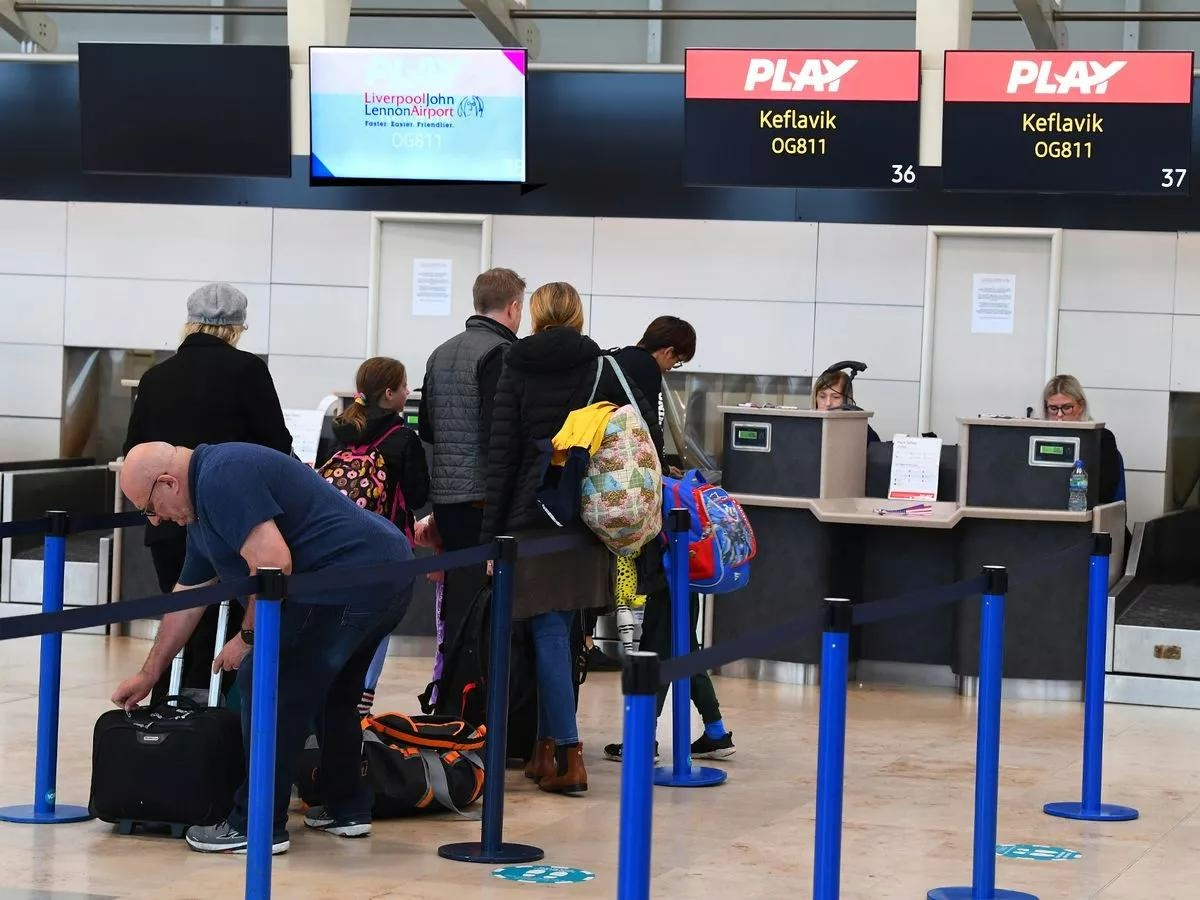
Iceland’s PLAY Airlines Halts Operations, Stranding Passengers Across Its Network
Iceland’s low-cost carrier PLAY Airlines abruptly ceased operations on Monday, September 29, leaving approximately 1,750 passengers stranded across its network. Established in 2021 as a successor to the defunct WOW Air, PLAY attributed its sudden closure to weaker-than-expected financial performance, declining ticket sales in recent months, and adverse media coverage. These factors collectively undermined the airline’s ability to sustain its operations.
Operational Challenges and Impact on Passengers
PLAY had positioned itself as an affordable link between Europe and North America, operating a fleet of ten Airbus A320neo and A321neo aircraft, easily recognizable by their distinctive red livery. From its base at Keflavík International Airport, the airline served over 30 destinations and transported more than 1.6 million passengers in 2024. Although initial passenger load factors were promising, a recent decline in bookings, coupled with rising operational costs and softening demand, left the airline unable to maintain profitability or fill its seats.
The airline’s sudden shutdown resulted in the immediate cancellation of flights connecting Reykjavík with several European capitals and US cities, catching passengers off guard. Travelers have been advised to seek refunds through the insolvency administrators now managing PLAY’s affairs. Under European Union regulations, affected passengers may also be eligible for compensation. In response to the disruption, some competing airlines have indicated they may offer discounted fares to assist stranded PLAY customers in reaching their destinations.
Broader Implications for Iceland’s Aviation Sector
Following the suspension of operations, PLAY’s staff have been stood down, and activities at the airline’s Reykjavík headquarters have been halted. This closure represents a significant setback for Iceland’s aviation industry, which depends heavily on strong air connectivity to support its vital tourism and trade sectors. The loss of PLAY reduces competition and available capacity on transatlantic and regional routes, raising concerns among industry experts that fewer seats could lead to increased airfares in the near term.
This development echoes the collapse of another Icelandic low-cost carrier, WOW Air, in 2019, highlighting the persistent challenges faced by airlines operating in the highly competitive transatlantic market.

The Future of Travel, According to the CEO of Europe’s Busiest Airport

Airbus Accelerates Year-End Deliveries to Meet Targets
Airbus Warns Tariffs Could Disrupt U.S. Aircraft Production
Turboprop Flight Experiences Double Engine Failure
Aviation Regulator Issues Notice to Air India Over Repeated Aircraft Malfunctions
Dhruv-NG Civilian Helicopter Completes First Flight in Bengaluru

4-H Member Earns Private Pilot Certificate Through New Program
Airbus and Boeing Order Totals for 2025 Compared
Jeju Island Introduces Air Taxis to Enhance Tourism and Reduce Emissions