
Orchestrate AI insights into action

Trending
Categories
Airbus and Boeing Increase Deliveries to Gulf Amid Persistent Backlog
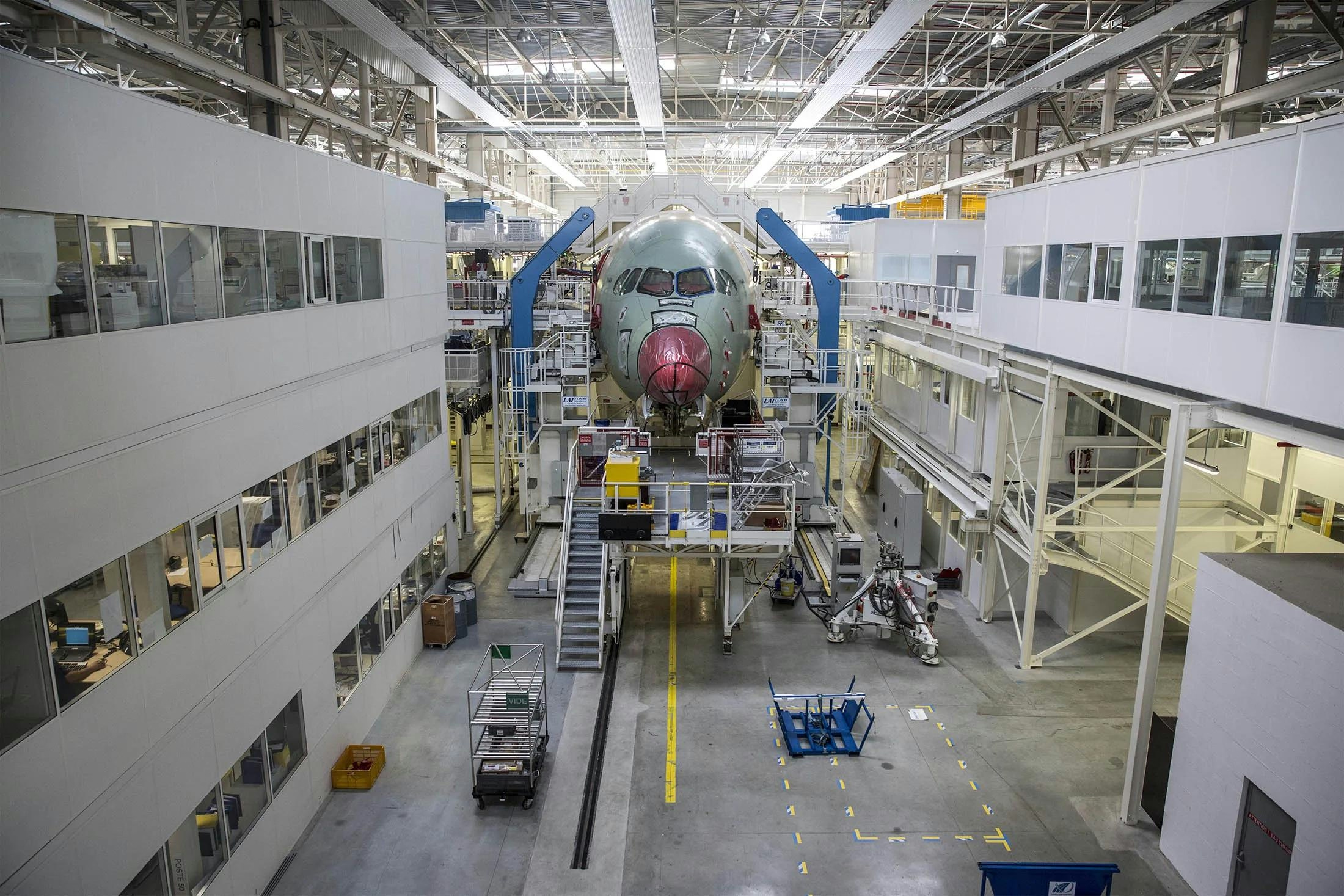
Airbus and Boeing Increase Deliveries to Gulf Amid Persistent Backlog
Rising Deliveries Amid Supply Chain Challenges
Aircraft deliveries to Gulf carriers from Airbus and Boeing have increased in 2024, reflecting the region’s ongoing fleet expansion to meet strong travel demand. However, this growth remains modest relative to the substantial backlog of hundreds of jets awaiting delivery. Both manufacturers continue to face significant supply chain constraints and production bottlenecks that hinder their ability to fully satisfy regional orders.
Airbus has more than doubled its deliveries to Gulf airlines in the first eight months of the year, handing over 25 aircraft compared to 11 during the same period in 2023. Emirates has been a key recipient, receiving six A350-900 widebodies and anticipating six additional deliveries by year-end. Saudi Arabia’s budget carrier Flynas also expanded its fleet with five A320neo aircraft to support its growing network. Despite these gains, Airbus remains challenged by disruptions in supply chains, labor shortages, and delays in engine and cabin equipment deliveries. These issues have impacted both narrowbody and widebody production lines, causing Airbus to miss its delivery targets for 2022 and 2023. Although the company delivered 766 jets in 2024, its goal of 820 aircraft for 2025 is under pressure, with global deliveries through August down 3 percent year-on-year at 434 units.
Boeing has similarly increased its footprint in the Gulf, delivering 27 aircraft in the first eight months—already exceeding the 20 deliveries recorded for the entirety of 2023. Key customers include Dubai Aerospace Enterprise, Emirates, Etihad Airways, Flydubai, Oman Air, and Qatar Airways. Globally, Boeing has delivered 385 jets so far this year, up from 348 in all of 2023, as it works to overcome production and certification delays that have drawn criticism from major clients such as Emirates.
Backlogs and Production Constraints
Despite improved delivery figures, both Airbus and Boeing continue to contend with significant backlogs. Boeing’s order book for Gulf carriers stands at 866 aircraft, contributing to a global backlog of 5,994 jets as of the end of August. Airbus projects delivering 42,430 new planes worldwide over the next two decades, with 3,740 of those destined for the Middle East.
Industry analysts highlight that maximum monthly production rates remain a critical bottleneck. Aviation consultancy Cirium Ascend estimates Airbus must sustain an average of 97 aircraft deliveries per month from September through December to meet its annual target, while Boeing would need to average 49 monthly deliveries to reach 580 jets for the year. John Grant, a partner at the consultancy, noted, “For both Airbus and Boeing, maximum monthly production limitations mean the industry is still a long way from reaching the capacity levels operators had hoped for.”
Supply chain challenges are expected to persist through the end of the decade, according to BOC Aviation, further complicating efforts to reduce the backlog. Meanwhile, Boeing’s outlook has been bolstered by a potential 500-aircraft deal with China, the world’s second-largest aircraft market. Airbus is closely monitoring China’s growing capabilities in commercial aircraft manufacturing. These developments have been well received by the market, with Boeing shares rising 37 percent since the start of the year. Competitors are also securing large orders from China, underscoring the rapid expansion of the global travel market.

Etihad Airways Suspends Airbus A380 Flights on Key Route

Aditya Birla Group Seeks Approval for Aircraft Leasing in GIFT City

Qatar Airways Highlights Innovation and Connectivity at Arabian Travel Market 2026

Hong Kong's Five-Year Plan Includes Andrew Fan's Aircraft Parts Processing Hub Proposal

ACIA Aero Leasing Delivers ATR72-600 to Air Nostrum

RTX Appoints Jill Albertelli as Head of Pratt & Whitney

TAT Technologies Joins Beyond Aero Hydrogen Aircraft Program

AURAK Study Highlights Barriers to Air Taxi Adoption in Emerging Economies

Xiamen Air Selects Altitude for 787 Maintenance at Heathrow

Etihad and Swissport Extend Global Partnership
