
Orchestrate AI insights into action

Trending
Categories
Boeing Reports Growth in Aircraft Deliveries and Orders
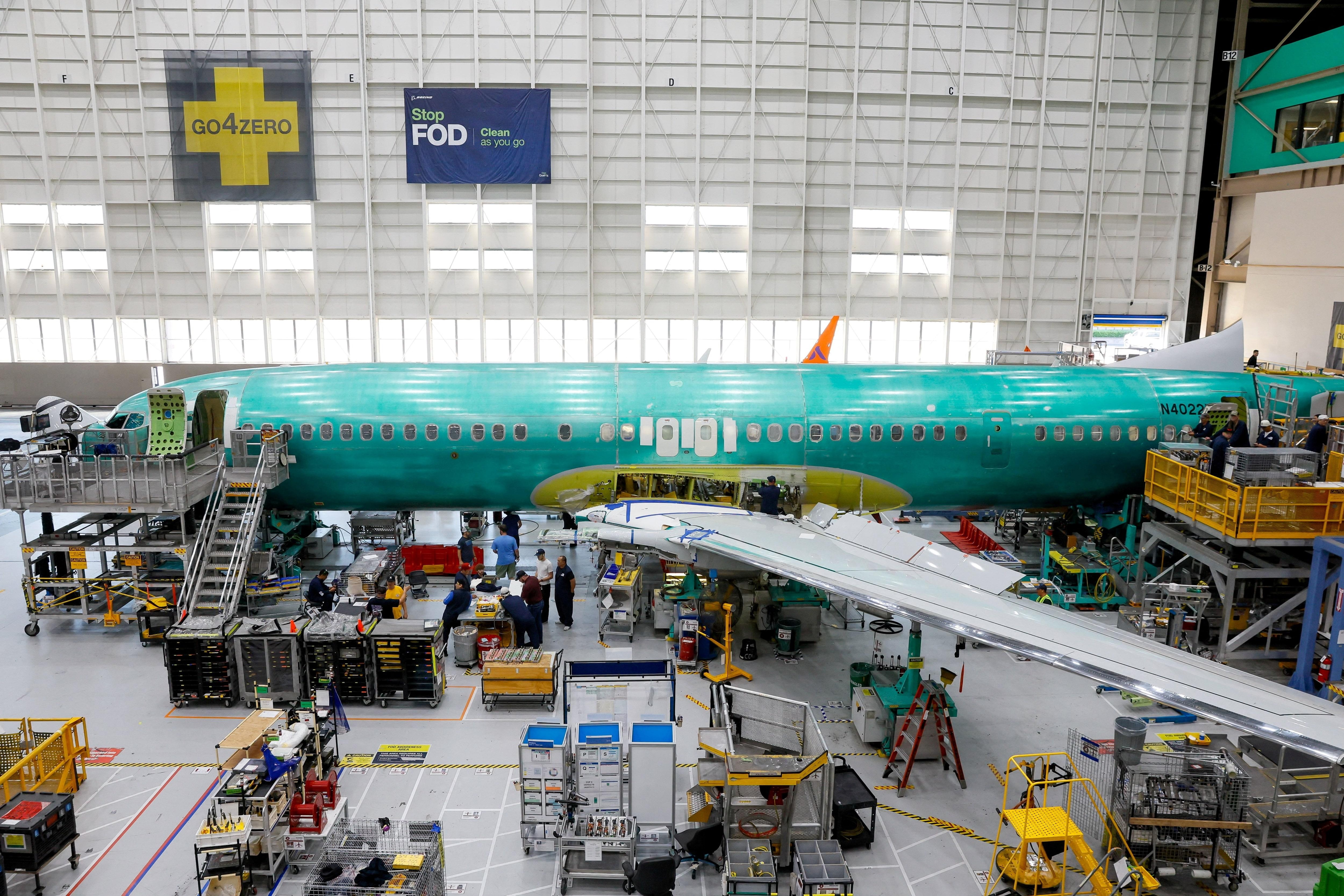
Boeing Reports Strong Growth in Aircraft Deliveries and Orders
Robust First Quarter Performance
Boeing demonstrated significant growth in the first quarter of the year, delivering 130 aircraft compared to 83 jets during the same period last year. This marked increase underscores the company’s ongoing recovery, with the 737 Max playing a pivotal role. The model accounted for 104 of the deliveries, reflecting its steady return to service following previous groundings. In March alone, Boeing delivered 41 aircraft, up from 29 in the corresponding month of the prior year.
The company also secured 241 new orders in the first quarter, nearly doubling last year’s figures. March was particularly strong, with 192 orders recorded. Among these, a notable order from BOC Aviation for 50 additional 737-8 Max jets highlighted renewed confidence in the market. This surge in demand contributed to a 2.6% rise in Boeing’s shares during late trading. Industry expectations are growing that production rates could reach 38 units per month by the third quarter.
Market Implications and Industry Context
Boeing’s robust performance in the first quarter signals a broader rebound in aerospace demand, offering positive prospects for investors. As the company increases its inventory and delivery capacity, analysts remain optimistic about further production growth. This expansion could enhance Boeing’s competitive position and support the recovery of its stock price. Nevertheless, the company continues to face significant challenges, including production bottlenecks, labor strikes, and ongoing supply chain disruptions. These issues present opportunities for competitors such as Airbus to gain market share should Boeing encounter further difficulties.
The surge in Boeing’s deliveries also reflects the wider recovery of the aviation industry from the lows experienced during the pandemic. Rising travel demand and fleet renewals are key drivers of this revival, benefiting not only Boeing but also other industry players like Airbus. The positive momentum extends beyond aircraft manufacturers to parts suppliers, airlines, and related sectors. As fleets expand and modernize, the effects ripple through job creation, tourism, and international trade, underscoring aviation’s critical role in global economic and social recovery. Despite operational headwinds, sustained market confidence in Boeing suggests that the industry’s upward trajectory remains intact, highlighting the interconnected nature of global industries and the central importance of aviation in post-pandemic growth.

Etihad Airways Suspends Airbus A380 Flights on Key Route

Aditya Birla Group Seeks Approval for Aircraft Leasing in GIFT City

Qatar Airways Highlights Innovation and Connectivity at Arabian Travel Market 2026

Hong Kong's Five-Year Plan Includes Andrew Fan's Aircraft Parts Processing Hub Proposal

ACIA Aero Leasing Delivers ATR72-600 to Air Nostrum

RTX Appoints Jill Albertelli as Head of Pratt & Whitney

TAT Technologies Joins Beyond Aero Hydrogen Aircraft Program

AURAK Study Highlights Barriers to Air Taxi Adoption in Emerging Economies

Xiamen Air Selects Altitude for 787 Maintenance at Heathrow

Etihad and Swissport Extend Global Partnership
