
Orchestrate AI insights into action

Trending
Categories
NTSB Identifies Engine Flaws in Boeing 737 Following Denver Fire
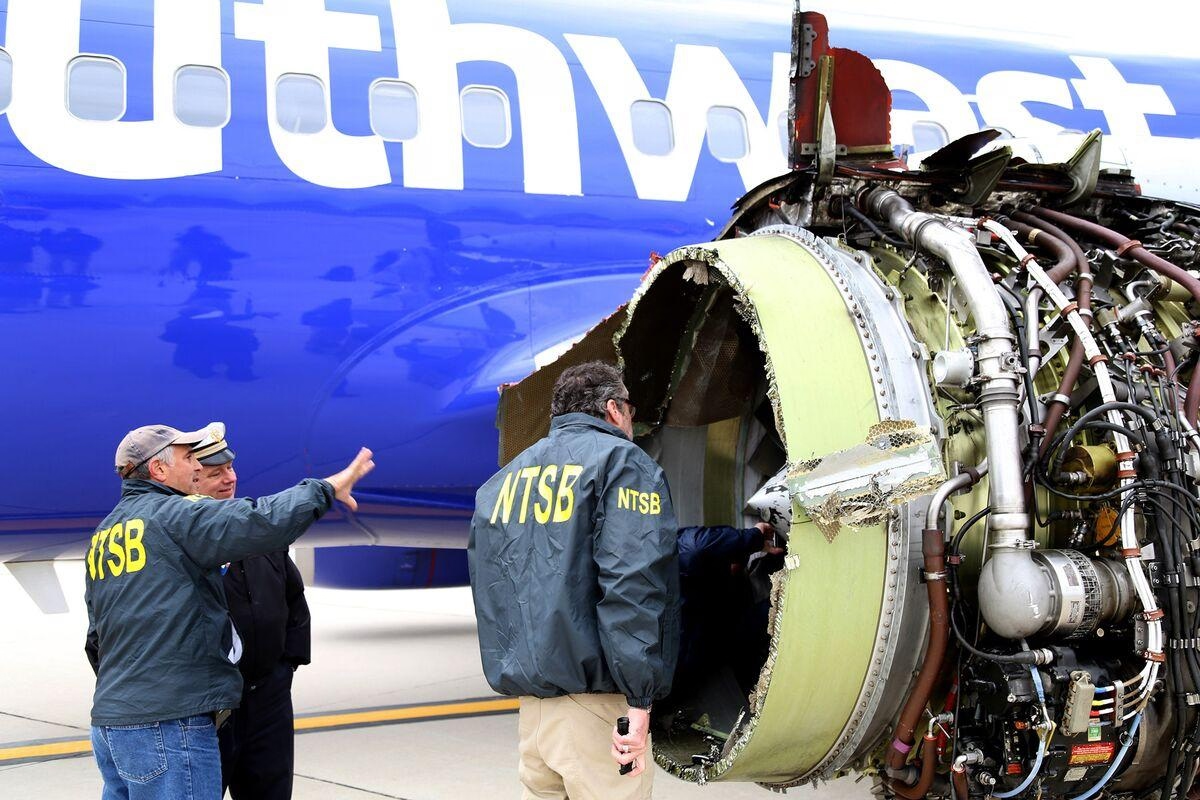
NTSB Identifies Engine Flaws in Boeing 737 Following Denver Fire
Preliminary Findings and Safety Concerns
The U.S. National Transportation Safety Board (NTSB) has uncovered significant engine defects in the Boeing 737 after a recent fire incident in Denver. According to the NTSB’s preliminary investigation, the fire originated from a fuel leak compounded by improperly installed engine components. These findings have raised urgent safety concerns, highlighting the necessity for immediate corrective measures by Boeing to prevent future occurrences.
Industry Impact and Market Response
The incident has intensified scrutiny of Boeing’s manufacturing and quality control protocols. Industry analysts caution that rectifying these engine flaws may disrupt production timelines and escalate costs substantially. The NTSB’s report has already triggered calls for enhanced regulatory oversight, with aviation authorities expected to closely monitor Boeing’s remedial actions to safeguard passenger safety.
Following the release of the NTSB’s findings, Boeing’s stock price experienced a notable decline, reflecting investor apprehension over potential regulatory sanctions and the financial burden of repairs and production delays. The company now confronts the dual challenge of restoring public confidence while maintaining its competitive standing in the global aerospace market.
Competitive Landscape and Boeing’s Response
Rival aircraft manufacturers may gain an advantage if Boeing’s difficulties persist. Observers suggest that competitors could increase their market share as airlines consider alternatives to the 737 amid ongoing safety concerns. While Boeing has faced crises in the past, the immediacy and severity of the current issues distinguish this episode.
Boeing has acknowledged the NTSB’s findings and affirmed its commitment to collaborating with regulators and suppliers to resolve the identified problems. The company emphasized its dedication to safety and transparency, pledging to implement corrective actions promptly.
The NTSB’s investigation continues, and further regulatory scrutiny is anticipated. Moving forward, Boeing must not only address the technical deficiencies but also work diligently to reassure customers, regulators, and investors that safety remains its paramount priority.

Etihad Airways Suspends Airbus A380 Flights on Key Route

Aditya Birla Group Seeks Approval for Aircraft Leasing in GIFT City

Qatar Airways Highlights Innovation and Connectivity at Arabian Travel Market 2026

Hong Kong's Five-Year Plan Includes Andrew Fan's Aircraft Parts Processing Hub Proposal

ACIA Aero Leasing Delivers ATR72-600 to Air Nostrum

RTX Appoints Jill Albertelli as Head of Pratt & Whitney

TAT Technologies Joins Beyond Aero Hydrogen Aircraft Program

AURAK Study Highlights Barriers to Air Taxi Adoption in Emerging Economies

Xiamen Air Selects Altitude for 787 Maintenance at Heathrow

Etihad and Swissport Extend Global Partnership
