image

AeroGenie — Your Intelligent Copilot.

Ask anything. Analyze everything. Act instantly.

Trending

Categories

Top 10 US-Canada to Europe Routes for Narrowbody Aircraft
November 13, 2025By ePlane AI
Top 10 US-Canada to Europe Routes for Narrowbody Aircraft
0
0
Transatlantic Routes
Narrowbody Aircraft
Airbus A321neo

Top 10 US-Canada to Europe Routes for Narrowbody Aircraft

The Emergence of Narrowbody Jets on Transatlantic Routes

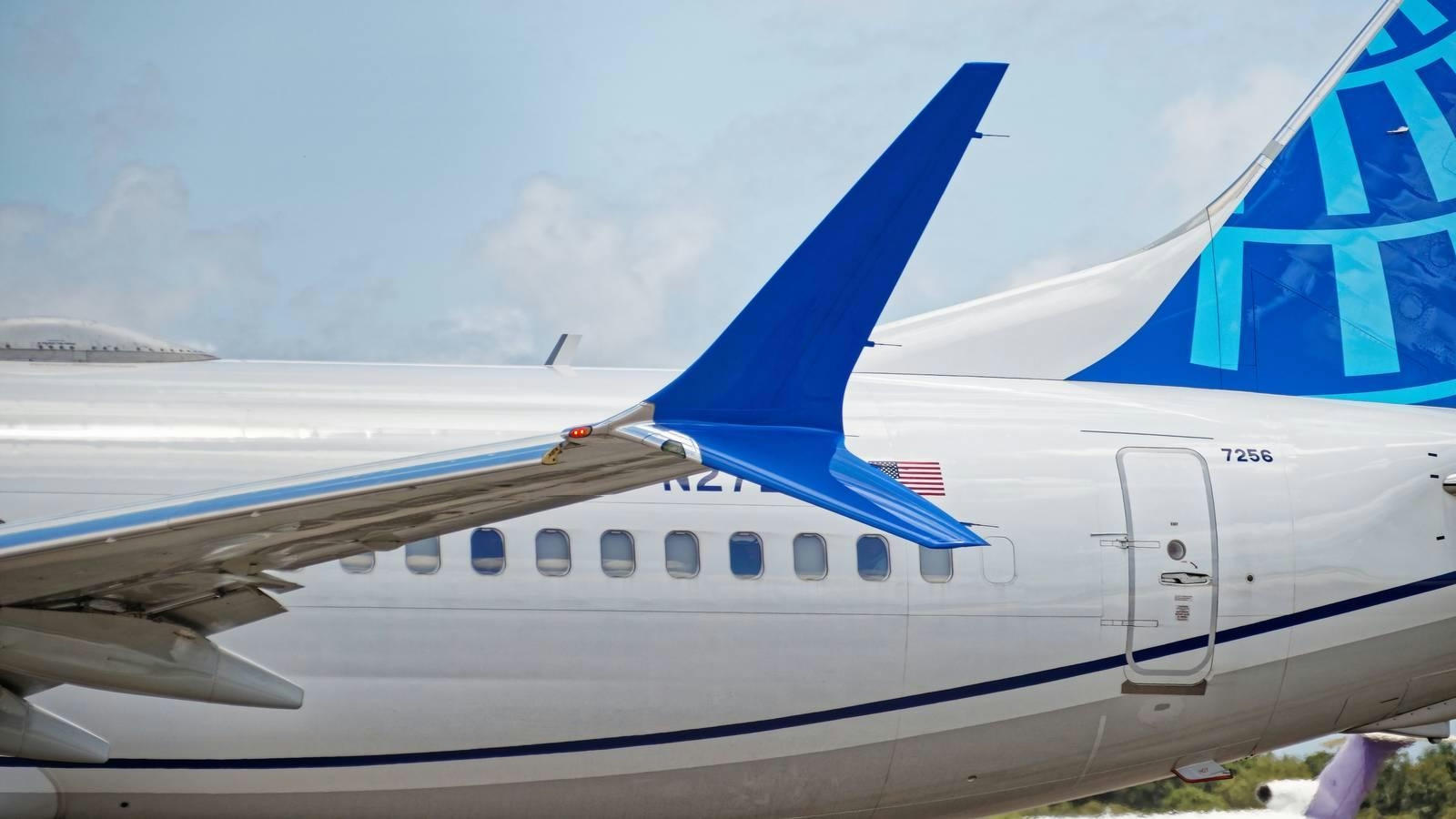
Traditionally, long-haul transatlantic flights have been dominated by widebody aircraft, designed to carry large numbers of passengers over extended distances. However, advancements in aircraft technology have begun to transform this landscape. New-generation narrowbody jets, such as the Airbus A321neo family and Boeing 737 MAX series, now offer extended range capabilities and enhanced fuel efficiency. These improvements enable airlines to operate long, thinner routes that do not justify the use of larger widebody aircraft. The Airbus A321XLR, for instance, has a published range of 4,700 nautical miles (8,700 kilometers), effectively extending the reach of single-aisle jets into long-haul territory, even if actual operational range is somewhat less.

Several major carriers, including American Airlines, JetBlue, Icelandair, Air Canada, SAS, United Airlines, and Aer Lingus, have incorporated narrowbody aircraft such as the A321neo, A321LR, A320neo, 737 MAX 8 and 9, and the Boeing 757-200 into their transatlantic fleets. According to scheduled data from Cirium for the period November 2025 through August 2026, more than 24,000 narrowbody flights are planned between Europe and North America, with the Airbus A321neo family accounting for over 15,000 of these flights. This trend underscores the growing role of narrowbodies in reshaping transatlantic air travel.

Leading Routes and Operational Highlights

The longest scheduled narrowbody route during this timeframe is Washington Dulles to Copenhagen, operated by Scandinavian Airlines (SAS) using the Airbus A321LR. Covering approximately 4,074 miles (6,556 kilometers), SAS deploys three A321LR aircraft across several US and Canadian routes, maintaining up to four weekly flights on this sector during the winter season. This route exemplifies the extended reach of narrowbody jets on transatlantic services.

Following closely is the Toronto to Berlin route, flown by Air Transat with the A321LR. This summer-seasonal service, inaugurated in June 2025, spans about 4,052 miles and operates twice weekly. La Compagnie, an all-business-class carrier, operates the third-longest narrowbody route between Newark and Milan Malpensa, also utilizing the A321LR. The airline offers similar services to Nice and Paris Orly, with frequencies that vary seasonally.

RouteAirlineAircraftDistance (miles)Frequency
Washington Dulles–CopenhagenSASA321LR4,074Up to 4 weekly (Mon, Wed, Thurs, Sat)
Toronto–BerlinAir TransatA321LR4,0522 weekly (Thurs, Sun); resumes May 2026
Newark–Milan MalpensaLa CompagnieA321LR4,0106 weekly (except Wed); daily in March
Newark–NiceLa CompagnieA321LR4,007

Market Dynamics and Strategic Developments

Despite the operational advantages offered by these narrowbody aircraft, transatlantic routes face significant market challenges. Recent softness in yields and passenger load factors has adversely affected airline financial performance, as evidenced by the negative market reaction to British Airways’ third-quarter earnings. Competition is intensifying, with American Airlines introducing the A321XLR to expand its long-haul narrowbody network, while Air Canada’s growth at Toronto Pearson Airport is increasing competitive pressure on regional carriers such as Porter Airlines.

Beyond the North Atlantic, airlines are also pursuing new strategic opportunities. Iberia’s planned nonstop service between Madrid and Monterrey in 2026 reflects a concerted effort to strengthen its presence in Latin America and the Caribbean, directly challenging Aeromexico’s dominance in the region.

As carriers continue to exploit the capabilities of new-generation narrowbody aircraft, the transatlantic market is undergoing rapid evolution. This shift is creating a broader array of route options while simultaneously intensifying competition and exposing airlines to emerging market risks.

More news
A Year of Innovation and Airline Partnerships

A Year of Innovation and Airline Partnerships

A Year of Innovation and Airline Partnerships at Pittsburgh International Airport The year 2025 proved to be a pivotal period for Pittsburgh International Airport (PIT), marked by the inauguration of its new terminal in November and a series of significant milestones that underscored the airport’s dedication to innovation, global connectivity, and enhancing the passenger experience. Amid an aviation industry grappling with intense competition among major carriers, regulatory challenges, and an increasing emphasis on sustainability, PIT’s progress reflects both regional advancement and broader trends shaping the sector. Leadership Driving Growth and Innovation Under the stewardship of Christina Cassotis, who was honored as Pittsburgher of the Year by *Pittsburgh Magazine*, PIT has undergone a remarkable transformation. Over her decade-long tenure as CEO, Cassotis has overseen the expansion of nonstop destinations from 36 to 63, with passenger traffic nearing 10 million in 2024. Her leadership has been instrumental in pioneering groundbreaking initiatives, including the establishment of the world’s first airport microgrid and the construction of a new landside terminal completed without reliance on taxpayer funding. Cassotis envisions the airport as a revitalized “front door” for Pittsburgh, aiming to redefine the city’s identity and its role within the global travel network. Evolving Airline Partnerships and Market Dynamics The competitive environment among airlines remains fierce, with carriers such as American Airlines striving to maintain market share leadership amid challenges from United Airlines and shifting industry dynamics. In this context, strategic partnerships have become increasingly crucial. The alliance between American Airlines and Japan Airlines exemplifies efforts to sustain competitive advantage through collaboration. At PIT, Allegiant Airlines marked a decade of service, expanding to 14 nonstop destinations and ranking second only to one other carrier at the airport. Since its market entry in 2015 as PIT’s first ultra-low-cost carrier, Allegiant has broadened its reach into leisure and underserved routes, thereby supporting local aviation employment and stimulating regional tourism. Enhancing Passenger Experience Through Innovation Responding to evolving traveler expectations and industry pressures, PIT introduced the “We Got You” initiative in 2025. This passenger-centric program equips Information Desk personnel and volunteer Ambassadors with handheld devices powered by AI-driven chatbots, real-time flight and transportation data, language translation capabilities, and internal communication tools. Developed through comprehensive passenger research, the initiative aims to deliver compassionate, real-time assistance, helping travelers manage common challenges such as lost belongings, missed connections, and sudden gate changes. Commitment to Operational Excellence and Sustainability PIT’s dedication to operational excellence was recognized at the International Aviation Snow Symposium in Buffalo, where both Pittsburgh International and Allegheny County airports received top honors in their respective categories of the Balchen/Post Awards. These accolades reflect decades of investment in advanced snow-fighting equipment and a steadfast commitment to maintaining runway safety during severe winter conditions—an essential factor for both commercial and medical flights. Looking ahead, the aviation industry faces potential volatility influenced by internal divisions within the Federal Reserve and other economic factors anticipated in 2026. The ongoing drive toward sustainable aviation fuels and innovative technologies presents both challenges and opportunities for carriers such as American Airlines and their partners. Through its focus on innovation, strategic partnerships, and passenger service, Pittsburgh International Airport is well-positioned to remain at the forefront of these evolving industry dynamics.
This Airline Operated The Rarest Boeing 767s In The World

This Airline Operated The Rarest Boeing 767s In The World

This Airline Operated the Rarest Boeing 767s in the World A mere 2.3% of all Boeing 767s ever produced were equipped with Rolls-Royce RB211 engines, marking one of the rarest configurations in commercial aviation history. The majority of these aircraft were delivered to British Airways, with a small number assigned to China Eastern Yunnan Airlines. Presently, none of these RB211-powered 767s remain in active service, highlighting the operational difficulties associated with maintaining such an uncommon variant. The RB211-Powered Boeing 767: A Unique Chapter The integration of the Rolls-Royce RB211 engine into the Boeing 767 program represents an intriguing episode in the aircraft’s development. Although the RB211 would later become one of the most successful widebody engines globally, its application on the 767 was met with limited enthusiasm. The dominant presence of the General Electric CF6 engine, which had already established a reputation for reliability and efficiency within the 767 family, posed a significant barrier. The RB211 struggled to compete against the CF6’s proven performance and extensive support network, limiting its appeal to airlines. During the early years of commercial aviation, offering multiple engine options was a common practice. The first-generation 767-200 was available with Pratt & Whitney JT9D, Pratt & Whitney PW4000, and General Electric CF6 engines. Subsequent variants, including the 767-200ER and 767-300, introduced the Rolls-Royce RB211 as an additional choice. However, the availability of an engine option did not guarantee widespread adoption. For example, the final 767-400ER was exclusively delivered with the CF6 engine. Over time, the GE CF6 emerged as the dominant powerplant, earning its place as one of the most successful widebody engines in history. It continues to be produced today, powering Boeing 767-300F freighters and the military KC-46A Pegasus, which utilizes the PW4000. Operational Challenges and Market Implications Boeing records indicate that only 31 767s were ever fitted with RB211 engines, with British Airways receiving 28 of these rare 767-300ERs and China Eastern Yunnan Airlines taking the remaining three. Operating such a limited and specialized fleet introduced significant challenges, particularly as the aircraft aged. Maintenance, repair, and overhaul (MRO) providers faced increasing difficulties in sourcing parts and expertise for the RB211-powered 767s, driving up operational costs and complicating regulatory compliance. In an industry where reliability and cost efficiency are critical, these factors contributed to the gradual phase-out of this variant. The scarcity of RB211-powered 767s also had broader repercussions within the aviation market. Airlines and investors, wary of potential maintenance and quality concerns—especially amid recent scrutiny of competitors such as Airbus—adopted more conservative fleet strategies. Meanwhile, Airbus capitalized on this environment, with its A320 family recently surpassing the Boeing 737 as the world’s most popular commercial airliner. For British Airways and other operators, sustaining the viability of such a unique fleet became increasingly impractical. Today, the RB211-powered Boeing 767 remains a rare and notable footnote in aviation history, reflecting the complexities and evolution of engine selection in commercial aircraft.
Q&A: Why Travel Needs a New Platform Built for an Open Ecosystem

Q&A: Why Travel Needs a New Platform Built for an Open Ecosystem

Q&A: Why Travel Needs a New Platform Built for an Open Ecosystem The travel industry stands at a pivotal moment, confronted with increasing pressure to modernize its foundational technology. Despite growing digital adoption, many travel systems continue to rely on outdated processes that impede innovation and slow progress across the sector. For instance, the adoption of New Distribution Capability (NDC) in the United States remains at a mere 20%, highlighting the sluggish transition of airlines and sellers toward contemporary standards. Meanwhile, Global Distribution Systems (GDS) still dominate inventory access and pricing. Entrenched practices, such as strict look-to-book ratios that limit the number of searches relative to bookings, further restrict experimentation and the emergence of new ideas. In contrast to travel, other industries like financial technology have embraced modular, cloud-based platforms designed for scalability and openness. Travel, however, remains constrained by legacy frameworks that hinder new entrants from gaining traction. The sector’s resistance to change, the complexity of integrating new technologies, and the necessity for extensive data standardization present significant obstacles to adopting an open platform. Established players, who benefit from the current systems, often respond with skepticism and may seek to maintain their competitive advantage by enhancing proprietary platforms or developing closed solutions. Addressing Barriers with a Platform-First Approach OnArrival, a company founded with a platform-first philosophy, seeks to overcome these barriers by creating an infrastructure layer that the travel industry has long lacked. Its mission is to open the travel ecosystem, enable innovative use cases, and accelerate the transition away from legacy systems. In a conversation with SkiftX, Ankit Sawant, co-founder and CEO of OnArrival, elaborated on how the company is helping businesses access a unified, modern technology stack that reduces traditional barriers to entry. When asked about the biggest technology challenges facing the travel industry today, Sawant identified the lack of accessible infrastructure for new entrants as paramount. Unlike sectors such as AI, fintech, and logistics—which provide open access to core systems through standardized APIs and developer-friendly platforms—travel remains fragmented and difficult to build upon. Legacy GDSs were originally designed for travel agents, leaving new companies without the necessary scaffolding to launch quickly or innovate. Although the underlying supply is largely consistent across the industry, integrating that supply is highly complex, making it difficult for newcomers to offer the breadth of products available through established online travel agencies. Sawant pointed to other industries that have addressed similar challenges by building shared infrastructure: Shopify for e-commerce, Stripe for payments, Plaid for bank account access, and AWS for cloud computing. Travel, he noted, has yet to experience such a platform shift, which has reinforced an oligopoly sustained more by technical barriers than by genuine technological leadership. The Impact of Legacy Systems on Competition and Innovation Legacy systems significantly affect how travel businesses operate and compete. Sawant explained that these systems make it exceedingly difficult for new travel companies to enter the market. Prospective entrants must identify the right contacts, negotiate terms, complete extensive paperwork, and endure integration processes that often take months—despite the fact that such procedures should require less than a month. This dynamic protects incumbents from competition, as opening their systems would expose them to margin pressures and compel them to function more like low-margin infrastructure providers rather than high-margin consumer brands. Consequently, many established players maintain closed technology environments, which further hampers innovation across the industry. As the travel sector contemplates a shift toward open platforms, it faces not only technical and cultural resistance but also the challenge of standardizing data and integrating new technologies. Market responses are expected to be mixed: some competitors may adopt open ecosystem strategies, while others may reinforce proprietary solutions to safeguard their market positions. Moving forward will demand collaboration, openness, and a willingness to reconsider long-standing industry practices.
Two Chinese Airlines Announce Plans to Order Airbus A320neos

Two Chinese Airlines Announce Plans to Order Airbus A320neos

Two Chinese Airlines Announce Plans to Order Airbus A320neos Major Fleet Expansion for Spring Airlines and Juneyao Airlines China’s Spring Airlines and Juneyao Airlines have revealed ambitious plans to expand their fleets through significant orders of Airbus A320-family aircraft, with the combined list-price value of these deals reaching up to $8.2 billion. Spring Airlines intends to acquire 30 Airbus A320neo jets, valued at a maximum list price of $4.13 billion, with deliveries scheduled between 2028 and 2032. Meanwhile, Juneyao Airlines plans to purchase 25 A320-family aircraft, estimated at approximately $4.1 billion at list prices, over the same timeframe. Both transactions remain subject to government approval. Context of Airbus’s Position in the Chinese Market These announcements come as Airbus seeks to secure additional large-scale orders from China, a key market for the European manufacturer. Earlier this month, Airbus received confirmation that deliveries of 120 previously ordered aircraft to Chinese carriers can proceed, while negotiations for further orders continue. This ongoing engagement underscores Airbus’s strategic focus on maintaining and expanding its presence in the rapidly growing Chinese aviation sector. Challenges Amid Quality Concerns The planned purchases coincide with recent quality issues affecting Airbus’s A320 fleet. The company has been addressing a software recall and a quality problem involving metal panels on the aircraft, raising concerns about potential impacts on future deliveries. These challenges have contributed to a notable decline in Airbus’s share price, reflecting mixed market sentiment regarding the manufacturer’s current difficulties. Implications for the Chinese Aviation Market Despite these headwinds, the decisions by Spring Airlines and Juneyao Airlines demonstrate sustained demand for modern, fuel-efficient aircraft within China’s aviation industry. While competitor responses remain uncertain, these deals highlight the strategic importance of fleet renewal for Chinese carriers as they position themselves for future growth and increased market competitiveness.
Russia and China Seek Cooperation in AI and Aviation Electronics

Russia and China Seek Cooperation in AI and Aviation Electronics

Russia and China Seek Cooperation in AI and Aviation Electronics Expanding High-Tech Collaboration A senior Chinese diplomat recently underscored the expanding opportunities for cooperation between China and Russia in several advanced technology sectors, including information technology, artificial intelligence (AI), microelectronics, semiconductors, and civil aircraft manufacturing. Speaking to Izvestia newspaper, the diplomat expressed a strong interest in deepening bilateral engagement, particularly through a Chinese initiative aimed at establishing a global cooperation organization focused on AI. The ambassador highlighted intentions to collaborate on AI development, industrial innovation, workforce training, and management, while also signaling readiness to partner on semiconductor materials, specialized microchip design, advanced manufacturing processes, and equipment development to enhance supply chain stability and security. Strategic Context and Challenges This renewed push for technological partnership emerges amid significant challenges for Russia in its quest for AI leadership. The ongoing conflict in Ukraine and the resulting Western sanctions have severely limited Russia’s access to cutting-edge technologies, increasing its dependence on Chinese expertise and resources. This growing reliance raises questions about Russia’s future market position and strategic autonomy within the global technology landscape. Meanwhile, China continues to advance its AI capabilities, driven by strategic priorities despite official calls for restraint in the military application of AI. Analysts caution, however, that China’s centralized military culture may slow the integration of AI technologies within its defense sector. The evolving partnership between Moscow and Beijing takes place against a backdrop of intensifying global competition, particularly between the United States and China, both of which are heavily investing in AI research and development. Implications for Global Technology and Supply Chains Observers are closely monitoring how this collaboration might influence global supply chains, technological standards, and competitive dynamics among leading players in the sector. While official statements from both countries emphasize mutual benefit and shared progress, significant practical challenges remain. Aligning strategic interests and overcoming structural differences will be critical to the success of this partnership as it seeks to reshape the balance of power and innovation in AI and aviation electronics.
Toyota-Backed VTOL Company Plans 25 Vertiports Across the U.S.

Toyota-Backed VTOL Company Plans 25 Vertiports Across the U.S.

Toyota-Backed VTOL Company Plans 25 Vertiports Across the U.S. Joby Aviation’s Expansion into Urban Air Mobility Infrastructure California-based Joby Aviation, a prominent figure in the emerging electric air taxi industry, has unveiled plans to develop 25 vertiports across the United States. This ambitious initiative, announced shortly before Christmas, is supported by Metropolis Technologies, North America’s largest parking network operator. Metropolis manages over 4,200 parking locations and provides aviation services at more than 350 sites, positioning it as a strategic partner in Joby’s infrastructure rollout. The initial vertiports will be established at existing Metropolis locations, beginning in the New York City metropolitan area. These sites will integrate Metropolis’ Bags VIP services, enhancing convenience for travelers by streamlining passenger experience. The vertiports are strategically located in areas where Metropolis already facilitates early electric air taxi operations, enabling Joby to leverage the company’s AI-driven operational technology to optimize service efficiency. Aircraft Fleet and Technological Development While Joby has not explicitly identified the aircraft models to be deployed for its air taxi services, it is expected to utilize the fleet acquired through its recent acquisition of Blade Air Mobility. This fleet includes helicopters and amphibious aircraft currently operating rapid shuttle services between Manhattan and major airports such as JFK and Newark, reducing travel times to as little as five minutes—a substantial improvement over conventional ground transportation. However, Joby’s own vertical takeoff and landing (VTOL) aircraft, under development since 2009, has yet to enter commercial service. The design and capabilities of Joby’s VTOL have attracted considerable attention and investment. Japanese automaker Toyota has invested nearly $1 billion in Joby over the past seven years, providing engineering expertise and support in powertrain and actuation systems. Additionally, the U.S. Air Force has demonstrated interest by evaluating a Joby VTOL at Edwards Air Force Base in California in late 2023, with NASA’s Armstrong Flight Research Center participating in the trials. Although the results of these evaluations have not been disclosed, the collaboration highlights the growing interest in VTOL technology from both commercial and military sectors. The U.S. Army’s exploration of short/vertical takeoff and landing (S/VTOL) aircraft as potential replacements for the Gray Eagle unmanned system further underscores the expanding market for advanced air mobility solutions. Strategic Partnerships and Market Outlook Joby’s VTOL aircraft is designed to carry four passengers and a pilot up to 100 miles (161 kilometers) on a single battery charge, targeting short-distance urban and regional travel. The partnership with Metropolis aims to reduce infrastructure costs by utilizing existing parking facilities, a strategic approach as Joby navigates regulatory challenges, substantial infrastructure investments, and intensifying competition from other advanced air mobility companies. Market responses to Joby’s announcement have focused on the company’s capacity to scale its vertiport network and meet production targets. In response, Joby plans to double its U.S. manufacturing capacity, signaling confidence in its growth prospects. Meanwhile, competitors are expected to pursue strategic alliances and increase manufacturing investments to remain competitive in the rapidly evolving air mobility sector. As Joby Aviation advances its vertiport development, the company positions itself at the forefront of a transportation transformation that could significantly alter urban and regional mobility across the United States in the coming years.
Top Widebody Business Class Seats Available for Booking

Top Widebody Business Class Seats Available for Booking

Top Widebody Business Class Seats Available for Booking The landscape of long-haul business class travel has undergone a significant transformation, with airlines dedicating substantial resources to enhancing space, privacy, and service consistency. Modern business class cabins now feature fully lie-flat beds, exclusive lounges, priority boarding, and elevated dining experiences—amenities that were once exclusive to first class. This comprehensive approach ensures that the premium travel experience begins well before departure and extends seamlessly beyond arrival. Qatar Airways Qsuite Since its introduction in 2017, Qatar Airways’ Qsuite has established itself as a benchmark in the industry. Available across the airline’s Airbus A350-1000 fleet and select Boeing 777 and A350-900 aircraft, the Qsuite is one of the most accessible next-generation business class products. However, availability varies depending on the route and aircraft, making seat selection a critical consideration for travelers. The defining feature of the Qsuite is its fully enclosed suite with a sliding privacy door, offering an unprecedented level of personal space at the time of its launch. The center seats can be configured into paired “double beds” or combined into four-seat quads, accommodating families, colleagues, or couples. This versatility distinguishes the Qsuite by balancing privacy for solo travelers with social options for groups. Beyond the seat itself, Qatar Airways maintains a consistently high standard of service. Business class passengers benefit from carefully plated meals, an extensive wine and beverage selection, and attentive cabin crew. The amenity kits, supplied by Diptyque, include branded skincare products that add a further element of luxury. At the 2024 Farnborough International Airshow, Engr. Al-Meer emphasized Qatar Airways’ ongoing commitment to innovation, highlighting recent additions such as the Boeing 787-9 Dreamliner and Gulfstream G700 to its fleet. Singapore Airlines Singapore Airlines offers a variety of business class seat configurations across its widebody and narrowbody fleets, each tailored to the specific mission of the aircraft. The flagship widebody business class seats are featured on long-haul Airbus A380s, A350s, and Boeing 777s, while regional A350s and 787s are equipped with designs optimized for shorter flights. Notably, even the airline’s Boeing 737s include lie-flat business class seats, a rarity among narrowbody operators. Across all aircraft, the emphasis remains on full-flat beds and a robust inflight entertainment system, KrisWorld, which is renowned for its large, high-resolution screens and extensive content library. Industry Challenges and Competitive Landscape Despite these advancements, airlines continue to face challenges in introducing new business class products. Certification delays have affected programs such as Delta’s A321neo and Air India’s retrofit initiatives, slowing the rollout of next-generation suites. Additionally, some carriers have encountered passenger dissatisfaction due to new monetization strategies, exemplified by Air France’s recent changes to its front-row business class seats. Competition within the premium travel sector remains intense. Airlines like Saudia are preparing to launch new business class products on their forthcoming Airbus A321XLRs, which may further elevate industry standards. As carriers navigate regulatory hurdles and shifting passenger expectations, the business class experience continues to evolve, delivering comfort, privacy, and service levels that rival or exceed those traditionally associated with first class.
The Airbus Model: Successes in Civil Aviation and Challenges in Defense and Innovation

The Airbus Model: Successes in Civil Aviation and Challenges in Defense and Innovation

The Airbus Model: Successes in Civil Aviation and Challenges in Defense and Innovation Governance and Industrial Leadership in European Defense Programs The Future Air Combat System (FCAS) program represents one of Europe’s most ambitious defense projects, testing the continent’s ability to design and manage highly complex combat systems. At the heart of its development lies a critical debate over governance: whether Europe should rely on clear industrial leadership or adopt a shared model inspired by Airbus’s success in civil aviation. This question transcends organizational preferences, directly influencing the program’s technical, financial, and operational outcomes. Insights drawn from recent European defense projects such as Eurofighter, A400M, Eurodrone, and the A330 MRTT, alongside Airbus’s civil aviation experience, provide valuable lessons for the New Generation Fighter (NGF) and future military systems. Airbus’s Civil Aviation Success: A Model of Structured Governance Airbus’s achievements in civil aviation are founded on a disciplined industrial model characterized by early, centralized technical architecture and rigorous certification processes overseen by authorities such as the European Union Aviation Safety Agency (EASA) and the Federal Aviation Administration (FAA). This governance framework has fostered stability, predictability, and efficiency, enabling Airbus to standardize platforms and maintain a competitive edge globally. The A350 program exemplifies how controlled innovation and streamlined decision-making can deliver projects on time and within budget. Nevertheless, recent challenges have exposed vulnerabilities within this model. Airbus has encountered significant issues, including a major software defect affecting approximately 6,000 A320-family aircraft and quality concerns related to fuselage panels on several dozen jets. These problems have contributed to a sharp decline in Airbus’s stock price—dropping by as much as 9 to 10 percent—and have raised concerns about the company’s heavy dependence on the A320, which accounts for the majority of its sales and profits. Despite robust demand and a record order backlog, investor confidence has waned amid doubts over Airbus’s ability to meet its ambitious 2025 targets. This skepticism is compounded by competitive pressures, notably Boeing’s strategic acquisitions of Spirit AeroSystems and Aerostructures, which may alter the competitive landscape. Challenges in Defense and Innovation: Limits of the Airbus Model Defense programs differ fundamentally from civil aviation projects, as they must reconcile diverse national requirements, sovereignty considerations, and the integration of sensitive capabilities such as weapons systems and electronic warfare. These complexities necessitate greater architectural coherence and adaptability to evolving threats. Applying a governance model designed for the regulated and relatively stable environment of civil aviation reveals inherent limitations when transferred to defense contexts. The challenges intensify in highly innovative sectors—including drones, electric vertical takeoff and landing vehicles (eVTOLs), reusable launch vehicles, and satellite constellations—where risk aversion and fragmented decision-making can hinder rapid iteration and technological breakthroughs. This dynamic has contributed to Airbus’s position as a follower in several emerging segments, as more agile competitors have taken the lead. Insights from ArianeGroup and the Future of European Aerospace The experience of ArianeGroup, the joint venture between Airbus and Safran, further illustrates how robust, centralized governance structures can become constraints amid industry disruption. As Europe advances programs like FCAS and NGF, striking a balance between structured governance and the need for agility and innovation remains a central challenge. Despite these obstacles, Airbus continues to be recognized for its contributions to sustainable aviation, as evidenced by its recent accolades at the ATI Aerospace Technology & Innovation Awards 2025. The company’s ongoing commitment to net-zero aviation highlights its capacity for innovation, even as it navigates operational and strategic headwinds. While the Airbus model has delivered remarkable success in civil aviation, its application to defense and cutting-edge innovation demands careful adaptation to address the unique requirements of these sectors.
Bosnian Aircraft Engine Overhaul Company Launches New Projects

Bosnian Aircraft Engine Overhaul Company Launches New Projects

Bosnian Aircraft Engine Overhaul Company “Orao” Launches New Projects Amid Growing Industry Competition The Bijeljina-based company “Orao,” a prominent entity within the defence sector of Republika Srpska (RS) and Bosnia and Herzegovina (BiH), has concluded a successful business year and is preparing to embark on a new phase of projects and expansion. Marko Mrkajic, the company’s director, announced that “Orao” is entering 2026 with a robust portfolio of contracted work and well-defined development plans. Expansion and Strategic Partnerships Mrkajic expressed satisfaction with the company’s recent achievements, highlighting the acquisition of new projects secured over the past year. Following its participation in the international arms fair EDEX in Cairo, “Orao” attracted significant interest from the Egyptian Ministry of Defence and anticipates formal cooperation requests in the near future. While aircraft engine overhaul remains the company’s core activity, management is actively pursuing growth opportunities within the civilian sector. Plans are underway to modernize facilities to generate additional revenue streams through civilian operations. Recent engagements at the “Partner 2025” fair in Belgrade and initial ventures into the African market have resulted in valuable contacts with ministries and companies across several countries. Mrkajic underscored the importance of joint appearances alongside other RS defence industry enterprises, which facilitate access to larger and more complex projects. He also emphasized the continued support from the RS Government, noting that clear guidelines for industry assistance have been established, primarily through the Ministry of Economy and Entrepreneurship. The company expects concrete relief measures to enable new investments and employment opportunities. According to Mrkajic, the expertise and experience of “Orao’s” workforce remain the company’s most valuable asset. Navigating a Competitive Global Market “Orao’s” expansion occurs amid intensified competition in the global maintenance, repair, and overhaul (MRO) sector. Established providers such as Pratt & Whitney and Ontic have recently expanded their capabilities and inaugurated new centers of excellence, heightening competitive pressures. Market analysts are closely monitoring “Orao’s” capacity to deliver high-quality overhauls while adhering to stringent industry standards. In response to these market dynamics, competitors have increased marketing efforts and adjusted pricing strategies to maintain their market share, reflecting broader industry trends exemplified by Boeing’s recent stock volatility linked to cash-flow commitments and delivery updates. Mladen Lemez, acting executive director for economic affairs at “Orao,” confirmed that current analyses and contracted work indicate another successful year ahead. He emphasized that new projects will facilitate the modernization of both technical and human resource capacities. “In aviation, survival depends on compliance with international standards. ‘Orao’ was among the first in the region to implement ISO 9001 and later the EN 9100 standard,” Lemez stated, adding that further improvements are planned. Lemez also highlighted the company’s longstanding cooperation with U.S. aerospace giant Pratt & Whitney, one of the world’s leading aircraft engine manufacturers. Although the volume of work decreased during the pandemic, cooperation is now returning to previous levels. “We continue producing parts for them and expect an expansion of cooperation in the coming period,” he said. The growing demands within the defence industry, combined with “Orao’s” ongoing modernization efforts, position the company to pursue new opportunities despite the increasingly competitive environment.
How AI Helped Uncover Airline Pricing Strategies and Reduce Costs

How AI Helped Uncover Airline Pricing Strategies and Reduce Costs

How AI Helped Uncover Airline Pricing Strategies and Reduce Costs A recent social media post by Peru-based artificial intelligence expert Gina Acosta has reignited discussions surrounding airline pricing transparency. Acosta claimed that AI tools can uncover deeply discounted fares often hidden from conventional search engines. In her post on X, she described how she used Grok, an AI chatbot, to reduce the cost of a flight from $1,200 to $340 by employing targeted prompts designed to analyze airline pricing behaviors. Acosta emphasized that these savings were achieved not through traditional fare comparison websites but by exploiting pricing loopholes revealed through AI analysis. She outlined six specific AI-driven strategies that expose the dynamic nature of airline pricing and offer travelers methods to circumvent standard pricing models. AI Strategies for Navigating Airline Pricing One key approach involves route-level pricing intelligence, where AI analyzes typical pricing patterns for a given route, identifying the cheapest days to fly, optimal booking windows, and seasonal fluctuations. Another tactic is the consideration of alternative airports; AI is instructed to locate all nearby airports within a 100-mile radius of departure and destination cities, factoring in ground transportation costs to assess true savings. Acosta also highlighted the use of hidden city ticketing, where AI searches for flights with the intended destination as a layover, which can sometimes be less expensive than direct flights. She noted the associated risks and airline policies that travelers must consider. Additionally, AI can track mistake fares and pricing errors by monitoring specific websites and alert systems, helping distinguish genuine errors from promotional offers. Points arbitrage is another strategy, where AI compares the cost-effectiveness of purchasing miles, utilizing credit card bonuses, transferring loyalty points, or booking positioning flights to cheaper hubs, calculating the financial implications of each option. Finally, dynamic pricing tactics are examined, including whether clearing cookies, using a VPN, switching devices, or booking at particular times can help avoid inflated prices. Acosta also shared a comprehensive prompt that integrates all these strategies into a step-by-step booking plan within a fixed budget. She described these AI-driven prompts as tools that reveal pricing strategies, loopholes, and insider knowledge capable of saving travelers hundreds of dollars on flights. Implications and Industry Response The post has struck a chord with frequent travelers and technology enthusiasts, reflecting a growing interest in leveraging generative AI not only for trip planning but also for scrutinizing how prices are determined in the global aviation sector. However, the increasing use of AI for fare analysis has raised concerns among consumer advocates and lawmakers regarding transparency, fairness, and the potential misuse of personal data within sophisticated, hyper-personalized pricing models. Major airlines, including Delta, are facing intensified pressure to clarify the workings of their AI-driven pricing systems and to ensure that consumers are not disadvantaged by opaque algorithms. Regulators are currently assessing whether existing oversight mechanisms are adequate to protect travelers as AI continues to reshape pricing strategies. This evolving debate highlights the tension between technological innovation and the imperative for fairness and transparency in the airline industry, as both consumers and carriers navigate a rapidly transforming digital environment.
Ask AeroGenie










