
Orquestre insights de IA em ações

Tendências
Categories
Boeing Reports Highest Airplane Deliveries Since Late 2023 Amid 737 Max Production Increase
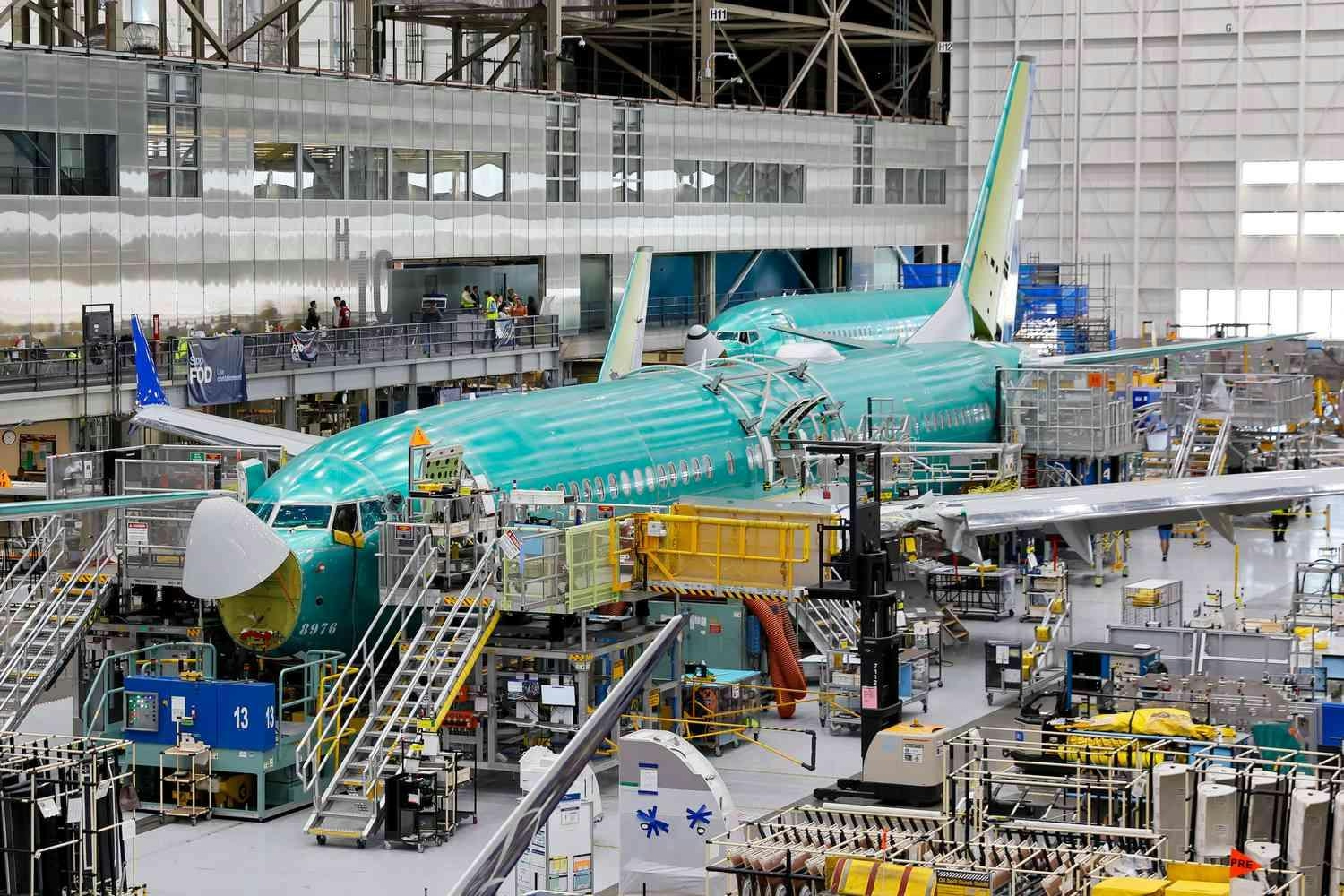
Boeing Achieves Highest Monthly Deliveries Since Late 2023 Amid 737 Max Production Recovery
Boeing reported delivering 60 aircraft in June, marking its strongest monthly performance since December 2023. This milestone reflects the company’s ongoing efforts to ramp up production of its bestselling 737 Max jets following a challenging period marked by manufacturing and safety setbacks. Earlier this year, a door plug on a 737 Max 9 detached mid-flight, prompting a production slowdown and delivery delays as Boeing addressed the resulting safety concerns.
Of the 60 aircraft delivered last month, 42 were 737 Max models, with key customers including Southwest Airlines, Alaska Airlines, and United Airlines. Since assuming leadership in August, CEO Kelly Ortberg has prioritized restoring production momentum and enhancing quality control across Boeing’s manufacturing facilities. His initiatives have contributed to the company’s improved output and operational stability.
For the second quarter ending June 30, Boeing delivered a total of 150 airplanes, its strongest quarterly performance since 2018. That year was the last in which Boeing reported an annual profit before two fatal 737 Max crashes led to a global grounding of the aircraft and a prolonged crisis for the company. The aftermath of these incidents allowed European rival Airbus to expand its market share in the commercial aviation sector.
Production Challenges and Market Dynamics
Despite recent progress, Boeing continues to face significant challenges. The Federal Aviation Administration (FAA) has capped 737 Max production at approximately 38 jets per month following the January incident, and any increase beyond this threshold requires regulatory approval. At a Bernstein investor conference in May, Ortberg expressed confidence that Boeing could soon raise production to 42 jets per month, signaling optimism about overcoming current constraints.
Sustaining higher production levels will depend on Boeing’s ability to manage ongoing supply chain disruptions and maintain stringent quality standards. Market response has been encouraging; in May, Boeing secured 303 new aircraft orders, its largest monthly total since December 2023, indicating renewed customer confidence in the company’s products and recovery efforts.
Meanwhile, Airbus has delivered 243 aircraft so far this year, falling short of Boeing’s production targets. The European manufacturer is also grappling with supply chain and trade challenges, highlighting the competitive pressures within the global aerospace industry.
As Boeing strives to rebuild its reputation and meet increasing demand, its capacity to maintain elevated production rates while managing operational risks will remain under close scrutiny from regulators, customers, and investors.

Etihad Airways Suspends Airbus A380 Flights on Key Route

Aditya Birla Group Seeks Approval for Aircraft Leasing in GIFT City

Qatar Airways Highlights Innovation and Connectivity at Arabian Travel Market 2026

Hong Kong's Five-Year Plan Includes Andrew Fan's Aircraft Parts Processing Hub Proposal

ACIA Aero Leasing Delivers ATR72-600 to Air Nostrum

RTX Appoints Jill Albertelli as Head of Pratt & Whitney

TAT Technologies Joins Beyond Aero Hydrogen Aircraft Program

AURAK Study Highlights Barriers to Air Taxi Adoption in Emerging Economies

Xiamen Air Selects Altitude for 787 Maintenance at Heathrow

Etihad and Swissport Extend Global Partnership
