image

AeroGenie — 您的智能副驾驶。

询问一切。分析一切。立即行动。

热门趋势

Categories

Airbus Software Issue Expected to Disrupt Flights Over Thanksgiving Weekend
November 28, 2025By ePlane AI
Airbus Software Issue Expected to Disrupt Flights Over Thanksgiving Weekend
0
0
Airbus A320
Software Update
Flight Disruption

Airbus Software Issue Expected to Disrupt Flights Over Thanksgiving Weekend

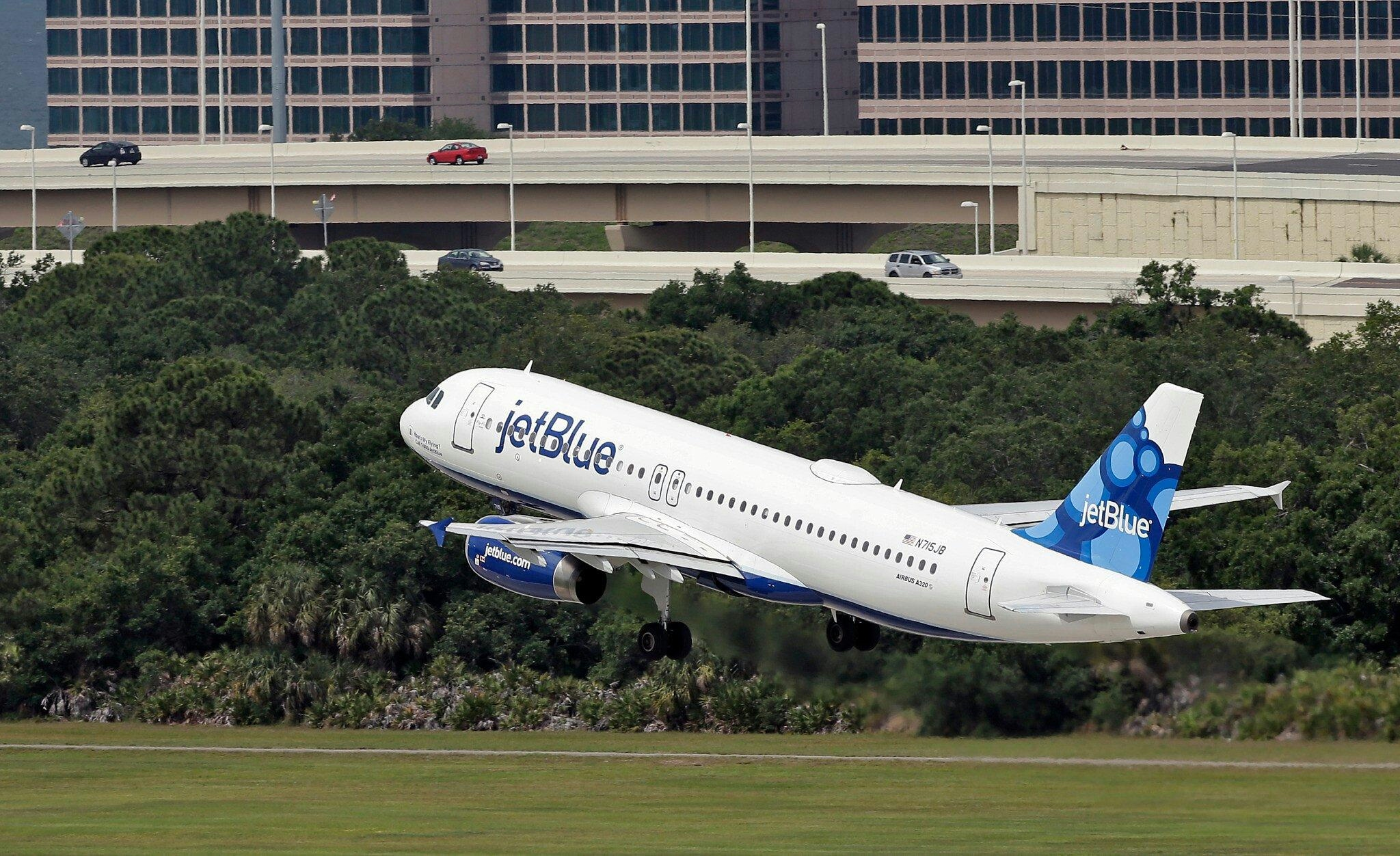
Airbus has mandated an urgent software update for approximately 6,000 aircraft in its A320 family worldwide, a development anticipated to cause significant flight disruptions during the busy Thanksgiving travel period in the United States. This directive follows the identification of a potential flaw in which intense sunlight could corrupt critical flight-control data, prompting immediate intervention from airlines and aviation regulators.

Regulatory Response and Operational Impact

The Civil Aviation Authority has stipulated that affected aircraft must undergo the software modification or remain grounded starting Sunday until the update is completed. A bulletin circulated to airlines, reviewed by Reuters, emphasized that the update must be installed before the aircraft’s next scheduled flight. In parallel, the European Union Aviation Safety Agency issued an emergency airworthiness directive requiring the replacement of ELAC computers—essential flight-control components—on the most severely impacted planes before they can resume passenger service.

Major carriers including American Airlines, easyJet, and Wizz Air have confirmed that their fleets are affected. American Airlines anticipates delays impacting 340 of its aircraft. Both easyJet and Wizz Air have warned of likely delays and cancellations over the weekend as they work to comply with the new safety requirements.

Implications for Thanksgiving Travel

The timing of this software issue and subsequent regulatory actions is particularly critical, coinciding with one of the busiest travel periods in the United States. Industry estimates suggest that around 6,500 aircraft worldwide could be affected, raising concerns about widespread cancellations and significant delays for travelers.

Airlines are expediting efforts to identify and update the necessary aircraft to mitigate disruption. However, given the scale and urgency of the directive, operational challenges are expected to continue throughout the weekend. Passengers are strongly advised to consult their airlines for the latest updates on flight status and schedule changes.

More news
UrbanV and Pax Aeroportos to Develop Vertiport Networks in Brazil

UrbanV and Pax Aeroportos to Develop Vertiport Networks in Brazil

UrbanV and Pax Aeroportos to Develop Vertiport Networks in Brazil Partnership to Advance Urban Air Mobility Italian vertiport provider UrbanV and Brazilian airport operator Pax Aeroportos have entered into a strategic partnership to develop vertiport infrastructure at two pivotal urban airports in Brazil: Campo de Marte in São Paulo and Jacarepaguá in Rio de Janeiro. This collaboration aims to integrate dedicated facilities for electric vertical takeoff and landing (eVTOL) aircraft within existing airport estates, positioning these sites as key gateways for Advanced Air Mobility (AAM) in the country. The partnership combines UrbanV’s international expertise in vertiport network design and operations with Pax Aeroportos’ established presence and long-term vision for urban aviation in Brazil. Ivan Bassate, Chairman of UrbanV, emphasized the significance of the initiative, stating, “Together with Pax Aeroportos, we are building the foundations for future air mobility networks in Brazil, starting from airports that already play a central role in urban aviation.” Development Plans and Strategic Importance Development work has already commenced at Campo de Marte, where a regulatory sandbox has been established in collaboration with Brazil’s National Civil Aviation Agency (ANAC). This initiative is described by both companies as a foundational step toward creating scalable and integrated AAM networks across Brazil. Campo de Marte, situated near São Paulo’s city center, is envisioned as a central hub for metropolitan air mobility. The facility will offer hangar capacity and connections to high-demand destinations including São Paulo’s main international airports, the Faria Lima business district, Alphaville, Campinas, and the port city of Santos. Meanwhile, Jacarepaguá is poised to become a critical access point for western Rio de Janeiro, with potential links to Copacabana, Niterói, and Rio’s principal airports. This development builds upon Jacarepaguá’s established role in executive and helicopter aviation. Rogerio Augusto Prado, CEO of Pax Aeroportos, described Advanced Air Mobility as a natural progression of urban aviation. He highlighted the opportunity to integrate “next-generation air mobility solutions into our airports and the cities they serve,” reflecting the company’s commitment to evolving urban transport infrastructure. Challenges and Market Context Despite the promising outlook, the initiative faces significant challenges. Regulatory complexities, the need for substantial infrastructure investment, and competition from established players such as Joby Aviation and Skyports present potential obstacles. Market analysts have expressed skepticism about the feasibility and profitability of urban air mobility, particularly as global competitors accelerate their vertiport development efforts. For instance, Joby Aviation’s recent partnership with Metropolis Technologies in the United States underscores the intensifying global race to secure strategic vertiport locations. The broader global trend toward integrating electric air taxis into urban transportation systems is influencing both market dynamics and regulatory frameworks in Brazil. As the AAM ecosystem continues to mature, the collaboration between UrbanV and Pax Aeroportos reflects a shared ambition to leverage existing airport infrastructure while maintaining flexibility for future expansion and adaptation to evolving industry standards. Both companies assert that their partnership represents a significant step toward establishing Brazil as a leader in urban air mobility, with the capacity to accommodate additional projects as the sector develops.
Air France Flight from Bengaluru to Paris Diverted to Turkmenistan Due to Engine Problem

Air France Flight from Bengaluru to Paris Diverted to Turkmenistan Due to Engine Problem

Air France Flight from Bengaluru to Paris Diverted to Turkmenistan Due to Engine Problem Emergency Diversion and Passenger Impact An Air France flight en route from Bengaluru to Paris was forced to divert to Ashgabat, Turkmenistan, early Tuesday morning following a reported engine malfunction. Flight AF191A, operated by a Boeing 777, departed Bengaluru at 11:22 pm IST on January 12, 2026. Shortly after takeoff, the flight crew identified a technical issue with one of the aircraft’s two engines and made the decision to divert to the nearest suitable airport, landing safely in Ashgabat at 3:37 am local time. Passengers and crew were initially required to remain onboard due to Turkmenistan’s stringent entry requirements. Once disembarkation was permitted, airport staff provided assistance, and accommodations were arranged at nearby hotels. Air France expressed regret for the inconvenience caused by the extended delay, which left passengers stranded for more than 15 hours. Operational Challenges and Industry Context To facilitate the continuation of the journey, Air France dispatched a replacement flight, AF386V, to Ashgabat. This aircraft was scheduled to depart later the same day, with an estimated arrival in Paris at 2:40 am local time on January 14. The airline has not disclosed the number of passengers affected by the diversion. This incident highlights the immediate safety and logistical challenges airlines face when technical issues necessitate unscheduled landings in countries with complex entry protocols. Air France must navigate not only the technical resolution of the engine problem but also the coordination of passenger care in a region operating in a time zone half an hour behind India, complicating scheduling and communication efforts. Industry analysts note that engine-related diversions are a recurring issue across the aviation sector. Recent reports from carriers such as United Airlines and Air Canada reveal similar incidents, underscoring ongoing challenges with engine reliability. In an increasingly volatile operating environment, airlines are under heightened pressure to maintain operational integrity and reassure passengers. Competitors may leverage such events to emphasize their own safety records. Air France has affirmed its commitment to minimizing disruption and ensuring the safety and comfort of all passengers as it manages the aftermath of this diversion. The episode serves as a reminder of the operational risks inherent in global air travel and the critical importance of robust contingency planning within the industry.
Hirth Engines and ePropelled Collaborate on Hybrid UAV Power Systems

Hirth Engines and ePropelled Collaborate on Hybrid UAV Power Systems

Hirth Engines and ePropelled Collaborate on Hybrid UAV Power Systems Hirth Engines and ePropelled have announced a strategic partnership to develop hybrid propulsion systems tailored for the unmanned aerial vehicle (UAV), aerospace, and defence sectors. This collaboration leverages Hirth’s longstanding expertise in two-stroke engine technology alongside ePropelled’s advanced electric propulsion and power-management capabilities. Together, they aim to address the increasing demand for lightweight, energy-efficient propulsion solutions suited to the rigorous requirements of modern aerial platforms. Technical Integration and Performance Advantages The hybrid propulsion systems under development will integrate Hirth’s high-performance 3508HF engine—a liquid-cooled, two-cylinder two-stroke engine capable of operating on heavy fuel—with ePropelled’s intelligent starter-generators and electronic engine starters. This fusion of mechanical and electric power generation is designed to provide operational flexibility, particularly for military and commercial UAVs that require compatibility with jet fuel. Both companies emphasize that the hybrid solutions will enhance fuel efficiency, extend flight endurance, increase payload capacity, and reduce lifecycle operating costs. The design prioritizes reliability and redundancy, critical factors for mission-critical applications and compliance with stringent regulatory standards. Additionally, the systems aim to deliver superior power-to-weight ratios and consistent performance, essential for UAVs operating in challenging and diverse environments. Market Context and Industry Implications The partnership enters a competitive landscape where established aerospace firms such as Rolls-Royce and Honeywell are also advancing hybrid and electric propulsion technologies for UAVs and collaborative combat aircraft. While Hirth and ePropelled’s hybrid-electric approach has garnered investor interest, industry analysts remain cautiously optimistic about the technology’s maturity and the pace of its market adoption. The emergence of this collaboration may prompt accelerated research and development efforts among competitors, potentially intensifying innovation within the UAV propulsion sector. Applications and Development Outlook The joint venture targets a broad spectrum of applications, including UAVs, uncrewed systems, advanced air mobility platforms, defence and surveillance operations, and industrial aerial tasks. Bruno-Gerard König, CEO of Hirth Engines, highlighted that the partnership expands the capabilities of their engines and opens new opportunities in rapidly growing sectors such as UAVs and advanced air mobility. Nick Grewal, CEO and Founder of ePropelled, noted that combining their intelligent electric power-generation systems with Hirth’s engines establishes a new standard for performance and efficiency in hybrid propulsion. Research, development, and system integration efforts are currently in progress, with prototype demonstrations scheduled for upcoming project cycles. The companies plan to unveil their hybrid propulsion prototypes at UMEX in Abu Dhabi in January 2026, providing industry stakeholders with an opportunity to evaluate the technology firsthand. Hirth Engines, headquartered near Stuttgart, Germany, brings nearly a century of experience in aviation and UAV engine manufacturing. ePropelled, based in Laconia, New Hampshire, holds 40 patents related to smart propulsion and energy-management systems for uncrewed vehicles. Further details are available on their respective websites.
Delta’s 787-10 Order and Its Impact on Airbus

Delta’s 787-10 Order and Its Impact on Airbus

Delta’s 787-10 Order and Its Impact on Airbus Delta’s Fleet Modernization Strategy Delta Air Lines has announced a substantial expansion of its fleet with an order for 30 Boeing 787-10 Dreamliners, reinforcing its commitment to modernizing operations, improving fuel efficiency, and enhancing the passenger experience. This acquisition will complement Delta’s earlier order of 100 Boeing 737-10 MAX aircraft, with deliveries scheduled to commence following certification. The introduction of the 787-10 marks a strategic shift for Delta, which had previously canceled an inherited 787 order from its merger with Northwest Airlines. The 787-10 is recognized for its industry-leading fuel efficiency and advanced passenger amenities. Data from the U.S. Department of Transportation and Skailark highlight the aircraft’s superior performance, with United Airlines reporting it as the most fuel-efficient widebody on a per-seat basis. In 2025, the 787-10 achieved a fuel burn rate 51% better than the industry average, underscoring its operational advantages and sustainability credentials. Implications for the Aerospace Market and Airbus Delta’s order, which includes options for up to 60 Boeing 787 Dreamliners and an additional 30 787-10s, carries significant implications for the competitive dynamics of the widebody aircraft market. The airline’s preference for Boeing, along with the domestically designed and manufactured GE engines powering the aircraft, is viewed as a strong endorsement of the U.S. aerospace sector. Market analysts have responded positively, noting that the 787-10’s combination of lower fuel consumption and enhanced passenger comfort is likely to influence other carriers seeking to upgrade their fleets. This development intensifies competition for Airbus, which now faces increased pressure to innovate and present compelling alternatives to maintain its market share. The potential acquisition by Delta of the high gross weight (HGW) variant of the 787-10, offering extended range and improved efficiency, could further erode Airbus’s presence within Delta’s twin-aisle fleet. In response, competitors such as American Airlines are accelerating premium upgrades across their fleets, incorporating both Boeing and Airbus aircraft to reclaim market share from Delta and United. This competitive environment is expected to drive further innovation and investment throughout the industry. Delta’s latest order not only consolidates its own market position but also signals a broader shift in the aerospace landscape, challenging Airbus to respond and ensuring continued advancements in aircraft technology and efficiency for airlines and passengers worldwide.
Spirit Aero Issues Delay A350 Deliveries

Spirit Aero Issues Delay A350 Deliveries

Spirit AeroSystems Delays Impact Airbus A350 Deliveries Deliveries of the Airbus A350 experienced a notable decline in 2025 compared to the previous year, highlighting persistent supply chain challenges within the aerospace sector. Christian Scherer, former CEO of Airbus Commercial Aircraft, clarified that the slowdown was not due to diminished market demand but rather production difficulties linked to a critical supplier. He explained during Airbus’s annual media briefing that the bottleneck centered on the fuselage’s center section, manufactured by the company formerly known as Spirit AeroSystems. “They ran into trouble. They were the pacing item,” Scherer stated, emphasizing that the issue was rooted in production rather than customer interest. Following Spirit AeroSystems’ merger with Boeing in December, Airbus acquired Spirit’s Airbus-related business to regain control over essential components. Scherer expressed confidence that this strategic move would facilitate the resumption of the A350 production ramp-up. “Now that we have regained, let’s say, control of that particular center fuselage piece on section 15 of the A350, you will see the A350 continue its ramp up,” he said. Delivery Figures Reflect Supply Chain Strains The repercussions of these supply chain disruptions were evident in Airbus’s 2025 delivery statistics. The company delivered a total of 793 aircraft, marking its third-highest annual output after 2019 and 2018. While single-aisle aircraft deliveries exceeded pre-pandemic levels—reaching 700 compared to 690 in 2019—widebody deliveries lagged considerably. Only 93 widebody aircraft were delivered in 2025, a sharp decline from the 2019 peak of 173 and even below figures recorded in 2008. The majority of year-on-year growth was driven by the A220 program, whereas the A350 faced the most significant production hurdles. Scherer highlighted Airbus’s ongoing efforts to resolve these bottlenecks and quality concerns by working closely with its supply chain partners. He noted substantial investments aimed at modernizing and expanding Airbus’s industrial capabilities worldwide. “We managed to further solidify our ramp-up and our industrial system. To achieve this, we made and continue to make substantial investments, modernizing our industrial capabilities by upgrading and expanding our global system,” Scherer said. All final assembly lines are now capable of producing the A321, and two new A320 family assembly lines were inaugurated in Asia and America in 2025 to support the planned increase in production rates to 75 aircraft per month by 2027. Strategic Acquisition and Industry Implications The acquisition of Spirit AeroSystems’ Airbus-related work is viewed as a strategic initiative to secure the production ramp-up of both the A350 and A220 programs. By bringing key work packages such as wings, pylons, and fuselage sections in-house, Airbus aims to mitigate supplier risks and enhance control over its manufacturing processes. This development occurs amid broader industry concerns, as Spirit AeroSystems has faced ongoing supply chain disruptions and production delays affecting not only Airbus but also Boeing, which relies heavily on Spirit for components. These challenges have contributed to market volatility, with Boeing’s stock experiencing fluctuations amid regulatory scrutiny, including the Federal Aviation Administration’s ongoing review of the 737 MAX 10. Such factors add further uncertainty to Boeing’s delivery schedules. In response, Airbus is streamlining its industrial flow from parts manufacturing to final assembly, upgrading customer delivery lines, and expanding its facilities. Notably, a new site in Germany dedicated to the A321XLR rear center tank was established in 2025. These measures are designed to reduce supplier risks and ensure that production targets are met, even as competitors and regulators closely monitor the evolving aerospace landscape.
Final Engine Test of Hawker Siddeley Nimrod XV232

Final Engine Test of Hawker Siddeley Nimrod XV232

Final Engine Test of Hawker Siddeley Nimrod XV232 Faces Uncertain Future Urgent Developments at Coventry Airport On November 9, 2025, the Nimrod Preservation Group announced critical developments concerning the future of the Hawker Siddeley Nimrod XV232, affectionately known as “The Mighty Hunter.” The group, alongside other tenants at Coventry Airport, received formal notification that all operations at the airfield must cease by May 9, 2026. This unexpected directive has compelled the preservation group to urgently reassess the options available for safeguarding the historic maritime patrol aircraft. In an update issued in early December, the Nimrod Preservation Group outlined three potential courses of action. These include transporting XV232 by road to the RAF Manston History Museum, executing a one-time ferry flight to Manston International Airport, or, if neither option proves viable, scrapping the aircraft. The group emphasized that no final decision has been reached and reaffirmed its dedication to preserving XV232 wherever possible. Ongoing consultations with engineers, regulatory authorities, and partner organizations are focused on identifying a feasible path forward. Regulatory and Economic Challenges The preservation efforts face additional complications amid heightened regulatory scrutiny and safety concerns. Recent recommendations from the National Transportation Safety Board (NTSB) regarding Hawker stall tests, coupled with 2025 marking the worst year for business aviation safety since 2011, have intensified the pressure on any plans involving ferry flights or public demonstrations. Stricter safety standards now govern such activities, potentially limiting the feasibility of moving or operating the aircraft. Economic uncertainty further clouds the project’s outlook. Market volatility anticipated in 2026, driven by Federal Reserve dissent and fluctuating valuations, threatens to complicate fundraising and sponsorship efforts. Meanwhile, the aerospace sector is rapidly evolving, with competitors focusing on innovations such as lunar missions, electric air taxis, and autonomous combat aircraft. These advancements may influence public and institutional interest in preserving legacy aircraft like the Nimrod. Final Engine Run at Coventry Airport As part of its longstanding fundraising initiatives, the Nimrod Preservation Group has regularly hosted public engine runs of XV232. However, due to the current uncertainty surrounding the aircraft’s future, these events will now conclude. A final engine run is scheduled for January 17 at Coventry Airport, featuring two engine runs and a possible third if required. This event will provide the last opportunity to witness the aircraft’s Rolls-Royce Spey turbofan engines in operation at the site. Although tickets have sold out, the group indicated that some members of the public may still attend subject to a donation. A representative of the Nimrod Preservation Group described the occasion as one of the longest engine runs to date, offering a final chance to hear “The Mighty Hunter” come to life at Coventry Airport. The group pledged to continue providing updates as discussions regarding the aircraft’s future progress. For further information about the Nimrod Preservation Group, visit www.xv232.com.
JetZero Secures $175 Million in Series B to Advance Aircraft Technology

JetZero Secures $175 Million in Series B to Advance Aircraft Technology

JetZero Secures $175 Million in Series B to Advance Aircraft Technology Major Investment to Propel All-Wing Aircraft Development JetZero, a U.S.-based aerospace startup pioneering the world’s first commercial all-wing airplane, has successfully raised approximately $175 million in a Series B funding round. The investment was led by global firm B Capital, with significant participation from United Airlines Ventures, Northrop Grumman, 3M Ventures, and RTX Ventures, the corporate venture arm of RTX. This latest infusion of capital brings JetZero’s total funding, including government grants, incentives, and commercial agreements, to over $1 billion. The new capital will accelerate the development of JetZero’s full-scale Demonstrator prototype, which is designed to achieve at least a 30% improvement in aerodynamic efficiency compared to conventional tube-and-wing aircraft. The company plans for the Demonstrator’s inaugural flight in 2027, marking a critical milestone in its technological advancement. Tom O’Leary, JetZero’s co-founder and CEO, emphasized the strategic importance of the diverse investor base, stating that it reflects both the momentum behind the company and the broader industry’s readiness to transform aviation. He highlighted the collaboration across the value chain—from demand and supply to implementation—as essential to delivering an aircraft that enhances passenger experience, strengthens American leadership in advanced manufacturing and exports, and fortifies the aviation supply chain. Technological Innovation and Industry Implications JetZero’s flagship Z4 aircraft is projected to offer up to 50% greater fuel efficiency and significantly lower carbon emissions relative to current commercial airliners. This positions the company as a key player in meeting the aviation sector’s ambitious 2050 net-zero emissions targets. The company is collaborating closely with the U.S. Air Force, NASA, and the Federal Aviation Administration (FAA), leveraging decades of research into blended wing technology. JetZero aims to commence commercial operations in the early 2030s. Jeff Johnson, General Partner at B Capital, underscored the urgency of innovation in the face of rising emissions and fuel costs. He expressed confidence in JetZero’s potential to reshape the aviation industry through its groundbreaking technology and affirmed B Capital’s commitment to supporting the company’s progress. JetZero’s substantial funding round arrives amid intensifying competition within the advanced aircraft sector. Established aerospace companies such as Dassault, Bombardier, and Boeing-backed Evio are also advancing next-generation aircraft technologies. Industry analysts suggest that JetZero’s advancements may stimulate increased investor interest in sustainable aviation solutions and prompt competitors to accelerate their own research, development, and commercialization efforts. The rapid pace of technological innovation and capital influx is expected to attract heightened regulatory scrutiny, particularly concerning environmental impact and safety standards for novel aircraft designs. As the race to develop more efficient and sustainable aircraft intensifies, both investors and regulators will closely monitor how JetZero and its competitors address these challenges. About JetZero Founded in 2020 by Tom O’Leary and aerospace engineer Mark Page, JetZero is dedicated to commercializing all-wing aircraft technology with the goal of transforming efficiency and sustainability in the aviation industry.
Delta Introduces Boeing 787 Dreamliner to Widebody Fleet

Delta Introduces Boeing 787 Dreamliner to Widebody Fleet

Delta Introduces Boeing 787 Dreamliner to Widebody Fleet Delta Air Lines has announced the addition of 30 Boeing 787 Dreamliner widebody aircraft to its fleet, marking a pivotal advancement in the airline’s strategy to modernize its operations, enhance fuel efficiency, and elevate the passenger experience. This introduction of the 787 represents a new fleet type for Delta, complementing its existing order of 100 Boeing 737-10 MAX aircraft. Deliveries are expected to commence following the completion of certification processes. Strategic Fleet Modernization and Operational Efficiency Ed Bastian, Delta’s chief executive officer, emphasized that the order is designed to build a future-ready fleet that improves customer experience, drives operational efficiencies, and gradually replaces older, less efficient aircraft over the coming decade. He highlighted the airline’s commitment to maintaining high service standards, noting that these new aircraft will be operated by Delta’s skilled aviation professionals who provide a welcoming and elevated travel experience worldwide. The introduction of the Dreamliner also underscores the strength of the U.S. aerospace industry, as both the aircraft and its General Electric engines are domestically designed and manufactured. This move aligns with Delta’s broader ambition to expand its international network, anticipating its largest-ever international schedule this year. The 787-10 model is expected to play a crucial role in Delta’s transatlantic and South American routes, offering approximately 25% better fuel efficiency per seat, increased passenger capacity, larger premium cabins, and enhanced cargo capabilities compared to the older widebody aircraft it will replace. Dan Janki, Delta’s chief financial officer, noted that the 787 order adds diversity to the airline’s widebody fleet while creating cost-efficient scale across all widebody operations. He described the fleet strategy as a forward-looking approach that balances customer experience enhancements with operational improvements. Passenger Experience and Industry Challenges Passengers flying aboard the Dreamliner can anticipate a premium experience characterized by a wide, quiet cabin, large tint-controlled windows, spacious overhead bins, and advanced fuselage technologies that reduce noise, contributing to a smoother and quieter flight. Despite these advantages, Delta’s fleet expansion occurs amid broader industry challenges. Boeing’s production of the 787 has slowed in recent years due to safety concerns, although efforts are underway to increase output. This production pace may affect delivery schedules for Delta and other airlines with substantial orders for long-haul aircraft. The market for widebody aircraft is becoming increasingly competitive. Airlines such as Southwest and Alaska Airlines are also expanding their long-haul fleets with orders for the Dreamliner and rival Airbus models, including the A330 and A350. As Delta strengthens its international presence, competitors are likely to respond by upgrading their own widebody offerings, potentially intensifying competition and sparking renewed rivalry as airlines contend with shifting economic conditions and consumer price sensitivities. Delta’s latest order reflects a strategic effort to secure its position within the evolving global aviation landscape, balancing operational efficiency, customer experience, and the realities of a dynamic and competitive marketplace.
Cape Verde Airports Begin New Phase of Expansion

Cape Verde Airports Begin New Phase of Expansion

Cape Verde Airports Begin New Phase of Expansion Progress in Modernization and Connectivity VINCI Airports has marked a significant milestone in Cape Verde with the completion of the first phase of its airport modernization program, accompanied by the announcement of a new investment plan designed to sustain air traffic growth and foster economic development across the archipelago. The announcement was made during a ceremony attended by Prime Minister José Ulisses Correia e Silva, Deputy Prime Minister Olavo Avelino Garcia Correia, and VINCI Airports President Nicolas Notebaert. Since assuming operational control in 2023, VINCI Airports has enhanced connectivity throughout Cape Verde’s airport network. Passenger traffic is expected to increase by 60 percent between 2022 and 2025, driven by the introduction of 35 new routes—15 launched in 2024 and an additional 20 planned for 2025. Efforts to attract low-cost carriers have improved affordability, stimulated tourism, and facilitated greater mobility for the Cape Verdean diaspora. The initial phase, known as Phase 1A, concluded in 2025 following an €80 million investment. This phase included critical upgrades such as runway renovations at Sal and São Nicolau airports, modernization of passenger terminals, reconfiguration of aircraft parking areas, installation of self-service check-in facilities, and deployment of advanced IT systems. Environmental sustainability was also a priority, with the implementation of solar power installations, widespread LED lighting, and enhanced oil separation and water treatment measures. Expansion Plans and Industry Challenges Building on this foundation, VINCI Airports and Cabo Verde Airports have launched Phase 1B, a €142 million development program scheduled for completion over the next three years. This phase aims to expand terminal capacity, introduce new commercial spaces, and deliver significant operational improvements, including a runway extension at Boa Vista. Upgrades to waste and wastewater treatment facilities are also planned across the airport network. The program is supported by a strong public-private partnership, featuring €60 million in sustainability-linked loans alongside ongoing shareholder equity contributions to ensure long-term investment resilience. The expansion occurs amid a complex global aviation environment. Recent supply chain disruptions, such as the temporary Jet A-1 fuel shortage at Cape Town International Airport in November 2025, have underscored the sector’s vulnerability to operational interruptions. Market sensitivities remain high, as evidenced by recent volatility in U.S. stock markets influenced by Federal Reserve policy divisions and economic data. Competitive pressures are intensifying within the region, with neighboring countries like Dominica pursuing ambitious airlift expansions to boost tourism and position themselves ahead of forthcoming infrastructure projects, including a major international airport scheduled to open in 2027. Additionally, regulatory changes such as the U.S. Transportation Security Administration’s enforcement of REAL ID requirements and associated fees beginning February 1, 2026, may affect travel demand and operational costs for airlines and passengers. Despite these challenges, Cape Verde’s airport modernization program is poised to enhance the country’s connectivity, support economic growth, and strengthen its position within the increasingly competitive West African aviation market.
Porter Leads Digital Overhaul of Maintenance with AMOS

Porter Leads Digital Overhaul of Maintenance with AMOS

Porter Leads Digital Overhaul of Maintenance with AMOS Porter Airlines, recognized as one of North America’s fastest-growing carriers, is undertaking a comprehensive digital transformation of its maintenance and engineering operations. This initiative supports the airline’s expanding fleet, which now includes over 70 De Havilland Dash 8-400 turboprops and Embraer E195-E2 jets. Central to Porter’s passenger-first strategy is operational reliability, and to this end, the airline has adopted the AMOS platform, developed by Swiss-AS, as the cornerstone of its modernization efforts. Modernizing Maintenance Operations Since selecting AMOS in 2021, Porter has replaced a patchwork of fragmented tools and paper-based processes with a unified, integrated system that spans planning, execution, compliance, and continuous improvement. The platform, enhanced by mobile applications and components from the AMOS Digital Tech Ops Ecosystem, creates a connected environment for managing the full spectrum of technical operations. AMOSdesktop now supports critical functions including maintenance control, engineering, planning, stores, and purchasing throughout the airline. To extend these capabilities directly to frontline operations, Porter has implemented AMOSmobile/EXEC, which allows engineers and mechanics to access work packages, task cards, and electronic instructions in real time at the aircraft. The consistent user interface across both desktop and mobile platforms has streamlined training requirements and accelerated adoption among maintenance personnel. Challenges and Advancements in Digital Integration Integrating new technology into established maintenance workflows has presented challenges. Ensuring compatibility with existing systems and equipping staff with the necessary skills to utilize digital tools effectively has required substantial investment in training and change management. Some traditional maintenance teams have expressed skepticism, reflecting a broader industry hesitancy toward rapid digitalization in aviation maintenance. Despite these obstacles, Porter continues to expand its digital maintenance environment. The introduction of AMOSeTL, a fully integrated electronic technical logbook, has replaced paper-based defect recording and aircraft release processes. This transition reduces handovers, minimizes errors, and provides a comprehensive, auditable record. Additionally, the AMOS Line Maintenance Manager (LMM) module offers advanced planning and optimization capabilities, featuring automated task assignment and real-time workload visibility. These enhancements support faster turnarounds and improved decision-making during operational disruptions. Component shop modules further strengthen oversight and compliance for both internal and external components. Industry Impact and Future Directions Porter’s digital overhaul has attracted close attention from competitors, some of whom are considering similar technology adoptions, while others explore proprietary solutions to maintain a competitive advantage. This industry response highlights the increasing importance of digital transformation in airline maintenance. Looking forward, Porter plans to integrate flydocs’ Lifecycle Asset Management system to enhance document control, audit readiness, and asset visibility—critical elements for effective fleet management and lease return processes. As Porter navigates the complexities of digital transformation, its efforts exemplify a broader shift within the aviation industry toward integrated, data-driven maintenance solutions, reshaping operational standards and competitive dynamics across the sector.
Ask AeroGenie