
image

AeroGenie — 您的智能副驾驶。

询问一切。分析一切。立即行动。

热门趋势

Categories

China’s Electric Air Taxi Completes First Flight in Africa

September 7, 2025By ePlane AI
China’s Electric Air Taxi Completes First Flight in Africa
0
0
EHang EH216-S
Electric Air Taxi
eVTOL Aircraft

China’s Electric Air Taxi Completes First Flight in Africa

A Milestone in Low-Altitude Aviation

A Chinese-manufactured automated electric air taxi successfully completed its inaugural flight in Africa this week, marking a significant development in the global expansion of China’s low-altitude aviation industry. The demonstration took place during the Aviation Africa Summit and Exhibition in Kigali, Rwanda, attracting industry leaders from 34 countries. The event highlighted emerging technologies aimed at revolutionizing air transport in regions facing urban congestion and environmental challenges.

The aircraft involved in the demonstration was the EH216-S, an unmanned electric vertical take-off and landing vehicle (eVTOL) developed by EHang Holdings, a Nasdaq-listed technology company headquartered in Guangzhou. The test flight was conducted through a collaboration between the Rwandan government and China Road and Bridge Corporation, a state-owned construction and engineering enterprise. According to China’s state-run Xinhua News Agency, this partnership is intended to enhance Rwanda’s capacity to adopt advanced aviation technologies and strengthen its position as a continental leader in innovative air mobility solutions.

Rwanda’s Strategic Vision for Sustainable Mobility

Rwanda, a landlocked country with a population of 14.2 million and a burgeoning tourism sector, is actively pursuing solutions to alleviate traffic congestion and reduce air pollution. The government has expressed a clear commitment to attracting investment and technology partnerships to develop a more efficient and sustainable air mobility infrastructure. The successful flight of the EH216-S positions Rwanda as a pioneer in urban mobility innovation, potentially setting a benchmark for other African nations to follow.

China’s influence in the low-altitude aviation market has grown substantially in recent years, with the sector recognized as a high-potential emerging industry. Supportive government policies have accelerated growth, and research by Hurun, referencing China’s Civil Aviation Administration, projects that the country’s low-altitude economy could reach 1.5 trillion yuan (approximately $210 billion) by the end of 2025. Chinese aviation companies are increasingly targeting international markets; for instance, a Thai firm recently signed a $1.75 billion agreement for 500 Chinese eVTOLs, while a buyer in the United Arab Emirates agreed to purchase 350 aircraft from Shanghai TCab Technology for $1 billion.

Opportunities and Challenges in African Air Mobility

The Kigali demonstration has generated heightened interest in advanced air mobility across Africa, opening the door for potential partnerships between Chinese manufacturers and local governments. Nonetheless, the sector faces considerable challenges, including regulatory approval processes, safety concerns, and the development of necessary infrastructure. Experts caution that Africa’s relatively low income levels may constrain immediate market demand, although more flexible regulatory environments could facilitate greater experimentation by Chinese firms.

Bulelani Jili, assistant professor at Georgetown University and an expert on Africa-China relations, noted that electric air taxis are more likely to compete with the continent’s established second-hand vehicle market rather than new vehicles. He emphasized that the success of such technologies will depend on their integration with existing transportation systems.

Competitors are expected to respond by accelerating the development of similar technologies or pursuing strategic collaborations to enhance their offerings. Rwanda’s infrastructure minister underscored that the flight exemplifies the country’s dedication to fostering a safe and progressive regulatory framework for advanced air mobility.

Widely covered by international media, including the South China Morning Post, the event highlights both the opportunities and challenges that lie ahead as Africa and China deepen cooperation in next-generation aviation.
More news
Why the Boeing 777X Is Limited to a Single Engine Type
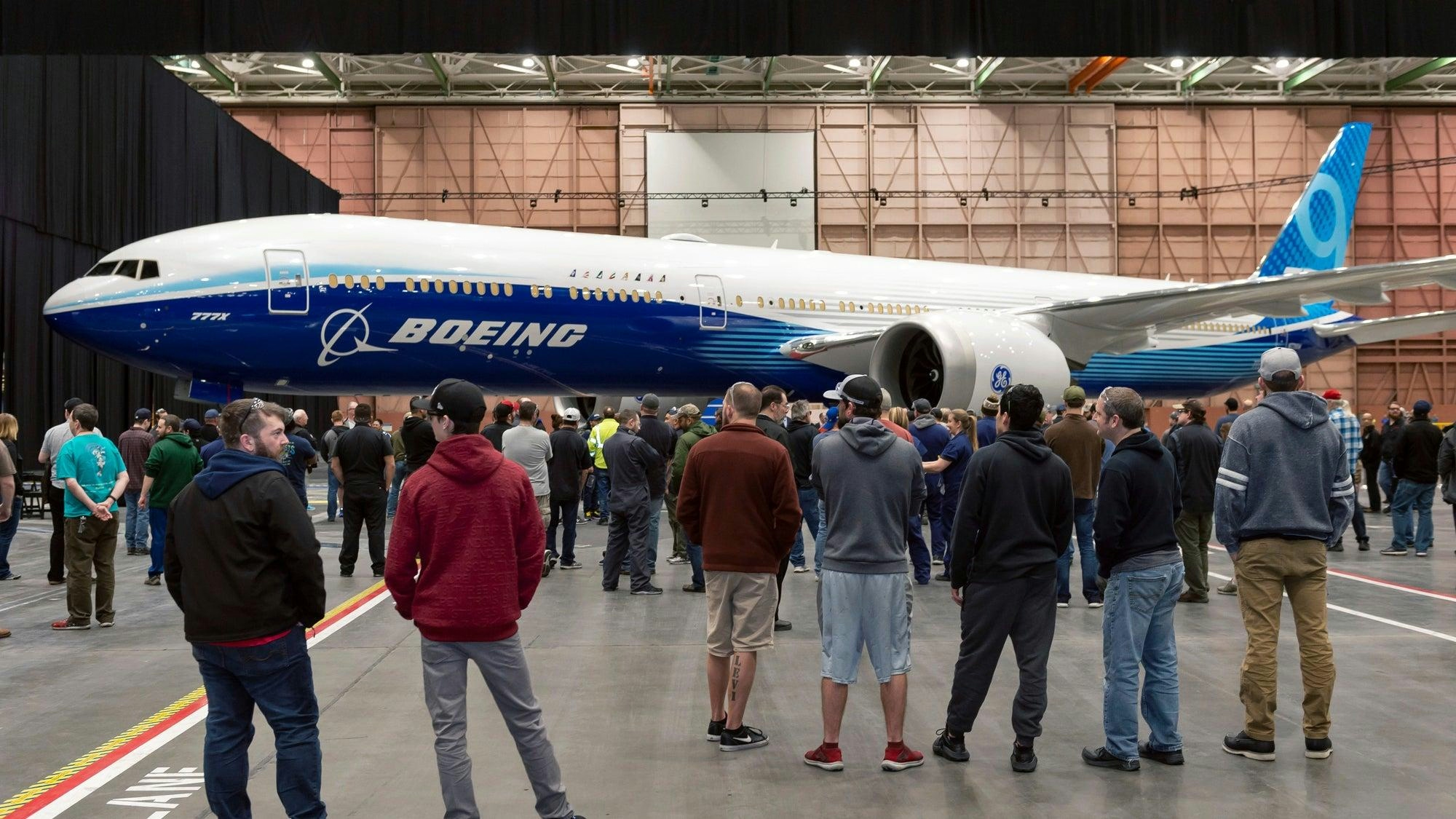
Why the Boeing 777X Is Limited to a Single Engine Type

Why the Boeing 777X Is Limited to a Single Engine Type The Boeing 777X, poised to enter service in the coming years, will be powered exclusively by the GE Aerospace GE9X turbofan. This decision marks a significant shift from earlier Boeing 777 models, which offered airlines a choice among engines from General Electric, Pratt & Whitney, and Rolls-Royce. The move to a single engine supplier reflects broader industry trends and the specific circumstances surrounding the 777X program. A Shrinking Pool of Engine Suppliers The widebody aircraft engine market is currently dominated by just three major manufacturers: GE Aerospace, Rolls-Royce, and Pratt & Whitney. Unlike the 1990s, when airlines could select from multiple engine options for new aircraft, the development of bespoke engines for a limited market has become increasingly impractical. The 777X targets a specialized segment, with 565 firm orders as of late 2025. Notably, approximately half of these orders come from two airlines—Emirates and Qatar Airways—both longstanding customers of GE engines. The substantial cost of developing a new engine capable of producing around 100,000 pounds of thrust presents a formidable barrier. For Rolls-Royce or Pratt & Whitney, the limited sales potential of the 777X makes the investment difficult to justify. Even if a second engine option were developed, it remains uncertain whether sufficient airline demand would exist to recoup the development expenses. Industry Relationships and Standardization Boeing’s longstanding partnership with GE Aerospace has also been a decisive factor. Airlines often prefer to standardize their fleets with engines from a single manufacturer to simplify maintenance and capitalize on existing supplier relationships. The 777X is designed as the successor to the 777-300ER and 777-200LR, both exclusively powered by GE engines. This continuity streamlines operations for major customers such as Emirates and Qatar Airways. In contrast, Boeing’s 787 Dreamliner offers two engine options, partly to compete directly with Airbus and to appeal to a broader range of airline preferences. However, the 777X’s more specialized market and established customer base have made a single-engine strategy more practical and economically viable. Competitive Pressures and Market Dynamics The decision to rely solely on the GE9X engine comes amid intensified competition and evolving market dynamics. Airbus, Boeing’s chief competitor, recently encountered quality issues with its A320 family, highlighting the risks associated with complex supply chains. Meanwhile, Emirates, one of the largest customers for the 777X, has publicly expressed frustration over program delays but remains committed to operating both Boeing and Airbus fleets. Looking forward, emerging players such as China’s Comac are beginning to challenge established aerospace manufacturers, adding further complexity to the competitive landscape. Boeing’s position remains fluid, with its stock price reacting to delivery figures, regulatory developments, and ongoing Federal Aviation Administration certification efforts for the 777X. The company aims to secure certification in 2026 and commence service in 2027. The exclusive use of the GE9X engine on the 777X thus reflects a confluence of economic considerations, strategic partnerships, and market realities shaping the future of commercial aviation.
Malaysia Aviation Group Announces Long-Term Business Plan

Malaysia Aviation Group Announces Long-Term Business Plan

Malaysia Aviation Group Announces Ambitious Five-Year Growth Strategy Malaysia Aviation Group (MAG) has unveiled its Long-Term Business Plan 3.0 (LTBP3.0), a comprehensive five-year roadmap spanning 2026 to 2030. The plan is designed to enhance the group’s competitive standing and foster sustainable growth across its aviation ecosystem. This new strategy builds upon the successes of LTBP2.0, introduced in 2020 during MAG’s financial restructuring, which notably reduced liabilities by over RM15 billion and eliminated RM10 billion in legacy debt. Since then, the group has recorded its strongest performance in more than a decade. Progress and Achievements Under LTBP2.0 Since the implementation of LTBP2.0, MAG has achieved three consecutive years of operating profit and two years of positive net income after tax. The group’s Customer Satisfaction Index (CSI) has improved to 84% year-to-date, up from 80% in 2024. Fleet modernization has been a key focus, with the acquisition of 22 next-generation aircraft, alongside route expansion and enhanced customer experience initiatives. Regional connectivity has been strengthened, particularly through Firefly’s jet operations realigned to KLIA Terminal 1 and the introduction of new ASEAN routes. MAG has also diversified its revenue streams, with non-air revenue now accounting for 18% of total group revenue. This growth is supported by strategic initiatives such as leasing Hangar 4 at Subang Airport to expand maintenance, repair, and overhaul (MRO) capacity. Digital innovation has played a significant role, with the development of an in-house middleware system and AI-powered customer support contributing to a 91% contact centre CSI, the highest among the group’s customer touchpoints. Datuk Captain Izham Ismail, Group Managing Director of MAG, emphasized the group’s resilience and ambition, stating, “The progress we have made under LTBP2.0 reflects the capability and resilience of our people across the Group, and it gives us the confidence to move into our next chapter with greater ambition. LTBP3.0 marks a shift from stabilisation to scaled and disciplined growth. It sharpens our premium position and deepens the value we create across our broader aviation ecosystem.” Strategic Objectives and Challenges Ahead Central to LTBP3.0 is a focused network and fleet strategy aimed at elevating Malaysia Airlines into Skytrax’s Top 10 Global Airlines by 2030, a significant leap from its current ranking of 27. The group targets doubling its topline revenue to over RM24 billion and achieving more than 60% growth in third-party revenue across its aviation services businesses. These ambitious goals are intended to strengthen MAG’s long-term financial resilience and enhance Malaysia’s global connectivity. However, the group faces critical decisions, particularly regarding the renewal of its widebody fleet, with a final determination expected by early 2026. This decision carries substantial financial and strategic implications and has elicited mixed reactions from the market. Competitors such as AirAsia are simultaneously advancing their fleet expansion plans, including the anticipated delivery of the A321LR in 2026, which may intensify regional competition. Compounding these challenges is an impending leadership transition, as Datuk Captain Izham Ismail prepares to step down. This change raises questions about operational continuity and investor confidence during the crucial implementation phase of LTBP3.0. Despite these uncertainties, MAG remains steadfast in its commitment to its long-term vision. Izham remarked, “It is a bold aspiration, perhaps a distant dream to some, but one we are fully committed to realising by building on what we have achieved, accelerating where we are strongest and investing strategically to secure long-term, sustainable value for our customers, partners and the wider nation.” With LTBP3.0, Malaysia Aviation Group aims to consolidate its position as a leading regional aviation player, navigating industry challenges while capitalizing on emerging opportunities for growth.
Hartzell Launches Sky-Tec Starter Line

Hartzell Launches Sky-Tec Starter Line

Hartzell Introduces Sky-Tec XP Series Starters for Experimental Aircraft Hartzell Engine Tech has announced the launch of its new Sky-Tec XP Series, a line of lightweight engine starters designed specifically for 12-volt electrical systems in experimental and home-built aircraft. Scheduled for global release by the end of the first quarter of 2026, the XP Series will be priced below $1,000, positioning it as an affordable option within the market. Targeting the Experimental and Home-Built Aircraft Segment Produced at Hartzell Engine Tech’s Montgomery, Alabama facility—the same site where the company manufactures its FAA-certified Sky-Tec products—the XP Series represents a new production line tailored exclusively for the experimental and home-built aircraft sector. Unlike the company’s certified starters, these new units will not carry FAA Form 8130 airworthiness certification, reflecting their intended use in non-certified aircraft. Marolous Cebulka, vice president of sales and marketing at Hartzell Engine Tech, emphasized the company’s commitment to accessibility and quality, stating that the Sky-Tec XP starters “make flying more affordable and accessible for the experimental market while maintaining the same engineering excellence that pilots have come to expect.” The starters are primarily designed for Lycoming-powered homebuilt aircraft, further extending the Sky-Tec brand’s reputation for innovation in starter technology. Market Context and Industry Challenges The introduction of the XP Series arrives amid a highly competitive market for experimental and home-built aircraft components. Hartzell faces established competitors and must leverage effective marketing strategies and product value to distinguish its new line. Furthermore, the aviation industry’s increasing focus on sustainability and climate resilience may present regulatory challenges and influence consumer preferences, potentially affecting demand for new products. Market reception of the XP Series will likely hinge on its perceived innovation and cost-effectiveness. Competitors may respond by upgrading their own offerings or launching new products, intensifying competition within this niche. Expanding the Sky-Tec Brand Portfolio The Sky-Tec brand, now under Hartzell Engine Tech, includes a diverse range of both legacy and modern starter designs. Beyond starters, Hartzell’s broader portfolio encompasses PowerUp ignition systems, Janitrol Plane-Power, and AeroForce Turbocharger Systems, serving general aviation as well as military markets. As Hartzell expands its product offerings, the impact of the Sky-Tec XP Series on the evolving landscape of experimental aircraft technology remains to be seen.
Boeing 777 Engine Failure Reported at Dulles Airport
Boeing 777 Engine Failure Reported at Dulles Airport

Boeing 777 Engine Failure at Dulles Airport Triggers FAA Investigation On December 15, a United Airlines Boeing 777-200ER experienced a significant engine failure during takeoff at Washington Dulles International Airport. The malfunction caused debris to ignite a brush fire near the runway, though no injuries were reported among passengers or crew. The incident has prompted an immediate investigation by the Federal Aviation Administration (FAA) and renewed attention on the safety of Boeing 777 engines. Details of the Incident and FAA Response The engine failure occurred as the United Airlines flight crew was preparing for departure. Thanks to the swift and decisive actions of the pilots, the aircraft was brought to a safe stop without further incident. Airport fire services responded promptly, containing the brush fire caused by engine debris. United Airlines confirmed that all safety protocols were effectively executed, ensuring the safety of everyone on board. In response, the FAA has initiated a thorough investigation focusing on the aircraft’s maintenance history and potential manufacturing defects. Given the Boeing 777’s prior record of engine-related issues, regulators are approaching the situation with heightened vigilance. There is a possibility that the FAA may impose temporary restrictions or grounding of Boeing 777-200ER aircraft pending the investigation’s outcome. The scrutiny is expected to extend to Boeing’s manufacturing and maintenance procedures as part of the inquiry. Implications for United Airlines, Boeing, and the Industry The incident presents immediate operational and financial challenges for United Airlines. The airline may be required to conduct additional inspections across its fleet, potentially disrupting flight schedules. Following the news, United’s stock price declined by 1.43% to $106.84, although it remains up 7.5% over the past year. Market analysts have maintained a ‘Neutral’ rating on United, with a consensus price target of $116.50. While short-term expenses may increase due to inspections and possible compensation claims, United’s financial position remains robust, supported by strong free cash flow and notable earnings growth. For Boeing, the event has intensified regulatory scrutiny and raised concerns among investors. The company’s stock experienced a temporary decline as safety worries resurfaced. Should the FAA investigation reveal systemic issues, Boeing could face broader reputational damage and potential impacts on its market share. Insurance claims related to the incident may also pose financial risks. Within the broader airline industry, the incident underscores ongoing challenges related to operational costs and regulatory compliance. United Airlines has demonstrated resilience, achieving nearly 20% earnings per share growth over the past year and maintaining a price-to-earnings ratio of 10.70, which suggests value for investors. Despite the current volatility, United’s long-term outlook remains positive, bolstered by efforts to improve operational efficiency and expand its route network. Competitors such as Airbus may stand to benefit if Boeing’s reputation is adversely affected, potentially gaining market share as airlines reconsider future aircraft acquisitions. The market continues to monitor the FAA’s investigation closely, awaiting regulatory decisions that could influence the competitive landscape. The Boeing 777 engine failure at Dulles represents a critical juncture for both United Airlines and Boeing. The FAA’s findings will be instrumental in determining accountability and shaping future safety standards, with significant implications for both companies’ operational and financial trajectories.
Austrian Airlines Transfers Embraer Fleet to Air Dolomiti

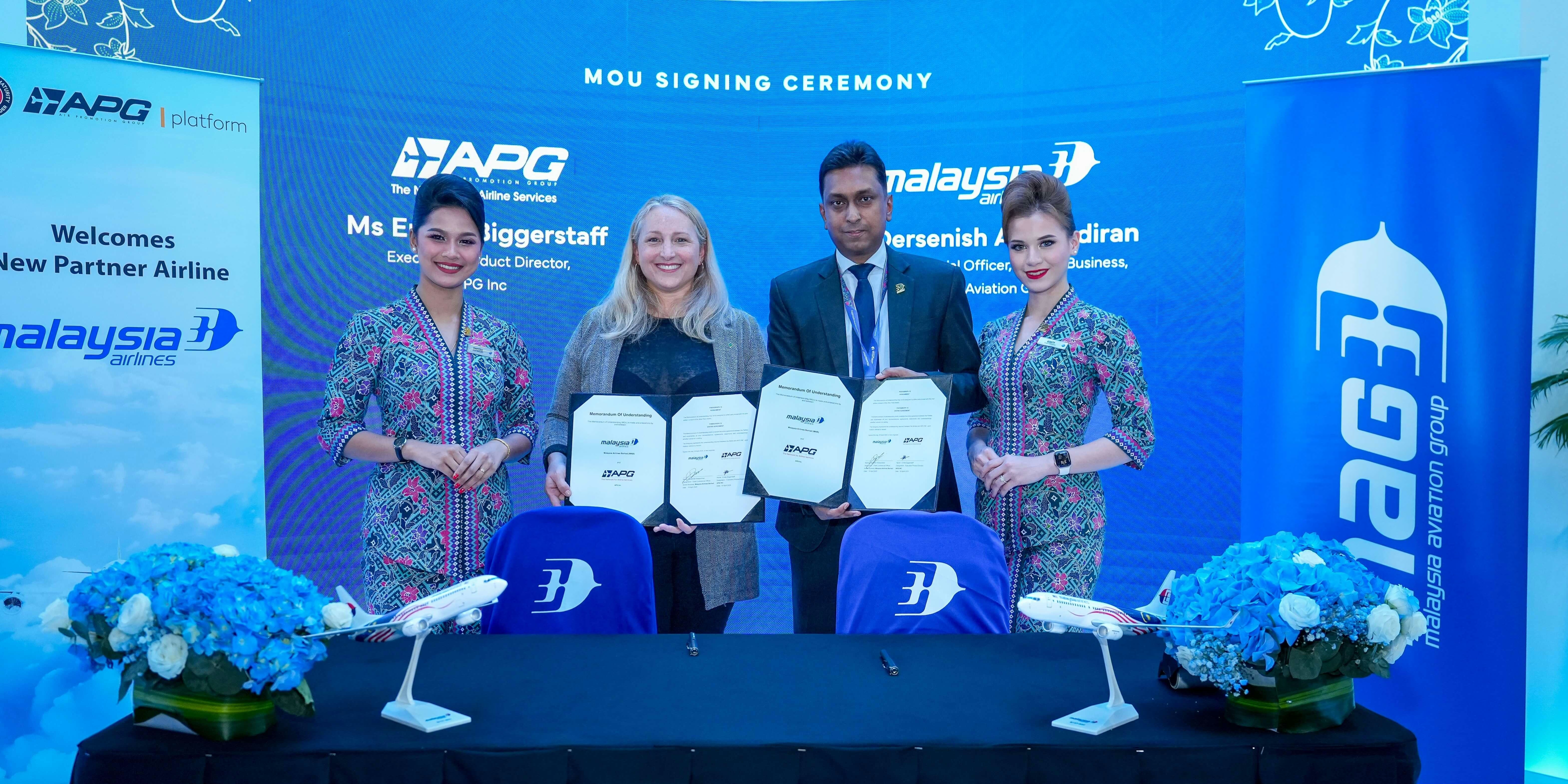
Austrian Airlines Transfers Embraer Fleet to Air Dolomiti

Austrian Airlines Transfers Embraer Fleet to Air Dolomiti Amid Strategic Renewal Austrian Airlines has initiated the transfer of its Embraer 195 aircraft to its Italian subsidiary, Air Dolomiti, marking a pivotal phase in the airline’s comprehensive fleet renewal program. The first aircraft to complete this transition, formerly registered as OE-LWM and now operating under the registration I-ENJA, joined Air Dolomiti’s fleet on December 12. This transfer signals the beginning of Austrian’s plan to phase out all seventeen Embraer 195 jets by the end of 2028. Fleet Transition and Operational Strategy According to the current schedule, thirteen of the Embraer 195s will be absorbed into Air Dolomiti’s operations, while the remaining four are earmarked for sale starting in early 2026. The process is set to continue with a second Embraer 195 leaving Austrian’s fleet in February. This reshuffling forms part of Austrian Airlines’ broader strategy to streamline its fleet composition, reducing the number of aircraft types from five to two primary models: the Airbus A320 family and the Boeing 787-9. As part of this modernization effort, Austrian plans to introduce six new Airbus A320neo family aircraft beginning in the summer of 2026, augmenting its existing narrowbody fleet of approximately forty Airbus planes. Concurrently, the airline will take delivery of ten Boeing 787-9 Dreamliners by the end of 2028, enabling the retirement of its older widebody aircraft, including three Boeing 767-300ERs and seven Boeing 777-200ERs. Historical Role and Challenges of the Embraer 195 Fleet The Embraer 195 jets have been integral to Austrian’s regional operations since their introduction in January 2016, when they replaced the airline’s former Fokker fleet. Notably, the fourth Embraer 195 delivered, known as “Whisky Mike,” entered service in April 2016 and accumulated over 21,400 flight hours before its recent retirement. The transfer of the Embraer fleet to Air Dolomiti presents a series of operational and financial challenges. Coordinating the logistics of moving regional jets between carriers requires meticulous planning and may result in additional costs. Market responses to the transition have been mixed; while some investors regard the move as a strategic optimization of fleet utilization within the Lufthansa Group, others express concern over the financial implications of phasing out the Embraer aircraft. Market Implications and Competitive Landscape The fleet realignment is also attracting attention from competitors. LATAM Airlines Group, for instance, is preparing to introduce new premium fleet types and may view Austrian’s transfer as an opportunity to further distinguish its own market offerings. This shift could alter competitive dynamics within the regional jet segment, influencing positioning and market share. Despite the complexities involved, Austrian Airlines asserts that its fleet renewal and simplification strategy will ultimately enhance operational efficiency and strengthen the carrier’s prospects for future growth.
Airbus and Ingenium Open Aerospace Innovation Lab in Ottawa

Airbus and Ingenium Open Aerospace Innovation Lab in Ottawa

Airbus and Ingenium Establish Aerospace Innovation Lab in Ottawa Airbus and Ingenium—Canada’s Museums of Science and Innovation—have announced a strategic partnership aimed at inspiring and equipping the next generation of Canadian aerospace innovators. Central to this collaboration is the launch of the Simulation Training and Research (S.T.a.R.) Lab at Ingenium’s Canada Aviation and Space Museum in Ottawa. The lab is designed to offer youth immersive, hands-on learning experiences that will influence the future of aerospace education and technological advancement. A Hub for Innovation and Experiential Learning The S.T.a.R. Lab will function as a dynamic and adaptable environment fostering creativity and practical skill development. A key feature of the initiative is a mentorship program where college students will lead the design and testing of a gamified simulation experience, collaborating closely with secondary school students. Industry professionals will provide guidance throughout the process, ensuring the creation of authentic digital learning tools accessible to school groups and the general public. Chris Kitzan, director general at the Canada Aviation and Space Museum, highlighted the natural alignment between the two organizations’ missions. He stated, “Ingenium is proud to partner with Airbus in a shared commitment to inspire and empower the next generation of aerospace innovators. Our collaboration amplifies our dedication to innovative learning spaces where students can experiment, design, and solve real-world challenges, connecting youth with the science and technology shaping their world.” Guillaume Chevasson, CEO of Airbus in Canada, underscored the company’s dedication to nurturing Canadian aerospace talent. He noted, “Airbus is a major employer of over 5,000 people in Canada, anchored by the A220—the only commercial aircraft program manufactured here. Our strategic partnership with Ingenium is an investment in youth, providing the essential skills and mentorship needed to innovate. We are excited by the potential of the S.T.a.R. Lab to shape tomorrow’s industry leaders.” Context Amid Industry Challenges The inauguration of the S.T.a.R. Lab coincides with a challenging period for Airbus. The company is currently addressing a fuselage quality issue affecting certain A320 jets, which has contributed to weaker-than-anticipated deliveries in November and ongoing evaluations for December. Furthermore, a significant software recall involving approximately 6,000 A320 family aircraft has raised concerns about the resilience of aviation software systems. These operational difficulties have resulted in a decline in Airbus’s stock price and increased scrutiny from investors, with industry analysts closely monitoring how the company will navigate these setbacks and fulfill its year-end delivery commitments. Despite these hurdles, Airbus’s collaboration with Ingenium reflects its sustained commitment to the future of Canadian aerospace. By investing in education and innovation, the partnership aims to cultivate the next generation of aerospace leaders and maintain Canada’s position in the global aerospace industry.
Merlin Labs: AI Aviation Company with SPAC Downside Protection
Merlin Labs: AI Aviation Company with SPAC Downside Protection

Merlin Labs: AI Aviation Company with SPAC Downside Protection Investment Opportunity Through Inflection Point Acquisition Corp. IV Inflection Point Acquisition Corp. IV (BACQ) offers investors a distinctive opportunity to gain exposure to Merlin Labs, an artificial intelligence-driven aviation company, while mitigating risk until the proposed merger is finalized. This arrangement, characteristic of special purpose acquisition companies (SPACs), enables investors to benefit from potential upside in Merlin Labs’ growth prospects while retaining the option to redeem shares if the transaction does not proceed. Merlin Labs operates at the forefront of AI-enabled aviation solutions, focusing on automating aircraft operations and accelerating procurement and production processes. This strategic positioning aligns with the broader adoption of artificial intelligence across various industries, particularly in sectors undergoing rapid technological transformation. However, the company faces significant challenges that could affect its growth trajectory and investor confidence. Risks and Market Dynamics The aviation and technology sectors remain vulnerable to fluctuating economic, political, and business conditions, all of which could influence Merlin Labs’ performance. There is also the risk that the business combination agreement may be terminated, which would impact investor returns. Furthermore, Merlin Labs must successfully execute its ambitious growth strategy amid a competitive landscape populated by both established players and emerging entrants. Competitor responses will likely depend on Merlin Labs’ market positioning and strategic initiatives. As AI-driven solutions become increasingly prevalent in aviation, incumbent companies and new market participants are expected to adjust their approaches in response to Merlin Labs’ advancements. The broader market environment, including sector-specific factors such as the pace of AI-enabled procurement and production, will play a critical role in shaping investor sentiment and competitive dynamics. Implications for Investors For investors, BACQ presents a unique trade setup by offering downside protection inherent in the SPAC structure until the merger is completed. This allows participation in Merlin Labs’ potential growth without fully committing capital until greater certainty is established. Such an approach may appeal to those seeking exposure to cyclical industries and innovative technologies while maintaining a balanced risk profile. As with any investment, thorough due diligence is essential. The ultimate success of the BACQ-Merlin Labs merger and the company’s future performance will depend on its ability to navigate market challenges, implement its strategic vision, and respond effectively to competitive pressures in a rapidly evolving sector.
Heli-One Extends AW101 Search and Rescue Support in Norway
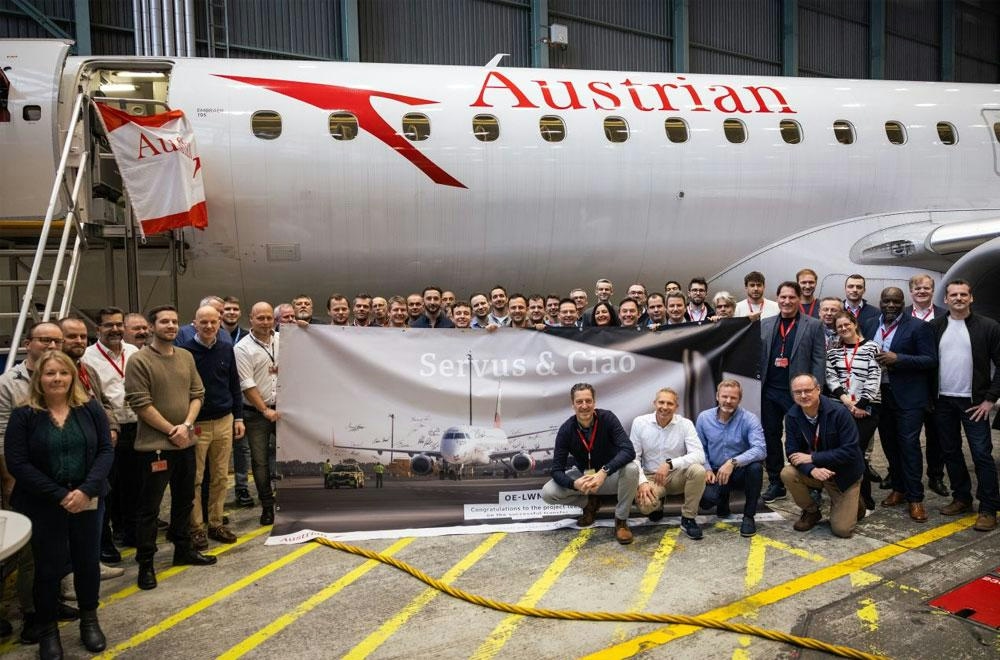
Heli-One Extends AW101 Search and Rescue Support in Norway

Heli-One Extends AW101 Search and Rescue Support in Norway Heli-One, a prominent global provider of helicopter maintenance, repair, and overhaul (MRO) services, has announced the extension and expansion of its support contract with Leonardo for Norway’s All-Weather Search and Rescue Helicopter (NAWSARH) programme. The renewed agreement ensures that Heli-One will continue delivering comprehensive MRO services for the Royal Norwegian Air Force’s fleet of AW101 SAR Queen helicopters through 2030, maintaining a close partnership with Leonardo. Sustaining Norway’s Critical Search and Rescue Capability The contract encompasses the entire operational fleet of 16 AW101 SAR Queen helicopters, all of which have been fully delivered and are actively deployed across Norway. These aircraft are integral to the country’s national emergency response system, undertaking complex search and rescue missions in some of the world’s most challenging climatic conditions. The reliability and availability of these helicopters are vital to saving lives and preserving national readiness. A defining feature of the NAWSARH programme has been its collaborative framework, which unites government agencies, the original equipment manufacturer, and specialist MRO providers. The extension of this agreement further strengthens this partnership model, widely recognized as a benchmark for effective cooperation within the aerospace sector. Operational Challenges and Industry Impact Under the terms of the contract, Heli-One’s experienced Norwegian maintenance engineers will remain embedded at Royal Norwegian Air Force bases, working alongside Leonardo personnel. These joint teams are tasked with both scheduled and unscheduled maintenance, ensuring continuous fleet availability and rapid response capabilities. The extension also introduces new operational challenges. Maintaining the AW101 fleet’s readiness demands ongoing vigilance, particularly in ensuring the reliability of specialized equipment such as Unison tube benders, which are critical for Merlin helicopter maintenance. Additionally, Heli-One must navigate the evolving economic landscape of the insurance sector, which influences operational costs and risk management strategies. The market has responded to the contract extension with heightened interest in specialized maintenance equipment and services, reflecting the increasing demand for robust support solutions in the search and rescue domain. Competitors are anticipated to enhance their capabilities to remain competitive, potentially driving further innovation and investment across the industry. Heli-One supports both government and commercial helicopter operators worldwide, providing maintenance services for a variety of critical missions including search and rescue, offshore transport, and emergency services. Backed by its parent company, CHC Helicopter, Heli-One leverages decades of operational and technical expertise to deliver dependable, industry-leading MRO solutions even in the most demanding environments. With this extended agreement, Heli-One and its partners are well-positioned to sustain Norway’s search and rescue readiness while adapting to the technical and economic challenges ahead.
Falko Completes First Aircraft Sale in Japan

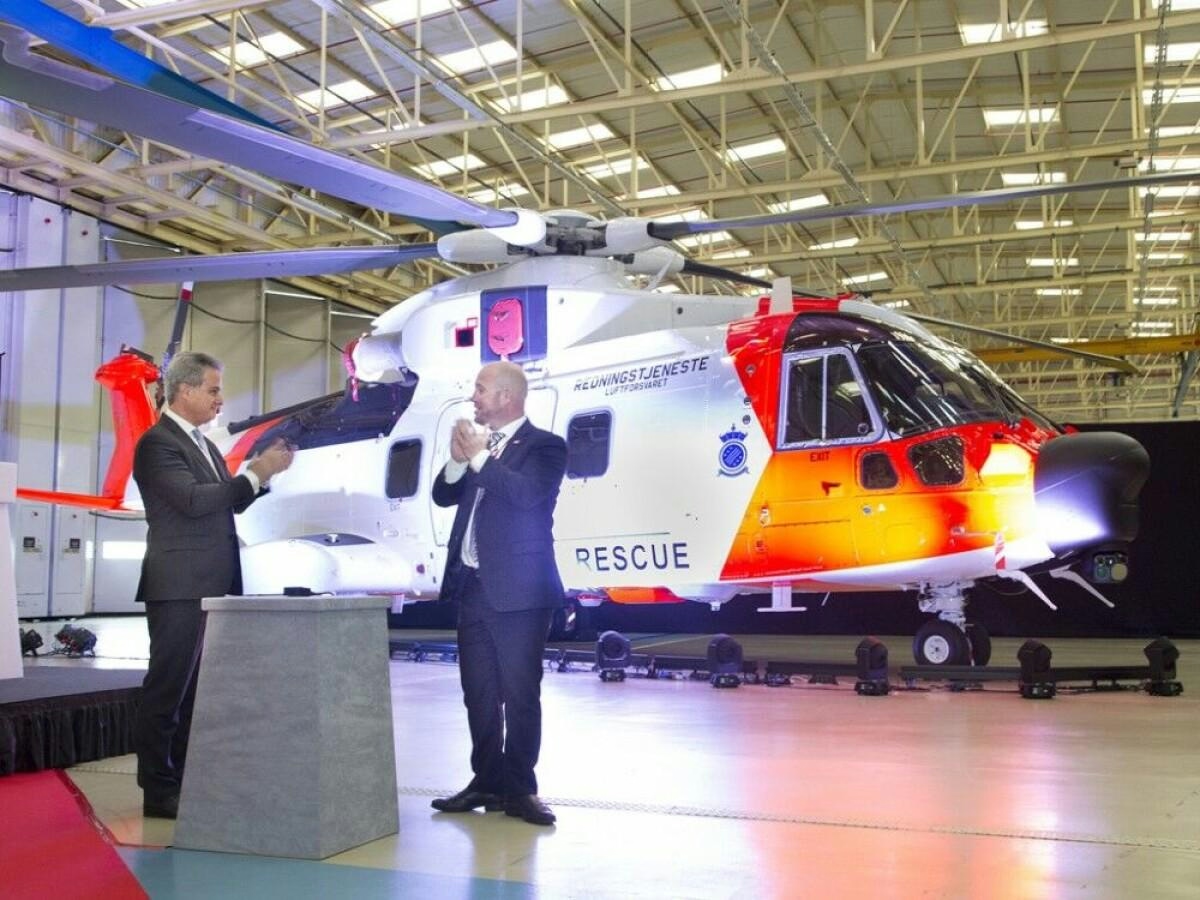
Falko Completes First Aircraft Sale in Japan

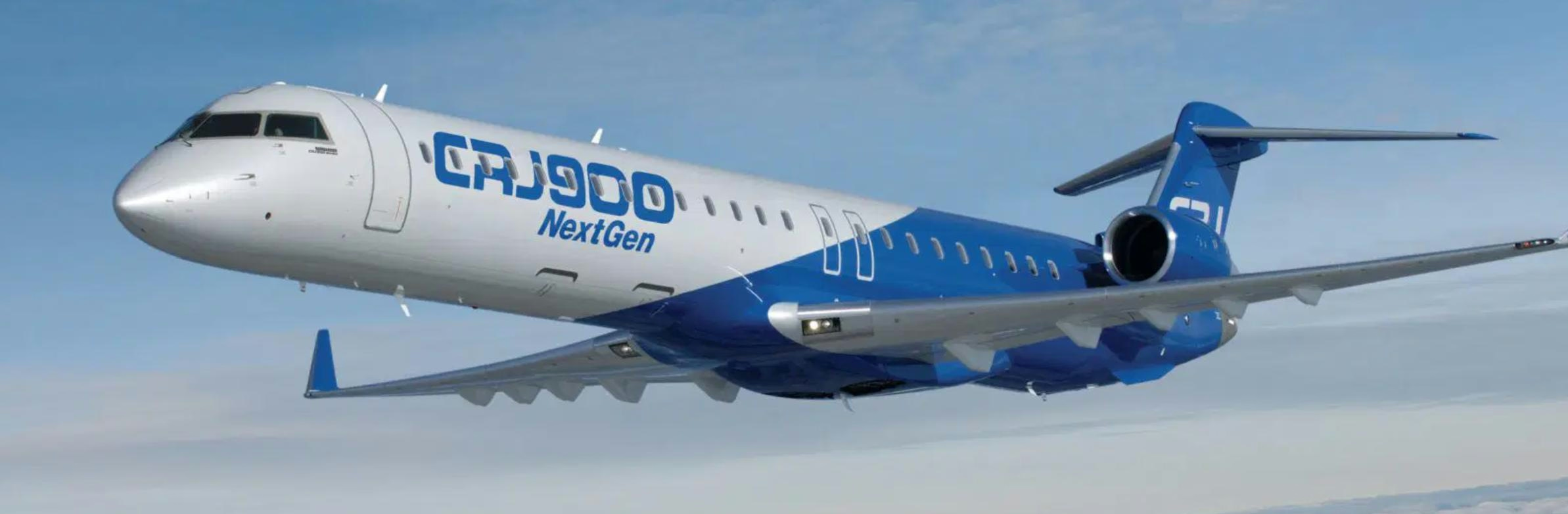
Falko Completes First Aircraft Sale in Japan Falko has successfully entered the Japanese market by completing its inaugural Japanese Operating Lease (JOL) transaction, selling a CRJ900 aircraft to a Japanese investor. This deal not only marks Falko’s debut in Japan but also stands out as one of the few CRJ900 placements structured under a JOL arrangement to date. Strategic Partnership and Market Entry The transaction was executed in collaboration with iStrings Aviation Capital Co., Ltd. (iStrings), forging a new partnership for Falko in the region. Brian Foley, Falko’s Head of Portfolio Strategy, highlighted the significance of this milestone, noting the traditionally narrow and widebody-focused investment landscape in Japan. Foley observed a rising interest among Japanese investors in smaller commercial aircraft, driven by the current economic environment and the comparatively lower capital requirements of such assets. He emphasized that the investment scale for used E-Jet, CRJ, and A220 aircraft aligns well with Japanese investor preferences, and Falko anticipates sustained momentum within the 50-150 seat aircraft segment, which remains its core focus. Hirotoshi Takezoe, Director at iStrings, underscored the CRJ900’s appropriateness for the expanding JOL market. He remarked that although regional jets have historically had limited presence in the JOL space, growing investor interest is emerging as the market broadens and diversifies. Takezoe stressed that partnering with a leading regional-jet asset manager like Falko enables iStrings to provide high-quality asset management services to JOL investors, a critical factor for long-term success. Market Challenges and Outlook Falko’s entry into Japan coincides with a highly competitive business jet market, where established players such as Bombardier and Boeing maintain strong footholds. As Falko seeks to expand its presence, it faces the challenge of differentiating its offerings in a market increasingly driven by advanced features and innovation. Industry analysts suggest that competitors may respond by enhancing their product lines or intensifying marketing efforts to safeguard their market share. Compounding these challenges, the recent 7.6-magnitude earthquake in Japan has introduced logistical and supply chain complexities for companies operating in the region. For Falko, this necessitates meticulous management to ensure timely aircraft delivery and robust after-sales support, as any disruptions could affect customer satisfaction and future business prospects. Despite these hurdles, both Falko and iStrings remain optimistic about their future collaboration and growth potential in the Japanese market. Foley expressed gratitude to the iStrings team for their professionalism throughout the transaction, emphasizing the importance of strong partnerships as Falko navigates the evolving landscape of Japanese aviation.
Joby Surpasses 50,000 Air Taxi Miles, Completes Fourth Global Demonstration

Joby Surpasses 50,000 Air Taxi Miles, Completes Fourth Global Demonstration

Joby Surpasses 50,000 Air Taxi Miles, Completes Fourth Global Demonstration Expanding Operational Milestones Joby Aviation, Inc. (NYSE: JOBY), a prominent developer of electric air taxis, has announced the successful completion of its fourth international flight demonstration of 2025 at Japan’s Fuji Speedway. Conducted over a week in partnership with Toyota Motor Company, the campaign featured 14 piloted flights and marked a significant milestone for the company. Over the past year, Joby’s fleet has logged more than 50,000 miles, effectively doubling its operational tempo compared to the previous year. This achievement coincides with Joby’s intensified efforts to secure Federal Aviation Administration (FAA) Type Certification, a crucial regulatory step ahead of its planned commercial passenger service launch in 2026. Throughout 2025, Joby completed over 850 flights worldwide, collecting extensive real-world performance data across key markets including the United States, Japan, and the United Arab Emirates. James “Buddy” Denham, Joby’s Chief Test Pilot, highlighted the scope of the company’s testing activities, stating, “2025 saw the most extensive and rigorous flight testing in our history. Flying in active, controlled airspace in three countries—from the California coastline to the iconic Fuji Speedway and the deserts of Dubai—has been a powerful showcase of Joby’s operational maturity.” Advancing Toward Certification and Commercial Operations In 2025 alone, Joby’s aircraft covered more than 9,000 miles and supported over 4,900 test points. The data gathered is instrumental in advancing the final stages of FAA certification, including the preparation of compliance documentation required for Type Inspection Authorization (TIA) flight testing scheduled for 2026. Joby reports that its aircraft already meets FAA airworthiness standards, and the company is in the process of finalizing operating and maintenance manuals in anticipation of commercial operations. Joby’s progress is further reinforced by its vertically integrated business model. The acquisition of Blade Air Mobility and the establishment of pilot training academies are strategic moves designed to strengthen its market position and streamline the transition to commercial service. Notably, during the Ryder Cup event in New York, Blade facilitated the transport of over 2,500 passengers, providing valuable insights into managing high-tempo passenger logistics—a critical component of Joby’s future service framework. Challenges and Competitive Landscape Despite these advancements, Joby faces considerable challenges. Market reactions remain mixed, with some investors optimistic about the potential of urban air mobility, while others remain cautious due to regulatory complexities and technological uncertainties. The competitive environment is intensifying, exemplified by rival Archer Aviation’s public denial of Joby’s allegations of corporate espionage and its continued promotion of its own progress in the sector. Joby’s pursuit of FAA certification is further complicated by ongoing litigation and the inherent difficulties of introducing a new category of aircraft to the market. Nonetheless, the company’s sustained operational momentum and global demonstration campaigns underscore its commitment to overcoming these obstacles as it aims to launch commercial air taxi services in cities worldwide. About Joby Aviation Joby Aviation, Inc. is a California-based transportation company focused on developing all-electric, vertical take-off and landing (eVTOL) air taxis. The company aims to provide fast, quiet, and convenient urban air mobility services on a global scale.
Ask AeroGenie