
image

AeroGenie — 您的智能副驾驶。

询问一切。分析一切。立即行动。

热门趋势

Categories

Joby’s Hybrid VTOL Partnership Aims to Secure Pentagon Funding
September 16, 2025By ePlane AI
Joby’s Hybrid VTOL Partnership Aims to Secure Pentagon Funding
0
0
Joby Aviation
Hybrid VTOL
Pentagon Funding

Joby’s Hybrid VTOL Partnership Aims to Secure Pentagon Funding

Expanding Horizons Beyond Urban Air Mobility

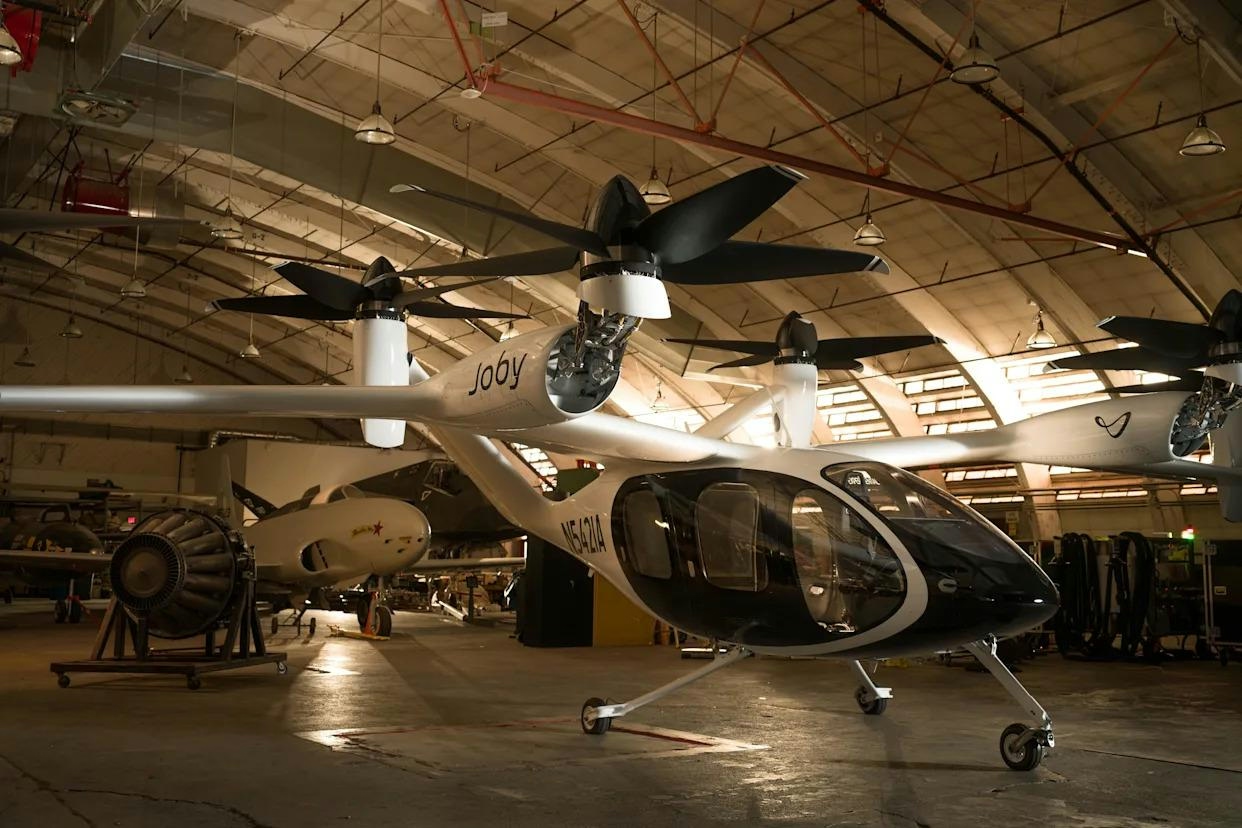
Joby Aviation Inc. (NYSE: JOBY) is broadening its strategic focus beyond the commercial urban air taxi market by targeting significant Pentagon funding. The company has announced a partnership with L3Harris Technologies Inc. (NYSE: LHX) to compete for a share of the U.S. Department of Defense’s proposed $9.4 billion budget for autonomous and hybrid aircraft in 2026. This collaboration signals Joby’s intent to leverage its technological capabilities within the defense sector, marking a notable shift in its growth trajectory.

Dual-Use Technology and Hybrid VTOL Development

Joby’s ongoing engagement with the Department of Defense has already validated its autonomous flight technology, which the company characterizes as “dual-use,” serving both commercial and military applications. This approach not only opens avenues for defense logistics contracts but also offers potential cost efficiencies for Joby’s commercial air taxi operations. The partnership with L3Harris represents a strategic move into the development of hybrid vertical take-off and landing (VTOL) aircraft. These platforms are engineered for low-altitude missions and feature optional piloting capabilities, providing operational flexibility that distinguishes Joby from many of its competitors.

Pentagon Funding Opportunity and Market Response

The timing of Joby’s pivot to defense contracts aligns with the Pentagon’s substantial budget allocation for autonomous and hybrid aircraft in 2026. Joby’s hybrid VTOL technology positions the company to capture a portion of this funding, presenting a diversification opportunity for investors. Defense contracts could offer a more stable revenue stream alongside the company’s primary commercial air taxi business. Market sentiment has responded positively, particularly following Joby’s recent $125 million agreement with Blade and its integration with Uber, both expected to accelerate the rollout of its air taxi services. The prospect of securing Pentagon contracts has further bolstered investor confidence and contributed to upward momentum in Joby’s stock performance.

Challenges and Competitive Pressures

Despite these promising developments, Joby faces significant challenges. Regulatory complexities and technological uncertainties remain critical hurdles, as underscored by the company’s recent autonomous flight demonstration for the Department of Defense. Successfully overcoming these obstacles will be essential for Joby to secure military contracts and scale its hybrid VTOL technology effectively. The competitive environment is also intensifying, with rivals such as Archer Aviation actively pursuing defense partnerships, building on initiatives like the Trump administration’s trial program to expedite electric air taxi development. Additionally, companies like Ascendance are advancing in hybrid-electric VTOL technology, increasing competitive pressure on Joby.

Emerging Defense Business as a Growth Driver

While Joby continues to emphasize its commercial air taxi service as the core of its business, defense partnerships are rapidly becoming a critical technology proving ground and a potential secondary growth pillar. The involvement of L3Harris underscores the seriousness of Joby’s military ambitions. Should Pentagon contracts materialize, the defense segment could contribute to revenue growth and positively impact the company’s stock performance sooner than anticipated.

More news
Air Taxis Are Not a Viable Solution to Broward’s Traffic Problems

Air Taxis Are Not a Viable Solution to Broward’s Traffic Problems

Air Taxis Are Not a Viable Solution to Broward’s Traffic Problems On December 3, the Sun Sentinel published an article titled “Air taxi developer planning commuter network,” which unfortunately resembled more of a promotional piece than a critical examination of the proposal. While air taxis are frequently promoted as a remedy for traffic congestion, the reality is that they would primarily serve a wealthy, well-connected minority, leaving the majority of Broward County residents to contend with persistent gridlock. Economic and Practical Limitations The assertion that air taxi fares will be “comparable in price to ground transportation” strains credibility. Comparable to what exactly—chauffeured luxury vehicles? History is replete with transportation innovations that have been overhyped and failed to deliver on their promises. Examples include Elon Musk’s Hyperloop, which critics argue was more a tactic to undermine California’s high-speed rail project than a feasible alternative, and Uber’s initial strategy of drastically undercutting taxi prices to eliminate competition before raising fares. Similarly, venture-backed “pod-based” automated vehicles have yet to fulfill their transformative potential. The article missed a crucial opportunity to scrutinize the financial realities of air taxis. The cost structure of operating multimillion-dollar vertical takeoff and landing (VTOL) aircraft is substantial. It is difficult to envision how trips carrying four non-wealthy passengers could cover these expenses. Even under optimistic assumptions—operating every 10 minutes for 18 hours daily, amounting to 216 flights per day, each at full capacity—air taxis would transport only 432 people. By comparison, a single arterial road accommodates between 30,000 and 60,000 vehicles daily, and Tri-Rail serves approximately 16,000 riders each day. Clearly, air taxis lack the scalability required to address Broward’s transportation demands. Infrastructure, Regulation, and Market Realities Beyond economic concerns, significant obstacles remain in making air taxis a practical solution. Infrastructure development, regulatory approval, safety considerations, and public acceptance all present formidable challenges. Market responses have been mixed; while some investors and observers see potential, many remain skeptical about the ability of air taxis to fulfill their ambitious objectives. Even among industry competitors, strategies vary considerably. For instance, Archer Aviation is concentrating on business aviation infrastructure rather than mass transit applications. Recent developments highlight that although air taxis may hold promise, they remain unproven as a solution to real-world congestion. The Case for Established Public Transit Meanwhile, proven transportation solutions already exist. Trains and buses offer time-saving and cost-effective relief that Broward residents urgently need. The bus network primarily serves lower-income riders, largely because it is not a viable option for those who can afford to drive. Enhancing public transit benefits the entire community, not just its users. Increased ridership reduces the number of cars on the road, thereby decreasing traffic congestion, pollution, accidents, and associated healthcare costs. Additionally, property values tend to rise in areas well-served by transit. The transportation surtax approved by Broward voters was intended to improve these systems, yet questions persist regarding the allocation of these funds. Concerns have been raised about whether the transit budget has been supplanted by surtax revenues, similar to how lottery funds have sometimes replaced education budgets. Furthermore, $1 billion is being allocated to a new commuter rail line projected to serve only 1,000 daily riders. In contrast, Tri-Rail, despite facing political funding challenges, effectively removes the equivalent of one lane of I-95 traffic every day. In sum, robust public transit systems provide widespread benefits, even to those who do not directly use them. Air taxis, by contrast, are unlikely to alleviate Broward’s traffic problems. Rather than investing in flashy and unproven technologies, efforts should focus on expanding and improving public transportation options that serve the entire community.
The Vision Jet and the Future of Personal Aviation

The Vision Jet and the Future of Personal Aviation

The Vision Jet and the Future of Personal Aviation The Cirrus Vision Jet is transforming the landscape of personal aviation by combining luxury, cutting-edge technology, and unparalleled safety features into the world’s first single-engine personal jet. Cirrus Aircraft offers comprehensive support to owners throughout the entire ownership experience, encompassing flight training, financing, and ongoing maintenance, thereby ensuring a seamless and premium journey from acquisition to operation. Luxury Meets Functionality The Vision Jet is distinguished by its spacious cabin, the largest in its class, made possible by a carbon fiber fuselage that maximizes interior volume. Passengers enjoy ample headroom and legroom, complemented by panoramic windows that enhance the sense of openness. The cabin’s design elevates travel into a comfortable and productive environment, with senior community manager Dale Huffstetler likening the experience to that of a luxury automobile. He notes, “The cabin is extremely roomy, particularly for the size of the aircraft. There are copious amounts of leg room.” The interior features high-end leather seating and modern amenities such as charging ports and in-flight entertainment systems, making it a preferred choice for both families and business travelers. The cabin is thoughtfully equipped to support work and relaxation alike, with an entertainment display that integrates with personal devices and a center console that serves as a functional workspace. Additional comforts include a pressurized cabin suitable for high-altitude flights, accent lighting, rear climate controls, and Gogo InFlight Wi-Fi, ensuring reliable connectivity throughout the journey. Pioneering Safety Innovations Cirrus has established new benchmarks in aviation safety through pioneering features like the Cirrus Airframe Parachute System (CAPS) and the Safe Return Emergency Autoland. CAPS, an FAA-approved whole-aircraft parachute system, can be deployed in emergencies to safely lower the entire jet to the ground. Huffstetler explains, “If the aircraft is broken, the Cirrus Airframe Parachute System is there in the event the aircraft cannot be landed safely.” The Safe Return Emergency Autoland system, powered by Garmin technology, automatically lands the aircraft if the pilot becomes incapacitated, further enhancing safety and accessibility. These innovations have garnered significant industry recognition, including the prestigious Robert J. Collier Trophy, and have set a new standard for personal aviation safety. Navigating Industry Challenges Despite its technological advancements and enhanced user experience, the Vision Jet and the broader personal aviation sector face considerable challenges. Regulatory changes, such as the United Kingdom’s extension of Air Passenger Duty to a wider range of business jet users, are driving up operational costs. Moreover, efforts to meet sustainable aviation fuel (SAF) targets are complicated by fragmented and costly government policies across Europe, sparking debate over the financial viability and effectiveness of SAF mandates within business aviation. These pressures have led some competitors, particularly in the electric vertical takeoff and landing (eVTOL) sector, to pivot away from passenger services toward logistics and drone operations. This strategic shift reflects a search for more sustainable business models amid evolving market conditions and regulatory landscapes. Looking Ahead As the Vision Jet continues to redefine luxury, safety, and connectivity in personal aviation, the industry must also confront regulatory and environmental challenges. The future of personal flight will hinge not only on technological innovation but also on the ability to navigate a complex and shifting policy and market environment.
Aircraft Leasing Market Expected to Grow Amid Changing Tourism and Fleet Demands

Aircraft Leasing Market Expected to Grow Amid Changing Tourism and Fleet Demands

Aircraft Leasing Market Set for Growth Amid Shifting Tourism and Fleet Demands The global aircraft leasing market is on track for significant expansion, driven by changing tourism patterns and airlines’ increasing need for operational flexibility. Valued at $87.97 billion in 2024, the market is expected to grow to $94.36 billion in 2025 and reach $155.61 billion by 2032, representing a compound annual growth rate (CAGR) of 7.39%. As passenger traffic rises and the tourism sector becomes more dynamic, leasing has emerged as a crucial strategy for airlines to swiftly adjust to fluctuating demand while advancing sustainability goals. Operational Flexibility and Fleet Expansion Airlines, especially those operating in major tourist destinations and regions with pronounced seasonal traffic, are turning to leasing to manage both long-term growth and short-term capacity fluctuations. Leasing enables carriers to expand or reduce their fleets without the burden of substantial upfront capital expenditure, offering agility in highly competitive and rapidly evolving markets. Both lessors and airlines are increasingly utilizing advanced asset management systems and data analytics to optimize fleet deployment and respond effectively to changing travel trends. Freighter Conversions and the Rise of E-Commerce A significant development reshaping the leasing landscape is the growing demand for narrowbody freighter conversions. This trend is largely propelled by the rapid expansion of the e-commerce sector and increased cargo volumes linked to tourism. Airlines are converting passenger aircraft into freighters to capitalize on new revenue opportunities, allowing lessors to diversify their portfolios and serve both passenger and cargo operators amid expanding global trade and travel. Technological Innovation and Sustainability Initiatives Digital transformation is further influencing the aircraft leasing sector. Innovations in digital asset management and predictive analytics are enhancing lease negotiations, minimizing aircraft downtime, and improving fleet utilization. Concurrently, lessors are increasingly offering green financing options, such as green bonds, to support environmentally sustainable leasing solutions. The industry’s commitment to sustainable aviation is reflected in the provision of more fuel-efficient aircraft and the integration of sustainable aviation fuel clauses in lease agreements, assisting airlines in meeting stringent carbon reduction targets. Emerging Challenges and Market Dynamics Despite promising growth, the aircraft leasing market faces notable challenges. Aviation insurers predict rising insurance premiums starting in 2026, following an anticipated record year for large losses in 2025. This development could increase costs for leasing companies, necessitating strategic adjustments in pricing and risk management across the sector. Furthermore, the regional aircraft fleet in the Middle East is projected to more than double by 2044, intensifying competition and demand for leasing services. Globally, the commercial aircraft fleet is also expected to double by the same year, prompting a comprehensive replacement cycle and a transition toward sustainable propulsion technologies. These evolving dynamics are likely to influence leasing strategies, profitability, and the types of aircraft in demand. Outlook As the aviation industry contends with rising demand, sustainability imperatives, and emerging risks, aircraft leasing is poised to remain a fundamental component of airline fleet management. The sector’s capacity to adapt to technological advancements, regulatory changes, and shifting market conditions will be pivotal in determining its future trajectory.
Pentagram Designs Identity for eVTOL Company Vertical Aerospace
Pentagram Designs Identity for eVTOL Company Vertical Aerospace

Pentagram Designs Identity for eVTOL Company Vertical Aerospace Renewed Momentum in eVTOL Development Aviation technology is often characterized by protracted development timelines, with groundbreaking innovations frequently taking decades to materialize. The electric vertical take-off and landing (eVTOL) sector, long anticipated as the next frontier in urban mobility, has experienced renewed vigor in 2025, driven in part by intensifying competition from China. While several early contenders such as Volocopter and Lilium have withdrawn from the race, Vertical Aerospace remains steadfast in advancing its ambitious vision. Based in Bristol, Vertical Aerospace is preparing to unveil its latest eVTOL aircraft, the Valo, on December 10 in London. The company seeks to distinguish itself from competitors including Joby, Archer, and Beta by combining innovative aircraft design with a clear certification strategy, a robust business model, and a seasoned leadership team. The Valo builds upon insights gained from the VX4 prototype and incorporates feedback from piloted test flights and operators. It is specifically engineered to serve early commercial routes, with a focus on airport-to-city center connections. Strategic Focus and Industry Partnerships Vertical Aerospace is prioritizing safety, reliability, and professionalism over large-scale infrastructure development. The company recently secured a pre-order agreement with Héli Air Monaco for the Valo, which aims to achieve airliner-level safety certification by 2028. Collaborations with Skyports Infrastructure and Bristow, a helicopter operator with six decades of experience, are instrumental in paving the way for commercial operations as early as the first quarter of 2029. Pentagram’s Role in Shaping the Brand Identity To articulate its vision and reinforce its market positioning, Vertical Aerospace engaged the internationally acclaimed design agency Pentagram. Under the leadership of Angus Hyland, Pentagram developed a comprehensive brand identity encompassing both the company and the Valo aircraft. This refreshed branding spans all customer touchpoints, including digital applications, billboards, and aircraft liveries, achieving a balance between futuristic innovation and grounded professionalism. At the heart of the new identity is Vertical’s distinctive hummingbird logo, symbolizing the core capabilities of vertical take-off, hovering, and flight. Pentagram refined the logo to be less abstract and more closely aligned with the sleek contours of the Valo aircraft. The updated wordmark, set in the Universal Sans typeface, conveys a modern, technical, and engineered aesthetic. The Valo Aircraft and Market Prospects The Valo is a piloted rotorcraft designed to transport four passengers over distances up to 100 miles at speeds reaching 150 miles per hour. Vertical Aerospace is targeting high-demand routes such as the journey from London’s Canary Wharf to Heathrow Airport—a trip that typically takes nearly an hour by car or train but could be completed in just 12 minutes by the Valo. With its revitalized brand identity, strategic partnerships, and a clear certification roadmap, Vertical Aerospace is positioning itself at the forefront of the eVTOL industry. The upcoming unveiling in London will represent a pivotal moment in the company’s efforts to redefine urban air mobility.
Gama Aviation Expands Services with New Paintshop at Staverton
Gama Aviation Expands Services with New Paintshop at Staverton

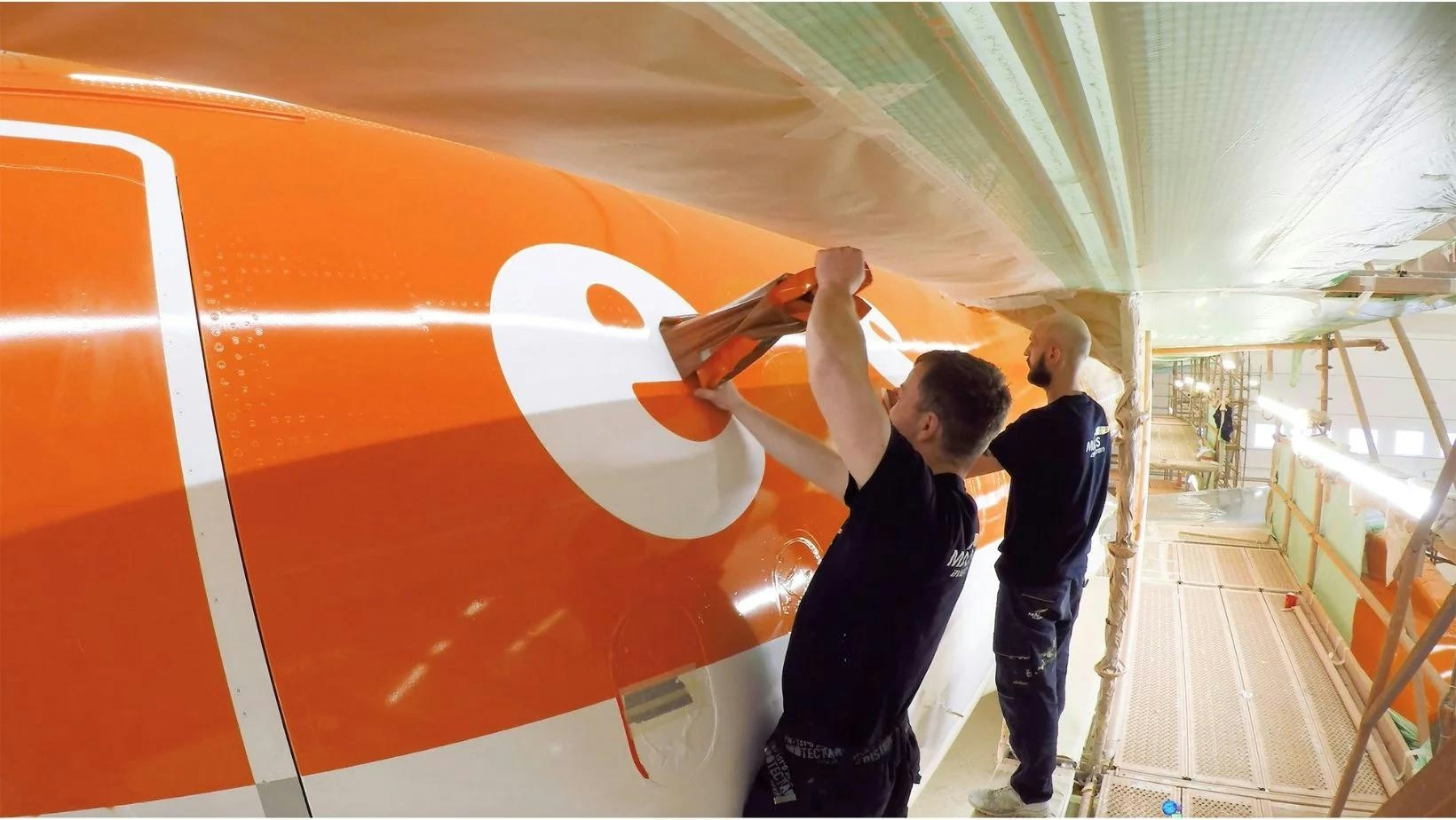
Gama Aviation Expands Services with New Paintshop at Staverton Gama Aviation is preparing to launch a new paintshop at its UK Rotary Centre of Excellence in Staverton, with operations expected to commence in January 2026. The facility will offer refinishing, repainting, and livery services specifically tailored for Leonardo AW169, AW139, and Airbus H145 helicopter platforms. This new addition will be integrated with Gama’s existing Part-145 maintenance, avionics, and interior modification services, reinforcing the company’s objective to provide a comprehensive, end-to-end service experience for its clients. Advanced Facility and Expertise The paintshop, measuring 16 by 8 metres, is equipped with specialist lighting and optimized airflow management systems to support a wide range of services, from minor panel refinishing to full aircraft repaints. Customers will benefit from aviation-approved colour matching and bespoke paint scheme development, overseen by a senior rotary paint specialist with over three decades of industry experience. This expertise is expected to enhance the quality and precision of the refinishing work, aligning with the high standards demanded in the rotary aviation sector. Operational and Market Challenges While the expansion represents a significant advancement for Gama Aviation, it also introduces several operational challenges. The integration of the paintshop may lead to increased operational costs and potential delays as the company adjusts to new workflows and fluctuating demand. Additionally, the move is likely to attract close scrutiny from competitors and customers alike, who will be attentive to any changes in pricing structures and service quality. In response, competitors may seek to bolster their own service offerings or negotiate more favourable terms with suppliers to maintain their market positions. This dynamic could intensify competition within the sector, as companies strive to differentiate their capabilities and secure client loyalty. Compounding these challenges, recent industry forecasts indicate that aviation insurance premiums are expected to rise starting in 2026. This anticipated increase could further impact Gama Aviation’s cost base and influence its pricing strategies for the new paintshop services. Despite these potential headwinds, Gama Aviation’s investment in the Staverton facility highlights its commitment to broadening its service portfolio and reinforcing its standing in the rotary aviation market.
MAAS Aviation and easyJet Renew Aircraft Painting Contract
MAAS Aviation and easyJet Renew Aircraft Painting Contract

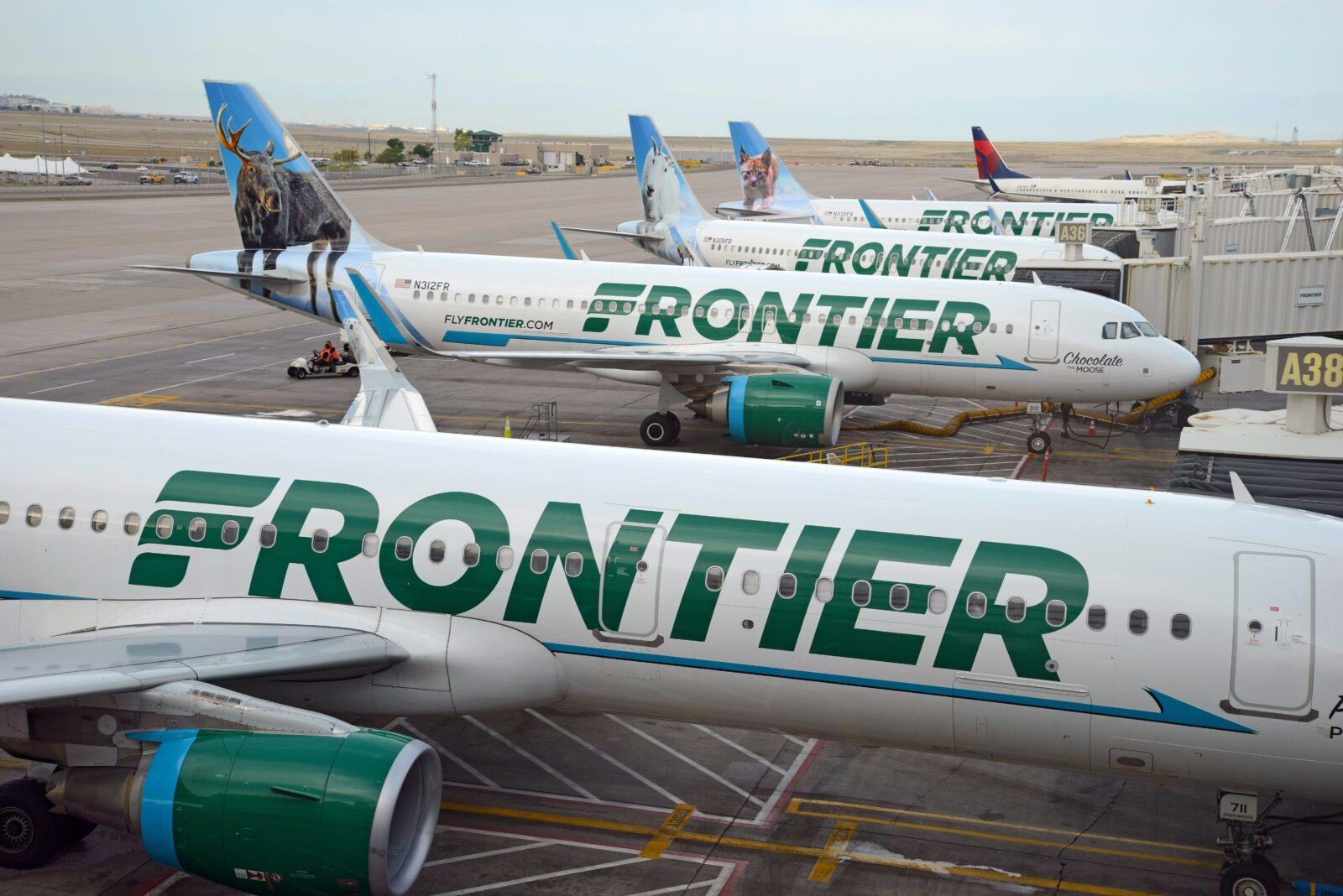
MAAS Aviation and easyJet Renew Aircraft Painting Contract MAAS Aviation has confirmed the renewal of its contract to repaint easyJet’s entire fleet of A320 family aircraft, extending a longstanding partnership between the two companies. The repainting work will continue to be conducted at MAAS Aviation’s Maastricht facility, which boasts two climate-controlled paint shops equipped with advanced building management systems, datalogging capabilities, and high-lux lighting designed to ensure precise and superior-quality finishes. Strengthening a Collaborative Partnership Richard Marston, chief commercial officer at MAAS Aviation, underscored the strength and transparency of the collaboration with easyJet. He noted that regular communication between the teams ensures alignment of working procedures, enabling MAAS Aviation to maintain high standards of painting while achieving rapid turnaround times. This close cooperation has been instrumental in delivering consistent quality and efficiency throughout their multi-year relationship. Sophie Michelson, easyJet’s aircraft appearance manager, emphasized the critical importance of maintaining exceptional exterior paint standards. She praised MAAS Aviation for their continued commitment to excellence, which has supported easyJet in achieving industry-leading paint processes and finishes. Michelson also highlighted easyJet’s dedication to sustainability, noting ongoing efforts to reduce carbon emissions. Since 2019, MAAS Aviation has played a key role in helping easyJet meet these objectives, and the airline looks forward to further improvements as its fleet expands. Industry Context and Future Considerations The contract renewal occurs amid increasing industry pressures to balance competitive pricing with the delivery of high-quality maintenance and painting services. Airlines are scrutinizing supplier contracts more closely, prompting competitors in the aircraft painting and maintenance sector to offer more attractive terms in an effort to secure business. This competitive environment is likely to influence future negotiations and contract renewals across the aviation industry. Furthermore, easyJet’s recent announcement of plans to acquire Adria Tehnika in 2026 represents a strategic move to consolidate its maintenance and repair operations. This acquisition may affect MAAS Aviation’s position as a supplier to easyJet, as the airline evaluates how best to integrate new capabilities and streamline its supplier relationships in the coming years. Despite these evolving market dynamics, both MAAS Aviation and easyJet remain committed to upholding high standards of aircraft appearance and operational efficiency. Their continued partnership reflects a shared dedication to quality, innovation, and sustainability in aircraft maintenance and presentation.
Frontier Airlines A321neo Engine Incident Raises Concerns Over Flight Disruptions
Frontier Airlines A321neo Engine Incident Raises Concerns Over Flight Disruptions

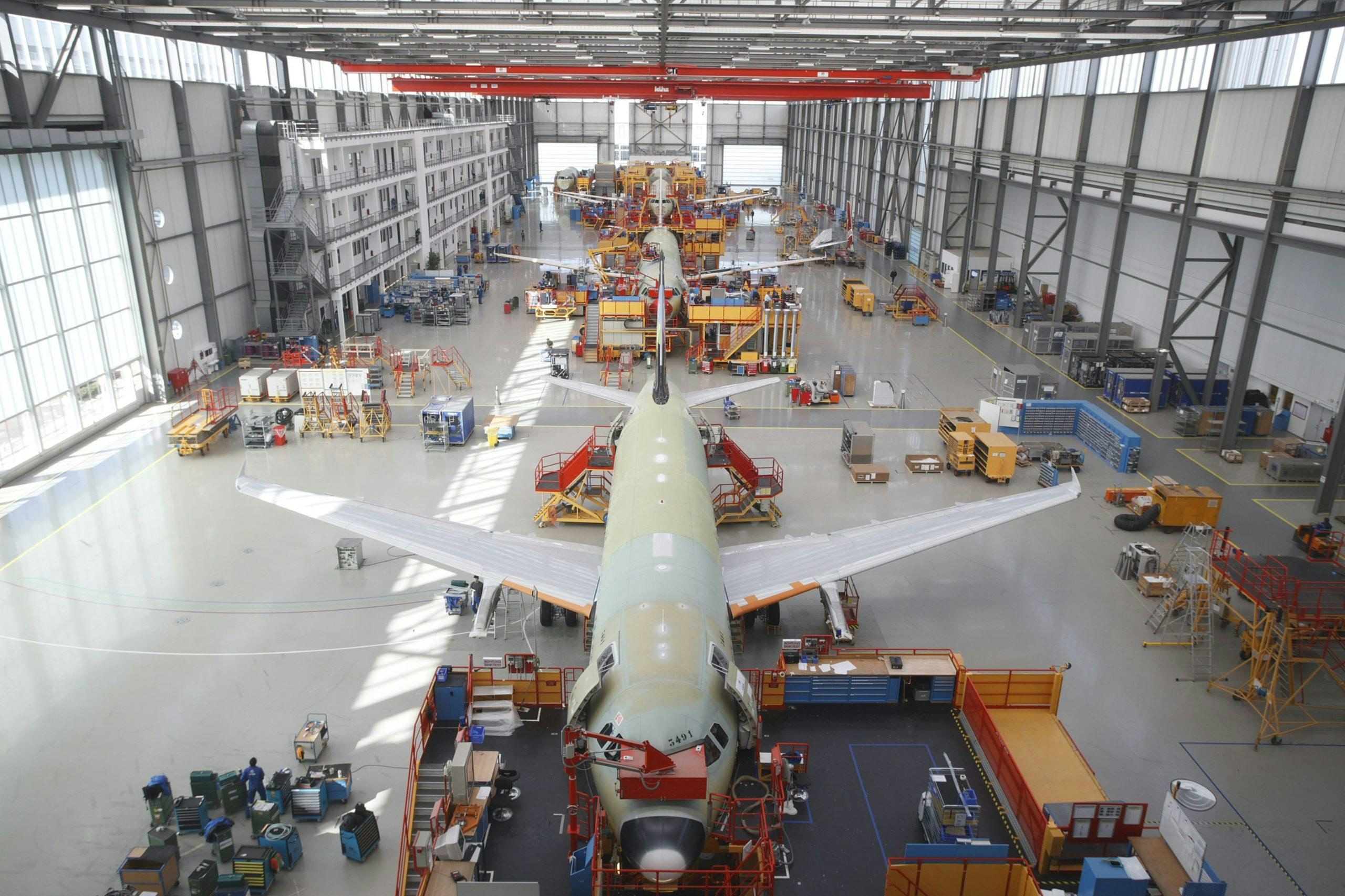
Frontier Airlines A321neo Engine Incident Raises Concerns Over Flight Disruptions Engine Flameout Forces Emergency Return A Frontier Airlines Airbus A321neo was compelled to return to Cleveland International Airport shortly after takeoff due to an engine malfunction. The aircraft, equipped with Pratt & Whitney’s geared turbofan (GTF) engines, experienced a rare flameout—an unexpected loss of engine power. The flight concluded safely with no injuries reported among passengers or crew, averting what could have been a more serious incident. This event has heightened scrutiny of both Frontier Airlines and the wider aviation industry, particularly regarding the reliability of Pratt & Whitney’s GTF engines. These engines have faced ongoing technical challenges, contributing to maintenance delays and flight disruptions across several carriers. Frontier’s rapid expansion of its A320 family fleet to accommodate increasing demand from budget travelers places additional pressure on the airline to maintain operational reliability amid these concerns. Broader Implications for the Aviation Sector and Travelers The incident raises significant questions about potential disruptions for passengers. Airlines operating aircraft with the affected engines have encountered difficulties in maintaining schedules, leading to delays and cancellations that reverberate through the hospitality and tourism industries. Frontier now faces intensified regulatory scrutiny and the prospect of increased maintenance costs, which may result in more frequent schedule adjustments or service interruptions in the near term. Investor confidence has also been affected, as evidenced by a temporary decline in Frontier’s stock price following the incident. Competitors may capitalize on this vulnerability by attracting travelers seeking more dependable service, thereby increasing competitive pressures on Frontier. Should these operational challenges persist, other airlines stand to gain market share at Frontier’s expense. Industry-Wide Challenges and Operational Complexities Compounding Frontier’s difficulties are broader technical issues affecting the aviation sector. Airlines operating Airbus A320-family aircraft are contending with necessary software updates, which demand significant attention and resources. These concurrent challenges risk diverting focus from resolving engine reliability problems, complicating efforts to ensure seamless operations. Guidance for Travelers In light of these developments, passengers are advised to monitor flight statuses closely, particularly when traveling on A320neo family aircraft. Flexible booking options and travel insurance may help mitigate the impact of potential disruptions. Staying informed through official airline communications regarding maintenance updates or schedule changes is also recommended. As Frontier Airlines and the industry at large address these technical and operational hurdles, the incident underscores the critical importance of rigorous aircraft maintenance and reliability. Passengers are encouraged to remain vigilant and plan accordingly to minimize the effects of any unforeseen travel disruptions.
Airbus Employs 3D Printing to Address Aircraft Supply Chain Challenges

Airbus Employs 3D Printing to Address Aircraft Supply Chain Challenges

Airbus Employs 3D Printing to Address Aircraft Supply Chain Challenges Adopting Additive Manufacturing Amid Supply Chain Disruptions Since the onset of the COVID-19 pandemic in 2019, global aircraft manufacturers have grappled with persistent supply chain bottlenecks that have delayed the delivery of critical components and slowed production schedules. In response to these challenges, Airbus has increasingly turned to 3D printing, or additive manufacturing, as a strategic solution to mitigate disruptions and uphold its delivery commitments. Airbus currently produces over 25,000 flight-ready 3D-printed parts annually, collaborating closely with Minnesota-based technology firm Stratasys. This transition has not only helped alleviate supply chain constraints but has also revolutionized the manufacturing and maintenance processes of modern aircraft. To date, more than 200,000 certified Stratasys polymer parts are in active service across airlines and air forces worldwide. Benefits and Implementation Across Key Aircraft Models The integration of 3D-printed components has delivered measurable advantages. For instance, the Airbus A350 long-haul jet has benefited from a 43% reduction in component weight through the use of these parts. Furthermore, Airbus has eliminated minimum order quantity requirements and achieved an 85% reduction in lead times. These improvements have been applied across three major production lines: the A320neo family, the A350, and the A400M military transport aircraft. The parts are manufactured using Stratasys’ industrial-grade printers and Certified Grade (CG) filament, ensuring compliance with stringent aerospace standards. Serge Senac, Airbus Industrial Leader for Polymer Additive Manufacturing, emphasized the significance of this technology, stating, “Stratasys’ additive manufacturing technology is an integral part of our commitment to safe and sustainable aviation. We can produce certified, repeatable parts faster, with less reliance on complex supply chains. This manufacturing flexibility reduces costs and ensures improved response times to meet the needs of our customers around the world.” Senac also highlighted that 3D printing aligns with Airbus’ ambition to achieve carbon neutrality by 2050. Ongoing Challenges and Strategic Advantages Despite these advancements, Airbus continues to confront challenges. Recent quality issues involving metal panels on certain A320 aircraft have exposed ongoing vulnerabilities within the supply chain, contributing to an 11% decline in Airbus shares following the report. These incidents underscore the critical need for continued innovation in manufacturing processes. While competitor Boeing has demonstrated improved performance amid similar supply chain pressures, the adoption of 3D printing may emerge as a key differentiator in the competitive aerospace landscape. Stratasys underscores that distributed additive manufacturing enables Airbus to produce parts on demand and in proximity to where they are needed, thereby reducing aircraft downtime, minimizing inventory storage, and avoiding costly supply chain delays. The flexibility inherent in 3D printing allows for the production of a diverse range of components, irrespective of type or function, providing Airbus with a strategic advantage as it navigates ongoing industry challenges. By leveraging 3D printing technology, Airbus aims to mitigate supply chain risks, reduce operational costs, and maintain its leadership position in the aerospace sector amid persistent market pressures and quality concerns.
PCC Approves Acquisition of Global Aircraft Leasing Firm
PCC Approves Acquisition of Global Aircraft Leasing Firm

PCC Approves Acquisition of Global Aircraft Leasing Firm The Philippine Competition Commission (PCC) has approved the proposed acquisition of aircraft assets of CL Financing Gold Ltd. from subsidiaries of Vmo Aircraft Leasing GP, LLC. In a decision dated November 6, the antitrust regulator determined that the transaction is unlikely to substantially lessen competition in the global dry leasing of aircraft. Transaction Overview and Market Impact The approval follows an extensive review process, including interviews and consultations conducted by the PCC’s mergers and acquisitions office to assess the potential competitive effects of the deal. CL Financing Gold Ltd., a consortium of global investment and asset management firms incorporated in the Cayman Islands, entered into an agreement with Vmo Aircraft Leasing on June 27 to acquire the aircraft assets. Vmo Aircraft Leasing, a multinational commercial aircraft lessor, is supported by private equity and credit groups managed by Los Angeles-based Ares Management Corp. The PCC noted that both CL Financing Gold and Vmo Aircraft Leasing hold minimal market shares within the global dry leasing sector. The Commission emphasized that the industry remains dynamic and competitive, with a sufficient number of existing players and strong market appeal for new entrants. This environment, the PCC concluded, ensures that competition will remain robust following the transaction. Regulatory Context and Industry Implications The approval comes amid increased regulatory scrutiny of large-scale transactions in the aviation sector. Recent deals, such as Boeing’s acquisition of Spirit AeroSystems, have been subject to stringent regulatory conditions aimed at addressing anti-competitive concerns. The PCC’s decision aligns with global regulatory standards, underscoring the importance of safeguarding market competition and consumer welfare. The Commission also acknowledged potential challenges associated with such acquisitions, including regulatory compliance, market competition, and the integration of acquired assets. Market responses to similar transactions have included fluctuations in the stock prices of both acquiring and competing firms, as well as strategic adjustments by competitors to preserve market share and maintain competitive pricing. In its statement, the PCC highlighted that “the presence of sufficient existing players and the attractiveness of the market to new entrants ensure that competition will remain robust.” The Commission reaffirmed that its approval supports its mandate to prevent consolidation in specialized global industries, such as aviation leasing, from harming competition. Under the Philippine Competition Act, the PCC is responsible for reviewing mergers and acquisitions to prevent transactions that could diminish market competition or adversely affect consumer welfare. The Commission reiterated its commitment to protecting consumer interests and promoting a level playing field across diverse markets.
Replica of Wright Brothers’ Engine to Run in San Diego on Wednesday

Replica of Wright Brothers’ Engine to Run in San Diego on Wednesday

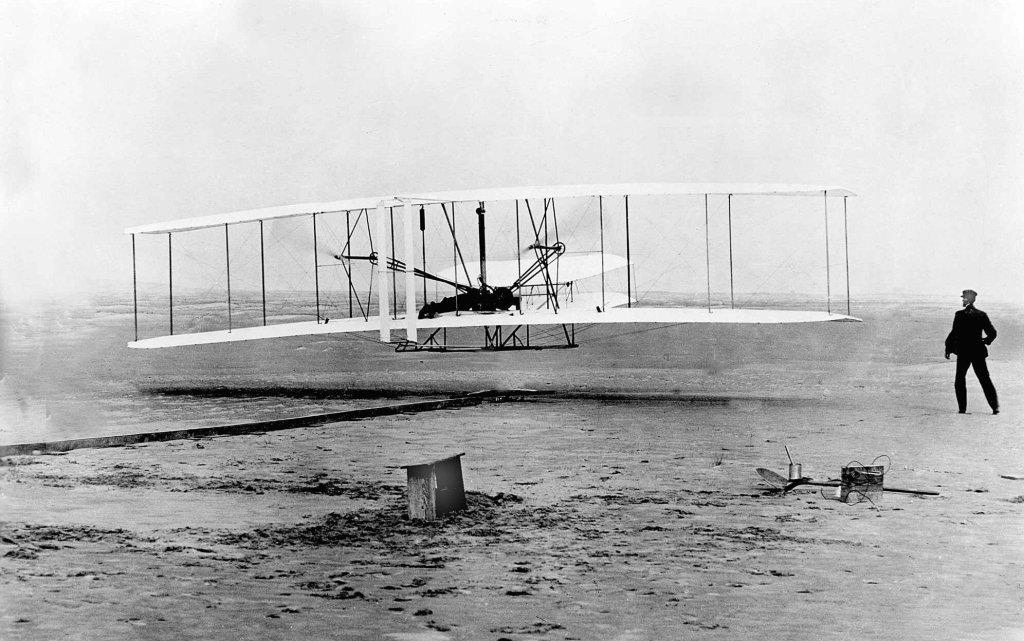
Replica of Wright Brothers’ Engine to Run in San Diego on Wednesday The San Diego Air & Space Museum will commemorate the 112th anniversary of the Wright Brothers’ historic flight with a live demonstration of a meticulously crafted replica of their original engine. Scheduled for 9:30 a.m. on Wednesday outside the museum, this event continues a tradition spanning more than two decades, dedicated to celebrating the origins of aviation and fostering public interest in the field. A Faithful Reproduction of Aviation History The demonstration, lasting approximately 30 seconds, is more than a symbolic gesture; it underscores the technical challenges involved in recreating early aviation technology. The replica engine was constructed over two and a half years by volunteer machinists Bud Monfort, Ted Tornesella, and Lee Lowery. Their work faithfully reproduces the engine designed by Charles E. Taylor for Wilbur and Orville Wright, requiring considerable expertise to ensure that the engine not only resembles but also operates like the original. This achievement highlights the complexity and ingenuity of early aviation engineering. The original Wright engine powered the Wright Flyer during its groundbreaking 12-second flight on December 17, 1903, at Kitty Hawk, North Carolina. This milestone marked the dawn of the aviation age, a legacy that continues to influence San Diego’s identity. The city’s aviation heritage was further enriched in 1911 when inventor Glenn Curtiss became the first American to fly a seaplane, journeying from Coronado’s North Island to San Diego Bay. Shortly thereafter, a Curtiss aircraft was mounted on a Navy warship in the bay, prompting the military to recognize the strategic importance of aircraft and establishing San Diego as the birthplace of naval aviation. Honoring the Past and Inspiring the Future This annual demonstration not only pays tribute to the pioneers of flight but also reflects broader trends within the aviation industry. Its educational and historical significance is expected to attract tourists and media attention, reinforcing San Diego’s standing as a center of aviation history. In an industry where engine manufacturers and aviation organizations compete to showcase technological innovation, such events emphasize the enduring impact of early breakthroughs while connecting them to contemporary advancements. As the aviation sector continues to evolve with a focus on innovation and efficiency, the museum’s tribute serves as a reminder of the field’s origins and the technical ingenuity that propelled it forward. The Wright engine replica demonstration stands as both a celebration of history and a testament to the ongoing spirit of innovation that defines aviation today.
Ask AeroGenie