
image

AeroGenie — 您的智能副驾驶。

询问一切。分析一切。立即行动。

热门趋势

Categories

US$200m JV to build autonomous cargo aircraft in Abu Dhabi

January 12, 2026By ePlane AI
US$200m JV to build autonomous cargo aircraft in Abu Dhabi
0
0
Autonomous Cargo Aircraft
Elroy Air
Chaparral VTOL

US$200 Million Joint Venture to Manufacture Autonomous Cargo Aircraft in Abu Dhabi

Barq Group and US-based Elroy Air have announced a US$200 million joint venture to establish a manufacturing facility in Abu Dhabi dedicated to producing the Chaparral autonomous cargo aircraft. Pending regulatory approvals, the partnership aims to position Abu Dhabi as a regional hub for advanced air mobility, targeting commercial and humanitarian logistics markets across the Middle East and North Africa (MENA).

Strategic Partnership and Technological Innovation

The collaboration leverages Barq Group’s expertise in smart mobility and logistics solutions throughout the MENA region alongside Elroy Air’s pioneering work in autonomous aerial systems for middle-mile logistics. The new facility will manufacture the Chaparral, a hybrid-electric vertical take-off and landing (VTOL) uncrewed aircraft system designed specifically for cargo operations. The Chaparral can carry a 300-pound payload over distances exceeding 300 miles, utilizing a hybrid-electric powertrain that enables extended range missions without dependence on charging infrastructure. This capability is particularly advantageous for remote and infrastructure-light environments prevalent in the region.

Beyond manufacturing, the joint venture will offer comprehensive aftermarket support, including maintenance, repair, and overhaul services, thereby creating an integrated regional capability. Local production is expected to enhance scalability, reduce lead times, and strengthen supply chain reliability. These improvements address the region’s increasing demand for resilient and efficient logistics solutions amid rapid economic growth and complex geographic challenges.

Economic and Regulatory Context

Ahmed AlMazrui, CEO of Barq Group, described the initiative as a strategic commitment to Abu Dhabi’s role in shaping the future of mobility. He highlighted that the investment supports the development of a self-sustaining aerospace ecosystem within the UAE and aligns with the national “Make it in the Emirates” initiative. The project also complements the objectives of Abu Dhabi’s Smart and Autonomous Vehicle Industry (SAVI) cluster, aiming to generate high-value aerospace jobs, stimulate regional supply chain development, and deliver long-term economic benefits.

Nevertheless, the venture faces several challenges. Regulatory hurdles remain significant, as the autonomous cargo aircraft sector is still evolving and subject to stringent aviation standards. Technological uncertainties, particularly regarding the reliability and safety of autonomous flight systems, could affect project timelines and market readiness. Market acceptance is another critical factor, with investor sentiment divided between optimism for advanced air mobility and caution due to the industry’s nascent stage.

Competition within the autonomous cargo segment is expected to intensify, with established players such as Textron eAviation and Pipistrel likely to increase their efforts to secure market share. The success of the Barq-Elroy Air joint venture could catalyse further investments and partnerships in the sector, reflecting recent developments such as Archer Aviation’s new UK aerospace engineering hub and the US Federal Aviation Administration’s ongoing overhaul of beyond-visual-line-of-sight (BVLOS) regulations.

The Chaparral marked a significant milestone in November 2023 by completing the world’s first flight of a turbo generator hybrid-electric aircraft. As the joint venture progresses, its developments will be closely monitored as an indicator of the future trajectory of autonomous cargo aviation in the region and beyond.

More news
Harmattan AI Secures $200 Million Series B Led by Dassault Aviation, Achieves Unicorn Status
Harmattan AI Secures $200 Million Series B Led by Dassault Aviation, Achieves Unicorn Status

Harmattan AI Secures $200 Million Series B Led by Dassault Aviation, Achieves Unicorn Status French defense technology startup Harmattan AI has achieved a valuation of $1.4 billion following the successful closure of a $200 million Series B funding round led by Dassault Aviation, the renowned manufacturer of the Rafale fighter jet. Founded in 2024, Harmattan AI specializes in developing autonomy and mission-system software for defense aircraft, rapidly earning recognition from both the French and British ministries of defense. Strategic Partnership and Industry Positioning This latest investment represents a pivotal moment for Harmattan AI, which has often been compared to the U.S. defense technology firm Anduril. Initially positioning itself as a challenger to established defense contractors, the company is now embracing collaboration with industry leaders. The partnership with Dassault Aviation will focus on integrating advanced artificial intelligence capabilities into future generations of Rafale jets and drones, emphasizing technological sovereignty and scalability. This alliance underscores a shared commitment to advancing European defense innovation while maintaining strategic autonomy. Expanding Capabilities Amid Evolving Defense Needs The rapid evolution of drone warfare, particularly highlighted by recent conflicts in Ukraine, has intensified the need for NATO and allied forces to modernize their defense systems. This environment has created significant momentum for startups like Harmattan AI, which aims to broaden its portfolio to include drone interception, electronic warfare, and intelligence, surveillance, and reconnaissance (ISR) technologies. The company’s recent partnership with Russian drone manufacturer Skyeton further signals its ambition to expand manufacturing capabilities and extend its operational reach. French President Emmanuel Macron hailed the funding announcement as “excellent news for our strategic autonomy, for the technological superiority of our armed forces in the field of AI-activated defense drones, as well as for our economy.” Market responses have been largely positive, with analysts highlighting the strategic advantages this development offers to France and Europe. Beyond its domestic ambitions, Harmattan AI has articulated a vision to “empower the armed forces of liberal democracies and their allies.” The company is preparing to showcase its technology at the upcoming World Defense Show in Riyadh and is actively expanding its presence in the United States. Challenges and Competitive Landscape Despite its rapid rise, Harmattan AI faces considerable challenges. Sustaining a competitive edge in the fast-evolving defense AI sector will demand continuous innovation and rigorous adherence to security and international defense regulations, especially as the company pursues global expansion. The expectations accompanying this substantial funding round will also place pressure on Harmattan AI to deliver tangible results and maintain growth momentum. Competitors are anticipated to intensify their investments in AI-driven defense technologies, heightening the race for technological leadership. As Harmattan AI leverages its new resources and strategic partnerships, its capacity to navigate these challenges will be crucial in securing its position at the forefront of European defense technology innovation.
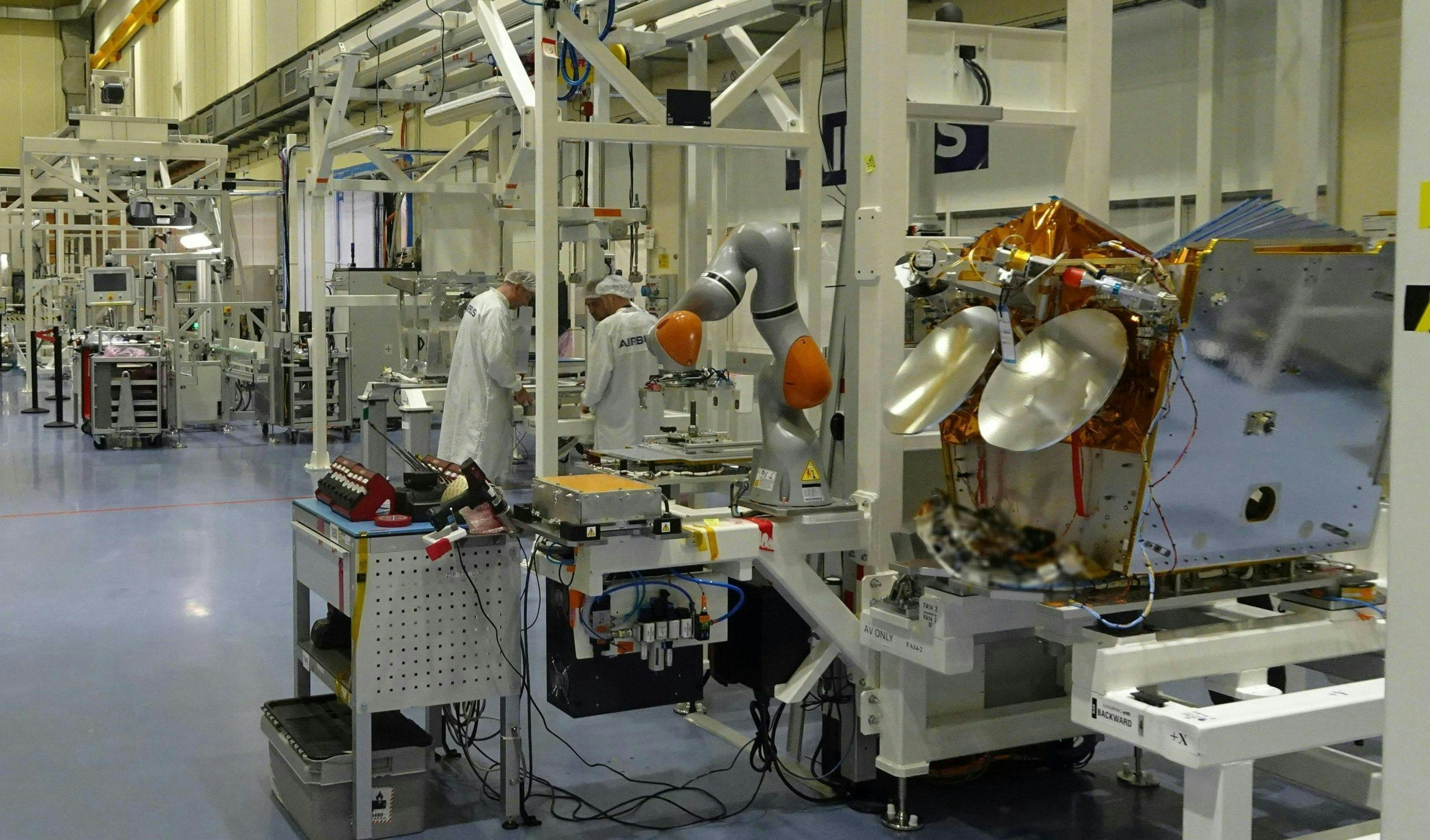
Eutelsat Orders 340 OneWeb Satellites from Airbus

Eutelsat Orders 340 OneWeb Satellites from Airbus

Eutelsat Orders 340 OneWeb Satellites from Airbus Eutelsat, the satellite operator supported by the French and British governments, has placed an order for 340 new satellites from Airbus to upgrade and expand its OneWeb low-Earth-orbit (LEO) network. The announcement was made jointly by the companies on Monday, marking a significant step in the evolution of OneWeb’s satellite constellation. Expansion and Replacement of OneWeb Satellites The newly ordered satellites will gradually replace OneWeb’s earliest spacecraft, which are approaching the end of their operational lifespans. These initial satellites were launched approximately six years ago, prior to OneWeb’s merger with Eutelsat in 2023. This latest order, combined with a previous contract for 100 satellites secured in December 2024, brings the total number of new satellites contracted for OneWeb to 440. Deliveries are expected to commence at the end of 2026. Although financial details were not disclosed, Eutelsat has previously estimated that extending the constellation until the European Union’s Iris² network becomes operational will require an additional 340 satellites beyond the initial 100. The total cost of this extension program is projected to range between €2 billion and €2.2 billion over the period from 2024 to 2029. Strategic Positioning Amid Intensifying Competition Eutelsat’s expansion occurs against the backdrop of intensifying competition in the LEO satellite market, particularly from SpaceX’s Starlink, which remains the dominant player. Both companies are engaged in a race to provide satellite-based broadband connectivity to businesses, governments, and consumers in underserved regions worldwide. Currently, OneWeb’s network stands as the only other LEO constellation of comparable scale to Starlink, attracting heightened interest from European governments concerned with digital sovereignty and connectivity. The financial backing from France, the United Kingdom, and other anchor investors has fortified Eutelsat’s position in this competitive landscape. In 2025, France led a €1.5 billion capital increase, joined by the UK and other stakeholders, to strengthen the company’s financial foundation and support its ambitious satellite deployment plans. Market analysts suggest that Eutelsat’s latest satellite order could stimulate increased investor interest in satellite broadband services. Competitors may respond by accelerating their own satellite launches or enhancing existing offerings to maintain their market share. As the global race for satellite internet coverage intensifies, Eutelsat’s expanded collaboration with Airbus, combined with robust government support, positions the company as a key contender in the rapidly evolving LEO satellite sector.
Allegiant and Sun Country Airlines Announce Merger Agreement
Allegiant and Sun Country Airlines Announce Merger Agreement

Allegiant and Sun Country Airlines Announce $1.5 Billion Merger Agreement Allegiant Air and Sun Country Airlines have reached a definitive agreement for Allegiant to acquire Sun Country in a transaction valued at approximately $1.5 billion, inclusive of $400 million in net debt. The deal, structured as a cash-and-share exchange, values Sun Country shares at $18.89 each. Shareholders will receive 0.1557 Allegiant shares plus $4.10 in cash per Sun Country share, representing a premium of 19.8% over Sun Country’s closing price on January 9, 2026, and an 18.8% premium relative to the 30-day volume-weighted average price. Upon closing, Allegiant shareholders will hold approximately 67% ownership of the combined entity, with Sun Country shareholders owning the remaining 33%. The merger is set to create one of the largest leisure-focused airlines in the United States, expanding the network to include a broader range of popular domestic vacation destinations alongside select international routes. The unified airline aims to enhance access to affordable and convenient air travel while establishing a resilient business model capable of swiftly adapting to fluctuations in demand, market conditions, and opportunities in charter and cargo services. Strategic Implications and Operational Structure Both carriers emphasized that the merger of two financially robust leisure airlines is expected to deliver significant benefits to customers, employees, and communities by fostering greater stability, improved growth prospects, and sustained investment in innovation. The transaction is also projected to yield operational synergies and cost efficiencies, thereby strengthening the combined group’s competitive position within the industry. Investor response to the announcement has been largely positive, reflecting optimism about the potential for enhanced growth and operational efficiency. Nevertheless, the merger may face regulatory scrutiny amid ongoing concerns regarding consolidation in the airline sector. Competitors are anticipated to monitor the development closely and may respond with pricing strategies or expanded leisure service offerings to protect their market share. Allegiant will remain the publicly traded parent company, and the merged airline will operate under the Allegiant brand. Until the Federal Aviation Administration issues a single operating certificate, Allegiant and Sun Country will continue to operate as separate airlines, maintaining their existing ticketing systems, flight schedules, customer experiences, and the Sun Country brand. Customers will be able to book and travel with both airlines as usual during this interim period. Leadership and Headquarters Leadership of the combined company will be led by Allegiant CEO Gregory C. Anderson, with Robert Neal serving as President and Chief Financial Officer. Sun Country President and CEO Jude Bricker will join the Allegiant Board of Directors, accompanied by two additional Sun Country board members, expanding the board to 11 directors. Maury Gallagher will continue in his role as Chairman, while Bricker will also act as an advisor to facilitate the integration process. The headquarters of the merged airline group will be located in Las Vegas, with a significant operational presence maintained in Minneapolis–St. Paul, the home base of Sun Country Airlines.
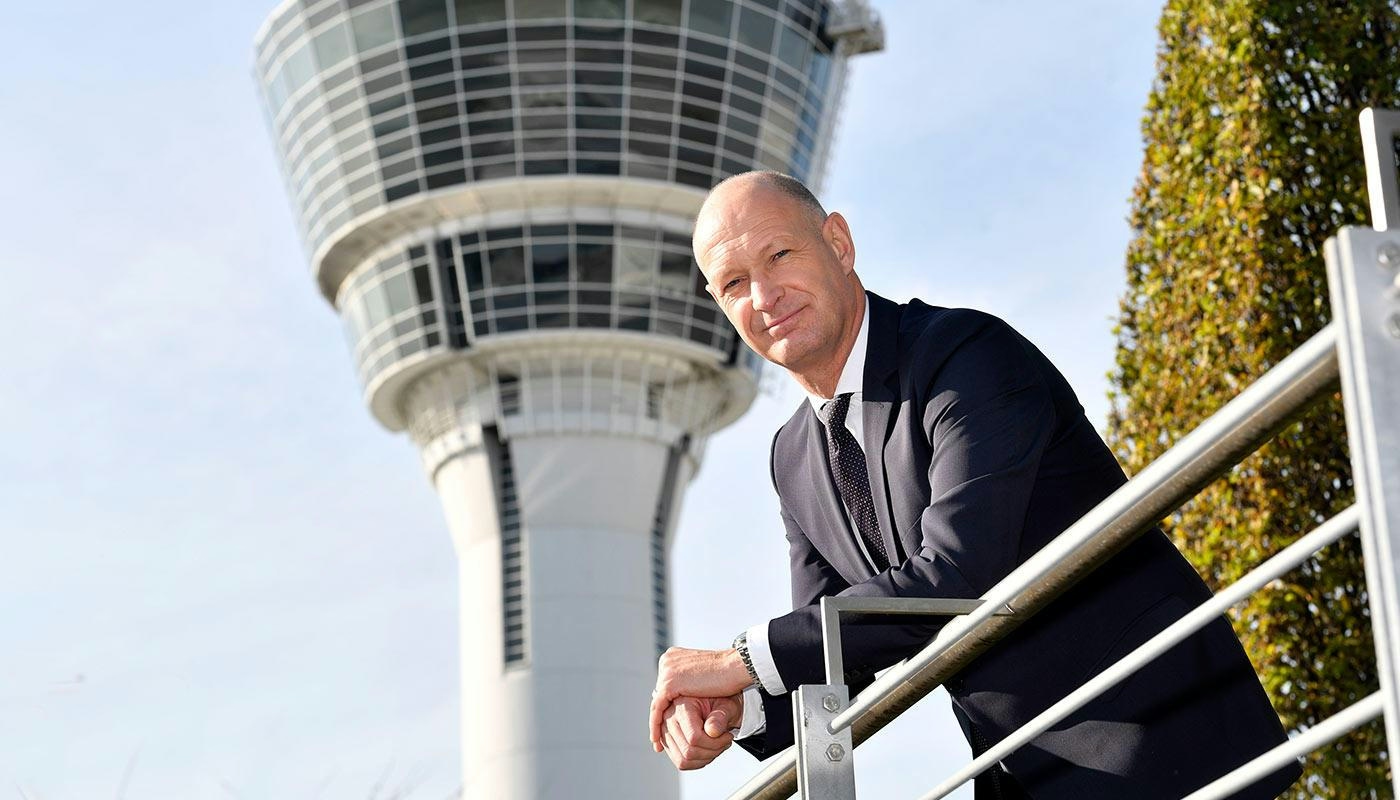
Munich Airport CEO Jost Lammers Named Chair of ACI World Governing Board

Munich Airport CEO Jost Lammers Named Chair of ACI World Governing Board

Munich Airport CEO Jost Lammers Appointed Chair of ACI World Governing Board Jost Lammers, the Chief Executive Officer of Munich Airport, has been named Chair of the Airports Council International (ACI) World Governing Board for the 2026–2027 term. This appointment comes at a critical juncture for the global aviation sector, as the industry navigates profound transformation. Lammers is widely recognized for his extensive leadership experience in airport operations, with a strong emphasis on innovation and sustainability. Leadership Transition and Board Role Lammers succeeds Candace McGraw, the retired CEO of Cincinnati/Northern Kentucky International Airport (CVG), who notably was the first woman to chair the ACI World Governing Board. McGraw’s tenure was marked by enhanced global advocacy and strategic initiatives that supported airports through challenging periods, leaving a significant legacy within the organization. The ACI World Governing Board, composed of 28 airport CEOs nominated by ACI’s five regional bodies, holds a pivotal role in shaping global airport policy. Its decisions impact critical areas such as sustainability, safety, operational efficiency, and technological advancement. As Chair, Lammers will be responsible for steering the board through a volatile operating environment characterized by ongoing post-pandemic recovery, supply-chain disruptions, and technical challenges such as engine reliability issues. These factors, recently highlighted by Air Canada’s network planning adjustments, have intensified scrutiny on industry leadership and underscored the need for resilient and adaptable strategies. Experience and Vision Lammers brings considerable expertise to his new position. He has been a member of the ACI World Governing Board since 2019 and served as Vice Chair for the 2024–2025 term. His leadership at ACI EUROPE, where he was President in 2019, was instrumental in guiding European airports through the COVID-19 crisis and fostering enhanced regional collaboration. Since January 2020, Lammers has led Munich Airport, one of Europe’s premier international hubs, with a focus on service excellence, innovation, and sustainable development. Prior to this, he was CEO of Budapest Liszt Ferenc Airport, overseeing significant modernization and expansion projects, and served as President of the German Aviation Association (BDL). Looking forward, Lammers is expected to prioritize initiatives addressing the aviation industry’s most urgent challenges, including accelerating digital transformation and advancing sustainability objectives. His leadership will be crucial in ensuring that airports remain innovative, resilient, and sustainable amid ongoing global uncertainties. With Lammers at the helm, ACI World embarks on a new chapter defined by both opportunity and heightened expectations as the aviation sector adapts to a rapidly evolving landscape.
Eutelsat Orders 340 OneWeb LEO Satellites from Airbus to Expand Global Connectivity
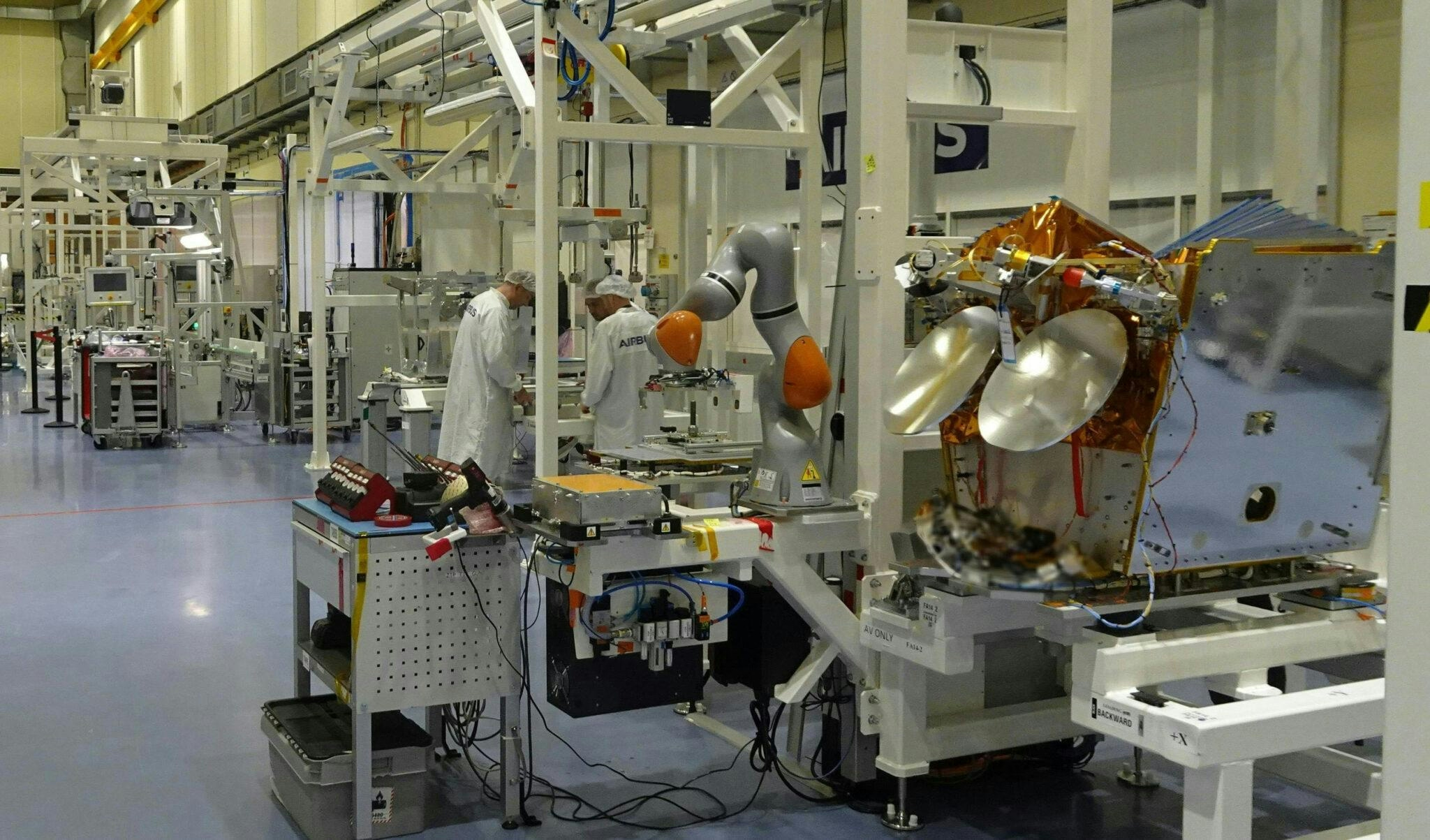
Eutelsat Orders 340 OneWeb LEO Satellites from Airbus to Expand Global Connectivity

Eutelsat Expands OneWeb LEO Satellite Constellation with Airbus Order Eutelsat has placed a significant order with Airbus Defence and Space for 340 additional OneWeb low Earth orbit (LEO) satellites, reinforcing its commitment to expanding global connectivity services and sustaining its competitive position in the evolving satellite internet sector. This new contract supplements a previous December 2024 order of 100 satellites, bringing the total to as many as 440 new units. Production will be carried out at Airbus’s Toulouse facility on a newly established production line, with deliveries anticipated to commence by the end of 2026. Enhancing Network Capacity and Technological Capabilities The incoming satellites will integrate into Eutelsat’s existing OneWeb LEO constellation, which currently consists of over 600 satellites distributed across 12 synchronized orbital planes at an altitude of 1,200 kilometers. This network provides high-speed, low-latency internet access to remote and underserved regions worldwide. The latest batch is intended to replace aging satellites approaching the end of their operational lifespan, thereby ensuring uninterrupted service for Eutelsat’s clientele. Beyond maintaining service continuity, the new satellites will feature advanced technological enhancements, including digital channelizers for improved onboard processing, optimized architectures designed for long-term performance, and increased operational flexibility and efficiency. These upgrades are expected to unlock new business opportunities, such as hosting third-party payloads, which would allow additional capabilities to be deployed on the satellites. Strategic Positioning Amidst a Competitive and Complex Market Eutelsat’s OneWeb network primarily targets the professional B2B market, addressing both fixed and mobile connectivity requirements while offering sovereign-grade solutions for government and critical infrastructure customers. As one of only two fully operational LEO networks globally—and the sole European operator—Eutelsat is strategically positioned to meet the rising demand for LEO satellite capacity. Nevertheless, the company faces considerable challenges as it scales its constellation. Cybersecurity risks and complex regulatory landscapes remain pressing concerns, particularly as Eutelsat integrates artificial intelligence into its infrastructure to enhance operational efficiency and security. The competitive environment is intensifying, with SpaceX’s Starlink having already deployed a vast number of satellites and recently securing Federal Communications Commission (FCC) approval to expand its constellation to 15,000 satellites. Other industry developments include Vodacom’s plans to resell Starlink services (though not yet in South Africa) and Airtel Africa’s intention to launch Starlink’s Direct to Cell service across 14 markets. Additionally, partnerships such as OQ Technology’s collaboration with Monogoto to extend LEO Internet of Things (IoT) services highlight the sector’s dynamic nature. Eutelsat CEO Jean-François Fallacher emphasized the importance of the partnership with Airbus, stating, “We are pleased to rely on our long-standing partner, Airbus, for the procurement of these latest satellites. They ensure service continuity for our growing customer base and enable us to pursue our growth path, building on the 80% topline expansion delivered in 2025.” Alain Fauré, Head of Space Systems at Airbus Defence and Space, remarked, “This latest contract from Eutelsat is an endorsement of our design and manufacturing expertise for LEO satellites. Airbus has been a key partner and supplier to Eutelsat for more than 30 years, and this award further cements our important relationship.” As Eutelsat advances with its expanded satellite order, the company is positioning itself to navigate both the opportunities and challenges presented by a rapidly transforming global connectivity market.
Eutelsat Orders 340 Satellites from Airbus for OneWeb Network

Eutelsat Orders 340 Satellites from Airbus for OneWeb Network

Eutelsat Orders 340 Satellites from Airbus to Expand OneWeb Network Eutelsat has announced an order for 340 new satellites from Airbus to significantly expand its OneWeb low Earth orbit (LEO) network. The satellite operator, supported by both the French and British governments, has not disclosed the financial details of the contract. This substantial acquisition aims to enhance the capacity and global reach of the OneWeb constellation, which provides internet connectivity from LEO. Expansion Amidst Industry Challenges The planned deployment of 340 satellites represents a major strategic move for Eutelsat as it seeks to solidify its position in the rapidly evolving satellite internet sector. However, the scale of this expansion presents considerable challenges. The manufacturing, launching, and operational management of such a large fleet will require significant investment and meticulous logistical coordination. This initiative also comes at a time when competition in the satellite broadband market is intensifying. Competitive Landscape and Industry Implications Market analysts are closely monitoring how Eutelsat’s expansion will influence the competitive dynamics of the sector, particularly in relation to rivals like SpaceX. The latter recently secured approval from the U.S. Federal Communications Commission (FCC) to expand its Starlink constellation to 15,000 satellites, highlighting the ongoing race to dominate global satellite internet services. In response to regulatory and safety concerns, including objections from China, SpaceX has adjusted its satellite deployment strategy, demonstrating continued innovation and adaptability among leading industry players. As Eutelsat advances its OneWeb expansion, industry observers anticipate further competitive responses, potentially involving similar network enlargements or technological innovations. The satellite internet sector is expected to experience sustained growth and transformation as operators invest in larger and more sophisticated constellations to meet the increasing global demand for connectivity.
Advancements in AI, Robotics, Aviation, and EMR in Asia
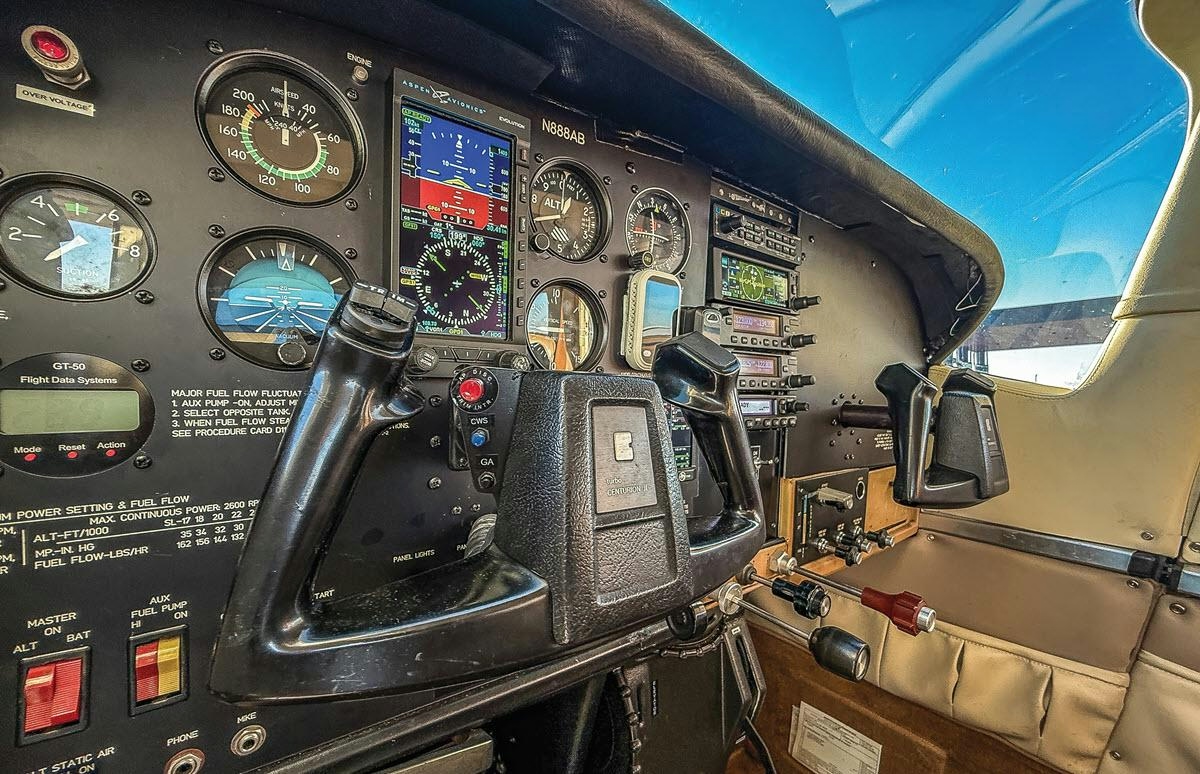
Advancements in AI, Robotics, Aviation, and EMR in Asia

Advancements in AI, Robotics, Aviation, and EMR in Asia Asia is rapidly emerging as a global leader in technological innovation, with significant progress across artificial intelligence (AI), robotics, aviation, and electronic medical records (EMR). From the dynamic showcases at the Consumer Electronics Show (CES) in Las Vegas to transformative healthcare initiatives in Vietnam, the region is moving beyond basic automation toward the seamless integration of AI and robotics into daily life. This evolution, however, is accompanied by complex challenges and varied market responses. Robotics: Transitioning from Pilot Projects to Mass Production Japan is at the forefront of factory automation, revolutionizing its manufacturing processes with high-density robotics designed to produce clean-energy vehicles. These advanced robots represent a decisive shift from experimental pilots to widespread industrial deployment. Hyundai’s plan to introduce humanoid AI robots in its factories by 2028 exemplifies the industry’s commitment to scaling robotic integration. Despite these advancements, the sector faces significant hurdles, including persistent talent shortages and escalating costs, which threaten to slow adoption rates and compress profit margins. A notable innovation presented at CES was Tomo, a flexible humanoid robot developed by Singapore’s Emage Group. Unlike conventional rigid machines, Tomo is engineered for precision tasks, such as handling medical components as small as needles. Its versatility suggests that “general purpose” robots could soon become integral to healthcare and logistics environments, assisting in clinics and pharmacies without necessitating extensive infrastructure modifications. Aviation: Embracing Predictive Intelligence and Sustainability The aviation industry in Asia is undergoing a profound transformation, driven by advancements in predictive AI and sustainability initiatives. The Civil Aviation Authority of Singapore (CAAS) and Changi Airport recently unveiled plans for Terminal 5, which will incorporate smart baggage systems capable of anticipating flight delays and dynamically adjusting ground operations. This innovation aims to reduce staff fatigue and enhance the passenger experience through real-time responsiveness. Looking ahead to 2026, the sector faces both opportunities and challenges as sustainability concerns increasingly influence business aviation models. AI Integration and Market Dynamics in ASEAN The rapid integration of AI into logistics and mobility is reshaping the ASEAN region’s technological landscape. Grab’s acquisition of Infermove, an AI robotics firm, marks a significant milestone for the “super-app” ecosystem, facilitating the deployment of AI beyond cloud platforms into vehicles and delivery robots. However, this surge in AI investment is accompanied by growing investor caution. Concerns over AI-driven inflation have raised the prospect of tighter monetary policies, increased funding costs, and diminished appetite for speculative technology ventures. These factors could adversely affect profitability and share valuations among leading technology companies. Healthcare Innovation: Digital Records and Predictive Diagnostics Vietnam’s Ministry of Health recently announced that 130 healthcare facilities have fully transitioned to electronic medical records (EMR), a development that extends beyond digitization to enable AI-powered predictive diagnostics for conditions such as heart disease and cancer. This advancement is particularly significant for improving access to high-quality care in remote areas. The growth of the EMR sector is supported by technological progress and government stimulus; however, inflationary pressures and rising operational costs pose potential risks to its long-term financial sustainability. The Rise of the Robotic Workforce South Korea is poised to become the first country where robots will constitute 10% of the workforce by January 2026. Automation has become ubiquitous across various sectors, including restaurants, hospitals, and electronics manufacturing, signaling a profound transformation in the labor market and workplace dynamics. Outlook Asia’s strides in AI, robotics, aviation, and healthcare are establishing new global benchmarks, yet the trajectory ahead is shaped by a delicate balance of innovation and caution. Market responses remain mixed, with some investors expressing wariness over emerging risks while others remain optimistic about the transformative potential of these technologies. As the region continues to advance, the interplay between opportunity and challenge will define the next phase of Asia’s technological evolution.
Jump Seat to Advise Blackstone Credit & Insurance on Aircraft Engine Leasing

Jump Seat to Advise Blackstone Credit & Insurance on Aircraft Engine Leasing

Jump Seat to Advise Blackstone Credit & Insurance on Aircraft Engine Leasing Jump Seat Advisor, a consultancy established by aviation finance veterans Michael Platt and John Shavinsky, has been appointed to support Blackstone Credit and Insurance in its strategic aircraft engine leasing partnership with Willis Lease Finance Corporation (WLFC). Blackstone plans to invest over $1 billion within the next two years, targeting both current and next-generation aircraft engines, alongside select aircraft acquisitions. Advisory Role and Expertise In its advisory capacity, Jump Seat has already conducted a thorough review of WLFC’s initial portfolio of engines and leases on behalf of Blackstone. The consultancy will continue to provide expert guidance as the partnership progresses. Michael Platt, Partner at Jump Seat, emphasized the value of their involvement, stating, “It is a pleasure to be working with the professional teams at Blackstone and WLFC to help ensure that Blackstone acquires high quality assets.” With over 70 years of combined experience in aviation finance and leasing, Platt and Shavinsky bring deep industry knowledge aimed at enhancing value within this engine leasing collaboration. Jump Seat’s advisory services are further bolstered by partnerships with Star Aero Services and Aero Engine Consulting, which expand the consultancy’s technical and market expertise. John Shavinsky, Partner at Jump Seat, highlighted the strength of their network, noting, “Through our industry-wide network, Jump Seat has access to the top experts in every facet of commercial aviation, which enables us to offer an expanded range of services and insights to our customers.” Market Challenges and Competitive Landscape Despite the promising partnership, Jump Seat faces significant challenges in advising Blackstone within the highly competitive aircraft engine leasing sector. The consultancy must navigate the complexities of aviation asset financing, ensure strict regulatory compliance, and contend with established industry players such as Bridgepoint Group and WLFC itself. The market is already experiencing increased competition, which may lead to pricing pressures as new capital enters the sector. Competitors are actively responding to these dynamics. Bridgepoint Group, for instance, has launched a joint venture with AIP Capital, while WLFC’s partnership with Blackstone exemplifies a broader trend toward strategic alliances designed to maintain or expand market share. As Blackstone advances its ambitious investment strategy, the collaboration with Jump Seat is expected to be instrumental in asset selection and risk management, influencing the evolving landscape of aircraft engine leasing.
Air Taxi Manufacturer Acquires Ohio Assembly Plant

Air Taxi Manufacturer Acquires Ohio Assembly Plant

Joby Aviation Expands Manufacturing Capacity with Ohio Assembly Plant Acquisition DAYTON, OH — Joby Aviation Inc., a prominent developer of electric air taxis for commercial passenger service, has acquired a 700,000-square-foot assembly plant in Dayton, Ohio. This strategic acquisition is central to Joby’s plan to double its manufacturing capacity, aiming to produce up to four aircraft per month by 2027. Expansion Strategy and Operational Outlook The newly acquired Ohio facility will complement Joby’s existing production sites in California and Ohio, with operations expected to commence later this year. This move follows a series of recent growth initiatives, including the expansion of an assembly plant in Marina, California, completed in July 2025, and the launch of propeller blade manufacturing in Ohio in October of the previous year. Together, these developments underscore Joby’s commitment to scaling production capabilities in response to growing demand. Industry Context and Challenges Ahead Joby’s expansion occurs amid intensifying competition within the advanced air mobility sector, where companies such as Vertical Aerospace and Wisk Aero are accelerating development efforts and forging strategic partnerships to enhance their market positions. The increased production capacity is anticipated to bolster investor interest in the rapidly evolving air taxi market. Nevertheless, Joby faces several potential challenges. Regulatory approval processes, persistent supply chain constraints, and the necessity to adapt to swiftly changing industry standards could affect the pace and scope of the expansion. Furthermore, broader economic uncertainties—including divisions within the Federal Reserve and elevated U.S. stock market valuations projected for 2026—may impact investor confidence and the availability of funding across the sector. Despite these hurdles, Joby’s acquisition of the Dayton assembly plant represents a significant milestone in its pursuit to commercialize electric air taxis and secure a leadership role in the emerging urban air mobility industry.
Airbus Stock Poised for Key Test on Monday

Airbus Stock Poised for Key Test on Monday

Airbus Stock Faces Crucial Test Ahead of Key Deliveries Report Paris, January 11, 2026 — Airbus shares closed slightly lower on Friday, slipping 0.05% to 215.10 euros on Euronext Paris, as investors prepared for the company’s highly anticipated annual orders and deliveries update scheduled for early next week. Despite the marginal decline, Airbus stock has gained approximately 8% year to date, reflecting cautious optimism amid ongoing industry challenges. Anticipation Surrounding Deliveries and Orders The forthcoming audited report, due on January 12, represents a pivotal moment for the European aerospace leader. Aircraft deliveries, which directly influence revenue through milestone payments, are under close scrutiny. Airbus recently revised its 2025 delivery target downward to “around 790” planes from an earlier goal of 820, citing supply chain disruptions, particularly related to fuselage panels supplied by a Spanish manufacturer. Industry data provider Cirium estimates that Airbus will deliver 782 aircraft in 2025, though some analysts anticipate the final figure may exceed this projection. Reuters sources suggest that Airbus may have already delivered 793 aircraft last year, potentially surpassing the revised target. Airbus has refrained from commenting ahead of the official announcement. Investor attention is also focused on the annual report’s net orders figure, which accounts for gross orders minus cancellations. This metric is closely monitored as an indicator of underlying demand and pricing power, both critical for Airbus as it seeks to maintain limited production capacity and defend its market position in 2026. Competitive and Regulatory Challenges The competitive landscape remains intense, with Boeing’s 737 MAX 10, a direct competitor to Airbus’ A321neo, progressing through FAA certification flight tests despite delays caused by engine deicing issues. These developments may prompt strategic responses from both manufacturers, including potential pricing adjustments or new product launches, as they compete for market share in a volatile aviation environment. Regulatory scrutiny and evolving demand patterns add further uncertainty for Airbus. Any shortfall in deliveries or an increase in cancellations could raise investor concerns regarding supply chain reliability and future cash flow stability. The recent rise in Airbus shares—from 208.00 euros on January 5 to 215.10 euros on Friday—has reduced the margin for disappointment should the upcoming figures fall short of expectations. Market reaction will likely depend heavily on the details of the January 12 report, as well as Airbus’ full-year 2025 earnings announcement scheduled for February 19. With regulatory pressures, competitive dynamics, and demand fluctuations all at play, the coming week could prove decisive for Airbus stock and its outlook for the year ahead.
Ask AeroGenie