
Orquesta conocimientos de IA para convertirlos en acción

Tendencias
Categories
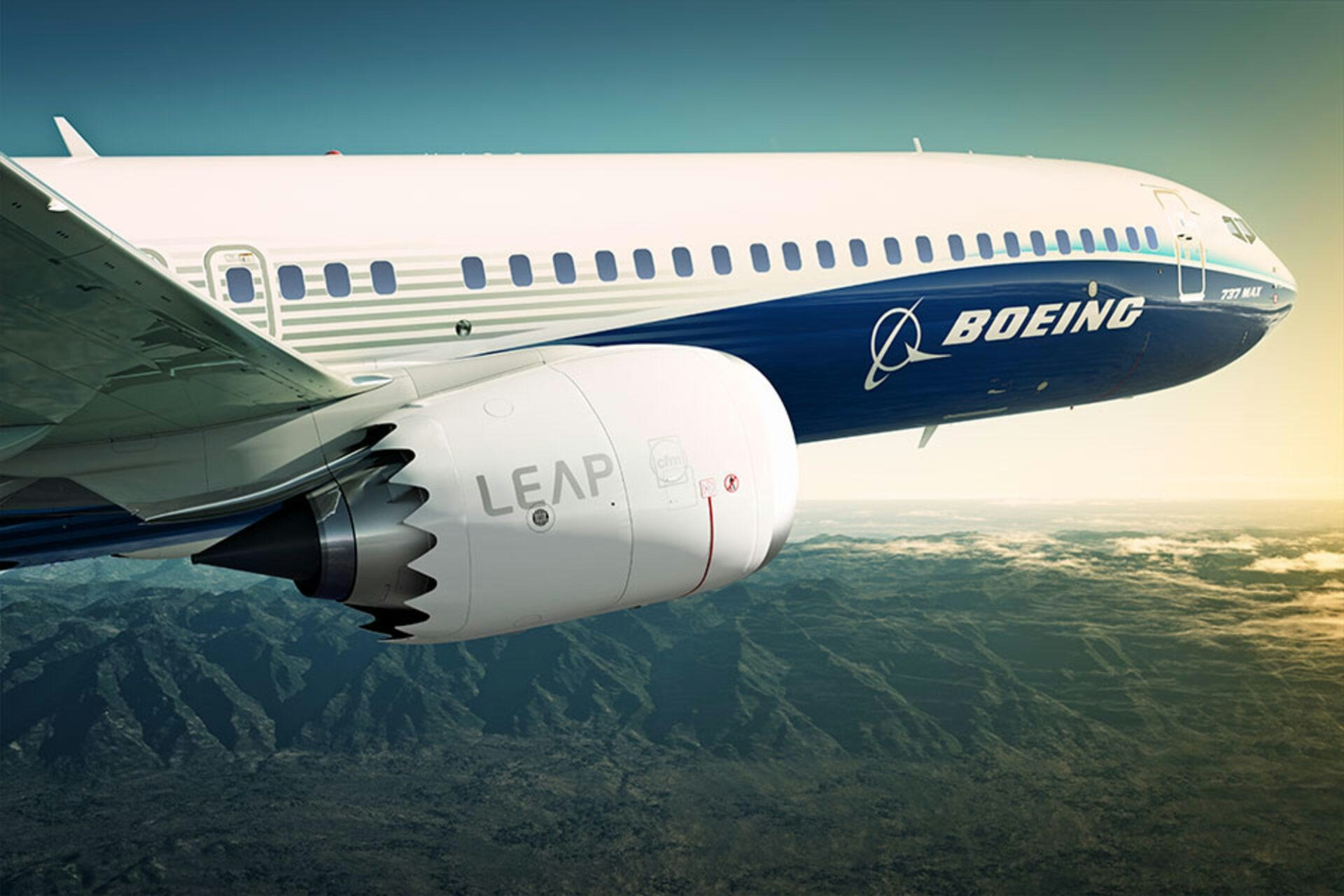
Boeing Forecasts Increased 737 and 787 Deliveries in 2026
Boeing Forecasts Increased 737 and 787 Deliveries in 2026
Production Ramp-Up and Regulatory Approval
Boeing has announced plans to increase deliveries of its 737 and 787 aircraft in 2026, a strategic move aimed at enhancing cash flow and supporting the company’s ongoing financial recovery. Speaking at the UBS Global Industrials & Transportation Conference on December 2, 2025, Jay Malave, Boeing’s Executive Vice President of Finance and CFO, confirmed that the production ramp for the 737 is progressing as anticipated despite some short-term fluctuations. He explained that transitioning production cadence into actual output requires several months, noting that November 2025 deliveries would likely be slightly below expectations. Nevertheless, Malave emphasized that production rollouts remain aligned with Boeing’s forecasts, with a typical minimum six-month interval between production rate changes once the system stabilizes.
This anticipated increase in production follows the Federal Aviation Administration’s (FAA) decision in October 2025 to lift the cap on 737 MAX output, which had been limited to 38 aircraft per month. With regulatory approval secured, Boeing is positioned to gradually raise production to 42 jets monthly. Malave indicated that this higher production rate should begin to translate into increased deliveries in the first quarter of 2026.
Delivery Outlook and Operational Challenges
Looking ahead, Boeing expects delivery volumes for both the 737 and 787 models to rise throughout 2026. While some of the 2025 deliveries—approximately 50 of the 737s—were fulfilled from existing inventory, Malave projected that nearly all 2026 deliveries would come from new production. He stated, “When you now fast forward to 2026, we’re going to be increasing our deliveries, but there won’t be hardly any aircraft, if any at all, that will be coming out of inventory.”
Despite this positive outlook, Boeing faces ongoing challenges. Deliveries of the 737-10 variant may lag behind production due to its expected certification later in 2026. Additionally, the company must maintain production efficiency amid previous disruptions and continue managing progress on its 777X program. These efforts to stabilize the 737 MAX and 787 production lines come after several years marked by delays and regulatory scrutiny.
Market Response and Competitive Landscape
Market sentiment following the conference was notably positive, with Boeing’s stock rising 7% and analysts reaffirming an “Outperform” rating. The competitive environment remains dynamic, as Boeing seeks to capture a larger share of narrow-body aircraft orders while rival Airbus reportedly reduces its delivery targets due to emerging technical issues. Industry volatility continues to be influenced by delivery data, regulatory developments, and cash-flow projections.
Malave concluded that the anticipated increase in 737 and 787 deliveries will play a crucial role in Boeing’s financial recovery, as the company strives to regain stability and strengthen its position in the commercial aviation sector.

Etihad Airways Suspends Airbus A380 Flights on Key Route

Aditya Birla Group Seeks Approval for Aircraft Leasing in GIFT City

Qatar Airways Highlights Innovation and Connectivity at Arabian Travel Market 2026

Hong Kong's Five-Year Plan Includes Andrew Fan's Aircraft Parts Processing Hub Proposal

ACIA Aero Leasing Delivers ATR72-600 to Air Nostrum

RTX Appoints Jill Albertelli as Head of Pratt & Whitney

TAT Technologies Joins Beyond Aero Hydrogen Aircraft Program

AURAK Study Highlights Barriers to Air Taxi Adoption in Emerging Economies

Xiamen Air Selects Altitude for 787 Maintenance at Heathrow

Etihad and Swissport Extend Global Partnership
