
Trasforma le intuizioni dell’IA in azioni concrete

Tendenze
Categories
Advances in Aerial Firefighting Technology
Advances in Aerial Firefighting Technology
Innovation Driven by Urgent Need
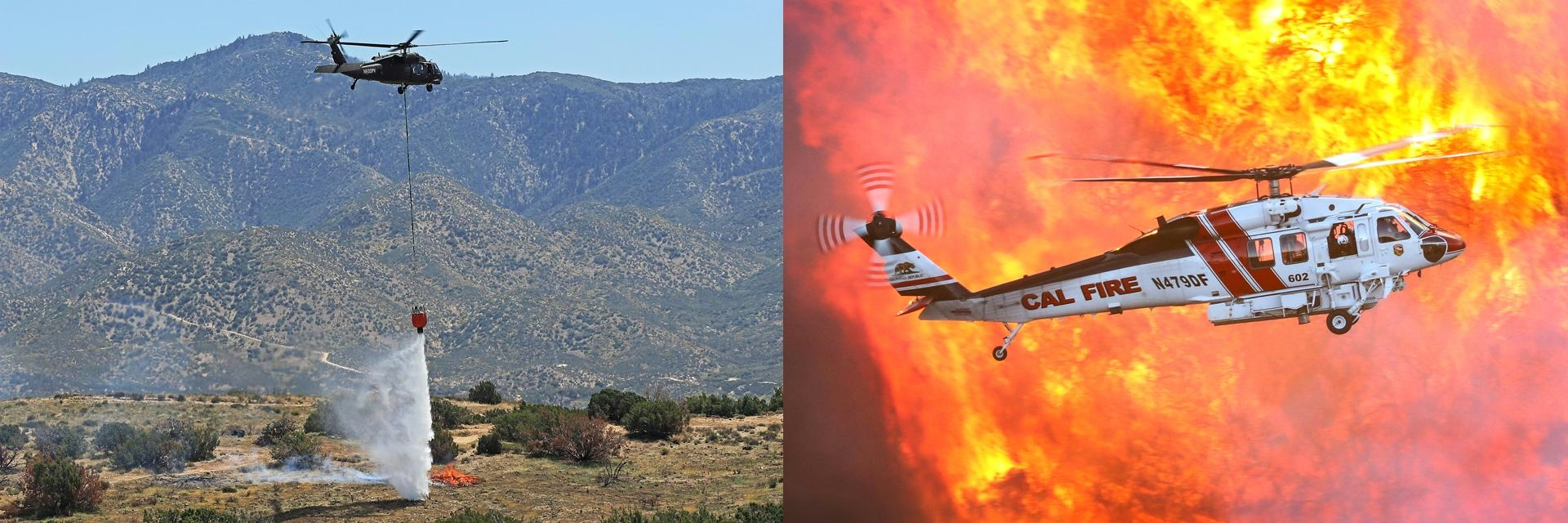
The aerial firefighting sector has witnessed a notable surge in innovation this year, as new technologies and products emerge with the potential to transform wildfire response strategies. The increasing frequency and severity of wildfires worldwide—highlighted by last year’s catastrophic fires in southern California—have intensified the search for more effective and efficient firefighting methods. Industry leaders are now focusing on forward-looking solutions that could redefine how aerial resources are deployed in combating these disasters.
One pioneering concept originated in 2021 when Jacob Haram, an offshore support helicopter pilot, was inspired by media coverage of firefighters battling intense wildfires with limited equipment. Observing the challenges faced on the ground, Haram envisioned the deployment of water cannons fed directly from nearby water sources, operating autonomously to suppress flames. This approach would allow firefighters and resources to be redirected to more critical areas of the fire. Haram’s subsequent research revealed that while compact water cannons already existed, their deployment was constrained by the need for ground personnel and manual handling, limiting their operational flexibility.
Toward Air-Portable Firefighting Systems
Building on these insights, Haram, now CEO of the aviation start-up Vest Aero Tech, developed the concept of an air-portable or mobile firefighting cannon. This system is designed for rapid aerial deployment, minimizing the reliance on ground crews in hazardous environments. Although the equipment’s official trade name remains undecided, the innovation has been submitted for patent protection, signaling a significant step toward practical application.
Despite the promise of such advancements, the path to widespread adoption remains challenging. Regulatory frameworks impose rigorous safety and operational standards that new technologies must satisfy before integration into existing firefighting protocols. Additionally, there is some resistance from traditional firefighting advocates who question the reliability and effectiveness of automated or remotely operated systems, underscoring the need for broader public acceptance.
A Competitive and Collaborative Future
The competitive landscape in aerial firefighting technology is intensifying on a global scale. Companies such as Volatus Aerospace are making strides under initiatives like the U.S. Drone Dominance Program, while European firm Metrea has recently showcased its Fireswift system, exemplifying the international race to develop cutting-edge aerial firefighting solutions. These advancements have prompted established industry players to enhance their own capabilities and, in some cases, to engage in lobbying efforts aimed at influencing regulatory policies and market conditions.
As innovators like Vest Aero Tech continue to push technological boundaries, the aerial firefighting industry is entering a period of significant transition. The successful integration of new technologies will depend not only on technical innovation but also on effective collaboration among regulators, emergency services, and the public. Such cooperation is essential to ensure that these emerging solutions can be deployed safely and effectively in the ongoing battle against increasingly severe wildfires.

Etihad Airways Suspends Airbus A380 Flights on Key Route

Aditya Birla Group Seeks Approval for Aircraft Leasing in GIFT City

Qatar Airways Highlights Innovation and Connectivity at Arabian Travel Market 2026

Hong Kong's Five-Year Plan Includes Andrew Fan's Aircraft Parts Processing Hub Proposal

ACIA Aero Leasing Delivers ATR72-600 to Air Nostrum

RTX Appoints Jill Albertelli as Head of Pratt & Whitney

TAT Technologies Joins Beyond Aero Hydrogen Aircraft Program

AURAK Study Highlights Barriers to Air Taxi Adoption in Emerging Economies

Xiamen Air Selects Altitude for 787 Maintenance at Heathrow

Etihad and Swissport Extend Global Partnership
