
imabge

AeroGenie: il tuo copilota intelligente.

Chiedi qualsiasi cosa. Analizza tutto. Agisci all'istante.

Tendenze

Categories

Aerolíneas Argentinas Grounds Several 737s Following Two Engine Failures

October 24, 2025By ePlane AI
Aerolíneas Argentinas Grounds Several 737s Following Two Engine Failures
0
0
Aerolíneas Argentinas
Boeing 737-800
Engine Failure

Aerolíneas Argentinas Grounds Several Boeing 737s Following Two Engine Failures

Dual Engine Failures Prompt Immediate Action

Aerolíneas Argentinas has temporarily grounded multiple Boeing 737-800 aircraft after experiencing two separate engine failure incidents within a single week. Both events involved the left CFM56-7BE engine and occurred shortly after takeoff, raising significant concerns about the reliability of the affected fleet and prompting increased scrutiny from aviation regulators.

The first incident took place on October 9 at Almirante Marcos Alberto Zar International Airport in Trelew. Flight AR1802, operated by a Boeing 737-8HX registered as LV-FQY, had safely completed a journey from Buenos Aires with 165 passengers. However, during the subsequent departure as flight AR1803, the aircraft’s left engine failed and caught fire while accelerating on runway 25 at approximately 100 knots. The flight crew promptly aborted the takeoff and safely cleared the runway via the first taxiway. Following repairs, the aircraft was ferried back to Buenos Aires for further maintenance.

A second incident occurred six days later on October 15 at Aeroparque Jorge Newbery Airport in Buenos Aires. Flight AR1526, operated by another Boeing 737-800 registered LV-FSK and carrying 168 passengers, experienced a similar left engine failure and fire shortly after takeoff. The event was widely captured on video. The crew responded by shutting down the engine, maintaining control at 1,200 feet, and climbing to 5,000 feet before diverting safely to Ezeiza Airport, where the aircraft landed 21 minutes after departure.

Operational and Industry Implications

In response to these incidents, Aerolíneas Argentinas has grounded several Boeing 737-800 aircraft equipped with engines matching those involved in the failures. While this precaution prioritizes passenger safety, it has caused operational disruptions and may lead to financial consequences for the airline. The grounding has also intensified oversight from aviation authorities and heightened passenger concerns regarding the reliability of Boeing 737 aircraft.

The situation presents a potential advantage for competing airlines, which may seek to capitalize on Aerolíneas Argentinas’ challenges by emphasizing their own safety records and attempting to attract its customer base. Market analysts predict the airline could experience a temporary decline in stock value and face mounting pressure to restore public and regulatory confidence.

Beyond the immediate effects on Aerolíneas Argentinas, these incidents could trigger a wider industry reassessment of engine reliability and maintenance protocols, particularly for operators of Boeing 737 models powered by CFM engines. Aerolíneas Argentinas has pledged full cooperation with aviation authorities and engine manufacturers as investigations continue, underscoring its commitment to safety and transparency throughout the process.
More news
GE Aerospace Shares Rise on FAA LEAP Engine Directive and China Partnership

GE Aerospace Shares Rise on FAA LEAP Engine Directive and China Partnership

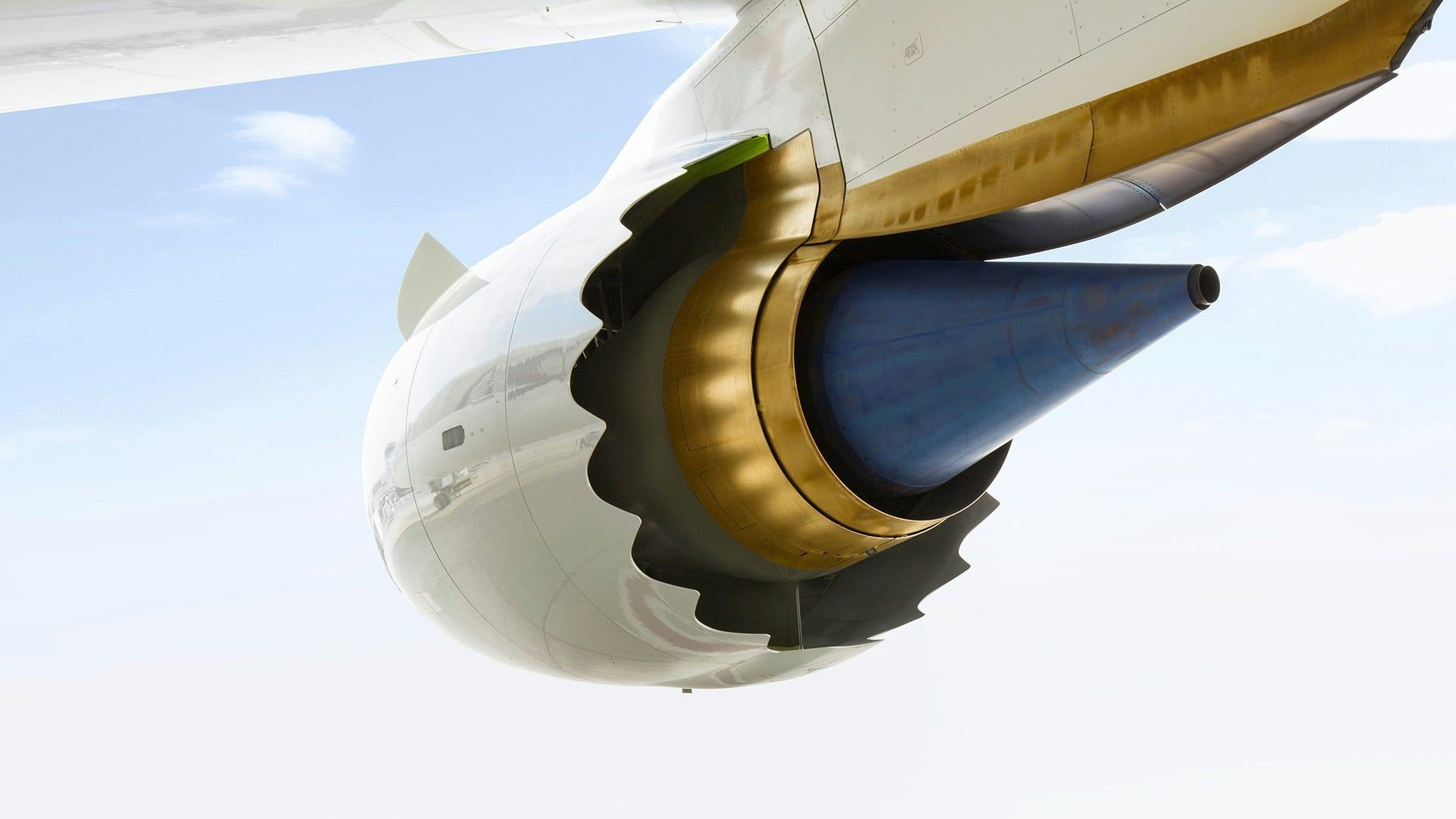
GE Aerospace Shares Rise on FAA LEAP Engine Directive and China Partnership GE Aerospace (NYSE: GE) shares experienced a notable increase of nearly 4%, closing at approximately $299.85 on Friday, December 12, 2025. The stock fluctuated between $289 and $301 during the session, extending its strong performance throughout 2025. This upward movement was driven by a combination of regulatory developments, positive analyst coverage, and strategic international partnerships, which collectively bolstered investor confidence and reignited discussions regarding the company’s valuation and growth potential. Regulatory and Strategic Catalysts Citi’s aerospace and defense analyst, John Godyn, recently initiated coverage on the sector with a bullish outlook, identifying aerospace as a long-term “megatrend” propelled by robust air travel demand, increased jet production, and advancements in defense and space technologies. Citi assigned GE Aerospace a Buy rating and set a price target of $386, one of the most optimistic on Wall Street. The firm emphasized GE’s leadership in engine technology and aftermarket services as key drivers of future growth. While such analyst endorsements do not immediately alter the company’s fundamentals, they often influence market sentiment and attract institutional investors, as reflected in recent positive earnings revisions and increased buying activity. Concurrently, the Federal Aviation Administration (FAA) issued Airworthiness Directive 2025-21-03 concerning certain CFM International LEAP-1A engines. This directive, effective December 29, 2025, responds to reports of in-flight shutdowns linked to cracks found in high-pressure turbine rotor blades. It mandates initial and recurring borescope inspections, with the possibility of more frequent checks or blade replacements depending on findings. Although these reliability concerns could dampen sentiment, the increased maintenance requirements may enhance GE’s aftermarket service revenues, a factor closely monitored by investors. Further strengthening its position, GE Aerospace announced a new strategic partnership with China, aimed at expanding its presence in the world’s fastest-growing aviation market. This collaboration is expected to open new growth opportunities and potentially mitigate near-term challenges arising from regulatory scrutiny or supply chain disruptions. Market Dynamics and Industry Outlook The recent surge in GE’s share price has sparked debate among analysts regarding the sustainability of its valuation. Some caution that the stock may be overextended following its strong performance in 2025, questioning whether it can maintain its premium valuation multiples. Continued operational execution, including securing new orders at major industry events such as the Dubai Airshow, will be essential to justify current price levels and support further gains. GE’s dominant position in the competitive engine market means that rival firms are likely to respond aggressively. The company’s ability to leverage industry trends, navigate regulatory challenges, and capitalize on high-profile partnerships will be critical to sustaining investor confidence in the months ahead. Conclusion Amid strong demand for air travel, evolving regulatory landscapes, and strategic international collaborations, GE Aerospace remains a central figure in the aerospace sector’s growth story. The coming period will be pivotal in determining whether the company can uphold its high expectations and maintain momentum within an increasingly dynamic and competitive environment.
AI-Driven Innovation Transforms the Airline Industry
AI-Driven Innovation Transforms the Airline Industry

AI-Driven Innovation Transforms the Airline Industry Artificial intelligence is rapidly revolutionizing the airline industry, moving beyond incremental enhancements to fundamentally alter how airlines operate and engage with customers. While many companies continue to treat AI as an add-on feature, a clear divide is emerging between those who merely augment existing systems and those who are reconstructing their platforms to embed intelligence at every level. A New Paradigm in Airline Technology IBS Software exemplifies this shift toward an AI-first approach. Instead of integrating AI into isolated functions, the company is redesigning its core architecture, data models, and workflows to make data, automation, and contextual decision-making foundational elements. Chris Branagan, CTO at IBS Software, emphasized that the industry remains dominated by “AI add-ons,” which no longer deliver meaningful transformation. He argued that teams must adopt an AI-first mindset rather than treating AI as a peripheral enhancement. This transformation demands a comprehensive reimagining of airline platforms, affecting everything from product design and pricing to how frontline employees interact with technology. The integration of AI at such a fundamental level presents significant challenges, including potential disruptions to company identity and established processes. Airlines that fail to adapt risk losing relevance and market share to AI-native competitors capable of delivering faster, more personalized experiences. Strategic Collaboration and Industry Impact To accelerate its AI-driven transformation, IBS Software has strengthened its partnership with Amazon Web Services (AWS) through a Strategic Collaboration Agreement (SCA). This partnership extends beyond conventional cloud hosting to a co-engineering relationship, with both companies collaborating closely on architecture, AI frameworks, and long-term product development. Branagan described AWS as “almost an extension of our architecture arm,” highlighting the active involvement of AWS teams in addressing complex design challenges and ensuring alignment with the latest cloud-native and AI-first standards. The collaboration also includes workshops, go-to-market support, and jointly developed frameworks that serve as blueprints for scaling the platform. Branagan noted that AWS is highly selective with SCAs, engaging in only a few in recent years, underscoring the significance of this partnership as a major opportunity to build a new generation of airline platforms. With this robust foundation, IBS is deploying AI across airline retailing and operations in ways that transcend simple automation. Product teams are redesigning workflows from the perspective of end users—such as crew schedulers and retail managers—to identify opportunities where AI can reduce friction and enable smarter decision-making. Early adopters of these AI-driven approaches have reported double-digit improvements in first-call resolution and upsell rates, resulting in enhanced customer service and increased loyalty. Industry leaders broadly agree that AI will redefine travel planning, booking, and the overall customer experience by 2026. However, uncertainties remain regarding customer acceptance of AI’s expanding role in travel and hospitality, alongside ongoing concerns about ensuring that AI-driven decisions remain consistent with brand values. As the airline industry accelerates its integration of AI, companies face a critical choice: to embrace AI as a core capability and navigate the challenges of transformation, or risk falling behind in a future where intelligence is embedded at every level. For those willing to lead, the potential rewards extend beyond operational improvements to reshaping the entire travel experience.
Beehive’s 3D-Printed Frenzy Engine Advances Toward 2026 Flight Tests

Beehive’s 3D-Printed Frenzy Engine Advances Toward 2026 Flight Tests

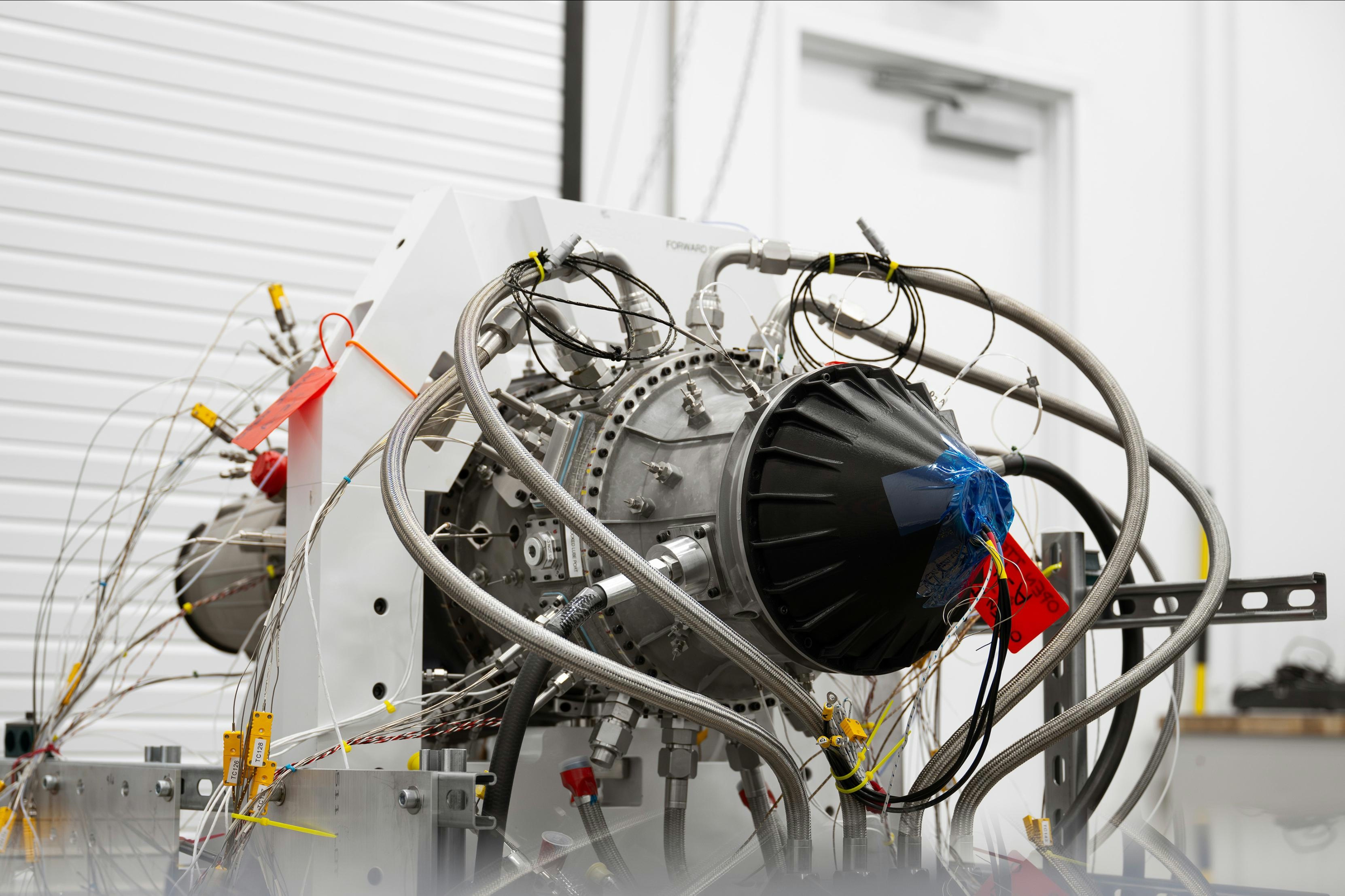
Beehive’s 3D-Printed Frenzy Engine Advances Toward 2026 Flight Tests High-Altitude Testing Marks a Key Milestone Additive manufacturing is revolutionizing military propulsion by drastically shortening the timeline from engine design to testing. This rapid development cycle aligns with the Pentagon’s objective to deploy quickly produced powerplants for a new generation of uncrewed aircraft. In this context, Beehive Industries has reached a significant milestone with the successful completion of high-altitude testing for its 200-pound-thrust, 3D-printed Frenzy engine, developed specifically for the US Air Force. The recent tests, conducted at a government facility in Ohio, represent a crucial step toward the engine’s planned flight trials in early 2026. Frenzy belongs to a new class of small jet engines created almost entirely through advanced digital modeling and additive manufacturing. This approach enables rapid prototyping, iterative modification, and streamlined production. Building on the success of Beehive’s earlier Rampart engine, Frenzy exemplifies the Pentagon’s pursuit of scalable propulsion solutions tailored for uncrewed systems. David Kimball, Chief Technology Officer at Beehive Industries, highlighted the significance of this achievement: “This milestone confirms Frenzy’s readiness for flight integration. In less than a year, we have gone from concept to proven high-altitude performance, ahead of schedule, thanks to our talented and determined team. Frenzy is now flight-ready, and our production system is prepared to scale alongside it.” Accelerated Development and Test Outcomes Beehive’s development timeline for the Frenzy engine has been notably compressed. Within four months, the company completed ground tests on six engines before shipping two prototypes to Ohio for altitude trials. During these tests, engineers assessed ignition behavior, low-pressure stability, fuel consumption, and thermal performance under demanding conditions. The engines demonstrated reliable ignition and operation across the full flight envelope, achieving rapid acceleration from light-off to full power. Turbine temperatures and fuel consumption metrics exceeded initial predictions, while the hardware remained in “like new” condition after runtime equivalent to a full mission life. These results are particularly significant given the unique stresses imposed by high-altitude environments on small turbine engines. Stable ignition and smooth acceleration are critical factors, especially for engines intended for high-volume, cost-sensitive uncrewed platforms. Kimball emphasized that the test campaign validated not only the engine’s capabilities but also Beehive’s broader development philosophy. “We are not just accelerating development timelines; we are ensuring America’s warfighters have the technology they need, when they need it most,” he stated. Future Challenges and Industry Implications Looking ahead, Beehive faces the challenge of integrating the Frenzy engine with its flight test vehicle and addressing any technical issues that may arise during upcoming flight trials. The successful demonstration has already attracted heightened interest from defense contractors and potential customers focused on autonomous fighter jets. This achievement is also expected to intensify competition within the industry. Major players such as Pratt & Whitney, GE Aerospace, Rolls-Royce, and Honeywell Aerospace are anticipated to accelerate their own engine development efforts, targeting the emerging market for autonomous military aircraft. Beehive’s “additive-first” strategy—emphasizing rapid cycles of printing, testing, refining, and reprinting engine components—continues to define its development pipeline. As the defense sector moves toward high-volume, rapidly evolving uncrewed systems, Beehive’s approach positions the company at the forefront of next-generation propulsion innovation.
CAAM and CRRG Form Alliance in Aviation Aftermarket

CAAM and CRRG Form Alliance in Aviation Aftermarket

CAAM and CRRG Form Strategic Alliance in Aviation Aftermarket China Aviation Aftermarket Holdings (CAAM), an affiliate of China Aircraft Leasing Group (CALC), has entered into a strategic cooperation agreement with China Resources Recycling Group International Investment (Shenzhen) (CRRG International Investment). This marks CAAM’s inaugural collaboration with CRRG and establishes a foundation for a long-term partnership focused on the aviation aftermarket sector. Partnership Objectives and Strategic Focus The alliance is designed to develop comprehensive solutions for managing retired aircraft, emphasizing bonded management of aircraft components, transparent acquisition procedures, and compliant sales of parts. By leveraging CAAM’s expertise in aviation asset management alongside CRRG’s strengths in international trade, resource recycling, and risk management compliance, the two companies aim to create a full-cycle ecosystem encompassing the import, asset management, disassembly, and recycling of retired aircraft. This integrated approach seeks to improve operational efficiency, ensure adherence to regulatory standards, and maximize the residual value of aircraft assets throughout their lifecycle. Furthermore, the partnership supports the advancement of a circular economy model within the aviation industry, promoting the high-value reuse of retired aircraft and components. Such initiatives align with China’s dual carbon goals by reducing resource consumption and environmental impact, while contributing to sustainable growth in aerospace through industrial upgrading. Challenges and Competitive Landscape Despite the promising outlook, the alliance faces significant challenges. Navigating complex regulatory approvals, harmonizing operational processes between the two organizations, and contending with competitive pressures from established industry players will be critical to its success. The global aviation aftermarket remains fiercely competitive, with major companies such as Rolls-Royce and Safran actively expanding their maintenance, repair, and overhaul (MRO) networks. Rolls-Royce recently strengthened its partnership with Emirates, while Safran is investing heavily in its MRO facility in India, underscoring the intensity of competition CAAM and CRRG will encounter. Market analysts have expressed reservations about the alliance’s capacity to achieve the anticipated efficiencies and cost savings, given the complexities involved in operational integration and compliance with stringent regulatory standards. Nevertheless, CAAM’s proven track record as CALC’s dedicated platform for managing mid-life, end-of-life, and used aircraft assets—successfully unlocking residual value through structured aftermarket solutions—positions it favorably for this new venture. The partnership not only consolidates CAAM’s position in the global aviation aftermarket but also opens avenues for broader cooperation, innovation, and future expansion in aircraft asset management and recycling. The alliance’s ultimate success will depend on its ability to surmount operational and regulatory obstacles while delivering measurable value in a rapidly evolving market.
AI and Digital Twins Enhance Airport Operations Amid Global Challenges
AI and Digital Twins Enhance Airport Operations Amid Global Challenges

AI and Digital Twins Enhance Airport Operations Amid Global Challenges The global Airport IT Systems market is experiencing significant transformation, propelled by advancements in artificial intelligence (AI), digital twins, automation, and contactless technologies. These innovations are driving improvements in operational efficiency, weather disruption management, security enhancement, and passenger flow optimization. As major airports increasingly implement Airport Predictive Operations Centres (APOCs), biometric processing, and smart infrastructure, the sector is anticipated to expand at a compound annual growth rate (CAGR) of 3.3% between 2025 and 2031. AI-Driven Solutions Mitigate Weather and Operational Disruptions Airports around the world are adopting AI and predictive analytics to address operational challenges such as adverse weather conditions, thereby enhancing passenger experience and safety. Indira Gandhi International Airport in Delhi serves as a prominent example, utilizing AI-powered predictive models alongside three runways equipped with CAT-III Instrument Landing Systems to facilitate safe landings in dense fog. The airport’s APOC integrates real-time data streams, weather forecasts, and airside inputs to enable swift decision-making regarding runway utilization, gate assignments, and aircraft sequencing. Collaboration with the Indian Institute of Tropical Meteorology’s Winter Fog Experiment (WiFEX) further refines fog prediction capabilities, allowing for proactive allocation of resources. At a national level, the Airports Authority of India is modernizing air traffic management through the deployment of new automation tools and satellite-based navigation systems. These upgrades align with international standards and address recent technical glitches, underscoring the critical importance of resilient IT infrastructure and robust cybersecurity measures to maintain uninterrupted airport operations. Digital Twins and APOCs Revolutionize Airport Management Contemporary APOCs harness the power of digital twins, AI, machine learning, big data analytics, and the Internet of Things (IoT) to deliver comprehensive, real-time situational awareness across terminal, landside, and airside operations. Hyderabad Airport’s implementation of such technologies by WAISL exemplifies the benefits of integrated airport management, including improved queue management, enhanced disruption response, and progress toward sustainability objectives. Digital twins facilitate the simulation of emergencies, crowd dynamics, and spatial optimization, enabling a shift from reactive to predictive operational strategies. Noida International Airport is emerging as a fully digital facility, featuring innovations such as self-bag-drop counters, biometric boarding gates, and seamless connectivity designed to prioritize speed and passenger convenience. These advancements incorporate locational intelligence and mobile crowd data analytics, providing detailed insights that enhance operational efficiency and passenger throughput while reducing traditional bottlenecks. Enhancing Passenger Processing, Security, and Ethical Governance The adoption of contactless technologies—including biometric screening, mobile boarding passes, and touchless kiosks—addresses heightened hygiene concerns in the post-pandemic era while streamlining passenger processing. Strategic partnerships, such as that between SITA and Palo Alto Networks, are reinforcing cybersecurity frameworks amid escalating threats. Infrastructure upgrades at major hubs like Heathrow Airport further bolster network resilience. Security platforms now integrate AI-enhanced video analytics, perimeter intrusion detection systems, and zero-trust architectures to strengthen overall safety. Software solutions dominate the market landscape, with integrated management platforms serving airlines, ground handlers, and security personnel. Cloud-based data sharing and real-time decision support systems are becoming industry standards, while passenger information systems evolve into sophisticated cloud dashboards. Despite these technological advances, the rapid integration of AI and digital twins raises significant concerns. Industry leaders and surveys have highlighted risks related to data privacy breaches and algorithmic bias, fostering skepticism regarding the self-regulation practices of major technology providers. These challenges emphasize the necessity for robust ethical frameworks and transparent governance structures. In response, competitors are adopting AI-native Digital Business Support Systems (BSS) that enable continuous iteration and automation, leveraging digital twins to proactively enhance passenger experiences and incorporating richer urban insights through mobile crowd data. As airports continue to embrace these cutting-edge technologies, the emphasis remains on developing smart, resilient, and ethically governed systems that prioritize operational efficiency, safety, and passenger satisfaction within an increasingly complex global environment.
Alaska Airlines Introduces AI Tool to Simplify Trip Planning
Alaska Airlines Introduces AI Tool to Simplify Trip Planning

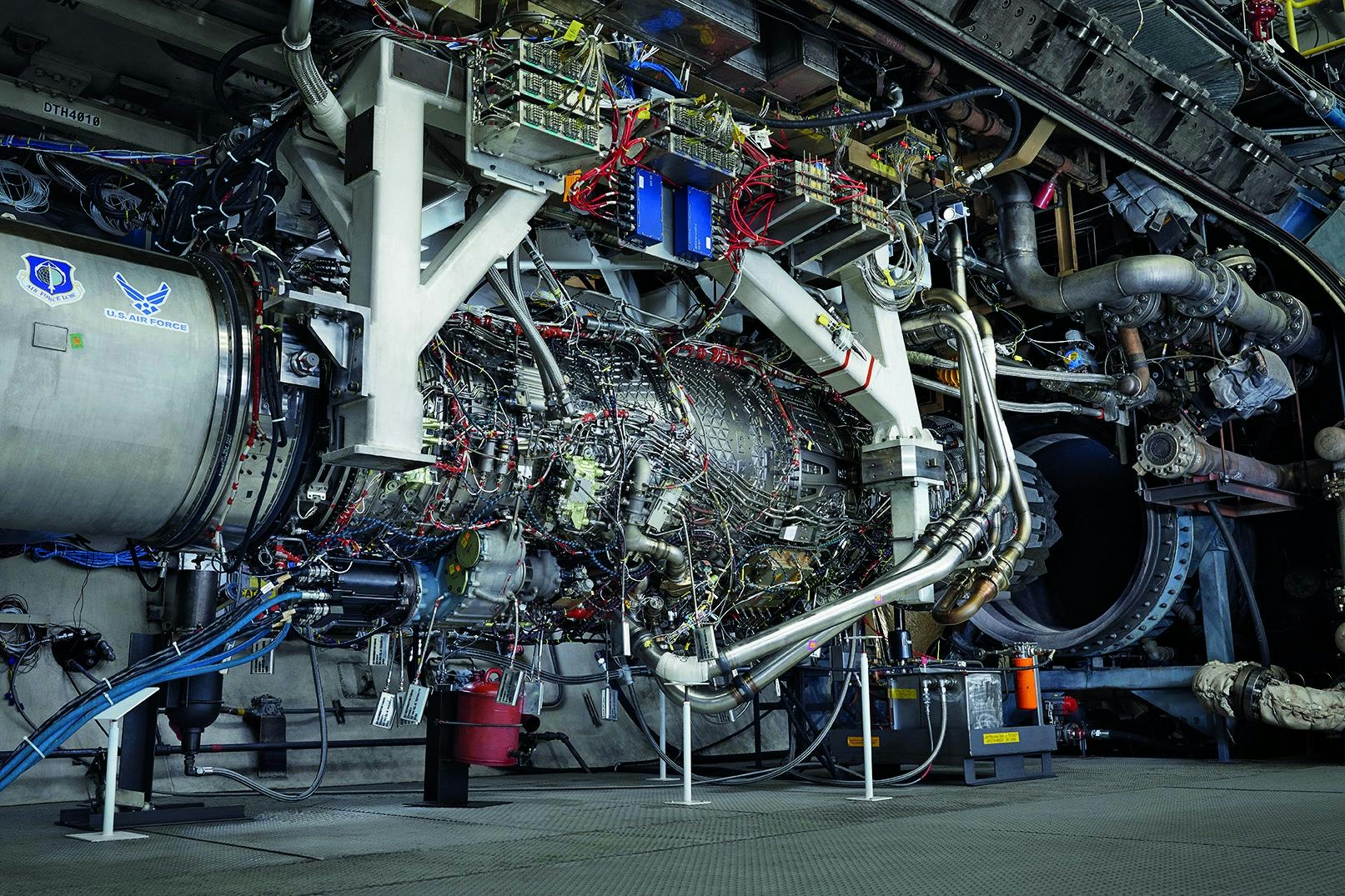
Alaska Airlines Launches AI Tool to Simplify Trip Planning Alaska Airlines has unveiled **Alaska Inspires**, an AI-powered natural language search tool designed to streamline and personalize the travel planning experience. Developed using Microsoft Azure OpenAI within Foundry Models, the platform enables travelers to discover, compare, and book trips more efficiently. According to a Microsoft blog post, the tool reduces destination planning time by up to 75%, marking a significant advancement in travel technology. Features and Integration Alaska Inspires supports over 90 languages and includes voice input functionality, broadening accessibility for a diverse global audience. The tool is seamlessly integrated with Alaska Airlines’ Atmos Loyalty Program, allowing it to tailor travel recommendations based on members’ points balances, status levels, and individual preferences. This integration aims to enhance the relevance and appeal of suggested destinations and itineraries. The airline developed Alaska Inspires in response to research indicating that customers spent an average of 40 hours researching trips to new destinations, often feeling overwhelmed by the volume of available options. Despite having a “Where We Fly” feature on its website, fewer than 1% of visitors engaged with it. Bernadette Berger, director of innovation at Alaska Airlines, emphasized the emotional and personal nature of travel discovery, stating, “Dreaming about and discovering all-new travel destinations isn’t an analytical problem. It’s one of passion that must take personal preferences and emotional desires into account.” Since its public launch in June 2024, Alaska Inspires has achieved a 7% conversion rate, exceeding the industry average of 5%. The tool has garnered a 90% guest satisfaction rating, with 87% of users expressing willingness to use it again. Alaska Airlines is actively exploring further personalization enhancements and considering expanding the application of AI tools across other departments, including human resources, finance, and operations. Industry Context and Challenges The introduction of AI-driven tools in the airline sector is accompanied by regulatory and consumer challenges. Increased scrutiny over AI-based pricing models has emerged, exemplified by similar initiatives from competitors such as Delta Air Lines. Concerns regarding data privacy and the fairness of AI-influenced pricing have generated skepticism among some travelers. In response, airlines may seek to improve their AI offerings or adopt more transparent pricing strategies to maintain competitive advantage. Alaska Airlines is part of a broader industry trend toward leveraging generative AI to enhance customer experience. In October, Delta Air Lines launched **Delta Concierge**, an AI-powered digital assistant available to select loyalty members. This tool allows users to submit natural language text or voice queries to receive personalized recommendations and proactive alerts, such as passport expiration reminders. As airlines continue to invest in artificial intelligence, the industry faces a complex landscape of opportunities to improve customer engagement alongside challenges related to transparency, regulation, and consumer trust.
Seven Breakthrough Commercial Aircraft Engines
Seven Breakthrough Commercial Aircraft Engines

Seven Breakthrough Commercial Aircraft Engines Identifying the most revolutionary commercial aircraft engines requires consideration of various dimensions of innovation, as well as a broad definition of what constitutes a commercial aircraft engine. This overview encompasses early piston engines, turboprops, and jet engines, including both technology demonstrators and widely produced models. As the industry embarks on the development of the next generation of aero engines, it confronts not only technical hurdles but also significant economic and competitive pressures that will shape future advancements. Wright J-4/J-5 "Whirlwind" Piston Engine (1920s) The Wright Whirlwind family, particularly the J-5 model, represented a pivotal advancement in aviation by introducing the first truly reliable air-cooled radial engines for commercial aircraft. Manufactured by Wright Aeronautical, which later became Curtiss-Wright, these engines addressed the critical issue of in-flight failures and overheating that plagued earlier designs. The Whirlwind’s reliability made passenger air travel more practical and safe, powering iconic aircraft such as the Fokker F.VII and the Ford Trimotor. Most notably, it enabled Charles Lindbergh’s historic nonstop transatlantic flight in the Spirit of St. Louis. This breakthrough established a new benchmark for engine dependability, laying the groundwork for subsequent innovations like the Pratt & Whitney Wasp and Wright Cyclone series. Pratt & Whitney Wasp Series (1920s–1940s) Building on the foundation set by the Whirlwind, the Pratt & Whitney Wasp series emerged as one of the most influential air-cooled radial piston engines in commercial aviation. Founded by Frederick B. Rentschler after his departure from Wright Aeronautical in 1925, Pratt & Whitney developed the R-1340 Wasp and its successors, including the R-1830. These engines featured a two-row radial design that delivered increased power without adding undue complexity or weight. Throughout the 1930s and 1940s, the Wasp series became central to commercial aviation, solidifying Pratt & Whitney’s position as a leading engine manufacturer. Industry Challenges and Future Directions The commercial aviation sector today faces formidable challenges as it prepares for a new era of propulsion technology. Maintenance costs for standard engines can reach up to €200,000 per month per aircraft, highlighting the pressing need for innovation. With the global commercial fleet expected to double by 2044, a comprehensive replacement cycle for propulsion systems is inevitable, intensifying competition among engine manufacturers. In response, Pratt & Whitney continues to invest in ducted-fan technology, while GE Aerospace advances hybrid-electric propulsion systems. The market is also shaped by the influence of major airframe manufacturers. Despite recent setbacks, Boeing is anticipated to leverage its industrial and political clout to maintain a significant role in the sector. Meanwhile, Embraer has reported improvements in Pratt & Whitney’s PW1900G engine turnaround times and spare parts availability, enhancing operator confidence and reducing the risk of aircraft groundings due to engine issues. As the industry evolves, the legacy of breakthrough engines such as the Whirlwind and Wasp series underscores that technological revolutions are driven not only by innovation but also by the capacity to address practical operational challenges. The forthcoming generation of revolutionary engines is expected to emerge at the nexus of reliability, efficiency, and adaptability to shifting market demands.
Can Emirates and United Airlines Help Boeing Outsell Airbus in 2025?
Can Emirates and United Airlines Help Boeing Outsell Airbus in 2025?

Can Emirates and United Airlines Help Boeing Outsell Airbus in 2025? As the aviation industry approaches a critical juncture, the longstanding rivalry between Boeing and Airbus is intensifying. For the first time in six years, Boeing appears poised to potentially outsell Airbus in net aircraft orders, a development largely driven by substantial agreements with prominent carriers such as Emirates and United Airlines. Major Orders Bolster Boeing’s Position Emirates, widely recognized for its premium service and extensive global network, has reaffirmed its commitment to Boeing through a landmark $41.4 billion order for 65 Boeing 777-9 aircraft. United Airlines, one of the largest carriers in the United States, has also placed significant orders for Boeing’s 787 Dreamliner, further strengthening Boeing’s momentum. These high-profile deals are central to Boeing’s strategy to reclaim leadership in aircraft sales, particularly within the lucrative long-haul segment. A Dynamic and Competitive Market Despite Boeing’s recent surge, the competitive landscape remains fluid and highly contested. Airbus continues to lead in aircraft deliveries and maintains a substantial order backlog, underscoring its enduring market strength. Challenges have also emerged that could complicate Boeing’s path to dominance. Notably, Flydubai, a key Middle Eastern carrier, recently announced a $24 billion shift from Boeing to Airbus, highlighting that airline loyalty is not assured and that Airbus remains a formidable competitor. Emirates itself is adopting a balanced approach, supplementing its Boeing fleet with ongoing investments in Airbus aircraft, including eight A350-900s. Furthermore, persistent delays in the Boeing 777X program have raised concerns among customers and industry analysts, potentially affecting Boeing’s ability to fulfill its ambitious order book within the expected timelines. Implications for Passengers and the Industry For travelers, these developments may translate into tangible benefits. The introduction of next-generation aircraft such as the Boeing 787 Dreamliner and 777X, alongside the Airbus A350, promises advancements in fuel efficiency, cabin comfort, and onboard amenities. As airlines modernize their fleets, passengers can anticipate quieter cabins, improved air quality, and enhanced in-flight entertainment experiences. Concurrently, the intense competition between Boeing and Airbus could influence ticket pricing and route availability as carriers strive to optimize the value of their new investments. Whether Boeing can ultimately outsell Airbus in 2025 will depend not only on the volume of orders secured from major airlines like Emirates and United but also on its capacity to deliver aircraft on schedule and adapt to evolving market conditions. With competitor strategies and market responses still unfolding, the contest between these aviation giants is set to shape the future trajectory of global air travel.
Airbus CEO Acknowledges Boeing May Lead in 2025 Orders
Airbus CEO Acknowledges Boeing May Lead in 2025 Orders

Airbus CEO Acknowledges Boeing’s Potential Lead in 2025 Aircraft Orders European aerospace giant Airbus has conceded that Boeing may surpass it in aircraft orders for 2025, signaling a possible shift in the competitive landscape between the two industry leaders. In an interview with France’s Inter Radio, Airbus CEO Guillaume Faury acknowledged that Boeing is on track to lead in net orders this year. Between January and November, Boeing secured 908 net orders after cancellations, compared to Airbus’s 700. November’s figures further underscored Boeing’s momentum, with the American manufacturer recording 149 firm orders against Airbus’s 75, suggesting Boeing could finish the year ahead in total orders for the first time in six years. Backlog and Production Challenges Despite the potential setback in new orders, Airbus retains a significant advantage in its order backlog, which Faury emphasized will sustain production for at least the next five years. He noted that Airbus’s consistent lead in orders over the past five years has resulted in a substantially larger backlog than Boeing’s. Faury also highlighted that Boeing’s recent surge in orders has been partly aided by favorable tariff and trade negotiations. Airbus has encountered several operational challenges in recent months. A software recall affecting approximately 6,000 A320 family aircraft and a quality issue involving metal panels have negatively impacted the company, contributing to a decline in its share price. Faury is currently evaluating the effects of a fuselage quality concern on certain A320 jets, which led to weak handovers in November and may influence December deliveries. These issues come as Airbus strives to meet its year-end production target of around 820 aircraft. Market Position and Future Outlook Despite these hurdles, Airbus continues to lead the industry in aircraft deliveries and remains the world’s largest manufacturer by this measure. The company is actively expanding its global production capacity, having recently doubled output at its Tianjin, China assembly facility and introduced new production lines in the United States to accommodate growing demand. Airbus aims to increase monthly production to 75 aircraft by 2027. Demand for both manufacturers’ products remains robust. Boeing’s resurgence is largely driven by the enduring popularity of the 787 Dreamliner, which appeals to airlines seeking efficient long-haul widebody aircraft. Meanwhile, Airbus has experienced strong interest in its A321 series, particularly the A321XLR, which is transforming the narrowbody market by enabling airlines to operate longer routes with smaller, more cost-effective planes. This year, Airbus reached a significant milestone as the A320 surpassed the Boeing 737 to become the world’s most popular commercial airliner. Both companies continue to compete fiercely for market share in China, a critical region where internal order targets remain ambitious. While Boeing appears poised to lead in orders for 2025, Airbus’s substantial backlog and ongoing expansion efforts position it well for sustained competitiveness in the years ahead.
Los Angeles Introduces Air Taxis Ahead of Olympics

Los Angeles Introduces Air Taxis Ahead of Olympics

Los Angeles to Launch Air Taxis for 2028 Olympics, Ushering in New Era of Urban Mobility As Los Angeles prepares to host the 2028 Olympic and Paralympic Games, the city is set to introduce a groundbreaking advancement in urban transportation. Archer Aviation has been appointed the official air taxi provider for the LA28 Games, deploying its Midnight electric vertical take-off and landing (eVTOL) aircraft to transport VIPs, officials, and key stakeholders across the expansive metropolitan area. This initiative represents a significant step forward in integrating eVTOL technology into mainstream urban mobility. Transforming Urban Travel with eVTOL Technology Archer’s Midnight eVTOL is engineered for short, frequent trips, promising to reduce travel times that typically exceed an hour by car to just 10 to 20 minutes. Unlike previous demonstrations, this deployment will be fully operational during one of the world’s largest sporting events, marking a pivotal moment for the commercial viability of air taxis. The aircraft features 12 electric rotors that transition from vertical lift to efficient wing-borne flight, producing significantly less noise than helicopters and operating with zero emissions. While currently piloted, the design anticipates future regulatory approval for autonomous flight. Recent test flights have demonstrated the aircraft’s capability to reach altitudes above 10,000 feet and cover distances exceeding 50 miles, advancing its path toward certification. Central to this rollout is Archer’s acquisition of Hawthorne Municipal Airport, which will serve as the operational hub for the Olympic air taxi network. This facility will also act as a testing ground for artificial intelligence-driven support systems, predictive maintenance, and real-time airspace management—essential elements for managing high-volume operations. The logistics model draws from commercial aviation practices but is adapted for rapid, city-wide service, relying heavily on sophisticated software for scheduling and coordination. Challenges and Industry Context Despite the promise of this technology, several challenges remain before air taxis can become a routine part of urban transportation. Regulatory approval processes, complex airspace management, vertiport infrastructure, and integration with existing transport modes must be carefully navigated. The commercial sustainability of eVTOL services continues to face scrutiny, with market acceptance dependent on factors such as operational costs, scalability, and safety assurances. Competitors, including companies like AutoFlight, are also advancing their own air taxi solutions, with innovations such as solar-powered water platforms potentially addressing logistical hurdles. Additionally, policy developments, including previous government initiatives promoting air taxi adoption, may influence the competitive landscape and regulatory environment. With the LA28 Games expected to attract over 15 million visitors, organizers emphasize that the introduction of air taxis is intended as more than a temporary attraction. It is envisioned as a legacy project that could establish a global blueprint for smart city mobility within the next decade. Industry events such as the Festival of Speed continue to highlight advancements in propulsion and urban flight technologies, underscoring the growing momentum behind everyday air mobility. As Los Angeles moves closer to 2028, the city’s skies may soon offer a transformative alternative to ground congestion, signaling a future where urban travel is redefined by taking to the air.
Ask AeroGenie