
Trasforma le intuizioni dell’IA in azioni concrete

Tendenze
Categories
Airbus CEO Acknowledges Boeing May Lead in 2025 Orders
Airbus CEO Acknowledges Boeing’s Potential Lead in 2025 Aircraft Orders
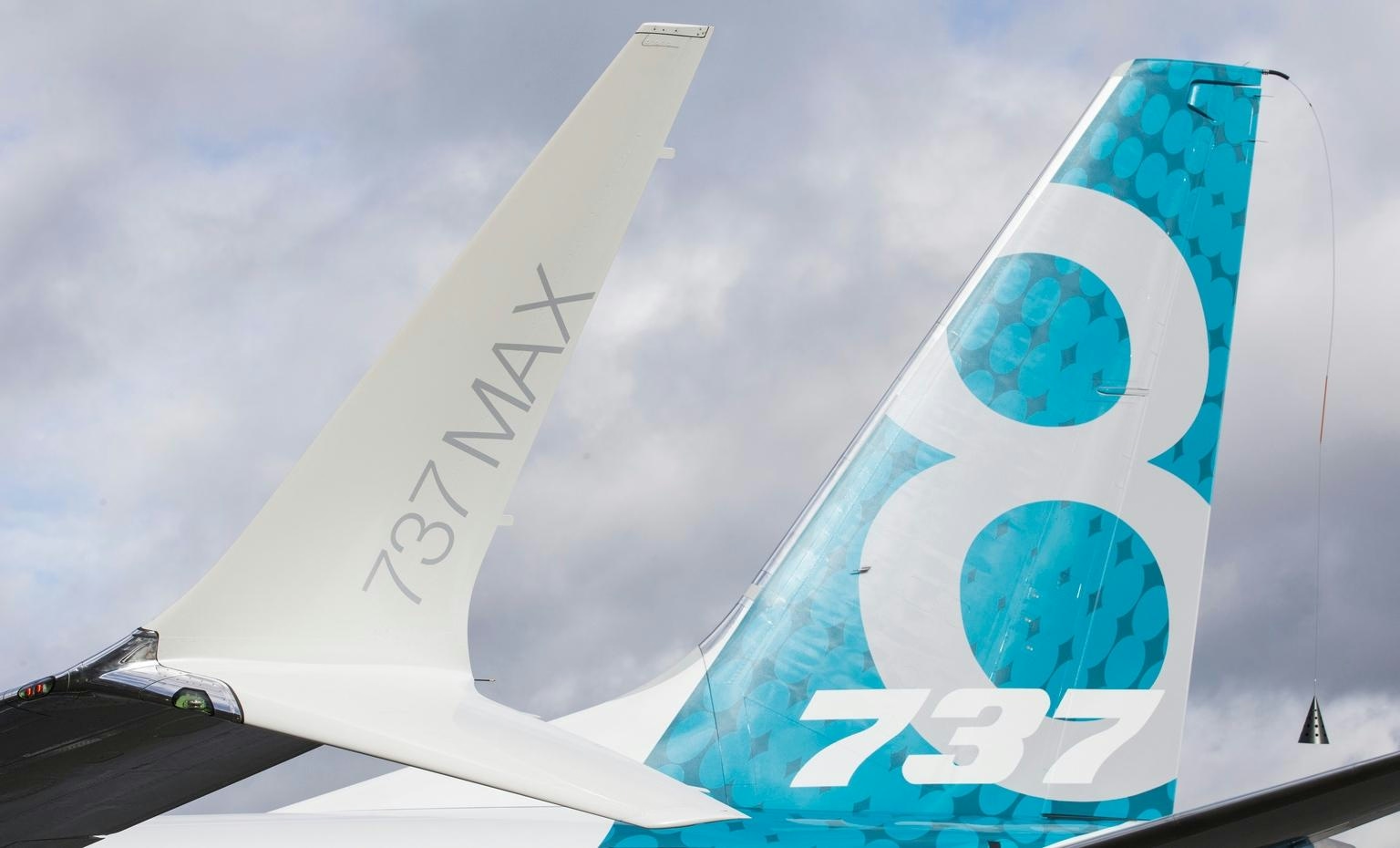
European aerospace giant Airbus has conceded that Boeing may surpass it in aircraft orders for 2025, signaling a possible shift in the competitive landscape between the two industry leaders. In an interview with France’s Inter Radio, Airbus CEO Guillaume Faury acknowledged that Boeing is on track to lead in net orders this year. Between January and November, Boeing secured 908 net orders after cancellations, compared to Airbus’s 700. November’s figures further underscored Boeing’s momentum, with the American manufacturer recording 149 firm orders against Airbus’s 75, suggesting Boeing could finish the year ahead in total orders for the first time in six years.
Backlog and Production Challenges
Despite the potential setback in new orders, Airbus retains a significant advantage in its order backlog, which Faury emphasized will sustain production for at least the next five years. He noted that Airbus’s consistent lead in orders over the past five years has resulted in a substantially larger backlog than Boeing’s. Faury also highlighted that Boeing’s recent surge in orders has been partly aided by favorable tariff and trade negotiations.
Airbus has encountered several operational challenges in recent months. A software recall affecting approximately 6,000 A320 family aircraft and a quality issue involving metal panels have negatively impacted the company, contributing to a decline in its share price. Faury is currently evaluating the effects of a fuselage quality concern on certain A320 jets, which led to weak handovers in November and may influence December deliveries. These issues come as Airbus strives to meet its year-end production target of around 820 aircraft.
Market Position and Future Outlook
Despite these hurdles, Airbus continues to lead the industry in aircraft deliveries and remains the world’s largest manufacturer by this measure. The company is actively expanding its global production capacity, having recently doubled output at its Tianjin, China assembly facility and introduced new production lines in the United States to accommodate growing demand. Airbus aims to increase monthly production to 75 aircraft by 2027.
Demand for both manufacturers’ products remains robust. Boeing’s resurgence is largely driven by the enduring popularity of the 787 Dreamliner, which appeals to airlines seeking efficient long-haul widebody aircraft. Meanwhile, Airbus has experienced strong interest in its A321 series, particularly the A321XLR, which is transforming the narrowbody market by enabling airlines to operate longer routes with smaller, more cost-effective planes.
This year, Airbus reached a significant milestone as the A320 surpassed the Boeing 737 to become the world’s most popular commercial airliner. Both companies continue to compete fiercely for market share in China, a critical region where internal order targets remain ambitious.
While Boeing appears poised to lead in orders for 2025, Airbus’s substantial backlog and ongoing expansion efforts position it well for sustained competitiveness in the years ahead.

Etihad Airways Suspends Airbus A380 Flights on Key Route

Aditya Birla Group Seeks Approval for Aircraft Leasing in GIFT City

Qatar Airways Highlights Innovation and Connectivity at Arabian Travel Market 2026

Hong Kong's Five-Year Plan Includes Andrew Fan's Aircraft Parts Processing Hub Proposal

ACIA Aero Leasing Delivers ATR72-600 to Air Nostrum

RTX Appoints Jill Albertelli as Head of Pratt & Whitney

TAT Technologies Joins Beyond Aero Hydrogen Aircraft Program

AURAK Study Highlights Barriers to Air Taxi Adoption in Emerging Economies

Xiamen Air Selects Altitude for 787 Maintenance at Heathrow

Etihad and Swissport Extend Global Partnership
