
Trasforma le intuizioni dell’IA in azioni concrete

Tendenze
Categories
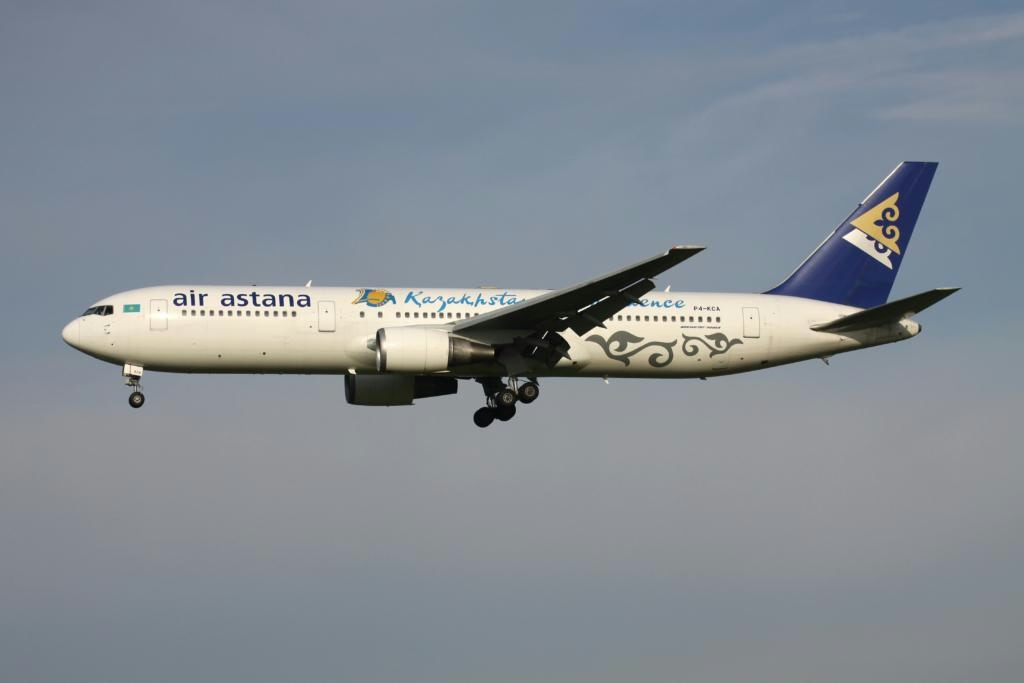
Air Astana to Retire Youngest Boeing 767s as 787s Enter Service in September
Air Astana to Retire Youngest Boeing 767s as 787s Enter Service in September
Air Astana is set to commence operations with its long-awaited Boeing 787 Dreamliners starting September 2026, marking a pivotal advancement in the airline’s fleet modernization efforts. This transition will initiate the phased retirement of the airline’s Boeing 767-300ERs, which remain among the youngest passenger 767s in active service globally.
Fleet Transition and Delivery Schedule
The announcement was made during Air Astana’s full-year earnings call on March 13, where company executives outlined both financial results and the strategic plan for updating the widebody fleet. The airline anticipates receiving its first Boeing 787-9 in September 2026, followed by a second aircraft in November, and a third by mid-2027. These deliveries come after multiple delays caused by Boeing’s production and certification challenges, which the airline’s outgoing CEO, Peter Foster, acknowledged but expressed confidence in their resolution. Foster stated, “Those challenges are now being addressed… the first aircraft will arrive in September, the second in November.”
The new Dreamliners will be configured with 30 business class and 273 economy seats, representing a significant enhancement in passenger comfort compared to the current long-haul fleet. The 787s are expected to serve many of the same routes as the 767s, including key destinations across East Asia, Southeast Asia, and Europe.
Operational and Market Implications
The replacement of the 767s with 787s may require operational adjustments and could present market challenges. Passengers familiar with the 767’s longer range and established service may need time to adapt to the new aircraft. Additionally, competitor airlines might respond by reassessing their own fleet strategies in light of Air Astana’s modernization.
Financially, Air Astana reported a mixed outlook for 2025, with EBITDA increasing by 0.8% year-on-year, while margins declined to 22.1% amid operational difficulties, including engine removals affecting its Airbus narrowbody fleet. The fleet renewal is part of a broader modernization plan that also includes finalizing orders for 25 Airbus narrowbody aircraft and up to 15 Boeing 787-9s.
The Boeing 767-300ERs and Future Outlook
The three Boeing 767-300ERs currently in service—registered EI-KEA, EI-KEB, and EI-KEC—were delivered between 2013 and 2014. These aircraft are among the last passenger 767s produced before Boeing shifted focus to freighter and military variants. They currently form the backbone of Air Astana’s intercontinental network, operating routes to Frankfurt and major Asian cities.
Foster confirmed that the Dreamliners will directly replace the existing widebody fleet, stating, “The 767s will leave the fleet in 2027 and be replaced by the 787s arriving from September this year.” While the 767 cabins were configured similarly to the upcoming Dreamliners, the new aircraft are expected to provide a superior passenger experience.
As Air Astana advances with its fleet renewal, the success of this transition will depend on the airline’s ability to manage operational changes effectively and on the reception of the new 787s by its customers. Market reactions and competitor responses will likely be influenced by Air Astana’s capacity to fulfill its modernization objectives while maintaining high service standards on its long-haul routes.

Etihad Airways Suspends Airbus A380 Flights on Key Route

Aditya Birla Group Seeks Approval for Aircraft Leasing in GIFT City

Qatar Airways Highlights Innovation and Connectivity at Arabian Travel Market 2026

Hong Kong's Five-Year Plan Includes Andrew Fan's Aircraft Parts Processing Hub Proposal

ACIA Aero Leasing Delivers ATR72-600 to Air Nostrum

RTX Appoints Jill Albertelli as Head of Pratt & Whitney

TAT Technologies Joins Beyond Aero Hydrogen Aircraft Program

AURAK Study Highlights Barriers to Air Taxi Adoption in Emerging Economies

Xiamen Air Selects Altitude for 787 Maintenance at Heathrow

Etihad and Swissport Extend Global Partnership
