
Trasforma le intuizioni dell’IA in azioni concrete

Tendenze
Categories
AirAsia Receives First Airbus A321LR Amid Shift from Widebody Aircraft
AirAsia Receives First Airbus A321LR Amid Shift from Widebody Aircraft
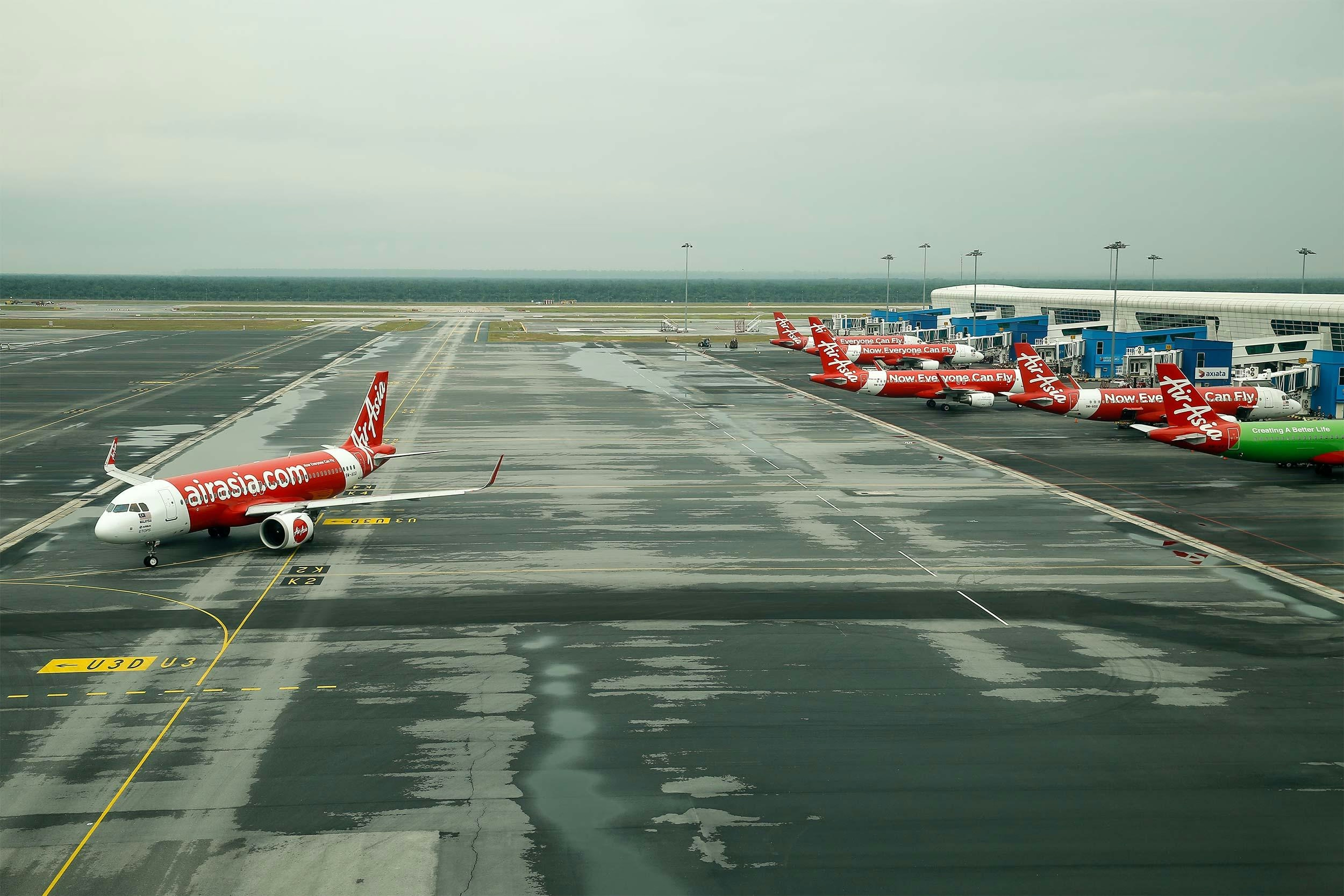
AirAsia Group has taken delivery of its first Airbus A321LR, marking a pivotal moment in the airline’s ongoing fleet restructuring. This acquisition highlights AirAsia’s strategic shift towards larger, longer-range narrowbody aircraft as it aims to consolidate operations, reduce dependence on widebody jets, and enhance efficiency amid rising fuel costs and sustained financial pressures.
The delivery coincides with AirAsia’s announcement of a net operating loss of RM129 million (approximately US$29 million) for the first quarter of 2026, attributed primarily to increased fuel expenses and foreign currency fluctuations. The introduction of the A321LR is integral to the group’s broader initiative to streamline its fleet and adapt to evolving market conditions.
Transition to a Narrowbody Fleet
The newly acquired A321LR, registered as 9M-XVC, was accepted on April 30 and arrived in Kuala Lumpur on May 3 following a journey from Hamburg with a stopover in Tashkent. Configured to accommodate 236 passengers in a single-class layout, the aircraft is expected to commence commercial operations shortly. A second A321LR is slated for delivery in June, although AirAsia has yet to announce the specific routes it will serve.
This delivery forms part of AirAsia’s strategy to phase out widebody operations, particularly on routes where the capacity of AirAsia X’s Airbus A330s surpasses demand. The group is currently undergoing a corporate restructuring process, with AirAsia X set to absorb AirAsia Aviation Group, thereby consolidating operations under a unified entity.
Fleet Modernization and Efficiency Initiatives
AirAsia’s future fleet strategy centers on the Airbus A321neo family and the A220, reflecting a commitment to fuel efficiency and sustainability. The group holds orders for more than 360 A321neos, including the ultra-long-range A321XLR variant. Since placing its initial order for 100 A321neos in 2016, AirAsia has converted numerous A320neo orders to the larger A321neo model, bringing its total backlog to 363 aircraft. Currently, the airline operates 19 A321s.
Across its operations in Malaysia, Thailand, Cambodia, Indonesia, and the Philippines, AirAsia plans to gradually retire older Airbus A320s, including many A320ceo variants. The group’s fleet presently comprises 239 aircraft, with 230 operational; however, external data indicates that approximately 40 A320s remain parked or under maintenance.
A comprehensive fleet management review is underway, with expectations that the total fleet size will decrease as older aircraft are returned to lessors. By the end of the second quarter, AirAsia anticipates reducing its fleet from 239 to 229 aircraft, with plans to return 14 aircraft by the close of 2026.
Navigating Market Challenges
As AirAsia transitions from widebody to narrowbody operations, it faces challenges in maintaining operational efficiency with a smaller fleet while responding to shifting market dynamics. The airline’s proactive approach to fleet management and strategic aircraft acquisitions is designed to align with changing operational requirements and industry trends. Market analysts observe that AirAsia’s emphasis on fuel-efficient models such as the A321LR and A220 positions the carrier to better manage costs and meet sustainability objectives, a strategy that competitors may also adopt to remain competitive in the evolving aviation landscape.

Etihad Airways Suspends Airbus A380 Flights on Key Route

Aditya Birla Group Seeks Approval for Aircraft Leasing in GIFT City

Qatar Airways Highlights Innovation and Connectivity at Arabian Travel Market 2026

Hong Kong's Five-Year Plan Includes Andrew Fan's Aircraft Parts Processing Hub Proposal

ACIA Aero Leasing Delivers ATR72-600 to Air Nostrum

RTX Appoints Jill Albertelli as Head of Pratt & Whitney

TAT Technologies Joins Beyond Aero Hydrogen Aircraft Program

AURAK Study Highlights Barriers to Air Taxi Adoption in Emerging Economies

Xiamen Air Selects Altitude for 787 Maintenance at Heathrow

Etihad and Swissport Extend Global Partnership
