
Trasforma le intuizioni dell’IA in azioni concrete

Tendenze
Categories
Airbus A220 Emerges as North America’s Most Profitable Narrowbody
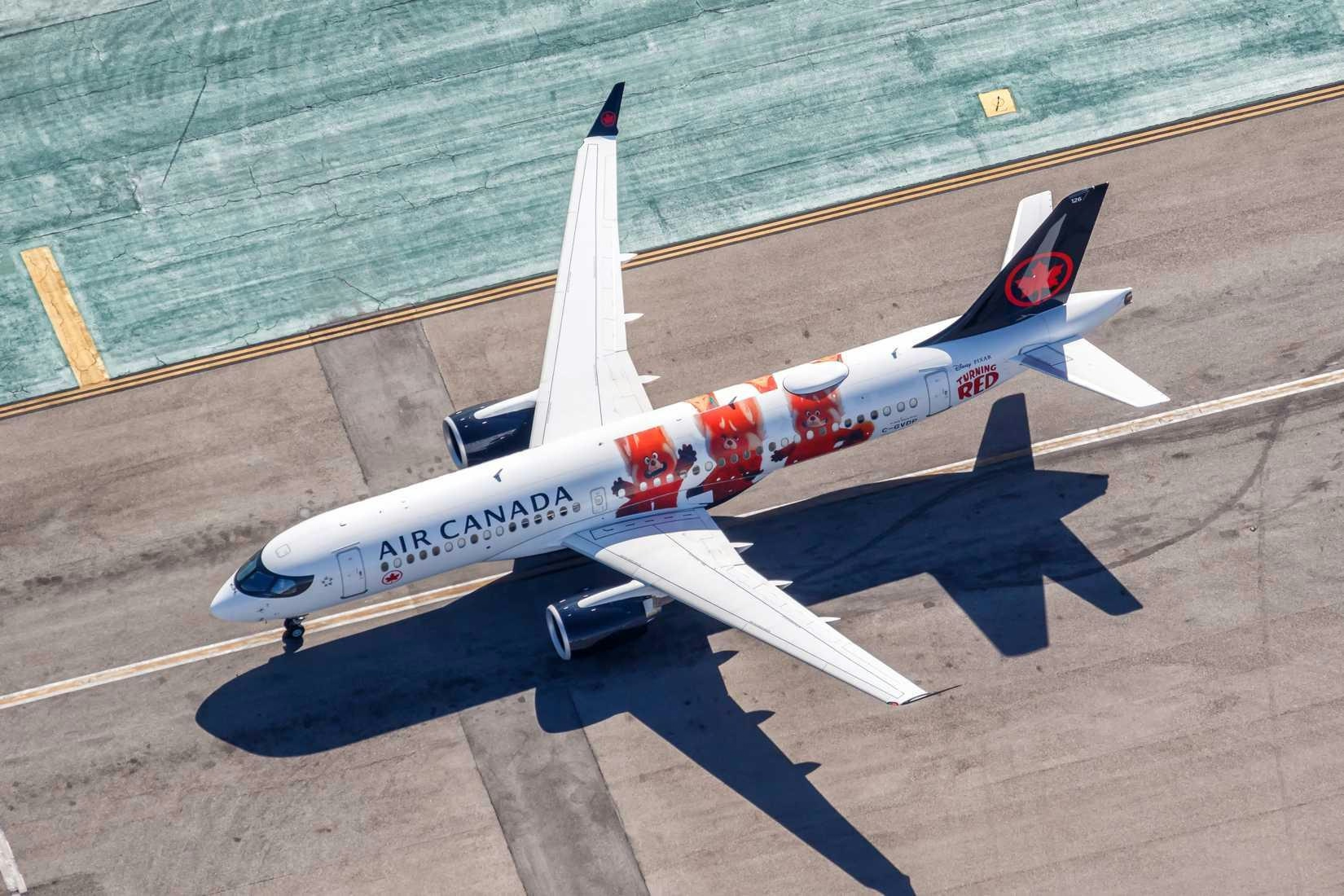
Airbus A220 Emerges as North America’s Most Profitable Narrowbody
The Airbus A220 is rapidly establishing itself as the most profitable narrowbody aircraft in North America for 2026, reshaping the economic landscape for airlines across the region. Initially regarded as a risky regional venture, the A220 has evolved into a vital asset for both established carriers and new market entrants. Its superior seat-mile economics and fuel efficiency outperform competing jets on comparable routes, making it a preferred choice for operators seeking to optimize profitability.
With a seating capacity ranging from 130 to 160 passengers, the A220 offers an optimal balance between size and operational cost. This configuration allows airlines to serve medium-density routes profitably—markets that are often unviable for larger aircraft. The aircraft’s lower acquisition costs, reduced fuel consumption, and streamlined maintenance requirements contribute significantly to its competitive advantage, directly enhancing airline margins. As the aviation industry continues its recovery from the pandemic, A220 operators have notably outpaced those flying larger narrowbodies or regional turboprops in margin growth. The aircraft’s ability to facilitate new point-to-point services without risking overcapacity has been instrumental in network optimization strategies.
From Regional Gamble to Profit Engine
The journey of the A220 to its current status was marked by considerable challenges. Originally developed as the Bombardier C Series, the program encountered skepticism, supply chain disruptions, and engine reliability issues, particularly with its Pratt & Whitney powerplants. Following Airbus’s acquisition of the program in 2018, early adopters faced delayed deliveries and operational setbacks that initially hindered the realization of the aircraft’s efficiency potential.
By 2026, Airbus has successfully stabilized production and addressed technical concerns through focused engineering enhancements and close collaboration with Pratt & Whitney. These efforts have elevated the A220’s reliability to levels comparable with established narrowbody aircraft programs. Airlines that persevered through the initial difficulties are now benefiting from an aircraft that consistently delivers strong operational performance and profitability.
Overcoming Challenges and Facing New Competition
Airbus’s methodical response to early obstacles was pivotal in the A220’s transformation. Expansion of production capacity at the Mobile, Alabama assembly facility accelerated deliveries to North American customers, while engineering teams implemented iterative updates and improved maintenance protocols to resolve engine issues. These measures have significantly increased aircraft availability rates, enabling airlines to maximize utilization and reduce maintenance reserves, thereby reinforcing the A220’s economic appeal.
Despite its current market dominance, the A220 faces emerging challenges. Rising fuel prices threaten to diminish some of its efficiency advantages, while competition is intensifying as manufacturers like Boeing seek to enhance their narrowbody offerings. The aircraft’s global appeal remains strong, as evidenced by record-breaking orders such as AirAsia’s recent $19 billion commitment. This underscores the A220’s position as a leading choice for airlines worldwide.
As North American carriers pursue profitable growth, the Airbus A220 stands out as a proven engine of profitability. However, its sustained success will depend on maintaining operational excellence amid evolving market conditions and increasing competitive pressures.

Etihad Airways Suspends Airbus A380 Flights on Key Route

Aditya Birla Group Seeks Approval for Aircraft Leasing in GIFT City

Qatar Airways Highlights Innovation and Connectivity at Arabian Travel Market 2026

Hong Kong's Five-Year Plan Includes Andrew Fan's Aircraft Parts Processing Hub Proposal

ACIA Aero Leasing Delivers ATR72-600 to Air Nostrum

RTX Appoints Jill Albertelli as Head of Pratt & Whitney

TAT Technologies Joins Beyond Aero Hydrogen Aircraft Program

AURAK Study Highlights Barriers to Air Taxi Adoption in Emerging Economies

Xiamen Air Selects Altitude for 787 Maintenance at Heathrow

Etihad and Swissport Extend Global Partnership
