
Trasforma le intuizioni dell’IA in azioni concrete

Tendenze
Categories
Airbus A220 Production: Short-Term Goals Meet a Long-Term Reality
Air Traffic Control Failures Highlight Systemic Aviation Infrastructure Challenges
A recent outage at Newark Liberty International Airport has once again underscored the vulnerabilities inherent in the Federal Aviation Administration’s (FAA) aging technological infrastructure. On April 28, air traffic controllers in Philadelphia lost both radar and communication capabilities with aircraft approaching Newark at approximately 1:30 p.m., resulting in radios going silent and screens going dark. Investigations traced the disruption to a failure in copper wiring responsible for transmitting data from a New York facility to Newark Approach Control. This incident marks at least the third such failure within the past year, raising concerns about the reliability of critical air traffic management systems.
FAA’s Outdated Systems Under Increasing Scrutiny
Transportation Secretary Sean Duffy publicly acknowledged the “incredibly old” nature of the systems managing air traffic at Newark. The Department of Transportation is poised to announce comprehensive plans aimed at overhauling and modernizing the nation’s air traffic control infrastructure. United Airlines CEO Scott Kirby expressed cautious optimism regarding these forthcoming reforms, stating, “This really leaves me the most optimistic I’ve been in my entire career that we’re finally going to get air traffic control modernized and fixed.” Kirby further suggested that under Duffy’s leadership, the modernization process could advance more rapidly than is typical for government projects.
Immediate Responses and Persistent Challenges
In the wake of the outage, the FAA outlined immediate measures to enhance system reliability at Newark. These include the installation of three new high-bandwidth telecommunications connections, the replacement of outdated copper wiring with fiberoptic technology, and the deployment of a temporary backup system at the Philadelphia Terminal Radar Approach Control. Additionally, the FAA plans to increase staffing levels, supported by a robust pipeline of training classes scheduled through next July.
Despite these initiatives, the FAA’s technology infrastructure continues to face longstanding criticism for its fragility. A recent Government Accountability Office report revealed that out of 138 FAA systems, 51 were deemed unsustainable and 54 potentially unsustainable. The FAA has committed to developing a more resilient and redundant telecommunications network in the New York metropolitan area and is collaborating with technology experts to implement swift and innovative solutions. The agency emphasized its objective to overhaul infrastructure comprehensively to meet both current operational demands and future growth, ensuring safety and efficiency as air traffic volumes increase.
Industry-Wide Pressures: Airbus A220 Production Amid Supply Chain Strains
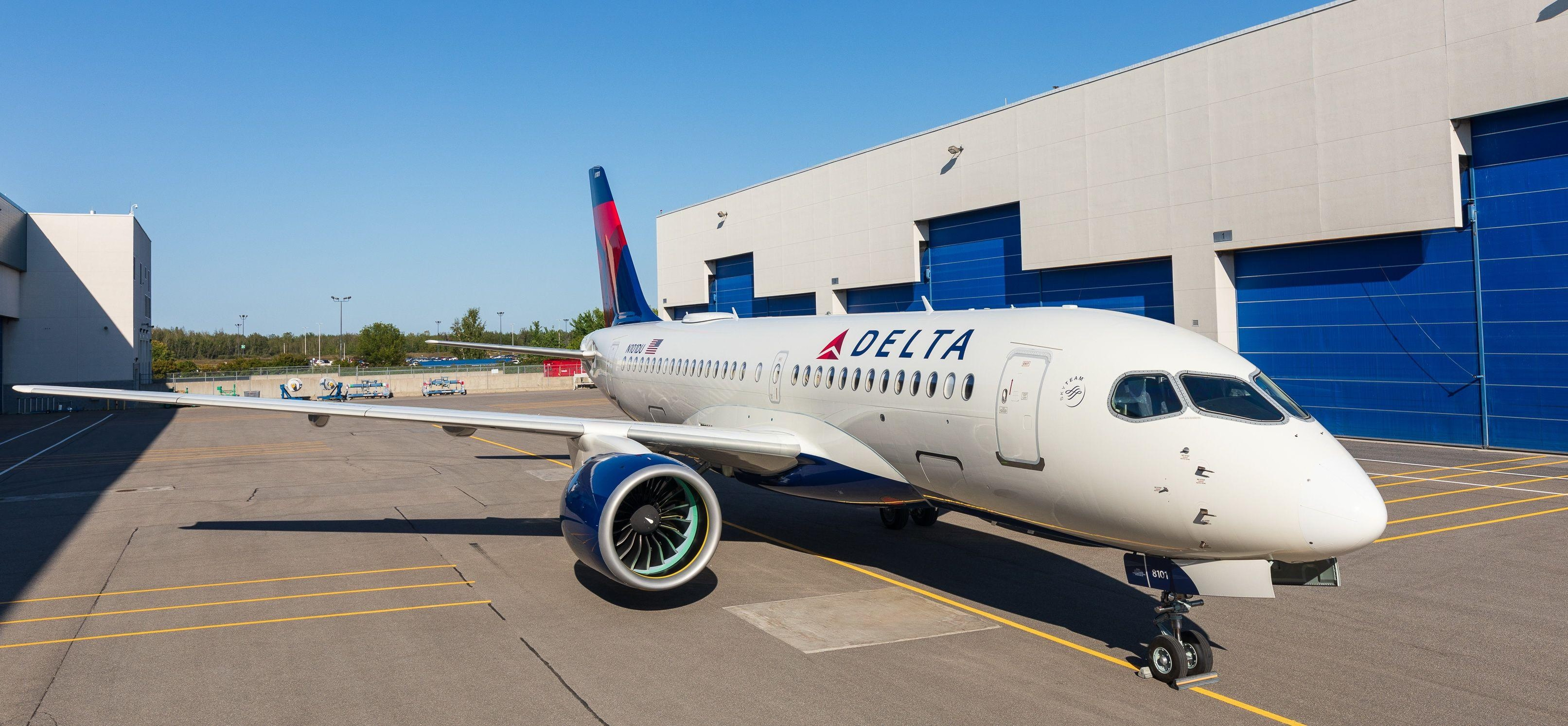
The challenges confronting U.S. air traffic control systems reflect broader pressures within the global aviation industry. Airbus, for instance, is encountering difficulties in scaling up production of its A220 aircraft due to persistent supply chain disruptions and fluctuating market demand. While Airbus has established ambitious short-term production targets, industry analysts caution that without a significant increase in new orders, these goals may not translate into sustainable long-term output. This situation is prompting competitors to reassess their own production strategies and pricing models as the sector grapples with balancing immediate operational requirements against the realities of infrastructure limitations and supply chain constraints.
A Critical Juncture for Aviation Infrastructure and Production
As the FAA advances efforts to modernize its air traffic control systems and manufacturers like Airbus confront production bottlenecks, the aviation industry finds itself at a pivotal crossroads. Addressing outdated infrastructure and supply chain vulnerabilities will be essential not only to meet current demand but also to secure the sector’s resilience and growth in the years ahead.

Etihad Airways Suspends Airbus A380 Flights on Key Route

Aditya Birla Group Seeks Approval for Aircraft Leasing in GIFT City

Qatar Airways Highlights Innovation and Connectivity at Arabian Travel Market 2026

Hong Kong's Five-Year Plan Includes Andrew Fan's Aircraft Parts Processing Hub Proposal

ACIA Aero Leasing Delivers ATR72-600 to Air Nostrum

RTX Appoints Jill Albertelli as Head of Pratt & Whitney

TAT Technologies Joins Beyond Aero Hydrogen Aircraft Program

AURAK Study Highlights Barriers to Air Taxi Adoption in Emerging Economies

Xiamen Air Selects Altitude for 787 Maintenance at Heathrow

Etihad and Swissport Extend Global Partnership
