
Trasforma le intuizioni dell’IA in azioni concrete

Tendenze
Categories
Airbus Appoints New CEO for Commercial Aircraft Amid Supply Chain Challenges
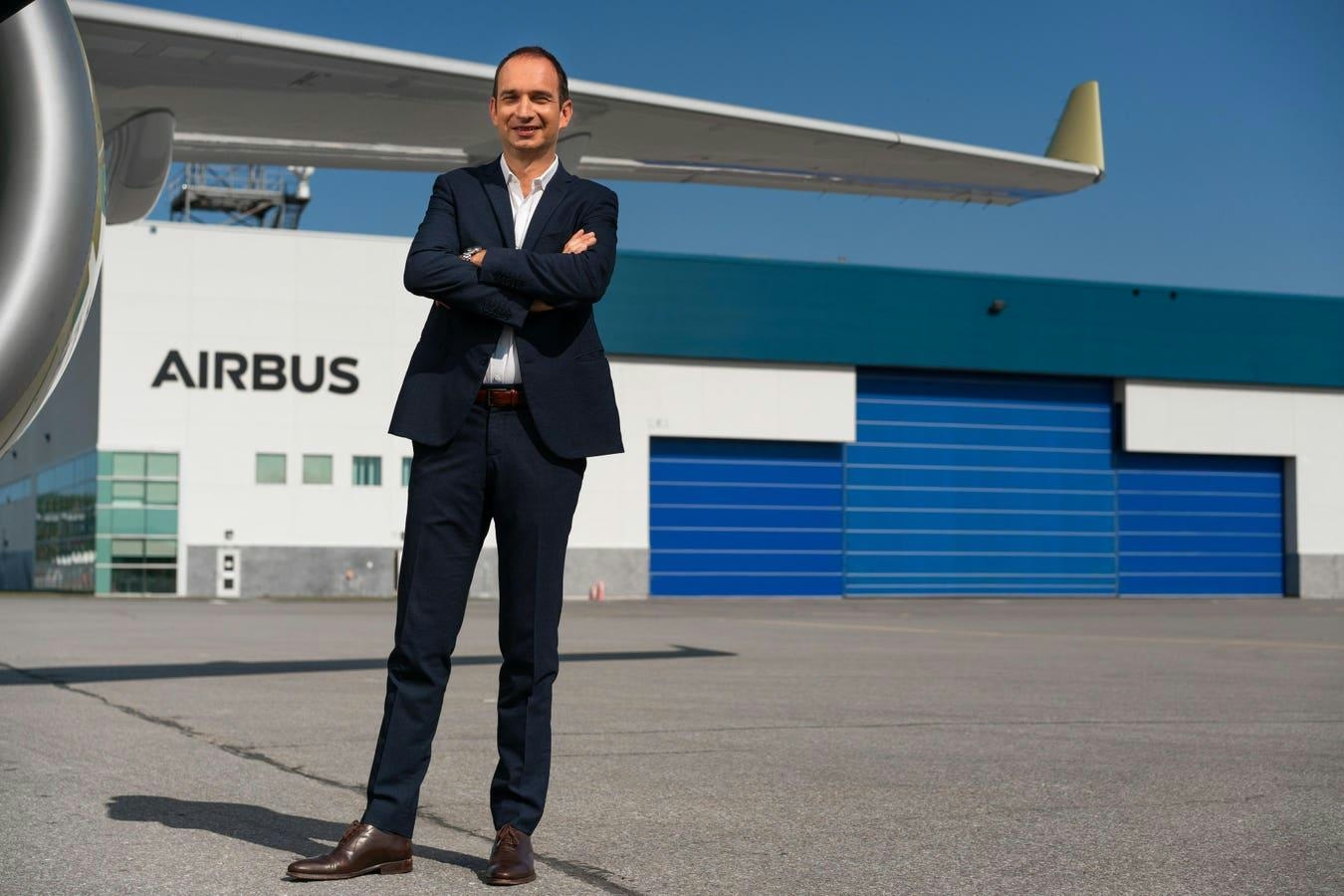
Airbus Appoints Lars Wagner as CEO of Commercial Aircraft Division
Airbus has announced the appointment of Lars Wagner as the new president and chief executive officer of its Commercial Aircraft division, effective from the beginning of 2026. Wagner succeeds Christian Scherer, who retired on December 31 after a lengthy tenure but will remain with the company for six months to facilitate a smooth leadership transition. Wagner, who joined Airbus in November to commence the handover process, brings a wealth of industry experience, having previously served as CEO of MTU Aero Engines AG and held earlier roles within Airbus.
Navigating Supply Chain Challenges and Strategic Decisions
Wagner assumes leadership at a critical moment as Airbus contends with ongoing supply chain disruptions that have impacted the aerospace sector globally. Similar to its competitor Boeing and other major manufacturers, Airbus faces significant challenges in scaling up production. The company has set ambitious targets to increase output, aiming for 75 aircraft per month of its A320 family by 2027, 12 A220 units monthly this year, 12 A350 aircraft per month by 2028, and five A330s per month by 2029. However, persistent supply chain pressures, compounded by quality control issues such as recently revealed defects in A320 fuselage panels, have compelled Airbus to revise downward its delivery forecast for 2025.
These difficulties are emblematic of broader industry-wide strains. Suppliers to both Airbus and Boeing are expected to intensify production efforts starting in 2026, a surge that analysts predict could lead to the steepest net price increases since 2023. In response to similar challenges, Boeing recently acquired Spirit AeroSystems for $4.7 billion, a strategic move aimed at enhancing production quality and supply chain resilience, potentially altering competitive dynamics within the sector.
Despite these operational hurdles, the aviation industry remains robust. The International Air Transport Association (IATA) forecasts that global airlines will achieve a record net profit of $41 billion next year, reflecting strong demand. Boeing has also demonstrated improved performance amid ongoing supply chain issues, underscoring the competitive environment that Wagner now faces.
Looking forward, Wagner will be tasked with critical strategic decisions that could shape Airbus’s future product portfolio. Key considerations include whether to develop a stretched version of the A220-300 to rival the size of the A320neo and whether to select the GE/Safran CFM International RISE Open Fan engine for the eventual A320 replacement. Airbus Group CEO Guillaume Faury indicated at last year’s Paris Air Show that an engine decision is anticipated by 2027 or 2028, with a program launch targeted for 2030. Notably, a RISE demonstrator engine is scheduled for flight testing on an A380 next year.
Wagner inherits not only the operational challenges facing Airbus but also pivotal strategic choices. His predecessor, Scherer, was a strong proponent of both the A220 stretch and the adoption of next-generation propulsion technologies, advocating for Airbus to lead rather than follow market trends. As Wagner takes the helm, his leadership will be instrumental in determining Airbus’s competitive position in the coming decade.

Etihad Airways Suspends Airbus A380 Flights on Key Route

Aditya Birla Group Seeks Approval for Aircraft Leasing in GIFT City

Qatar Airways Highlights Innovation and Connectivity at Arabian Travel Market 2026

Hong Kong's Five-Year Plan Includes Andrew Fan's Aircraft Parts Processing Hub Proposal

ACIA Aero Leasing Delivers ATR72-600 to Air Nostrum

RTX Appoints Jill Albertelli as Head of Pratt & Whitney

TAT Technologies Joins Beyond Aero Hydrogen Aircraft Program

AURAK Study Highlights Barriers to Air Taxi Adoption in Emerging Economies

Xiamen Air Selects Altitude for 787 Maintenance at Heathrow

Etihad and Swissport Extend Global Partnership
