Immagine

AeroGenie — Il tuo copilota intelligente.

Chiedi qualsiasi cosa. Analizza tutto. Agisci immediatamente.

Tendenze

Categories

Airbus Faces Challenges as A320neo Production Slows
June 12, 2025By ePlane AI
Airbus Faces Challenges as A320neo Production Slows
0
0
Airbus
A320neo
Production Delays

Airbus Faces Challenges as A320neo Production Slows

Production Delays and Engine Supply Issues

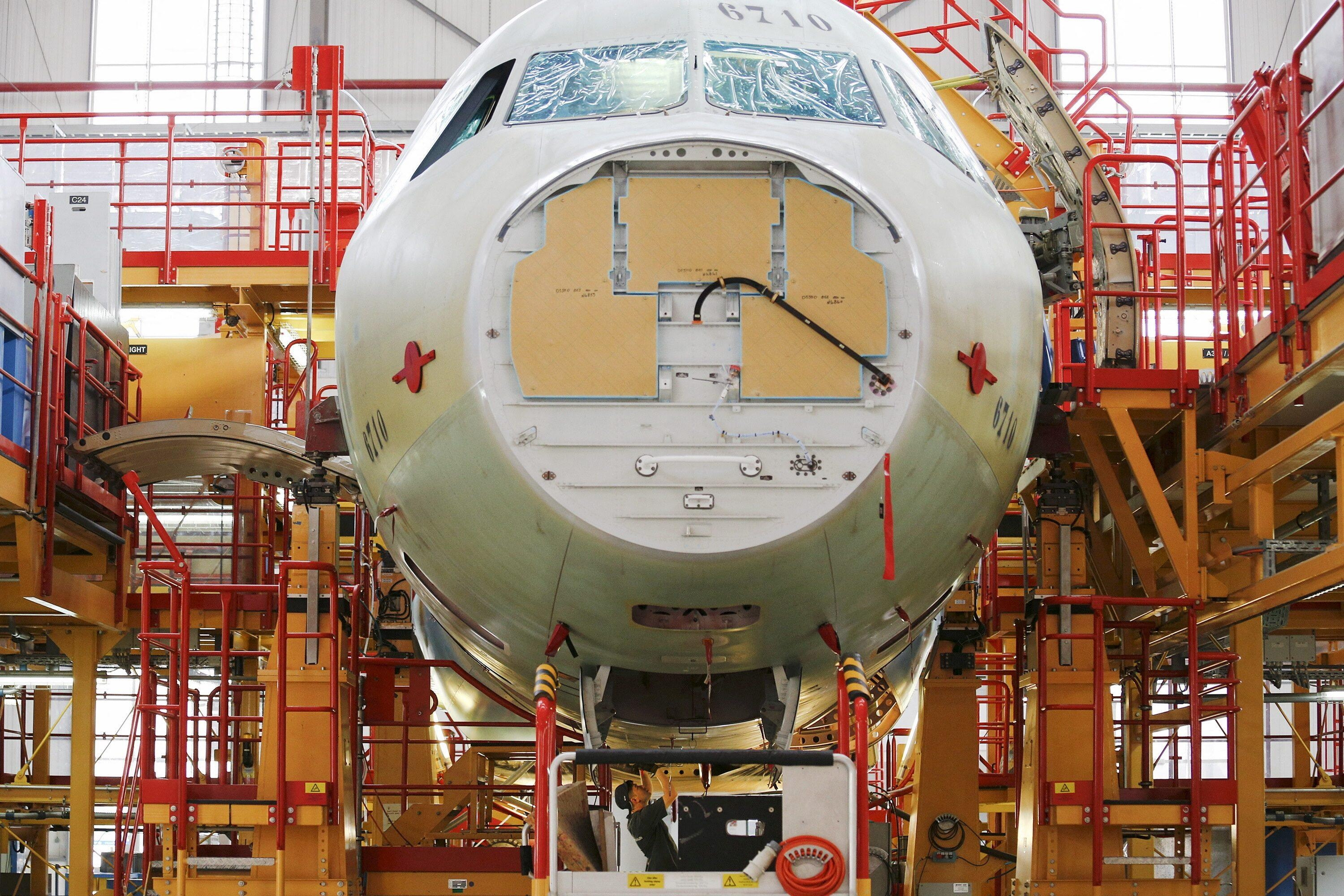
Airbus is currently confronting significant production delays for its A320neo-family aircraft, with nearly 40 jets held at its facilities awaiting engine installation. Despite these setbacks, Christian Scherer, Airbus’s commercial aircraft chief, asserts that the underlying performance of single-aisle production is showing signs of improvement. In the first five months of 2024, Airbus delivered 189 A320neo-family aircraft, a decline from 208 deliveries during the same period last year. Speaking at a briefing in Toulouse on June 11, Scherer emphasized that if not for the engineless aircraft backlog, delivery performance would be slightly ahead of plan, indicating a healthier production ecosystem.

The delays primarily stem from supply chain disruptions affecting the availability of CFM International Leap-1A engines, one of the two engine options for the A320neo family, alongside Pratt & Whitney’s PW1100G. Scherer described the inventory of completed but engineless aircraft as “good cholesterol,” underscoring that once the engines arrive, these jets will be promptly delivered. He highlighted Airbus’s mature relationship with CFM but cautioned that there is no definitive timeline for a significant increase in engine deliveries, only a gradual ramp-up that the company is monitoring closely. Financially, Airbus’s performance remains largely satisfactory despite the inventory buildup.

Production Targets and Industry Context

Airbus aims to achieve a monthly production rate of 75 A320neo aircraft by 2027. While the company has been reserved about revealing detailed progress, Scherer indicated that current production is “just cruising past” 60 aircraft per month. He acknowledged fluctuations caused by supply chain waves but affirmed that the trend is moving in the right direction.

This production slowdown occurs amid broader challenges facing the airline industry, including rising operational costs and ongoing supply chain constraints. A recent report by Skift on the sector’s outlook for 2025 highlights these pressures, noting that airlines are adapting to the evolving environment. For instance, IndiGo has reported a reduction in groundings of Pratt & Whitney GTF-powered aircraft, suggesting shifts in market dynamics that may influence future demand and supply.

Continued Demand and Supply Chain Improvements

Despite production bottlenecks, demand for the A320neo remains strong. Royal Jordanian recently took delivery of its first A320neo from lessor Avolon, while Gulf Air is expanding its narrowbody fleet through a new lease agreement with BOC Aviation. These transactions reflect sustained interest in Airbus’s products even as the company navigates supply challenges.

Elsewhere in Airbus’s operations, supply chain disruptions have eased considerably, though some issues persist. Scherer noted that the “overall disturbance” across Airbus programs, which once involved thousands of missing parts, has largely abated. However, widebody production continues to face constraints, particularly due to shortages of cabin components such as lavatory modules for the A350, produced by Safran in Mexico. Scherer remarked, “You can’t really build an airplane without toilets,” identifying this as the current bottleneck in widebody manufacturing.

More news
Archer Aviation Integrates NVIDIA’s IGX Thor into Air Taxi Systems

Archer Aviation Integrates NVIDIA’s IGX Thor into Air Taxi Systems

Archer Aviation Integrates NVIDIA’s IGX Thor into Air Taxi Systems Archer Aviation has announced a pivotal advancement in the development of its electric vertical takeoff and landing (eVTOL) air taxis by integrating NVIDIA’s IGX Thor compute platform into its Midnight aircraft. Revealed during the company’s fourth-quarter 2025 earnings call, this integration represents a fundamental hardware decision that will govern how the Midnight aircraft perceives, processes, and reacts to its surroundings in real time. Strategic Integration of Advanced AI Computing Unlike conventional branding collaborations, Archer’s adoption of the IGX Thor platform is a core technical commitment. NVIDIA’s IGX Thor is an industrial-grade edge AI system designed specifically for real-time inference in safety-critical environments. This makes it particularly well-suited for autonomous air taxis, where low latency, high reliability, and stringent functional safety are essential. The platform’s robust AI processing capabilities and hardware-level safety architecture position it as a strong candidate for meeting rigorous aviation certification standards such as DO-178C. By incorporating IGX Thor, Archer aims to unify critical operational functions—including sensor fusion, obstacle detection, and flight decision-making—on a single, certifiable compute platform. This consolidation is expected to facilitate regulatory approval processes, as aviation authorities require traceability and deterministic behavior in safety-critical systems. Such qualities are more readily demonstrated on a purpose-built platform than on general-purpose hardware, potentially streamlining Archer’s path to certification. Market Context and Competitive Challenges Archer’s technological progress unfolds amid ongoing legal disputes with competitors like Vertical Aerospace and Joby Aviation, involving patent infringement claims that could influence the company’s development timeline and market positioning. Meanwhile, competitors continue to advance their own initiatives; for instance, Joby Aviation has partnered with Uber to develop an electric air taxi booking platform, and other rivals are likely exploring similar AI integrations or strategic partnerships to maintain competitive parity. From a financial perspective, Archer reported a fourth-quarter 2025 earnings per share (EPS) of approximately -$0.24, reflecting its pre-revenue status as it pursues certification and early commercialization. Despite continued cash burn, the company’s market capitalization stood at around $5.23 billion during this period, indicating sustained investor confidence in the long-term prospects of urban air mobility. Implications of the NVIDIA Partnership The collaboration with NVIDIA lends additional credibility to Archer’s technical roadmap. NVIDIA has demonstrated strong financial performance, posting four consecutive quarters of earnings beats, including a Q4 fiscal year 2026 EPS of $1.62 on $68.13 billion in revenue. The company is actively expanding its AI compute business beyond traditional data centers into industrial and embedded applications, exemplified by its partnership with Archer’s eVTOL platform. Market reactions to such integrations remain mixed, with investors closely monitoring the emergence of tangible demand for AI technologies, as noted by NVIDIA’s CEO. Archer’s CEO, Adam Goldstein, underscored that the integration of IGX Thor is central to the Midnight aircraft’s design rather than a peripheral addition. This platform underpins the autonomy necessary for commercial operations. As competition intensifies and regulatory scrutiny increases, Archer’s strategic reliance on NVIDIA’s AI platform may prove decisive in shaping the future landscape of autonomous air taxis.
Boeing Jet Returns to Airport Following Engine Fire Warning

Boeing Jet Returns to Airport Following Engine Fire Warning

Boeing 787-9 Returns to Los Angeles Following Engine Fire Warning A United Airlines Boeing 787-9 Dreamliner was compelled to return to Los Angeles International Airport (LAX) shortly after takeoff on Tuesday after the flight crew received a fire warning for one of the aircraft’s two engines. The flight, en route to Newark Liberty International Airport, reported the alert soon after departure, prompting the pilots to abort the journey and return to LAX as a precautionary measure. Emergency Evacuation and Passenger Safety Upon landing, the aircraft came to a stop on a taxiway where more than 250 passengers were evacuated using emergency slides and mobile stairs. United Airlines confirmed that no injuries were reported during the evacuation. Passengers were subsequently transported by bus to the terminal and later rebooked on another aircraft to complete their journey to Newark. Regulatory Response and Industry Implications The Federal Aviation Administration (FAA) has initiated an investigation into the incident, focusing on the cause of the fire warning and the crew’s response. This event has reignited concerns regarding the reliability of Boeing’s engines, with aviation safety authorities expected to conduct a thorough review. The investigation may lead to operational disruptions, including potential delays in flight schedules and the imposition of more stringent safety inspections or immediate technical modifications. Such measures could have significant repercussions for Boeing’s production timelines and overall operations. The incident also carries broader implications for Boeing’s market standing. Investor apprehension about the potential impact on the company’s reputation and delivery commitments may influence fluctuations in its stock value. Concurrently, competitors in the aerospace sector might leverage the situation to highlight their own safety records, seeking to attract customers and expand their market share. As the inquiry progresses, both Boeing and United Airlines are subject to increased scrutiny from regulatory bodies and the public, highlighting the persistent challenges faced by the commercial aviation industry in ensuring safety and reliability.
AENA Executives' Tactics Do Not Justify Fee Increases

AENA Executives' Tactics Do Not Justify Fee Increases

AENA Executives' Tactics Do Not Justify Fee Increases Industry Response to AENA’s Safety Claims The International Air Transport Association (IATA) has issued a strong rebuke of recent statements made by Maurici Lucena, Chairman and CEO of AENA, Spain’s leading airport operator. Lucena suggested that airlines’ demands for lower airport charges could jeopardize safety and security. IATA dismissed these assertions as unfounded “scaremongering,” reaffirming that safety remains the paramount concern for the entire aviation sector. The association emphasized that calls for more cost-effective airport fees are unrelated to safety standards and should not be conflated with security issues. Willie Walsh, IATA’s Director General, criticized Lucena’s remarks as indicative of a disconnect from the core realities of aviation, both in terms of safety and economic considerations. Walsh underscored that airlines’ appeals for reasonable airport charges are legitimate and necessary, particularly as the industry grapples with increasing regulatory, environmental, and operational expenses. Divergent Views on Fee Increases The controversy surrounding AENA’s proposed 3.8% annual increase in airport charges has deepened divisions among key stakeholders. While ACI Europe, representing European airports, supports the fee hike as essential to underpinning AENA’s investment agenda, IATA contests the justification for such an increase. The association argues that the proposed rise does not align with passenger growth trends or the imperative to maintain affordable connectivity. IATA further highlights that, when adjusted for inflation, airfares in Spain have decreased by 9% since 2019, with reductions ranging from 6% to 37% across the country’s 15 largest airports over the past decade. The dispute has also attracted political scrutiny. The regional party Coalición Canaria has demanded an urgent dialogue with Spain’s ruling PSOE party, expressing concern over AENA’s unilateral approach to fee adjustments. The party insists on greater involvement of the Canary Islands in managing strategic airport infrastructure, underscoring the broader regional and political ramifications of AENA’s fee policies. Financial Performance and Regulatory Concerns Financial data further intensifies the debate over AENA’s fee strategy. Reports indicate that over the last two regulatory periods, AENA has earned €1.32 billion in excess of the limits set by Spain’s economic regulatory framework. In 2024, the company’s combined regulated and non-regulated activities in Spain yielded a net profit margin of 36.4%, starkly contrasting with the average 3.5% net margin recorded by European airlines. IATA points to this disparity as evidence of the urgent need for independent, transparent, and consultative airport regulation that equitably balances the interests of all parties involved. Willie Walsh concluded by advocating for constructive dialogue over inflammatory rhetoric, emphasizing that productive engagement is essential to ensuring Spain’s airports continue to foster growth, regional development, and high-quality passenger services. IATA remains committed to collaborating with AENA and other stakeholders to safeguard the competitiveness, sustainability, and accessibility of Spain’s aviation sector over the long term.
Setna iO Expands Teardown Portfolio with B737-700 and CFM56-7B

Setna iO Expands Teardown Portfolio with B737-700 and CFM56-7B

Setna iO Expands Teardown Portfolio with B737-700 and CFM56-7B Amid Intensifying MRO Competition Setna iO has announced a significant expansion of its teardown portfolio through the acquisition of a Boeing 737-700 airframe, formerly operated by Southwest Airlines, alongside two CFM56-7B26 engines previously in service with Georgian Airlines. This strategic move reinforces the company’s integrated aftermarket approach, aiming to address the increasing global demand for high-quality aircraft components. Strategic Asset Integration and Operational Deployment The Boeing 737-700 will be dismantled at Setna iO’s ecube facility in Coolidge, Arizona. Components salvaged from the teardown will be processed through the company’s in-house maintenance, repair, and overhaul (MRO) network, which includes Setnix Arizona, Setnix UK, Landing Gears Technologies (LGT), and Zulu Global. Following repair and overhaul, these parts will be distributed via Setna iO’s extensive global sales channels. Concurrently, the two CFM56-7B26 engines will be disassembled at the Willis Engine Repair Centre in Bridgend, United Kingdom, augmenting Setna iO’s inventory of high-demand CFM56 modules and serviceable components for operators worldwide. This expansion follows Setna iO’s recent acquisition of J&C Aero, which has enhanced the company’s technical expertise but also introduced operational complexities as it scales its teardown and MRO services. The broadened scope of activities is likely to attract heightened regulatory scrutiny as Setna iO consolidates its position within the aftermarket sector. Navigating a Competitive MRO Landscape Setna iO’s growth occurs amid intensifying competition in the global MRO market. Industry leaders such as RTX have recently committed $139 million to expand MRO capacity in Singapore, signaling a strategic push to capture greater market share. Similarly, Dubai Aerospace Enterprise (DAE) has increased investments in heavy maintenance operations and facility expansions, raising the competitive stakes across the sector. Despite these challenges, Setna iO’s integrated strategy—combining asset acquisition, in-house technical capabilities, and a broad international sales network—positions the company to offer comprehensive, responsive aftermarket solutions. By deepening its teardown portfolio and leveraging its vertically integrated operating model, Setna iO aims to maintain agility and competitiveness in a rapidly evolving aviation services environment.
DASI Reaches Inventory Agreement with Mesa Airlines

DASI Reaches Inventory Agreement with Mesa Airlines

DASI Reaches Inventory Agreement with Mesa Airlines Strategic Partnership Amid Industry Consolidation DASI, a global leader in aviation inventory and logistics solutions, has formalized an agreement with Mesa Airlines to support the carrier’s ongoing fleet transitions and its integration with Republic Airways Holdings Inc. Under this arrangement, DASI will acquire spare parts inventories for Mesa’s entire CRJ700 and CRJ900 fleet. The inventory uplift will be coordinated across several key U.S. locations, managed by DASI’s specialist logistics team to ensure seamless execution. Mike Heaton, President of DASI, emphasized the importance of such agreements in the current market environment, stating, “As fleets evolve and industry consolidation continues, airlines require a clear route to unlock capital tied up in surplus inventory. DASI provides that route with minimal operational impact.” This deal reflects the growing need for airlines to optimize working capital amid fleet changes and sector consolidation. Market Dynamics and Operational Challenges The regional airline sector is undergoing significant transformation, with fleet transitions and consolidations frequently generating surplus inventory that can restrict liquidity. DASI’s structured inventory acquisition programs are designed to assist airlines and maintenance, repair, and overhaul (MRO) providers in releasing capital from non-core stock while minimizing operational disruption. In 2025 alone, DASI supported over 20 airlines and MROs in freeing up capital, expanding its inventory holdings, and reinforcing its position as a trusted industry partner. Despite these opportunities, the agreement introduces new challenges for DASI. As Mesa Airlines expands its inventory, declining market prices for aviation parts exert pressure on DASI to maintain competitive pricing structures. Furthermore, falling real estate values in Mesa, Arizona, have raised investor concerns regarding DASI’s ability to sustain profitability amid a shifting economic landscape. The deal may also prompt competitors to recalibrate their strategies, potentially intensifying competition within the regional airline sector as other carriers seek to counterbalance DASI’s enhanced market position. Context Within Republic Airways Holdings Republic Airways, established in 1974, operates a combined fleet exceeding 300 Embraer 170/175 aircraft. Its airlines provide more than 1,300 daily flights to over 100 cities across the United States, Canada, the Caribbean, and Mexico. These operations are conducted under the brands of major codeshare partners, including American Eagle, Delta Connection, and United Express. The group employs over 8,000 aviation professionals. DASI’s collaboration with Mesa Airlines highlights both the opportunities and competitive pressures confronting aviation inventory specialists as the industry continues to evolve rapidly.
SR Technics to Provide MRO Services for North American Carrier's CFM56-7B Engines

SR Technics to Provide MRO Services for North American Carrier's CFM56-7B Engines

SR Technics Secures Multi-Year MRO Contract for North American Carrier’s CFM56-7B Engines SR Technics has entered into a multi-year agreement to provide heavy shop visit maintenance for CFM56-7B engines operated by a leading North American airline. This contract represents a strategic advancement for the Swiss-based maintenance, repair, and overhaul (MRO) provider as it seeks to expand its presence in the increasingly competitive North American market. Strengthening Regional Presence Amid Intensifying Competition Owen McClave, Chief Executive of SR Technics, underscored the company’s dedication to fostering strong customer relationships and delivering operational excellence. He stated, “We treasure our relationships with our customers and the trust placed in our capabilities. Our people are aware of all our commitments and are ready to deliver every time.” McClave further emphasized that expanding long-term engagements in North America is a critical step in reinforcing the company’s regional footprint and providing dependable engine MRO solutions to operators. The agreement arrives at a time when the MRO sector is experiencing heightened competition from established providers such as GATES SPAH and Willis Module Shop, both of which offer comparable services for the CFM56-7B engine. These competitors are actively broadening their service portfolios; for instance, GATES SPAH has recently introduced new maintenance offerings for Leap engines, while TimeTooth Technologies has secured seating approval in India, signaling their ambitions to capture a larger share of the global aviation aftermarket. Market Shifts and Emerging Challenges The dynamics of the aviation maintenance market are evolving, with airlines increasingly prioritizing powerplant availability over traditional MRO slot allocations. Steven Greenway, CEO of flyadeal, recently highlighted this shift, noting that operators demand greater flexibility and reliability to maintain fleet operations amid ongoing supply chain disruptions. Adding to the competitive pressures, IER MRO has announced plans to establish a significant engine maintenance facility in Dubai. This development is expected to attract customers from North America and other regions, compelling existing providers to innovate and expand their service capabilities to retain market share. Despite these challenges, SR Technics remains confident in its extensive expertise with CFM engine platforms and its capacity to deliver reliable maintenance solutions. The company’s ongoing investments in regional infrastructure, exemplified by the recent opening of its Zurzach facility, demonstrate its commitment to supporting customers in key markets. As the MRO industry continues to evolve, SR Technics’ latest agreement highlights its resilience and determination to remain a trusted partner for North American carriers navigating a rapidly changing maintenance environment.
Budget 2026 Introduces AI Talent Visa and Expands Cabin Crew Hiring Options

Budget 2026 Introduces AI Talent Visa and Expands Cabin Crew Hiring Options

Budget 2026 Introduces AI Talent Visa and Expands Cabin Crew Hiring Options New AI and Technology Track under One Pass Singapore will introduce a dedicated artificial intelligence (AI) and technology track within its Overseas Networks and Expertise (One) Pass scheme starting January 2027. This new track will replace the existing Tech.Pass programme and is designed to attract elite global digital and AI professionals, reinforcing Singapore’s position as a leading hub in the global digital economy. The announcement was made by Manpower Minister Tan See Leng during the Committee of Supply debate on March 3, highlighting the government’s commitment to enhancing the country’s competitive edge in the technology sector. The One Pass (AI and Tech) will offer more favourable terms to top-tier technology talent, aligning with recommendations from the Economic Strategy Review committees and priorities set out by Prime Minister and Finance Minister Lawrence Wong in the recent Budget speech. Accelerating AI adoption is central to Singapore’s growth strategy, and the new visa track aims to secure the presence of influential professionals who can drive innovation and development in this critical field. Eligibility and Application Criteria Since its launch in 2021, the Tech.Pass scheme has allowed distinguished technology professionals to contribute flexibly to Singapore’s tech ecosystem by running businesses, investing, mentoring, or lecturing without the need for multiple work passes. The broader One Pass, introduced in 2023, extended this flexibility to talent across various sectors, enabling holders to concurrently start, operate, and work for multiple companies. Minister Tan reported that over 8,000 individuals currently hold the One Pass, many of whom are active in sectors vital to Singapore’s economic future. To qualify for the new AI and Tech track, applicants must demonstrate a monthly salary of at least S$30,000, either earned in the 12 months preceding the application or offered by a prospective Singapore-based employer. Recognising the unique compensation structures prevalent in the technology sector, the Ministry of Manpower (MOM) will permit applicants to meet this salary threshold through a combination of cash and equity-based remuneration, including stock options and share ownership. Additional eligibility requirements include employment with a large technology company or venture capital firm and at least five years of recent experience in senior leadership or specialised technical roles. MOM expects that the stringent criteria will limit the number of successful applicants, focusing on attracting “movers and shakers, rainmakers and network brokers,” as described by Minister Tan. Context and Market Implications The introduction of the AI and Tech track comes amid a challenging global hiring environment marked by a significant skills gap. In the United States, only 6% of hiring managers report having access to the talent necessary for high-priority projects. The rise of AI-generated job applications has further complicated recruitment efforts, with 65% of managers finding it increasingly difficult to evaluate candidates effectively. In response, some companies, such as IBM, plan to significantly increase entry-level hiring in 2026, targeting roles less vulnerable to AI automation. While the market’s response to Singapore’s AI Talent Visa and expanded cabin crew hiring options remains uncertain, the government’s targeted initiatives underscore the importance of attracting and retaining top talent as AI adoption accelerates. The overall hiring landscape in 2026 is expected to remain complex, necessitating strategic approaches to workforce development in key sectors.
The Role of Argo Turboserve Components in Modern Aviation Engineering

The Role of Argo Turboserve Components in Modern Aviation Engineering

The Role of Argo Turboserve Components in Modern Aviation Engineering In the realm of modern aviation engineering, the pursuit of reliability hinges on precision manufacturing and stringent quality control. Aircraft systems comprise thousands of specialized components that must function harmoniously under demanding conditions. Among the pivotal suppliers in this intricate ecosystem is Argo Turboserve Corporation. Rather than relying on marketing narratives, it is imperative to assess Argo Turboserve’s contributions through the lens of engineering and maintenance, where safety and performance remain paramount. Aerospace Hardware and Operational Demands Aircraft represent complex assemblies of mechanical and electronic systems, each component engineered to endure extreme operational stresses. These include continuous vibration during flight, significant temperature variations at high altitudes, mechanical loads generated by thrust, and prolonged service intervals. Engine accessory components provided by firms such as Argo Turboserve are specifically designed to meet these rigorous demands, thereby ensuring the integrity and safety of aircraft operations. Integration within the Aviation Supply Chain Argo Turboserve is distinguished for supplying specialized aircraft hardware and turbine-related parts, frequently cataloged under the National Stock Number (NSN) system. This classification facilitates efficient identification and verification of compatible replacement components by both military and commercial maintenance teams. The use of certified and traceable parts is critical to maintaining operational readiness and compliance with aviation standards. Engine Components and Turbine Performance Aircraft engines operate in some of the most challenging mechanical environments, where turbine assemblies must sustain structural and thermal stability at high rotational speeds. Components supplied by Argo Turboserve play essential roles in regulating airflow, distributing thermal loads, maintaining mechanical housing integrity, and optimizing fuel combustion efficiency. Even minimal deviations in component geometry can adversely affect engine performance over extended flight hours, underscoring the necessity for exacting precision in manufacturing. The Critical Role of Fastening Technology Precision fasteners, though often overlooked, are fundamental to the structural integrity of aviation assemblies. Aerospace fasteners are engineered to resist vibration and maintain load stability, preventing fatigue failures, micro-movements, and accelerated wear. This sector of the industry, while less visible, is indispensable to ensuring the overall safety and durability of aircraft structures. Engineering Standards and Certification Aviation engineering is governed by the principle of predictable performance under stress. Components undergo rigorous testing for thermal cycling endurance, dynamic vibration resistance, material fatigue thresholds, and long-term reliability. Manufacturers like Argo Turboserve must comply with stringent certification protocols before their products are approved for use in flight, reflecting the uncompromising safety standards of the industry. Industry Challenges and Market Dynamics The American Institute of Aeronautics and Astronautics (AIAA) highlights the ongoing challenges faced by suppliers such as Argo Turboserve in integrating advanced materials and propulsion technologies. The aerospace sector’s evolution toward smart maintenance monitoring and predictive failure detection has increased demand for innovative components. However, as noted by Aviation Week, these technological advances also introduce concerns regarding data privacy and security in maintenance operations. Competitive pressures further shape the market landscape. For instance, Honeywell’s expansion into the Asia-Pacific defense sector, emphasizing autonomous flight and counter-drone technologies, signals a rising demand for sophisticated turboserve components. Such developments are likely to influence both the pace of innovation and the competitive dynamics among suppliers. Future Outlook As aircraft systems become increasingly digitally integrated and reliant on lightweight, high-strength materials, companies like Argo Turboserve will continue to play a vital role in supporting next-generation flight platforms. Their capacity to adapt to technological progress and evolving industry requirements will be essential in upholding the safety, reliability, and performance standards that define contemporary aviation.
United Airlines flight makes emergency landing in Los Angeles after engine fire

United Airlines flight makes emergency landing in Los Angeles after engine fire

United Airlines Flight Makes Emergency Landing in Los Angeles Following Engine Fire United Airlines Flight 2127 was compelled to execute an emergency landing at Los Angeles International Airport (LAX) on Thursday morning after an engine fire was detected less than an hour after departure. The flight, operated by a Boeing 787-9 Dreamliner, had taken off from LAX at approximately 10:15 a.m. when the left engine encountered a critical issue, prompting the crew to return to the airport. Incident and Response According to a statement from the Federal Aviation Administration (FAA), the flight crew responded promptly to the engine fire, ensuring the aircraft’s safe return to LAX. Upon landing, passengers were evacuated using emergency slides and airstairs. United Airlines confirmed that all passengers were safely transported back to the terminal by bus, with no injuries reported. The airline emphasized that passenger and crew safety remains its highest priority, commending the swift actions of both the flight crew and emergency responders. Investigation and Industry Implications The FAA has announced a comprehensive investigation into the incident to determine the cause of the engine fire. This emergency landing has drawn attention to the Boeing 787-9 Dreamliner model involved, raising concerns about in-flight safety and maintenance protocols. Industry analysts suggest that such events may influence market dynamics, affecting competitors and insurance providers, while also prompting a renewed focus on aircraft safety standards. United Airlines and federal authorities have pledged full cooperation with the investigation, underscoring the importance of identifying the root cause to prevent similar occurrences in the future. The incident highlights the critical role of rapid response procedures in ensuring passenger safety during unforeseen emergencies.
What Is the Average Lifespan of a Jet Engine?

What Is the Average Lifespan of a Jet Engine?

The Average Lifespan of a Jet Engine The advent of the jet age transformed commercial aviation, enabling faster and more affordable travel while significantly enhancing safety standards. Over the years, aircraft have grown larger and more efficient, with millions of flights conducted annually and fatal accidents becoming increasingly rare. Despite this, occasional incidents involving engine failures—such as the February 2026 JetBlue flight that returned to Newark and the Delta Air Lines flight that caused a grass fire near Savannah/Hilton Head International Airport—continue to draw public attention. Importantly, investigations into these events have not attributed the failures to engine age. Design and Operational Lifespan Modern commercial jet engines are typically designed to last between 25 and 35 years, or approximately 150,000 flight hours, assuming they undergo proper maintenance. This contrasts sharply with military jet engines, which operate under more strenuous conditions and are generally retired after 5,000 to 10,000 mission hours. The lifespan of a jet engine, however, is not a fixed metric; it is influenced by a complex combination of design specifications, maintenance regimes, and the operational environments in which the engines function. Challenges in Engine Durability and Reliability Recent developments in the aviation sector have highlighted the challenges associated with engine durability. The GE9X engine, which powers Boeing’s 777X, has come under scrutiny due to potential issues with a critical seal, raising concerns about its long-term reliability. Similarly, Southwest Airlines has reported difficulties related to the availability of CFM Leap-1B engines, citing durability problems with disk components that could result in engine shortages and operational disruptions. Next-generation engines, such as those installed on the Airbus A320neo and Boeing 737 MAX, have also faced reliability challenges. Reports of early removals and retrofits have surfaced, sometimes compromising the anticipated fuel efficiency gains these advanced engines were designed to provide. These instances underscore the ongoing technical and logistical obstacles that manufacturers and airlines must navigate to ensure both the longevity and dependability of jet engines. Balancing Innovation and Durability While commercial jet engines are engineered for decades of service, their actual operational lifespan depends on numerous factors, including technological innovation, manufacturing quality, real-world operating conditions, and stringent maintenance practices. As the aviation industry continues to evolve, achieving an optimal balance between performance, efficiency, and durability remains a critical challenge for the future of air travel.
line










