
Trasforma le intuizioni dell’IA in azioni concrete

Tendenze
Categories
Airbus Lowers 2025 A320 Delivery Target to 790 Jets Amid Quality Concerns
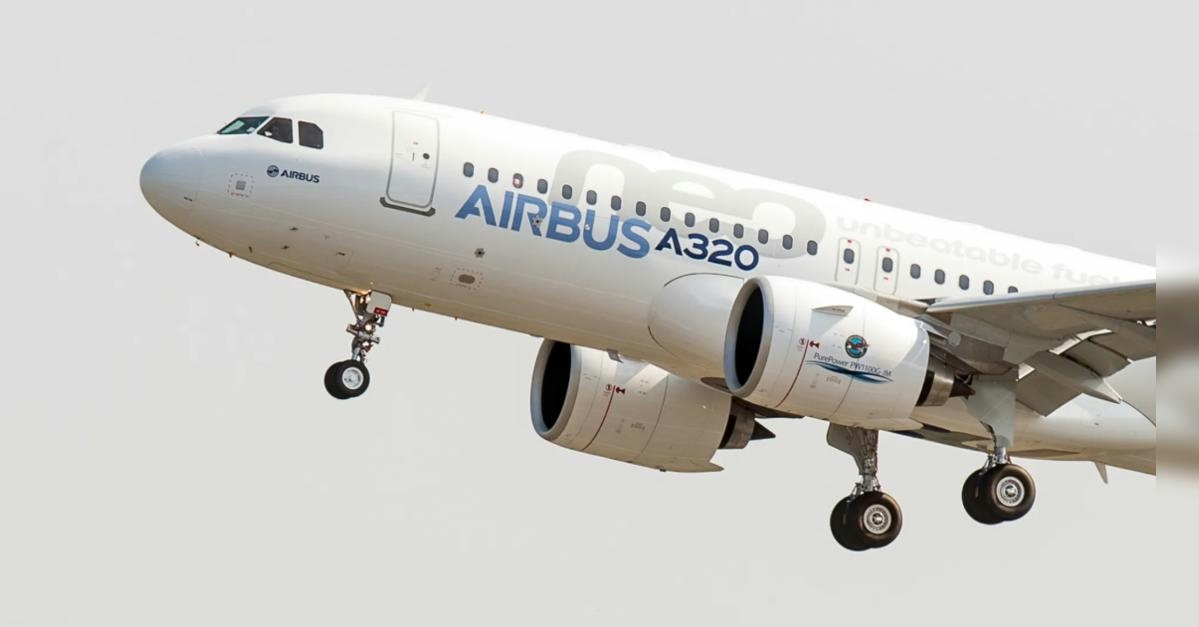
Airbus Lowers 2025 A320 Delivery Target Amid Quality and Software Challenges
Airbus has revised its 2025 delivery target for A320-family aircraft downward to 790 jets, a reduction from the previously announced goal of 820. This 4% cut follows the discovery of a quality issue involving fuselage panels supplied by Spanish manufacturer Sofitec Aero. The adjustment was revealed in a regulatory filing on Wednesday, highlighting the ongoing supply chain and quality control difficulties faced by the European aerospace giant.
Fuselage Panel Defects and Inspection Efforts
Earlier this week, Airbus informed its customers that 628 A320-family aircraft were found to have fuselage panels with thickness deviations outside the required specifications. Of these, 168 jets are currently operational with airlines, while the remainder remain in various stages of production. Airbus has initiated thorough inspections of each affected aircraft and communicated to buyers that a significant portion of the panels are expected to comply with standards. The company stressed that the issue has been identified and contained, aiming to minimize operational disruptions.
Despite this setback, Airbus has maintained its financial guidance for the year. The announcement initially triggered a sharp decline in the company’s share price—the steepest since April—but the stock later recovered as Airbus reassured investors about the limited scope and controlled nature of the problem.
Concurrent Software Glitch and Broader Supply Chain Pressures
Compounding the fuselage panel issue, Airbus is also addressing a separate software problem affecting approximately 6,000 A320-family aircraft. This glitch, linked to potential corruption of flight control systems caused by cosmic radiation, led to a recall earlier this month. While most affected aircraft received software updates within days, some are still awaiting the necessary fixes. The software malfunction had previously resulted in the grounding of a significant portion of Airbus’s narrow-body fleet.
In addition to these technical challenges, Airbus continues to confront broader supply chain constraints, including shortages of engines, airframes, and cabin interiors, all contributing to delivery delays. The company is also managing engine-related issues within its A320neo fleet, powered by Pratt & Whitney engines from RTX Corp., which have necessitated the temporary removal of several aircraft from service for maintenance.
Industry observers have noted that the pressures of meeting quarterly delivery targets amid intense competition can sometimes affect product quality. Tony Fernandes, founder of AirAsia—one of Airbus’s largest single-aisle customers—remarked in a recent interview that the situation serves as a cautionary example for the industry.
As Airbus works to resolve these challenges, it remains committed to its financial objectives and is actively engaging with customers and investors to ensure that quality concerns are addressed and that future deliveries adhere to the company’s rigorous standards.

Etihad Airways Suspends Airbus A380 Flights on Key Route

Aditya Birla Group Seeks Approval for Aircraft Leasing in GIFT City

Qatar Airways Highlights Innovation and Connectivity at Arabian Travel Market 2026

Hong Kong's Five-Year Plan Includes Andrew Fan's Aircraft Parts Processing Hub Proposal

ACIA Aero Leasing Delivers ATR72-600 to Air Nostrum

RTX Appoints Jill Albertelli as Head of Pratt & Whitney

TAT Technologies Joins Beyond Aero Hydrogen Aircraft Program

AURAK Study Highlights Barriers to Air Taxi Adoption in Emerging Economies

Xiamen Air Selects Altitude for 787 Maintenance at Heathrow

Etihad and Swissport Extend Global Partnership
