
Trasforma le intuizioni dell’IA in azioni concrete

Tendenze
Categories
Airbus Marks 25 Years of Aerospace Innovation in Chile
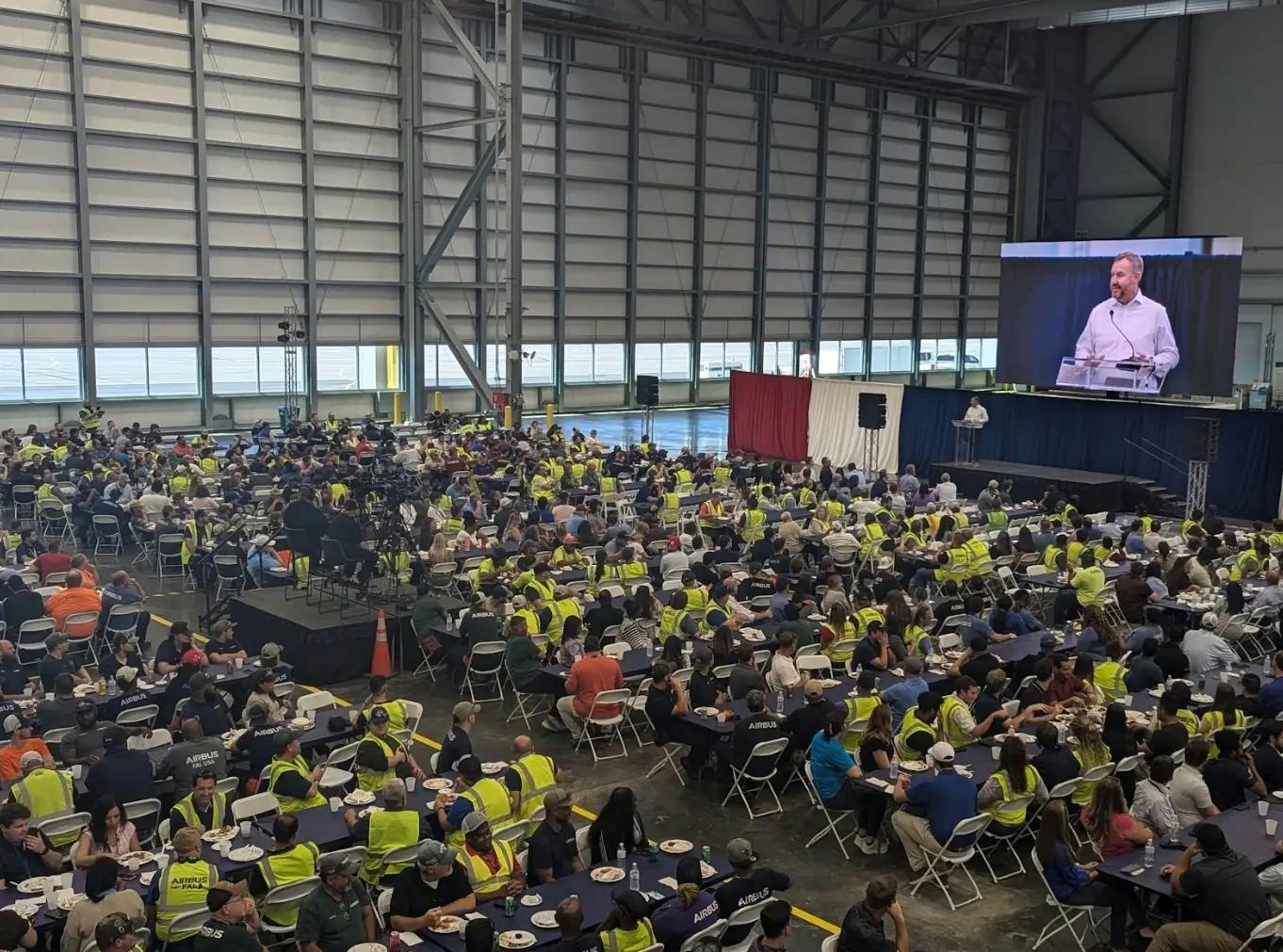
Airbus Marks 25 Years of Aerospace Innovation in Chile
Airbus’s presence in Chile extends well beyond its reputation in commercial aviation, reflecting a profound integration into the country’s aerospace sector. Currently, 74% of commercial aircraft operating within Chile are manufactured by Airbus, underscoring the company’s pivotal role in the nation’s aviation landscape. Since establishing its Santiago base in 2001, Airbus has transitioned from a mere supplier to a strategic partner, collaborating closely with major local airlines such as LATAM, SKY, and JetSMART. Together, they navigate Chile’s challenging geography, which spans over 4,200 kilometers and includes the Andes mountain range, the Pacific coastline, and remote Antarctic territories.
For 25 years, Airbus has anchored Chile’s aerospace industry through a consolidated hub that encompasses Commercial, Helicopters, and Defence and Space operations. This facility is unique in the Southern Cone, serving as a critical node in a country where reliable air connectivity is essential for both economic and social cohesion.
Transforming Commercial Aviation in Chile
The introduction of the A320neo Family has been a transformative development for Chile and the wider Latin American region. These aircraft offer a 20% reduction in fuel consumption and CO2 emissions, enabling airlines to reduce operational costs while expanding access to air travel for millions of passengers. Despite these advances, Airbus faces significant challenges in Chile’s complex regulatory environment and a market where aviation infrastructure is still developing. Competition is intensifying, with global aerospace firms such as Boeing and Leonardo actively seeking to increase their foothold in Latin America. The expansion of competitors like Azul in Brazil, despite structural barriers, highlights the dynamic and competitive nature of the regional aerospace market.
Airbus’s plans to expand its local assembly and industrial capabilities are under close scrutiny. Industry observers are particularly attentive to how such initiatives, similar to those undertaken in countries like Romania, will influence local employment opportunities and technology transfer within Chile.
Essential Helicopter and Military Operations
Airbus helicopters have been indispensable in Chile’s demanding terrain for a quarter of a century. With a fleet of 140 aircraft, representing a 40% market share, these helicopters are critical for search and rescue missions, medical emergencies, and disaster response. The H125 model, in particular, has become emblematic of operational resilience, serving public agencies including the Army Aviation Brigade, the Investigations Police of Chile (PDI), Carabineros, and the Navy, as well as private operators such as Ecocopter and DAP. More than 25 H125 helicopters are dedicated to firefighting efforts, while the broader Southern Cone fleet numbers approximately 300.
During national emergencies, Airbus helicopters operate alongside tactical transport aircraft like the C295, delivering aid to remote islands and supporting scientific expeditions in Antarctica. The Santiago hub plays a vital role in maintaining these aircraft, staffed by local experts who understand the unique operational demands posed by Chile’s geography.
Expanding Horizons with Space Technology
Airbus’s contributions in Chile extend beyond aviation into the realm of space technology. Its capabilities support national sovereignty by enabling the monitoring of glaciers, management of natural resources, and response to environmental challenges. As Chile’s aerospace sector continues to evolve, Airbus’s commitment to innovation and partnership will be tested by regulatory complexities, competitive pressures, and infrastructural limitations. Nonetheless, after 25 years, Airbus remains a foundational element in Chile’s aerospace ambitions, continuously adapting and innovating to help shape the nation’s future both in the air and beyond.
American Airlines Plans to Receive New Aircraft Deliveries in 2026

Delta Flight Returns to Atlanta Airport Due to Engine Trouble

Samoa Airways Recovers Damaged DHC-6-300 Aircraft

Man Ingested by Frontier Airlines Engine Marks Denver’s Sixth Airfield Security Breach in Three Years

The Advantages and Disadvantages of Owning Versus Leasing a Private Jet

Former Spirit Employees Express Concerns Over AI Partnership With Google
China Certifies Pilotless Air Taxi for Export; Sri Lanka First Buyer
US Pilot Hourly Pay Ranges from $90 for Regional to $465 for Widebody Flights

NASA Chooses University Teams to Support Aviation Research

Airbus Conducts Freighter First Flight as Delivery Figures Influence Stock
