
Trasforma le intuizioni dell’IA in azioni concrete

Tendenze
Categories
Airbus Reduces 2025 Commercial Aircraft Delivery Forecast
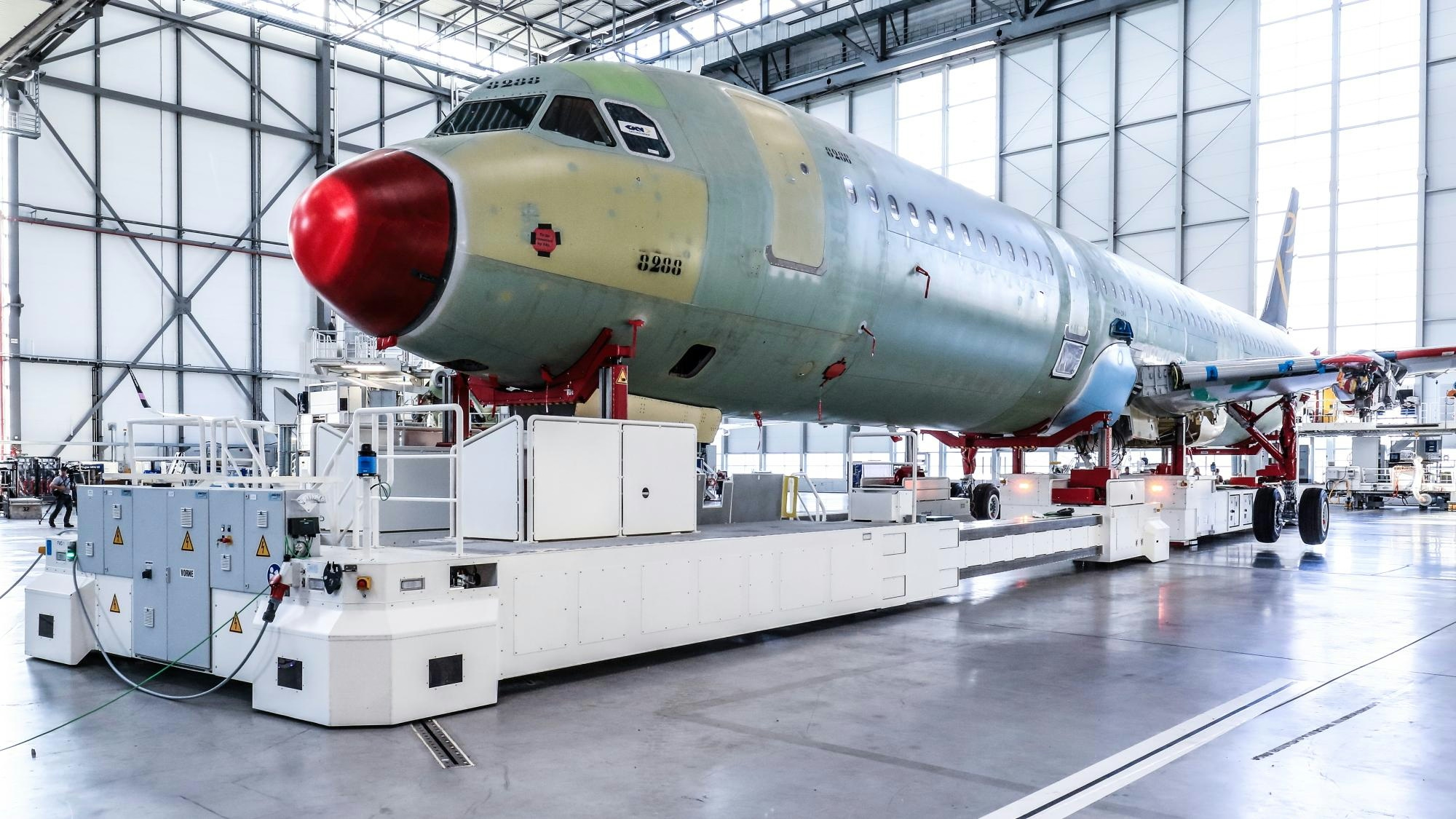
Airbus Lowers 2025 Commercial Aircraft Delivery Forecast Amid Production and Supply Chain Challenges
Airbus, a leading global manufacturer of commercial aircraft, has revised its delivery forecast for 2025 downward due to ongoing production delays and emerging quality concerns. This adjustment notably impacts key models such as the A320neo and A350, which are integral to airline fleet expansion plans worldwide.
Production and Supply Chain Constraints
The company attributes the slowdown to a combination of persistent supply chain disruptions and operational challenges. Shortages of essential components—including semiconductors, avionics, and engine parts—continue to hamper assembly lines. These global supply chain issues are expected to extend into 2025, constraining Airbus’s production capacity and delivery schedules.
Compounding these difficulties are labor shortages and technical bottlenecks at Airbus’s assembly plants in France, Germany, and Spain. Delays in training and retaining skilled workers have slowed production cycles despite the company’s efforts to streamline operations while maintaining stringent safety and quality standards. Additionally, Airbus is addressing a quality issue involving fuselage panels on several dozen A320-family aircraft, with ongoing inspections likely to further affect delivery timelines.
Impact on Airlines and Market Dynamics
The reduction in deliveries is already influencing airlines’ fleet planning strategies. Carriers awaiting the A320neo for short-haul routes and the A350 for long-haul operations may encounter delays in capacity expansion, potentially affecting ticket pricing, route scheduling, and aircraft leasing negotiations. Financially, these delays can disrupt airlines’ cash flow and financing arrangements, prompting some to adjust procurement schedules or explore alternative leasing options.
Currently, Airbus has 30 jets assembled but awaiting engines, contributing to a “backloaded” delivery schedule for the remainder of the year. To meet its year-end target of approximately 820 aircraft, the company must still deliver 235 jets—a goal that is increasingly challenging under current conditions.
Strategic Response and Industry Outlook
In response to these challenges, Airbus is prioritizing production of high-demand models such as the A320neo family while managing bottlenecks in other areas. The company is collaborating closely with suppliers to secure critical components and reduce lead times. Investments in automation, predictive maintenance, and digital production planning are underway to enhance assembly efficiency. Industry analysts suggest that these measures may gradually restore delivery rates by late 2025 or early 2026, contingent on broader stabilization of supply chains.
Market and Competitor Reactions
The delivery slowdown has introduced volatility into Airbus’s stock, with investors expressing concerns over production capacity and quality control. Despite short-term uncertainties, confidence in Airbus’s long-term prospects remains underpinned by its diverse product portfolio and extensive global presence.
Meanwhile, competitors such as Boeing, which are contending with their own production challenges, may find opportunities to regain market share if Airbus fails to meet its delivery targets. This evolving situation highlights the broader pressures confronting the commercial aviation industry as manufacturers and airlines navigate ongoing supply chain and operational disruptions.

Etihad Airways Suspends Airbus A380 Flights on Key Route

Aditya Birla Group Seeks Approval for Aircraft Leasing in GIFT City

Qatar Airways Highlights Innovation and Connectivity at Arabian Travel Market 2026

Hong Kong's Five-Year Plan Includes Andrew Fan's Aircraft Parts Processing Hub Proposal

ACIA Aero Leasing Delivers ATR72-600 to Air Nostrum

RTX Appoints Jill Albertelli as Head of Pratt & Whitney

TAT Technologies Joins Beyond Aero Hydrogen Aircraft Program

AURAK Study Highlights Barriers to Air Taxi Adoption in Emerging Economies

Xiamen Air Selects Altitude for 787 Maintenance at Heathrow

Etihad and Swissport Extend Global Partnership
