Immagine

AeroGenie — Il tuo copilota intelligente.

Chiedi qualsiasi cosa. Analizza tutto. Agisci immediatamente.

Tendenze

Categories

Aircraft Deliveries Drop 30 Percent, Raising Safety Concerns
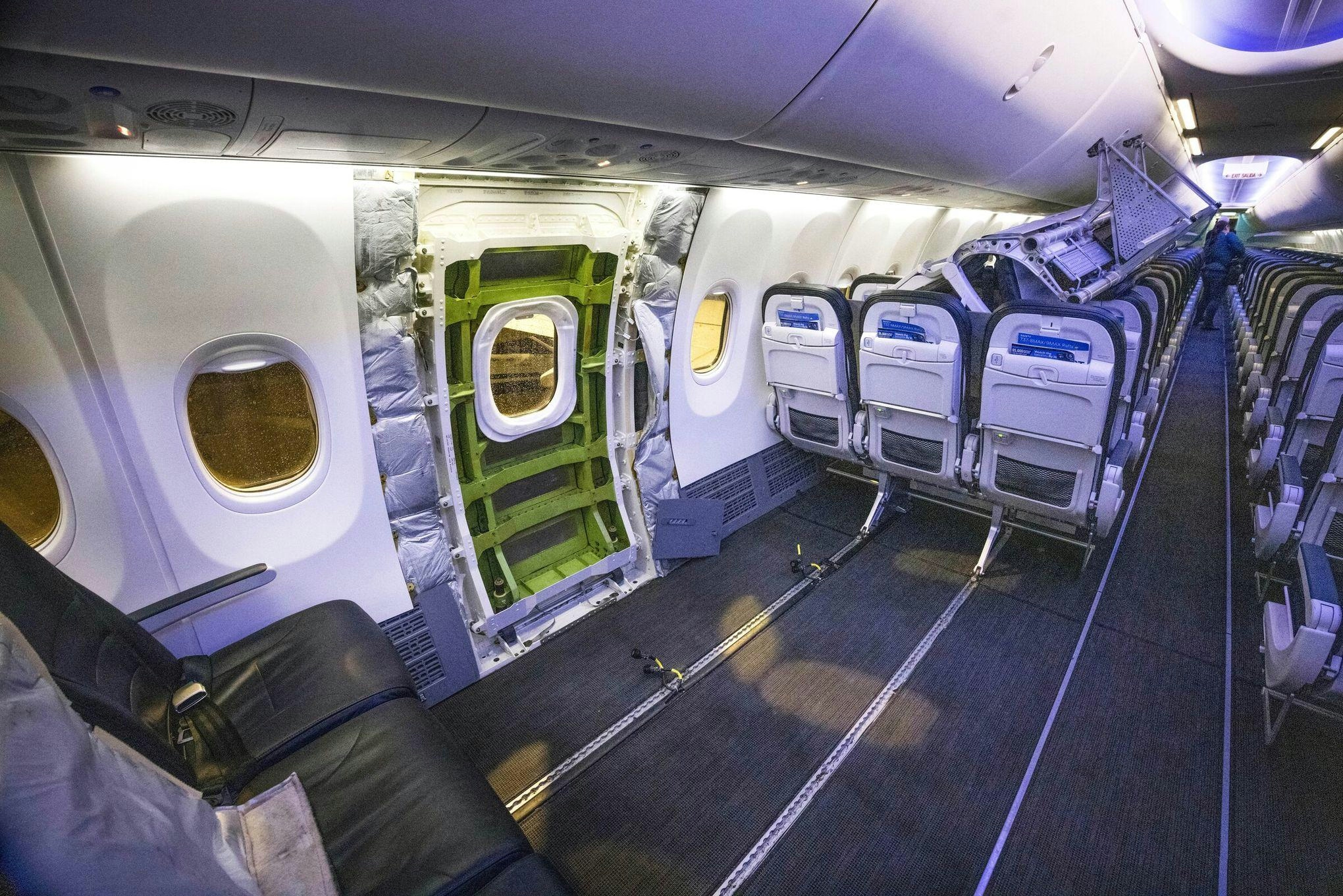
October 18, 2025By ePlane AI
Aircraft Deliveries Drop 30 Percent, Raising Safety Concerns
0
0
Aircraft Deliveries
Flight Safety
IATA

Aircraft Deliveries Decline by 30 Percent Amid Rising Safety Concerns

The International Air Transport Association (IATA) World Safety and Operations Conference (WSOC) commenced this week in Xiamen, China, bringing together global aviation leaders to confront escalating safety challenges. These challenges arise amid ongoing geopolitical instability and persistent supply chain disruptions that continue to affect the industry’s operational landscape. Mark Searle, Director General of IATA, welcomed delegates by emphasizing the significance of hosting the conference in China for the first time, describing the nation as “an aviation powerhouse” and acknowledging its notable advancements in safety and operational standards.

Progress and Challenges in Aviation Safety

Searle highlighted China’s achievements, including the broad adoption of the IATA Safety Leadership Charter, the protection of aviation spectrum during the 5G rollout, and the establishment of new international waypoints with Tajikistan and Kyrgyzstan to enhance route flexibility. He underscored the economic importance of aviation in China, noting that the sector contributes $250 billion to the country’s GDP and supports over 10 million jobs.

Despite these positive developments, Searle issued a stark warning about the unprecedented risks confronting the industry. He referenced recent tragic incidents, such as the downing of an Azerbaijan Airlines jet and fatal accidents in Sudan, emphasizing that while such events are rare, they remain “completely unacceptable.” He stressed that civilian aircraft must never be exposed to such dangers, particularly in conflict zones.

The operational environment is further complicated by ongoing geopolitical tensions. The war in Ukraine results in the cancellation of up to 2,000 flights daily and forces rerouting of an additional 1,500 flights. Similarly, the India–Pakistan conflict has led to more than 200 daily diversions. Europe has experienced a surge in drone incursions and Global Navigation Satellite System (GNSS) interference, increasing by over 200 percent since 2021. These disruptions have undermined confidence and connectivity, extended journey times, and elevated costs and emissions, despite established procedures and rerouting efforts.

Supply Chain Disruptions and Their Impact on Safety

Adding to these operational challenges, the aviation industry is contending with a 30 percent decline in aircraft deliveries, which has raised significant safety concerns. A joint report by IATA and Oliver Wyman attributes this decline to ongoing supply chain disruptions that delay the production of new aircraft and parts. As a result, airlines are compelled to extend the service life of older aircraft to accommodate rising passenger demand. The global commercial aircraft backlog has surged to a record high of over 17,000 units, far exceeding the 2010–2019 average, while spending on maintenance, repair, and overhaul continues to increase.

Although the recent reinstatement of zero tariffs on aircraft and parts between the United States and the European Union has alleviated some trade tensions, it has not resolved the persistent production delays. High-profile setbacks, such as Boeing’s ongoing difficulties with 777X deliveries, have frustrated major customers including Emirates, which has placed orders for more than 200 units. Industry analysts caution that these supply chain challenges could cost airlines upwards of $11 billion in 2025.

Searle emphasized that safeguarding the future of aviation safety demands strong leadership, strict adherence to global standards, and the intelligent application of operational data. He described global standards as “the bedrock of global aviation” and warned against regulatory fragmentation. He concluded by affirming the industry’s responsibility to manage current risks while anticipating and preparing for future challenges.

As the aviation sector navigates a complex interplay of operational, geopolitical, and supply chain risks, leaders at WSOC reiterated the urgent need for coordinated action to uphold safety and resilience in the skies.

More news
Southern Museum of Flight in Birmingham Marks USA 250 with Aviation History Exhibit

Southern Museum of Flight in Birmingham Marks USA 250 with Aviation History Exhibit

Southern Museum of Flight Commemorates USA 250 with Aviation History Exhibit As the United States prepares to celebrate its 250th anniversary in 2026, the Southern Museum of Flight in Birmingham, Alabama, has unveiled a comprehensive aviation history exhibit to mark this significant milestone. The museum’s display invites visitors to delve into the remarkable stories of pilots, engineers, and aviation pioneers whose innovations have profoundly influenced both American and global air travel. Honoring Aviation Pioneers and the Tuskegee Airmen The exhibit traces the evolution of flight from its earliest days to contemporary technological advancements, spotlighting the journeys of aviation heroes and the aircraft that defined their eras. A central feature is a tribute to the Tuskegee Airmen, the trailblazing African American aviators who shattered racial barriers during World War II. The display includes training aircraft similar to those flown by the Airmen, alongside personal artifacts and detailed narratives of their achievements. This section not only highlights their pivotal role in aviation history but also underscores their significant impact on the civil rights movement. The legacy of the Tuskegee Airmen serves as a powerful testament to resilience and excellence amid systemic racism. Their contributions transformed the U.S. military and opened doors for future generations of aviators. Through immersive storytelling and authentic artifacts, the museum pays homage to their enduring influence on both aviation and social progress. Personal Stories and Broader Context Beyond the Tuskegee Airmen, the museum offers intimate insights into the lives of World War II aviators. One notable exhibit recounts the recovery of a B-25 Mitchell bomber that had been submerged in a South Carolina lake for nearly seven decades. Among the recovered items was a co-pilot’s watch engraved with the date March 5, 1943, providing a poignant connection to the personal sacrifices behind historic wartime events. The Southern Museum of Flight’s initiative arrives amid a complex and evolving aviation sector. Globally, the industry remains sensitive to geopolitical developments, exemplified by the recent drone attack on Dubai Airport, which disrupted airline stocks and underscored the sector’s volatility. Meanwhile, emerging markets such as Brazil continue to face structural challenges, including disproportionate passenger lawsuits and currency financing issues, as noted by Azul CEO John Rodgerson, though they present significant opportunities for growth. Within this competitive environment, the Southern Museum of Flight’s exhibit complements other prominent aviation museums, including the Hagerstown Aviation Museum’s homage to Fairchild Aircraft and the National Museum of the Marine Corps’ football-themed aviation display. These varied approaches reflect the broad appeal and shifting interests within aviation history, shaping how museums engage audiences and respond to industry dynamics. As part of the nationwide America 250 celebrations, the Southern Museum of Flight offers not only a retrospective on the past but also a tribute to the courage, innovation, and legacy that continue to inspire new generations of pilots, engineers, and aviation enthusiasts. Through its carefully curated exhibits, the museum emphasizes the enduring importance of aviation in shaping the nation’s history and future.
TxDOT Aims to Develop Air Taxi Services

TxDOT Aims to Develop Air Taxi Services

TxDOT Advances Development of Air Taxi Services in Central Texas The Texas Department of Transportation (TxDOT) is actively pursuing the development of air taxi services across Central Texas, positioning the state at the forefront of this emerging mode of transportation. Texas is one of eight states selected by the U.S. Department of Transportation to contribute to shaping the future of electric vertical takeoff and landing (eVTOL) aircraft, commonly referred to as “air taxis.” These vehicles have the potential to revolutionize daily travel by offering rapid, quiet, and environmentally friendly alternatives to traditional ground transportation. Testing and Infrastructure Development Recently, at The Long Center in downtown Austin, 14-year-old Weston Rhoden and his family observed test flights of LIFT Aircraft’s single-seat eVTOL vehicles. Rhoden’s reaction—expressing a mix of curiosity and skepticism about the prospect of seeing hundreds of such aircraft in the city skyline—reflects the broader public sentiment toward this futuristic technology. TxDOT has established a coalition dedicated to advancing air taxi development, focusing on critical infrastructure such as sensors, electric charging stations, and prototype designs. Sergio Roman, representing TxDOT’s Aviation Division, emphasized the agency’s role in collecting data to assist federal regulators, including the Federal Aviation Administration (FAA), in formulating safety and reliability standards. “We have the space, and we have the conditions to answer the questions about pretty much everything that they're looking for,” Roman stated. The Austin region’s extensive network of general aviation airports, combined with its proximity to the Texas Hill Country, makes it an ideal location for early air taxi infrastructure. Roman envisions dedicated vertiports capable of accommodating multiple aircraft simultaneously, with designs that prioritize noise reduction through the use of electric propulsion. He highlighted the quiet nature of these aircraft, noting that “goods and passengers [will be] loaded onto these aircraft quietly departing because these are electric aircraft.” Potential Benefits and Challenges Beyond urban applications, the coalition is exploring how air taxis could enhance connectivity for rural communities, improving access to essential resources and enabling faster medical transport during emergencies. However, significant challenges remain before air taxis can become a mainstream transportation option. Regulatory complexities, safety concerns, and technological limitations must be addressed comprehensively. TxDOT and its partners are working toward statewide policy harmonization to ensure consistent standards across Texas. Market responses to air taxi technology are expected to evolve as the sector matures. While initial public skepticism is common, successful test flights and demonstrated safety could shift perceptions and generate enthusiasm. The transportation industry may respond with either collaboration or increased investment, depending on individual readiness to engage with this new market. Affordability remains a central objective for TxDOT. Roman expressed the goal that, at scale, air taxi services would be priced comparably to rideshare options, making them accessible to a broad demographic of Texans. Outlook for Air Taxi Services in Texas Recent projections suggest that limited air taxi operations could commence in Texas cities later this year, with plans to expand to commercial passenger flights within two to three years. Nonetheless, widespread adoption of air taxi services is anticipated to be a longer-term development, potentially becoming commonplace over the next decade. Reflecting on this timeline, Rhoden remarked, “I guess that will probably be the future, in my adulthood,” as he watched the aircraft navigate Austin’s skyline.
FAA Approves Electric Air Taxis for U.S. Flights Starting Summer 2026

FAA Approves Electric Air Taxis for U.S. Flights Starting Summer 2026

FAA Approves Electric Air Taxis for U.S. Flights Starting Summer 2026 The Federal Aviation Administration (FAA) has authorized the operation of electric air taxis in the United States beginning as early as summer 2026, marking a pivotal advancement in urban air mobility. This approval comes with stringent safety requirements, mandating that these next-generation aircraft meet standards on par with commercial airliners. The FAA expects these electric vertical takeoff and landing (eVTOL) vehicles to achieve an exceptionally low failure rate—less than one incident per billion flight hours—making them significantly safer per mile than conventional road travel. Accelerating Innovation Through Pilot Programs After years of cautious regulation that many industry stakeholders viewed as a barrier to progress, the FAA is now actively expediting development through strategic political support and collaboration with private companies. The agency has approved eight pilot programs spanning 26 states, facilitating the transition from conceptual designs to operational testing. Leading companies such as Archer Aviation, Beta Technologies, Joby Aviation, and Wisk are at the forefront, each striving to demonstrate the commercial viability of eVTOL technology. Test flights will take place in a variety of locations, including Florida, Manhattan, Texas, and Utah. Florida’s selection is particularly significant given its well-documented traffic congestion, providing an ideal environment to showcase the potential of air taxis to revolutionize urban commuting. These aircraft are designed to be cleaner and quieter than traditional helicopters, while offering fare prices competitive with popular ride-hailing services like Uber. Expanding Applications and Industry Challenges The scope of the pilot programs extends beyond passenger transport to include cargo delivery and emergency response, underscoring the broad utility of electric air taxis. Urban planners and technology investors are closely monitoring these developments, intrigued by the possibility of integrating eVTOLs into existing city infrastructure. Nonetheless, the path forward remains complex. Regulatory challenges, safety assurances, and the establishment of new infrastructure—such as rooftop landing pads and charging stations—pose significant hurdles to widespread adoption. Market responses have been mixed. Established aviation sectors have expressed skepticism, concerned about competition and the complexities of managing eVTOL traffic within already congested airspace. Some companies are pursuing strategic partnerships to strengthen their positions, while others are preparing for intensified rivalry as the market evolves. Notably absent from the list of test sites is Los Angeles, a city widely anticipated to be an early adopter, especially with the 2028 Olympic Games approaching. This exclusion may affect the ambitions of firms like Archer Aviation, which had planned to leverage the global spotlight to showcase their technology. Despite these uncertainties, the federal pilot program reflects a robust governmental commitment to fostering innovation in air mobility. By concentrating on urban environments and practical use cases, the FAA aims to establish a regulatory framework that ensures the safe and efficient integration of electric air taxis into American airspace. If successful, this initiative could transform urban transportation by providing a cleaner, quieter, and potentially more affordable alternative to traditional modes of travel.
Pilot Lands Plane on Old Kansas City Road After Engine Failure Near Miami County Airport

Pilot Lands Plane on Old Kansas City Road After Engine Failure Near Miami County Airport

Pilot Executes Emergency Landing on Old Kansas City Road Following Engine Failure Near Miami County Airport KANSAS CITY, Mo. — A pilot successfully performed an emergency landing on Old Kansas City Road on Thursday afternoon after experiencing engine failure shortly before reaching Miami County Airport. The incident highlights the critical importance of pilot training and rapid decision-making in managing in-flight emergencies. Incident Details and Response The Miami County Sheriff’s Office reported that their communications center received a distress call from the aircraft just before 12:30 p.m. The engine failure occurred approximately 1.2 miles southwest of the airport. Despite the mechanical malfunction, the pilot managed to safely land the single-engine plane on Old Kansas City Road, north of 335th Street. Both occupants, affiliated with the U.S. Aviation Academy, escaped the incident without injury. Emergency personnel from multiple agencies, including the Miami County Sheriff’s Office, Miami County EMS, Osawatomie Police Department, Osawatomie Fire Department, and Paola Fire Department, promptly responded to the scene. The Kansas Highway Patrol has taken the lead in investigating the cause of the engine failure. Broader Implications for Aviation Safety Aviation experts observe that such incidents often lead to increased scrutiny of safety protocols and can result in higher insurance premiums for operators. In response, competitors within the aviation sector frequently reassess and strengthen their emergency procedures and pilot training programs to reduce the risk of similar occurrences. Recent emergency landings caused by engine failures at major airports, including Newark and Los Angeles, have underscored the ongoing necessity for stringent safety measures and continuous advancements in aviation standards. The successful emergency landing near Miami County Airport serves as a testament to the essential role of thorough preparation and training in safeguarding passengers and crew during unforeseen events.
American Airlines Reduces Heat-Trapping Contrails by 62% Using AI

American Airlines Reduces Heat-Trapping Contrails by 62% Using AI

American Airlines Achieves 62% Reduction in Heat-Trapping Contrails Using AI American Airlines, in collaboration with Google, has made a significant advancement in mitigating the climate impact of aviation by reducing contrail formation through artificial intelligence. In a landmark trial involving 2,400 transatlantic flights, the airline reported a 62% decrease in visible contrails and a 69% reduction in their associated warming effects, all achieved without a notable increase in fuel consumption. AI-Driven Contrail Forecasting and Flight Optimization The partnership leveraged Google’s AI forecasting technology to predict the atmospheric conditions most conducive to contrail formation—cloud-like streaks that occur when jet engine emissions encounter cold, humid air. While often transient, contrails can persist under certain conditions, trapping heat in the atmosphere and contributing to global warming. Research from Contrails.org, a nonprofit affiliated with Bill Gates’ Breakthrough Energy initiative, estimates that contrails account for approximately 1% to 2% of global warming. By integrating AI-generated contrail risk maps into its flight planning systems, American Airlines enabled pilots to make minor altitude adjustments or select alternative routes to avoid areas with a high likelihood of contrail formation. The trial, conducted from January to May 2025, divided flights into two groups: one following standard routes and the other utilizing AI-informed paths. Among the 112 flights that adopted these alternative routes, contrail formation was reduced by 62% compared to the control group. Researchers from Flightkeys and Contrails.org calculated that these operational changes led to nearly a 70% reduction in the climate warming impact of the affected flights. Google’s recent blog post highlighted these findings as evidence that AI-driven route optimization could represent one of the aviation sector’s most practical and cost-effective climate mitigation strategies to date. Challenges and Industry Implications Despite the promising results, experts caution that widespread adoption of AI-based contrail reduction faces several hurdles. Scaling the technology will require extensive validation across diverse flight routes and varying weather conditions to ensure consistent effectiveness. Moreover, integrating AI tools with existing flight planning systems must maintain the highest standards of safety and operational efficiency. There is also potential skepticism among passengers and stakeholders regarding the environmental benefits relative to any operational costs incurred. The aviation industry is under mounting pressure to reduce its environmental footprint. While sustainable aviation fuels offer a long-term pathway to emission reductions, minor route adjustments present a more immediate and cost-effective approach to mitigating contrail-related warming. Competitors are likely to explore similar AI technologies to uphold their environmental commitments, though they must also address cybersecurity and ethical considerations inherent in AI deployment. Dinesh Sanekommu, head of Google’s contrail research, underscored the importance of ongoing experimentation, stating, “Aviation is one of the hardest sectors to decarbonize. We think AI can help make that a reality. Each operational demonstration adds evidence and data to inform the right decisions for the future.” This initiative builds on earlier collaborations between Google, American Airlines, and Breakthrough Energy that began in 2023. While the initial results are encouraging, the long-term impact and scalability of AI-driven contrail reduction remain to be fully assessed as the industry balances environmental benefits against operational complexities.
Rep. Troy E. Nehls Calls for Aviation Innovation in Op-Ed

Rep. Troy E. Nehls Calls for Aviation Innovation in Op-Ed

Rep. Troy E. Nehls Advocates for FAA Modernization to Sustain U.S. Aviation Leadership Congressman Troy E. Nehls (R-TX) has issued a compelling call for comprehensive reforms in U.S. aviation policy, emphasizing the urgent need to modernize the Federal Aviation Administration’s (FAA) certification processes. In a recent op-ed published in *Flying Magazine*, Nehls presented his bipartisan legislative proposal, H.R. 7553—the Aviation Innovation and Global Competitiveness Act—designed to revamp the FAA’s type certification system specifically for Advanced Air Mobility (AAM) aircraft. He argues that the current framework is antiquated, lacking in transparency and accountability, and constitutes a significant impediment to growth within the rapidly evolving aviation sector. Nehls warns that without prompt modernization, the United States risks ceding its competitive edge to international rivals, particularly China, in the global race for aviation innovation. “Our systems must adapt if we are to remain at the forefront of flight technology,” he wrote, urging policymakers and industry stakeholders to embrace reforms that balance safety with the promotion of innovation and growth. According to Nehls, updating the FAA’s certification processes is critical not only to foster technological advancement but also to preserve America’s longstanding leadership in aviation. Political Challenges and Broader Legislative Agenda Nehls’ push for reform unfolds amid a complex political environment. While many within the aviation industry regard his advocacy as a necessary impetus for innovation, others remain skeptical, citing his controversial public persona. Critics have pointed to past incidents—such as his widely publicized appeal to former President Trump during a State of the Union address to sign his tie—as evidence of a lack of decorum, which adversaries have used to question his credibility and motivations. Complicating perceptions further is Nehls’ recent endorsement of his twin brother, Trever Nehls, as his successor for Texas’s 22nd Congressional District. Observers suggest this familial endorsement may influence how his legislative initiatives, including the aviation bill, are received by both colleagues and constituents. Despite these challenges, Nehls continues to advance a broad legislative agenda. Beyond H.R. 7553, he has introduced bills addressing railroad safety, forensic DNA testing, and infrastructure reform. Financial disclosures reveal that Nehls raised $118,600 in the fourth quarter of 2025, with nearly 60 percent of contributions coming from individual donors, and he holds an estimated net worth of $378,500. As the debate over FAA modernization progresses, Nehls’ advocacy for innovation remains a focal point, attracting both support and scrutiny from across the political spectrum and the aviation industry. The ultimate impact of his efforts will likely depend on the strength of his proposals and his capacity to navigate the political challenges tied to his public image.
British Airways Introduces Starlink Wi-Fi on Boeing 787 and Select Routes

British Airways Introduces Starlink Wi-Fi on Boeing 787 and Select Routes

British Airways Introduces Starlink Wi-Fi on Boeing 787 and Select Routes Deployment and Strategic Focus British Airways (BA) has commenced the introduction of ultra-fast Starlink Wi-Fi across its fleet, beginning with its first Boeing 787-8 Dreamliner now in commercial operation. This aircraft, retrofitted at BA’s Heathrow engineering base between late February and mid-March, has already served routes to Mumbai, Montreal, and Cincinnati. The airline plans to equip its entire fleet with Starlink connectivity within three years, providing passengers with complimentary high-speed internet as competition in in-flight connectivity intensifies across Europe and North America. The initial rollout targets the Boeing 787-8 fleet, which previously lacked onboard Wi-Fi capabilities. This focused approach facilitates streamlined installation and allows BA’s engineering teams to build expertise before undertaking more complex retrofits on aircraft already equipped with existing systems. Industry sources indicate that this phased strategy aims to minimize aircraft downtime and optimize efficiency during the broader implementation. Following the completion of the 787-8 installations, British Airways intends to extend Starlink integration to other aircraft types, including select Boeing 787-9 Dreamliners and the Airbus A380. The program will eventually encompass both long-haul widebody aircraft and short-haul Airbus A320 family jets. This initiative forms part of a wider agreement within the International Airlines Group (IAG), which also includes Aer Lingus, Iberia, Vueling, and LEVEL. While British Airways will offer Starlink free of charge to its passengers, the group’s low-cost carriers are expected to treat the service as a paid add-on. Market Challenges and Competitive Landscape British Airways faces several operational and market challenges as it integrates Starlink Wi-Fi across its fleet and routes. Maintaining consistent service quality and managing potential price increases for users—issues highlighted in recent data—will be critical as the airline seeks to distinguish itself in a rapidly evolving market. Passenger satisfaction with the new service is likely to influence broader industry responses, with competitors potentially enhancing their own in-flight connectivity offerings or closely monitoring BA’s performance to gauge demand. Additionally, strategic partnerships or investments in similar satellite technologies may emerge as rival airlines strive to preserve their competitive positions. The in-flight connectivity sector is becoming increasingly competitive. Air France has initiated Starlink installations on its short-haul fleet, while Lufthansa and SAS have also selected the service. In North America, United Airlines is deploying Starlink on regional and narrowbody aircraft, although its widebody rollout remains pending. Conversely, Ryanair has opted against Starlink, citing concerns over fuel efficiency and passenger demand—claims that have been contested within the industry. Starlink’s technology, leveraging a constellation of low-earth orbit satellites, delivers high-speed, low-latency internet across most global regions and is rapidly supplanting legacy systems from providers such as Panasonic and Thales. Its primary competitor, Amazon-backed Leo, remains under development, with JetBlue as its sole committed airline partner and service activation anticipated in 2027. As British Airways accelerates its Starlink rollout, the airline is positioning itself at the forefront of in-flight connectivity, setting new standards for passenger experience while navigating the operational and competitive complexities of this technological transition.
Dubai Plans to Launch One of the World’s First Major Air Taxi Networks

Dubai Plans to Launch One of the World’s First Major Air Taxi Networks

Dubai Plans to Launch One of the World’s First Major Air Taxi Networks As the global competition to introduce air taxis intensifies, much attention has centered on aircraft manufacturers—specifically, who will achieve certification first and scale production most effectively. Companies such as Joby Aviation and Vertical Aerospace frequently dominate these discussions. However, the decisive factor in launching the first operational air taxi network may ultimately be the cities themselves. In this context, Dubai is emerging as a prominent leader. Government Coordination Accelerates Urban Aviation Development The establishment of a new urban aviation layer hinges as much on coordination as on technological innovation. Duncan Walker, CEO of Skyports Infrastructure, emphasizes that creating aviation infrastructure within urban centers demands extensive stakeholder alignment and clear direction from top government levels. Dubai’s centralized governance model facilitates swift progression from concept to implementation, contrasting sharply with the fragmented regulatory frameworks found in many other regions. With robust government support, Dubai has successfully unified various stakeholders around the shared objective of transitioning commercial air taxis from experimental test flights to full-scale operations. Walker notes that the city’s top-level endorsement has been instrumental in aligning all parties toward this common goal. Infrastructure Development Precedes Aircraft Certification While much of the industry remains focused on certifying electric vertical takeoff and landing (eVTOL) aircraft, Dubai is proactively investing in the infrastructure necessary to support large-scale air taxi operations. Skyports is spearheading the development of the city’s first commercial vertiport network—high-capacity hubs designed to facilitate efficient passenger movement and rapid aircraft turnaround. This forward-looking strategy may prove critical, as cities without established vertiport networks could face significant challenges in launching viable services once aircraft certification is achieved. Challenges and Competitive Pressures Despite Dubai’s early momentum, the path to operational air taxi services is fraught with challenges. Regulatory complexities, safety considerations, and substantial operational costs present potential obstacles. The traditional aviation sector may also express skepticism regarding the feasibility and safety of urban air mobility solutions. Concurrently, competitors such as Archer and Joby Aviation are accelerating their own deployment plans in other regions, intensifying the global race to establish air taxi networks. The broader geopolitical environment adds another layer of uncertainty. Ongoing conflicts in the Middle East could affect Dubai’s standing as a global aviation hub. Nevertheless, analysts contend that Dubai’s well-established infrastructure and extensive network provide a strong foundation for resilience and continued leadership in this emerging sector. A Potential Global Benchmark Should Dubai succeed in launching one of the world’s first major air taxi networks, it would establish a significant precedent for cities worldwide. Drawing parallels with traditional aviation, robust infrastructure often underpins sustainable value creation over the long term. Dubai’s early investments and cohesive government support may not only secure a first-mover advantage but also influence the future trajectory of urban air mobility on a global scale.
AIESL Proposes 200-300 Crore MRO Facilities at Two New Airports

AIESL Proposes 200-300 Crore MRO Facilities at Two New Airports

AIESL Proposes ₹200–300 Crore Investment in MRO Facilities at Noida and Navi Mumbai Airports AI Engineering Services Ltd (AIESL) is set to invest between ₹200 and ₹300 crore to establish new maintenance, repair, and overhaul (MRO) hubs at Noida International Airport (Jewar) and Navi Mumbai International Airport. This strategic expansion reflects the rapid transformation underway in India’s aviation sector, where major carriers such as Air India, IndiGo, and Akasa Air are increasingly developing their own in-house maintenance capabilities, intensifying competition within the domestic MRO market. Expansion Plans and Market Context AIESL is currently negotiating phased MRO operations at both airport locations, beginning with the construction of wide-body aircraft hangars. Each hangar is projected to require an investment of ₹100–150 crore, with the possibility of scaling operations depending on demand and financial outcomes. Subject to land acquisition and regulatory approvals, these facilities could become operational within the next two years. India’s MRO market, valued at $1.7 billion in 2021, is expected to grow substantially, potentially exceeding $4 billion by 2031. This growth is driven by a surge in aircraft orders, with over 1,000 planes currently on order. Despite this expansion, nearly 90% of heavy maintenance work is outsourced to international hubs such as Singapore, Dubai, and Colombo. AIESL aims to capture a larger share of this market by enhancing its domestic presence and reducing dependence on foreign service providers. Challenges and Competitive Landscape While the opportunities are significant, AIESL faces considerable challenges. The emergence of airline-owned MRO facilities enables carriers to reduce turnaround times and long-term maintenance costs, thereby exerting pressure on independent MRO providers. Furthermore, the market for used serviceable materials is becoming increasingly competitive. For instance, AerSale has recently encountered difficulties sourcing feedstock, highlighting the intense competition for used aircraft and engine components. This environment may affect AIESL’s ability to secure contracts and manage operational expenses effectively. Financial viability is also under scrutiny, particularly given a slight decline in maintenance sales despite strong overall MRO demand. Competitors are actively pursuing strategic initiatives: Jet Air Inc. has expanded its Midwest presence through the acquisition of three new facilities, while Embraer has formed a partnership with Mahindra to strengthen MRO services in India. These moves underscore a rapidly evolving sector where alliances and acquisitions are reshaping the competitive landscape. Current Operations and Future Outlook AIESL currently operates six major maintenance bases located in Delhi, Mumbai, Chennai, Kolkata, Nagpur, and Thiruvananthapuram. These facilities service approximately 20 aircraft daily, including five to six wide-body jets. The company reported a turnover exceeding ₹2,100 crore in the fiscal year 2024 and anticipates revenues of around ₹1,750 crore and profits near ₹300 crore for fiscal year 2025, pending audit. Enhancing turnaround times and operational efficiency remains a priority, with the potential to increase capacity two to threefold without substantial new capital expenditure. As AIESL aligns its capabilities with the requirements of next-generation aircraft fleets, its proposed investments at Noida and Navi Mumbai airports will serve as a critical test of its ability to compete in an increasingly crowded and dynamic MRO market.
NBAA Highlights Business Aviation’s Role in Sustainability at Capitol Hill Fly-In

NBAA Highlights Business Aviation’s Role in Sustainability at Capitol Hill Fly-In

NBAA Highlights Business Aviation’s Role in Sustainability at Capitol Hill Fly-In Industry Leaders Advocate for Sustainable Aviation Policies On March 18, business aviation leaders from across the United States gathered on Capitol Hill for the National Business Aviation Association’s (NBAA) CLIMBING. FAST. Capitol Hill Fly-In. The event underscored the industry’s dedication to achieving net-zero carbon emissions by 2050, bringing together professionals, lawmakers, and congressional staff to discuss policies that promote sustainable aviation, enhance U.S. energy independence, and support rural economies. The CLIMBING. FAST. initiative serves as a comprehensive advocacy campaign emphasizing business aviation’s significant economic impact, supporting 1.3 million jobs and generating nearly $340 billion in economic output. It also highlights the sector’s role in driving innovation in sustainable technologies and clean fuels. During the fly-in, NBAA’s Environmental Committee urged Congress to back bipartisan legislation aimed at expanding sustainable aviation fuel (SAF) production, a critical element in reducing the aviation industry’s carbon footprint. Legislative Priorities and Industry Perspectives Central to the discussions were key legislative proposals such as the Securing America’s Fuels Act (H.R. 6518/S. 3759), which seeks to restore the Section 45Z Clean Fuel Production Credit for SAF to $1.75 per gallon and extend it through 2033. Another priority was the Farm to Fly Act (H.R. 1719, S. 114), which would classify SAF as an advanced biofuel eligible for support from the U.S. Department of Agriculture. Scott Cutshall, president of real estate and sustainability at Clay Lacy Aviation and co-chair of the NBAA Environmental Committee, emphasized the importance of restoring the tax credit. He explained that the current reduced credit incentivizes producers to manufacture renewable diesel rather than SAF, and that reinstating the credit to $1.75 is essential to encourage continued investment in SAF production capacity. Clay Lacy Aviation, a pioneer in offering SAF at U.S. airports, has been at the forefront of sustainable aviation practices since 2021. Despite these advancements, the industry confronts challenges including regulatory obstacles and skepticism about the environmental benefits of business aviation. Heightened scrutiny over emissions and operational efficiency is driving companies to accelerate innovation. Competitors such as Gulfstream and Embraer are advancing sustainable technology certifications and demonstrating robust financial performance, intensifying competition in the pursuit of leadership in green aviation. Progress and Economic Impact of Sustainable Aviation Fuel Business aviation has achieved a 40% reduction in its carbon footprint over the past four decades, with modern aircraft now approximately 35% more fuel-efficient than earlier models. Sustainable aviation fuel, derived from renewable feedstocks, can reduce lifecycle greenhouse gas emissions by up to 80% compared to conventional jet fuel. Corey Hanlon, manager of communications and government relations at Morristown Airport (MMU), highlighted the collaborative nature of the industry’s sustainability efforts, noting that strengthening the 45Z credit will be instrumental in expanding SAF production capacity nationwide and increasing its availability. The Americans for Clean Aviation Fuels Coalition projects that expanding domestic SAF production could contribute over $78 billion to the U.S. GDP by 2035 and support more than 400,000 jobs at peak production, creating new economic opportunities for farmers and rural communities. Kristie Greco Johnson, NBAA senior vice president of government affairs, stressed the importance of direct engagement between members of Congress and their constituents. She remarked that the fly-in demonstrated a unified commitment among business aviation leaders—from airports to manufacturers to operators—to policies that accelerate progress toward net-zero emissions while bolstering American energy independence and rural economic development.
line










