
Trasforma le intuizioni dell’IA in azioni concrete

Tendenze
Categories
Airline to Operate Largest Boeing 787 Fleet in 2025
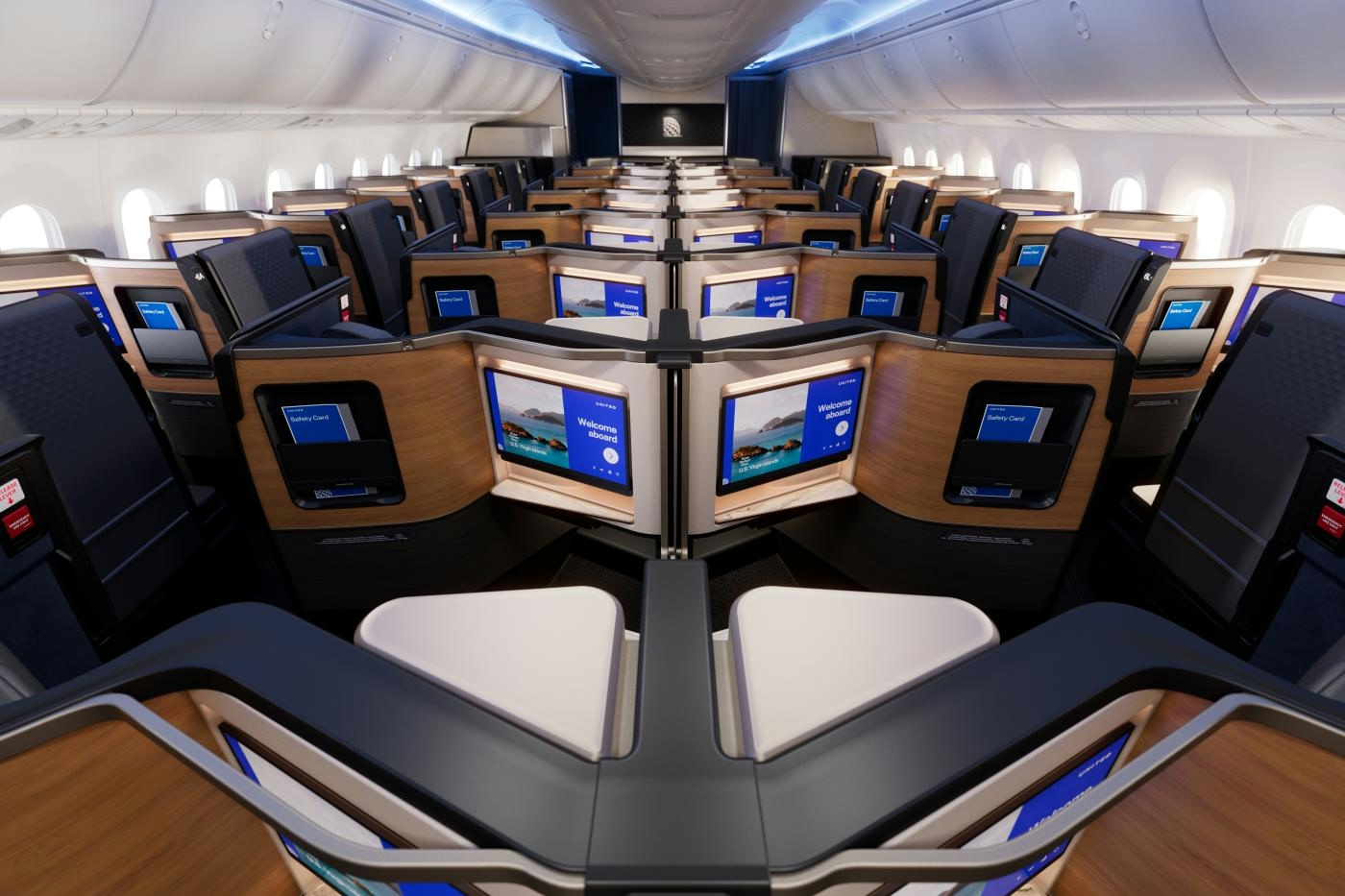
ANA to Operate the World’s Largest Boeing 787 Fleet in 2025
The evolution of commercial aviation has been marked by significant milestones, from the introduction of early jetliners like the Boeing 707 and Douglas DC-8 in the mid-20th century to the advent of widebody aircraft such as the Boeing 747. Continuing this trajectory of innovation, the Boeing 787 Dreamliner has emerged as a transformative aircraft, incorporating advanced composite materials, enhanced fuel efficiency, and improved passenger comfort. These attributes have enabled airlines to expand their long-haul networks and optimize operational performance.
ANA’s Expanding Dreamliner Fleet
All Nippon Airways (ANA) is poised to become the world’s largest operator of the Boeing 787 by 2025. The airline currently operates a fleet of 88 Dreamliners, with further deliveries anticipated. This fleet comprises 34 Boeing 787-8s, averaging 12.4 years in service; 44 Boeing 787-9s, with an average age of 8 years and four additional aircraft on order; and 10 Boeing 787-10s, the newest variant averaging 2.6 years old, with two more pending delivery.
ANA employs varied configurations across its 787 models to meet diverse route demands. The 787-8s are arranged in both standard and high-density layouts, accommodating up to 335 passengers. The 787-9s operate in multiple three-class configurations, seating between 215 and 246 passengers. The 787-10s, primarily deployed in high-density configurations, can carry up to 429 passengers, although some are configured with a three-class layout. These aircraft predominantly serve routes from ANA’s Tokyo hubs at Haneda and Narita airports, enabling the airline to broaden its international and domestic reach.
Challenges Amidst Intensifying Competition
While ANA’s leadership in operating the largest Boeing 787 fleet underscores its prominence in long-haul aviation, it also presents considerable challenges. The airline faces mounting competition from carriers investing heavily in next-generation aircraft. Emirates is expanding its Boeing 777-9 fleet and has committed to integrating advanced GE9X engines, while Ethiopian Airlines continues to grow its Boeing 737 MAX operations. Other competitors, such as FlyDubai and Jetstar Japan, are pursuing aggressive expansion strategies, including large aircraft orders and new route launches.
Managing a fleet of this scale and diversity entails complex operational demands, including heightened maintenance requirements and increased costs. ANA must also remain vigilant in adopting technological advancements to sustain its competitive advantage. The expansion of its Dreamliner fleet is likely to intensify competition on key routes, compelling the airline to innovate continuously in passenger experience and operational efficiency.
As ANA prepares to operate the world’s largest Boeing 787 fleet in 2025, it stands at the forefront of global aviation. The airline’s ability to balance growth with the operational and competitive pressures inherent in this position will be critical to its continued success.

Etihad Airways Suspends Airbus A380 Flights on Key Route

Aditya Birla Group Seeks Approval for Aircraft Leasing in GIFT City

Qatar Airways Highlights Innovation and Connectivity at Arabian Travel Market 2026

Hong Kong's Five-Year Plan Includes Andrew Fan's Aircraft Parts Processing Hub Proposal

ACIA Aero Leasing Delivers ATR72-600 to Air Nostrum

RTX Appoints Jill Albertelli as Head of Pratt & Whitney

TAT Technologies Joins Beyond Aero Hydrogen Aircraft Program

AURAK Study Highlights Barriers to Air Taxi Adoption in Emerging Economies

Xiamen Air Selects Altitude for 787 Maintenance at Heathrow

Etihad and Swissport Extend Global Partnership
