
Trasforma le intuizioni dell’IA in azioni concrete

Tendenze
Categories
Airlines Expand Long-Haul Narrowbody Flights Across the Atlantic
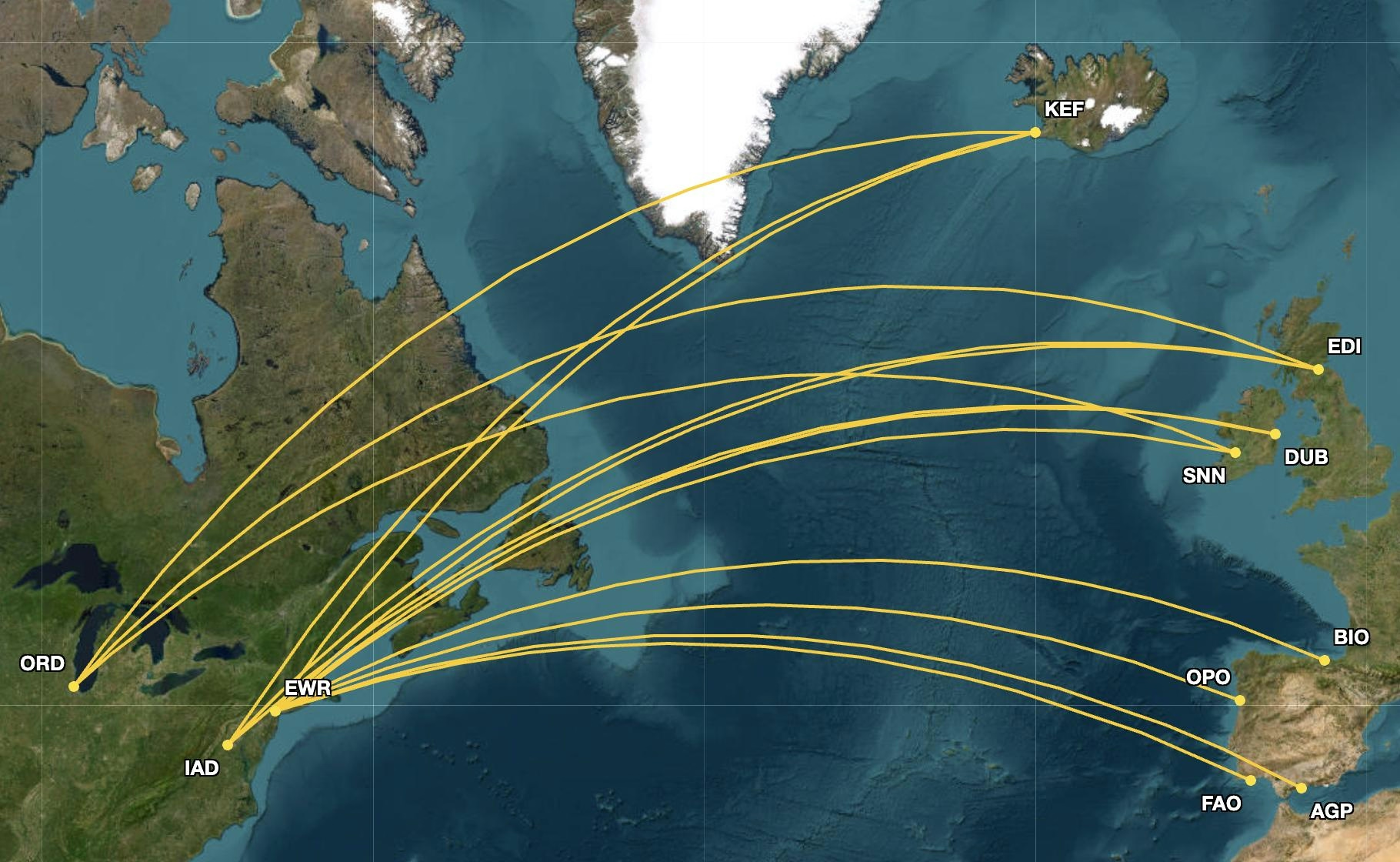
Airlines Expand Long-Haul Narrowbody Flights Across the Atlantic
Emerging Strategy in Transatlantic Travel
A growing number of airlines across North America and Europe are adopting a novel approach to transatlantic travel by deploying single-aisle, long-range aircraft to connect secondary cities on both continents. This strategy, initially pioneered by Canadian leisure carrier Air Transat, is gaining traction industry-wide as carriers seek to unlock new markets and enhance route economics. Air Transat has focused on underserved destinations in southern Europe, recently launching thrice-weekly flights between Ottawa and London Gatwick—the first direct connection between the Canadian and UK capitals via Gatwick. Sebastian Ponce, Transat’s chief revenue officer, emphasized that this route, combined with connections offered by partner Porter Airlines from multiple cities across Canada and the United States, positions Ottawa as a genuine gateway to Europe. Additionally, the airline introduced once-weekly flights from Quebec City to Marseille and Nantes in France, all operated with Airbus A321LR aircraft—narrowbody jets designed for longer-range routes that cannot economically support widebody aircraft.
The Rise of the Airbus A321XLR and Market Impact
The trend toward long-haul narrowbody operations is accelerating with the introduction of the Airbus A321XLR, a next-generation narrowbody aircraft boasting an advertised range of 4,700 nautical miles (8,700 km). Its lower trip costs and improved fuel efficiency enable airlines to serve smaller, secondary cities and launch seasonal routes that were previously unviable with larger jets. Persistently high fuel prices, exacerbated by ongoing geopolitical tensions such as the United States’ conflict with Iran, have further increased the appeal of these more efficient aircraft.
Data from aviation analytics firm Cirium reveals an 11% year-on-year increase in transatlantic narrowbody flights originating in North America for July, accompanied by a 12% rise in available seats. This contrasts with flat or declining capacity on widebody transatlantic routes. Air Transat’s July schedule alone reflects a 22% increase in narrowbody flights to Europe compared to the same month last year. Air Canada, which recently introduced its first A321XLRs, is expanding such flights by 80%. Other notable increases include Aer Lingus (19%) and Iberia (87%), both operators of the A321XLR. American Airlines is deploying its new A321XLRs on routes between New York and Edinburgh, as well as on transcontinental flights between New York and Los Angeles. Alaska Airlines is also entering the long-haul narrowbody market with a seasonal Seattle–Reykjavik service operating from late May to early September.
Challenges and Competitive Dynamics
Despite the promising expansion, long-haul narrowbody operations face significant challenges. Rising fuel costs and operational complexities present ongoing risks, while competition from established Gulf carriers remains a critical factor. Some European airlines are responding by adjusting capacity; for instance, Lufthansa is reducing approximately 1% of its total capacity to mitigate higher fuel expenses. Emirates president Tim Clark has attributed the decline of certain European long-haul operations to strategic missteps by those airlines rather than competition from Gulf carriers.
As airlines continue to navigate shifting market dynamics and economic pressures, the deployment of long-range narrowbody jets is reshaping the transatlantic aviation landscape. This evolution offers passengers increased options and connects cities that were previously beyond the reach of direct flights.

Etihad Airways Suspends Airbus A380 Flights on Key Route

Aditya Birla Group Seeks Approval for Aircraft Leasing in GIFT City

Qatar Airways Highlights Innovation and Connectivity at Arabian Travel Market 2026

Hong Kong's Five-Year Plan Includes Andrew Fan's Aircraft Parts Processing Hub Proposal

ACIA Aero Leasing Delivers ATR72-600 to Air Nostrum

RTX Appoints Jill Albertelli as Head of Pratt & Whitney

TAT Technologies Joins Beyond Aero Hydrogen Aircraft Program

AURAK Study Highlights Barriers to Air Taxi Adoption in Emerging Economies

Xiamen Air Selects Altitude for 787 Maintenance at Heathrow

Etihad and Swissport Extend Global Partnership
