
Trasforma le intuizioni dell’IA in azioni concrete

Tendenze
Categories
Alliance to Cut E190 Fleet in Revised Qantas Wet-Lease Agreement
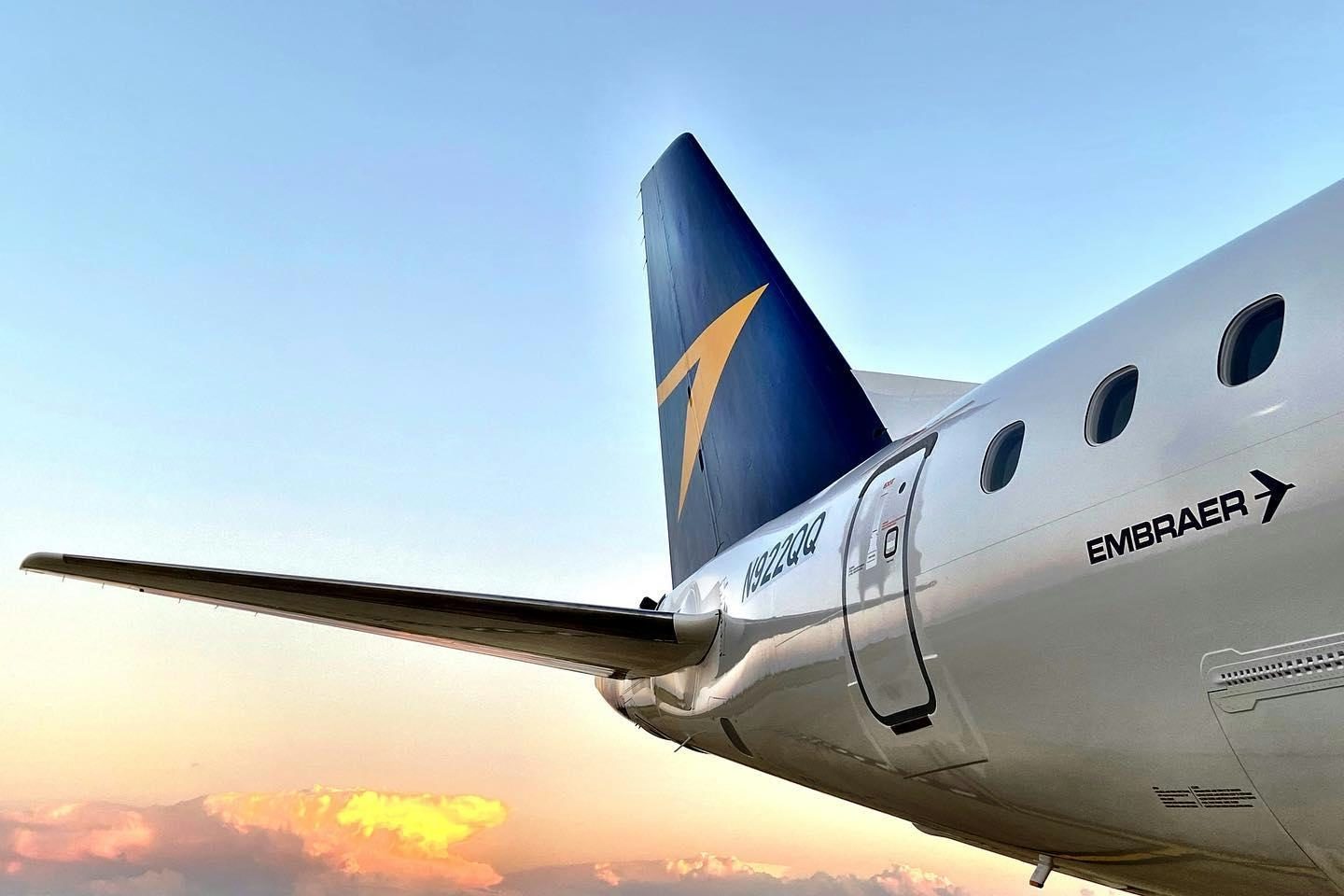
Alliance to Reduce Embraer E190 Fleet in Revised Qantas Wet-Lease Agreement
Alliance Aviation will reduce the number of Embraer E190 aircraft it operates for Qantas from 30 to 23 under a newly revised wet-lease agreement. This adjustment reflects both carriers’ responses to evolving market conditions and escalating operational expenses. The reduction will be implemented gradually through fiscal year 2027, with the seven aircraft released from the Qantas contract to be redeployed for other ACMI (Aircraft, Crew, Maintenance, and Insurance) and charter operations.
The updated agreement incorporates increased lease rates alongside a new annual escalation mechanism. These changes address rising costs related to aircraft acquisition, maintenance, and logistics, which have exerted pressure on profitability across the aviation sector. The revisions are designed to maintain the commercial viability of the contract amid a challenging cost environment.
Context and Operational Adjustments
Qantas initially began wet-leasing Embraer E190s from Alliance in 2021 to strengthen its QantasLink regional network. The airline is currently in the process of modernizing its regional fleet, progressively introducing Airbus A220-300 aircraft to replace older models. QantasLink’s current fleet is diverse, comprising Boeing 717s, Airbus A220s, Embraer E190s, Fokker 100s, Dash 8 turboprops, and Airbus A319s.
As one of the world’s largest operators of Embraer E190s, with a total fleet of 51 aircraft, Alliance Aviation will adjust its workforce and operational model to align with the reduced flying activity. Employee consultations are planned over the coming months to manage this transition. In addition to the E190s, Alliance operates 22 Fokker 100s and 12 Fokker 70s, primarily serving ACMI, charter, and regional markets throughout Australia.
The financial implications of the revised agreement are expected to be disclosed when Alliance reports its annual results on August 25. Investors will closely examine how the updated contract affects the underlying profit guidance for both Alliance and Qantas, given that higher lease rates and cost escalations may impact earnings.
This development occurs amid intensifying competition and rising costs within the regional airline sector, prompting some operators to reconsider their wet-lease arrangements or explore alternative aircraft types. Market analysts will be monitoring how these changes influence the broader regional aviation landscape in Australia.

Etihad Airways Suspends Airbus A380 Flights on Key Route

Aditya Birla Group Seeks Approval for Aircraft Leasing in GIFT City

Qatar Airways Highlights Innovation and Connectivity at Arabian Travel Market 2026

Hong Kong's Five-Year Plan Includes Andrew Fan's Aircraft Parts Processing Hub Proposal

ACIA Aero Leasing Delivers ATR72-600 to Air Nostrum

RTX Appoints Jill Albertelli as Head of Pratt & Whitney

TAT Technologies Joins Beyond Aero Hydrogen Aircraft Program

AURAK Study Highlights Barriers to Air Taxi Adoption in Emerging Economies

Xiamen Air Selects Altitude for 787 Maintenance at Heathrow

Etihad and Swissport Extend Global Partnership
