Immagine

Trasforma le intuizioni dell’IA in azioni concrete

Unisciti oggi alla lista d’attesa di AeroGenie!

Tendenze

Categories

Anduril, Archer, Expeditors, and StandardAero Announce Key Developments in Aviation Logistics

July 27, 2026By ePlane AI
Anduril, Archer, Expeditors, and StandardAero Announce Key Developments in Aviation Logistics
0
0
Anduril
Archer Aviation
Autonomous VTOL Aircraft

Anduril, Archer, Expeditors, and StandardAero Announce Key Developments in Aviation Logistics

Recent announcements from leading companies in the aviation logistics sector highlight a significant transformation in operational infrastructure, driven by increasing demands for efficiency and resilience within aerospace and defense. On July 20, 2026, three major developments spanning autonomous aircraft technology, global logistics services, and engine maintenance contracts underscored a broader industry shift toward integrated and scalable solutions.

Anduril and Archer Introduce Dual-Use Autonomous VTOL at Farnborough

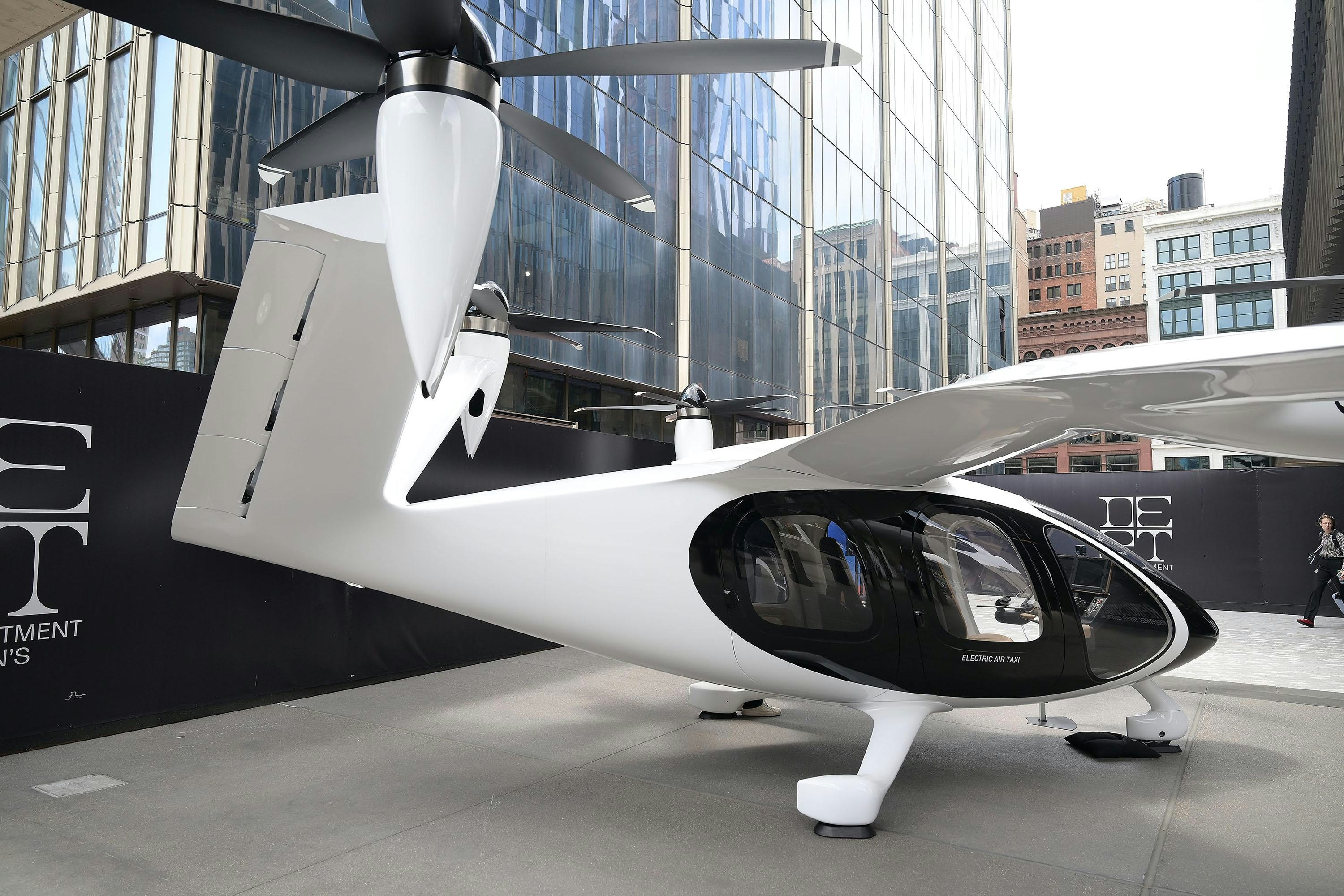
At the Farnborough International Airshow, Anduril and Archer Aviation (NYSE: ACHR) unveiled a new autonomous vertical takeoff and landing (VTOL) platform designed for both defense and commercial markets. The defense variant, named Thunder, is a Group 5 autonomous attack rotorcraft intended to extend the operational capabilities of crewed military aircraft. This dual-use design enables both military and civilian operators to benefit from shared technological maturity and streamlined supply chains, facilitating faster qualification and certification processes while reducing unit costs.

Archer’s strategic shift into defense logistics marks a departure from competitors such as Joby Aviation, which remains focused on civilian urban air mobility. By targeting government defense budgets, Archer is repositioning itself from speculative consumer technology toward critical national security infrastructure. This realignment aligns with broader aerospace and defense market trends, which surpassed USD 900 billion in 2025, with defense accounting for approximately 55 percent of that total.

The partnership combines Archer’s expertise in civil aviation design and FAA regulatory compliance with Anduril’s strengths in autonomous systems and defense integration. Together, they offer a unified program office that simplifies procurement for both enterprise and government customers, enhancing operational efficiency and accelerating deployment.

Expeditors Expands Global Aircraft on Ground Services

Expeditors International of Washington (NYSE: EXPD) announced a substantial expansion of its global Aircraft on Ground (AOG) services, incorporating dedicated logistics teams, round-the-clock support centers, and its extensive freight network. AOG incidents, which occur when aircraft are grounded due to missing or damaged parts, represent some of the most costly disruptions faced by airlines. Expeditors’ enhanced service offering aims to address growing demand from airlines, manufacturers, and maintenance, repair, and overhaul (MRO) organizations seeking rapid and reliable logistics solutions.

By leveraging its global trade lanes, Expeditors can source, clear, and deliver critical parts more swiftly than many in-house supply chains, thereby minimizing costly aircraft downtime and improving operational continuity.

StandardAero Secures Engine MRO Contract in the Caribbean

StandardAero announced a new engine maintenance, repair, and overhaul (MRO) contract with Arajet, reinforcing its presence in the Caribbean aviation market. This agreement reflects the increasing need for dependable MRO partnerships as carriers expand their fleets and route networks, ensuring sustained operational safety and reliability.

These developments coincide with heightened investor interest in aerospace and defense sectors, exemplified by Doncasters’ successful initial public offering in the United States, which raised USD 919.3 million. The strong demand for shares underscores long-term growth prospects across aerospace and industrial energy markets.

Collectively, these announcements illustrate a decisive evolution in aviation logistics, as industry leaders invest in advanced platforms, global networks, and strategic partnerships to meet the complex and evolving requirements of both commercial and defense aviation sectors.

More news
Volatility Challenges Joby Aviation Stock

Volatility Challenges Joby Aviation Stock

Volatility Challenges Joby Aviation Stock Joby Aviation (NYSE: JOBY), a leading innovator in electric air taxis, continues to advance its efforts toward launching commercial passenger services. The company has recently made strides in manufacturing, now producing components for its ninth conforming aircraft. Additionally, Joby was selected for the White House-backed electric Integrated Pilot Program (eIPP), which could facilitate operations across 11 states. Despite these significant developments, Joby’s stock remains highly volatile, highlighting the inherent risks faced by investors. Market Volatility and Amplified Downside Risks On July 24, Joby’s shares declined by 8.1% in a single trading session. While this drop is notable, it is relatively modest compared to the stock’s historical performance during broader market downturns. Joby’s stock has consistently experienced sharper declines than the overall market during periods of systemic stress. Since its public listing, the company’s shares have fallen an average of 27% from peak to trough across five major market shocks, compared to a 13% average decline in the S&P 500 over the same intervals. The most severe drawdown occurred during the 2022 inflation shock and subsequent monetary tightening, when Joby’s stock plummeted 51%, more than double the S&P 500’s 24% decline. Other rate-driven selloffs, such as the “5% Yield Shock” in the summer and fall of 2023, also inflicted heavy losses, with Joby’s shares dropping 38%. These episodes underscore the tangible risks investors face, as the path to recovery following such shocks can be protracted and uncertain. Recovery Timelines and Investor Patience Joby has demonstrated the ability to recover from past market shocks, but the timeline for regaining pre-shock share price levels can be lengthy and test investor resolve. The median recovery period is approximately four months; however, the aftermath of the 2022 inflation shock extended to 17 months before the stock returned to its previous highs. While rapid rebounds remain possible, they are not assured, and investors must be prepared for potential extended periods of volatility. | Event | Joby Drawdown | S&P 500 | Bonds | Sector | Recovery Time | |--------------------------------------|---------------|---------|--------|--------|---------------| | 2022 Inflation Shock & Fed Tightening| -51% | -24% | -35% | -20% | ~17 months | | 2023 SVB Regional Banking Crisis | -11% | -6.7% | -4.3% | -6.2% | ~3 months | | Summer-Fall 2023 5% Yield Shock | -38% | -9.5% | -17% | -12% | ~16 months | | 2024 Yen Carry Trade Unwind | -5.4% | -7.8% | -1.2% | -1.1% | ~4 months | | 2025 US Tariff Shock | -30% | -19% | -3.8% | -16% | ~3 months | Additional Challenges: Legal Disputes and Competitive Pressures Beyond market volatility, Joby faces ongoing challenges that may further influence its stock performance. The company remains embroiled in a protracted legal dispute with rival Archer Aviation, a conflict that has persisted for over a year and continues to cast uncertainty over Joby’s outlook. Meanwhile, competitive pressures are intensifying. Archer Aviation recently experienced a 20% surge in its stock following the announcement of a defense contract with Anduril, illustrating how competitor developments can swiftly affect market sentiment. Looking ahead, Joby’s forthcoming financial results, scheduled for August 5, 2026, are likely to prompt market reactions. Investors should remain vigilant, as both external market shocks and company-specific events have the potential to drive significant fluctuations in Joby’s share price. While Joby Aviation is making tangible progress in the electric aviation sector, its stock remains highly sensitive to both broad market dynamics and sector-specific developments. Shareholders must carefully balance the company’s long-term potential against the realities of pronounced volatility and a challenging competitive environment.
Safran stock trades steadily as engines and services support earnings momentum

Safran stock trades steadily as engines and services support earnings momentum

Safran Stock Trades Steadily as Engines and Services Support Earnings Momentum Robust Revenue Growth Amid Aviation Recovery Safran S.A. (ISIN FR0000130809), the prominent French aerospace and defense group, has maintained steady stock performance driven by strong growth in its civil engine operations and aftermarket services. The company’s latest financial disclosures reveal a significant increase in revenue and earnings, fueled by robust demand in commercial aviation and a resilient services segment. In its most recent annual report, Safran recorded revenue of approximately EUR 19 billion, marking a double-digit increase from around EUR 16 billion the previous year. This growth reflects the ongoing recovery in the commercial aviation sector, as airlines expand operations and prioritize fleet reliability. Operating income rose at an even faster pace than revenue, benefiting from a business mix increasingly weighted toward higher-margin service activities, particularly within the civil aviation engine portfolio. Civil Engines and Aftermarket Services as Core Drivers Civil aircraft engines and associated services continue to form the backbone of Safran’s business, representing the majority of group sales. The company’s CFM-branded engines, widely deployed across global fleets, generate recurring income through maintenance and spare parts over extended periods. In the latest reporting cycle, engine deliveries combined with service activities accounted for well over half of total revenue. This performance was supported by increased flight hours and a higher volume of shop visits. Recurring service revenue experienced double-digit year-on-year growth, propelled by greater fleet utilization and long-term support agreements with airline customers. These factors have helped Safran mitigate the impact of cost inflation and maintain healthy operating margins. Order Backlog and Cash Flow Strengthen Financial Stability Safran’s substantial order backlog, valued in the tens of billions of euros, provides multi-year visibility into future revenue streams from both civil and military aviation sectors. This backlog encompasses contracted deliveries and long-term service agreements, underpinning the company’s financial outlook. The group also reported positive free cash flow in the hundreds of millions of euros, reflecting disciplined capital expenditure and efficient working capital management. This strong cash generation has facilitated debt reduction and supported shareholder returns, including potential dividend payments. Strategic Initiatives Amid Competitive Pressures Safran’s commercial success is closely tied to its CFM engine programs, developed through strategic partnerships and widely adopted by narrow-body aircraft operators worldwide. These engines contribute to revenue not only through initial sales but also via ongoing maintenance contracts, which have expanded in line with the normalization of flight activity. Nevertheless, Safran faces intensifying competition, particularly from MTU Aero Engines. MTU is increasing its presence in the CFM aftermarket and holds a broad portfolio of manufacturer authorizations. Its focus on complex repairs for GE engines is shifting the workload balance, potentially leading to a more equitable division of aftermarket activities. Additionally, the risk of insufficient new aircraft deliveries to meet rising airline demand remains a concern, as evidenced by the booming maintenance, repair, and overhaul (MRO) businesses at both Safran and GE Aerospace. To address these challenges and meet global demand, Safran is pursuing strategic initiatives, including exploring cooperation with Sikorsky on future rotorcraft projects and inaugurating a new MRO facility in Mexico. Market Position and Outlook Safran’s stock, listed on the primary French market, reflects the company’s strong standing within the aerospace sector. While steady earnings momentum from engines and services continues to support the stock, investors remain attentive to ongoing competitive pressures and supply chain challenges that could influence future performance.
Mohammed Bellatig Reappointed Head of Morocco’s Aerospace Industry Group

Mohammed Bellatig Reappointed Head of Morocco’s Aerospace Industry Group

Mohammed Bellatig Reappointed Head of Morocco’s Aerospace Industry Group Experienced Leadership at the Helm The Moroccan Aerospace Industries Group (GIMAS) has confirmed the reappointment of Mohammed Bellatig as its president, effective July 8, 2026. Bellatig, a distinguished aircraft engineer and alumnus of France’s ISAE-SUPAERO, brings extensive expertise from his longstanding career at Royal Air Maroc (RAM). His specialization in aircraft maintenance and significant contributions to the airline’s industrial growth have been widely recognized. During his tenure as RAM’s Technical Director, Bellatig played a crucial role in establishing several strategic joint ventures and subsidiaries that have shaped Morocco’s aerospace landscape. These include SMES (now SAESM), dedicated to engine maintenance; MATIS, a collaboration with Boeing and Safran focusing on aircraft wiring; Aerotechnic Industries (ATI), a heavy airframe maintenance partnership with Air France-KLM; and Satys SP Maroc, a joint venture with the Satys Group specializing in aircraft painting and components. Bellatig currently serves as Director General and CEO of Satys SP Maroc and has previously chaired the boards of both SAESM and ATI. GIMAS emphasized Bellatig’s foundational role in the association, noting that he was its inaugural president following its establishment on September 11, 2006. The group highlighted his contributions alongside pioneering companies that helped nurture the aerospace ecosystem in Morocco. Beyond his executive responsibilities, Bellatig has also contributed to several industry publications, including *MRO Management*, *Id Aero*, *Snecma Magazine*, *Aircraft Technology*, and *African Aviation Magazine*. Growth and Prospects of Morocco’s Aerospace Sector GIMAS represents Morocco’s aerospace manufacturing sector and serves as a key promoter of the country’s rapidly expanding aerospace ecosystem. Over the past two decades, the aerospace industry has emerged as one of Morocco’s leading industrial sectors. Despite the global disruptions caused by the COVID-19 pandemic, the sector has demonstrated resilience and continued growth, with aerospace exports increasing by nearly 15% in 2024 compared to the previous year. By the end of 2024, the industry comprised nearly 150 companies, generating approximately $2.6 billion in exports and employing around 17,000 people. Looking forward, Morocco’s aerospace sector is positioned for further expansion, supported by significant investments in aviation infrastructure and the national carrier. Royal Air Maroc plans to expand its fleet from just over 50 aircraft to nearly 200 by 2037, aligning with Morocco’s broader tourism ambitions ahead of the 2030 FIFA World Cup. Concurrently, the National Airports Authority (ONDA) is investing approximately $4.5 billion under its Airports 2030 strategy to modernize and expand airport infrastructure in key cities including Casablanca, Marrakech, Agadir, Tangier, and Fez. Regional Challenges and Strategic Considerations Bellatig’s reappointment occurs amid a complex regional geopolitical environment. Developments such as shifts in U.S.-Iran relations and Saudi Arabia’s advancing nuclear program may indirectly affect Morocco’s aerospace sector by influencing regional stability and investment flows. Additionally, neighboring countries like Algeria and Tunisia are likely to pursue strategic adjustments within their own aerospace industries to maintain or enhance their competitive positions. These evolving dynamics present both challenges and opportunities for Morocco as it seeks to consolidate its role as a regional leader in aerospace manufacturing.
AutoFlight Demonstrates Advanced Air Mobility at Games of the Future 2026 in Astana

AutoFlight Demonstrates Advanced Air Mobility at Games of the Future 2026 in Astana

AutoFlight Showcases Advanced Air Mobility at Games of the Future 2026 in Astana AutoFlight, a global frontrunner in Advanced Air Mobility (AAM), has marked a significant milestone with its inaugural Air Taxi demonstration flight in Astana, Kazakhstan. This event took place on July 24 during the Games of the Future 2026, an international “phygital” tournament that merges physical sports with digital gaming. The demonstration featured live electric vertical takeoff and landing (eVTOL) flights, highlighting the growing momentum for urban air mobility in Central Asia. A Landmark Event in Kazakhstan’s Aviation Sector The demonstration was conducted under special authorization from the Aviation Administration of Kazakhstan and attracted over 300 distinguished guests, including senior government officials, diplomats, industry leaders, and media representatives. Among the notable attendees were Kuanyshbek Yessekeyev, Assistant to the President of Kazakhstan; Han Chunlin, Ambassador of China; Jung Ki Hong, Ambassador of Korea; and Michael Daniel, Director General of the Aviation Administration of Kazakhstan. Daniel described the event as a pivotal advancement for AAM within the country. The Games of the Future 2026, which hosts more than 800 competitors from over 50 countries, serves as a prominent platform for showcasing innovative technologies. AutoFlight’s ton-class eVTOL aircraft, which previously completed a successful flight in Alatau City in May 2026, remains on display throughout the event as part of the official public exhibition. Strategic Partnerships and Regional Development Central to AutoFlight’s expansion in Kazakhstan and the wider Central Asian region is its strategic partnership with Alatau Advance Air Group Ltd. (AAAG). This collaboration focuses on fostering the development of advanced air mobility through sustained investment in aviation innovation, smart infrastructure, and enhanced regional connectivity. Sergey Khegay, CEO of AAAG, emphasized that the demonstration flights in Astana represent a component of a broader, systematic effort to integrate urban air mobility into Kazakhstan’s transportation framework. He noted that the country is steadily building a comprehensive ecosystem, supported by newly adopted legislation, ongoing infrastructure development, and expanding international cooperation with leading global companies. Potential and Challenges for eVTOL Technology in Central Asia Jia Xie, Senior Vice President of AutoFlight, underscored the wide-ranging applications of large eVTOL aircraft in Central Asia, including urban mobility, regional transportation, aerial tourism, logistics, and emergency response. Xie highlighted that these real-world applications illustrate how Advanced Air Mobility can provide safe, efficient, and sustainable transportation solutions tailored to the region’s needs. Despite the successful demonstration, AutoFlight faces several challenges in commercializing eVTOL technology in Kazakhstan. Regulatory complexities, safety considerations, and the integration of new aircraft with existing airport infrastructure remain significant hurdles. Nonetheless, the market response has been optimistic, with industry leaders from companies such as Joby Aviation and Electra recognizing the substantial potential for air taxis. Concurrently, competitors are advancing their own eVTOL technologies and collaborating closely with regulators, as evidenced by the FAA’s pilot programs and prototype developments by firms like Bye Aerospace. As AutoFlight continues to broaden its global presence, the company remains dedicated to working alongside governments, regulatory bodies, and strategic partners to accelerate the adoption of sustainable air transportation and unlock new opportunities for advanced mobility worldwide.
How Air France Is Transforming the Digital Passenger Experience

How Air France Is Transforming the Digital Passenger Experience

How Air France Is Transforming the Digital Passenger Experience Air travel has experienced a significant evolution in recent years, driven largely by digital innovation that reshapes the passenger journey well before boarding. Airlines are increasingly investing in technology to streamline every phase of travel—from booking and check-in to baggage tracking and real-time updates. Among these carriers, Air France has emerged as a leader, expanding its digital ecosystem to offer a smoother, more personalized, and less stressful experience for travelers. Redefining the Passenger Journey Through Technology The modern digital passenger experience now integrates technology at every touchpoint before, during, and after a flight. Traditional reliance on airport counters and paper documents is giving way to mobile applications, self-service kiosks, biometric identification, and artificial intelligence. These advancements reduce waiting times, enhance communication, and provide passengers with timely, relevant information. For many travelers, the journey effectively begins the moment they engage with the airline’s mobile app. Air France has made substantial investments in developing smarter digital services aimed at increasing convenience. Its comprehensive mobile platform allows passengers to manage reservations, check in online, obtain digital boarding passes, monitor flight status, and access personalized travel details—all within a single application. Important notifications are sent directly to smartphones, eliminating the need to sift through emails or endure long queues at the airport. This emphasis on practical digital innovation reflects a broader industry trend, as airlines recognize that digital convenience is now as vital as onboard service. Passengers expect immediate access to information and seamless interactions across all digital channels. Personalization and Stress Reduction Through Mobile Technology One of the most significant benefits of digital transformation is the ability to tailor the travel experience to individual needs. Air France utilizes data analytics to customize communications based on factors such as itinerary, loyalty status, travel history, and personal preferences. For instance, a passenger connecting through Paris Charles de Gaulle may receive specific gate updates, walking directions, or lounge recommendations relevant to their journey. Whether business travelers, leisure passengers, or families, each group receives targeted assistance that reduces uncertainty and enhances the overall travel experience. The airline’s mobile app has become an indispensable travel companion, offering features such as mobile check-in, digital boarding passes, real-time gate and flight updates, baggage tracking, seat selection and upgrade options, airport maps, and direct customer support. These tools enable travelers to focus less on logistical concerns and more on their journey itself. Challenges and Competitive Dynamics Despite these advancements, Air France faces ongoing challenges in integrating cutting-edge digital tools with legacy systems while ensuring a consistent user experience across platforms. Keeping pace with rapid technological developments remains critical, as does maintaining operational efficiency. The competitive environment is intensifying, with rival airlines adopting similar digital enhancements or competing through pricing strategies. Market response to Air France’s digital initiatives has been largely positive, with passengers valuing the increased convenience and operational improvements. According to projections from the International Air Transport Association (IATA), strong demand is anticipated in 2026, highlighting the importance of continued digital transformation to sustain passenger engagement and competitive positioning. As passenger expectations evolve, Air France’s dedication to digital innovation positions the airline at the forefront of delivering a modern, personalized, and efficient travel experience.
The Role of Lubrication in Aircraft Reliability and Performance

The Role of Lubrication in Aircraft Reliability and Performance

The Role of Lubrication in Aircraft Reliability and Performance The Expanding Importance of Lubrication in Modern Aviation As aircraft technology continues to advance, maintenance teams are confronted with increasing challenges to ensure reliability and operational readiness. Innovations such as novel materials, high-efficiency propulsion systems, and sophisticated control architectures have driven significant performance improvements. However, these advancements have also introduced greater complexity in maintenance practices, particularly in the domain of lubrication. Lubricants extend far beyond their traditional role of reducing friction and wear; they are vital in protecting and optimizing a wide range of aircraft systems. From landing gear and hydraulic assemblies to turbine engines and auxiliary equipment, the selection of appropriate fluids is critical for components to operate reliably under demanding conditions. Modern aviation environments subject lubricants to extreme stresses, including rapid temperature fluctuations, heavy mechanical loads, and prolonged operating cycles. For instance, hydraulic fluids must maintain consistent performance from cold starts at high altitudes to elevated temperatures on the ground, while turbine oils are required to resist thermal degradation and minimize deposits that could compromise system efficiency. Challenges and Innovations in Lubricant Performance The complexity of lubrication is further heightened by the necessity for compatibility with a diverse array of metals, elastomers, and composite materials used in contemporary aircraft construction. Maintenance organizations now assess lubricants not only for compliance with technical specifications but also for critical attributes such as oxidation resistance, low-temperature operability, corrosion protection, deposit control, and long-term stability. These factors are essential for prolonging component lifespan, preserving system cleanliness, and ensuring predictable maintenance intervals. Among the challenges faced are the need to optimize lubrication for engine component longevity and efficiency, manage the intricacies of varying lubrication systems across different aircraft models, and address the environmental impact of lubrication fluids. With sustainability emerging as a paramount concern, the aviation industry is increasingly scrutinizing the ecological footprint of lubricants. This has spurred manufacturers to develop more environmentally friendly formulations, reflecting a broader commitment to reducing the sector’s environmental impact. Market Trends and Future Directions Market dynamics are evolving as airlines and Maintenance, Repair, and Overhaul (MRO) organizations place greater emphasis on advanced lubrication technologies and stringent maintenance protocols. This heightened focus is driving competition among suppliers to develop proprietary lubrication solutions aimed at enhancing aircraft performance and reliability. Collaborative efforts between manufacturers and suppliers are accelerating innovation, resulting in new products designed to meet the rigorous demands of next-generation aircraft. The critical role of lubricant performance is particularly evident in aerospace applications where operating conditions push technology to its limits. Specialty lubricants initially developed for aviation are now employed in spacecraft systems exposed to extreme temperatures and vacuum environments, underscoring the engineering precision required to ensure reliability in mission-critical systems. As aircraft continue to evolve, lubricant requirements will likewise advance. Emerging materials, propulsion technologies, and increasingly data-driven maintenance practices will necessitate fluids capable of delivering consistent performance across a broader spectrum of conditions. For MRO organizations, lubrication remains a foundational element of reliability. A thorough understanding of how lubricants contribute to equipment performance, coupled with the selection of products tailored to specific applications, will be essential to supporting system availability, protecting critical assets, and maintaining operational readiness throughout the aircraft lifecycle.
Alaska Airlines 737 Diverts To Eugene After Engine Oil Warning Prompts Mid-Air Shutdown

Alaska Airlines 737 Diverts To Eugene After Engine Oil Warning Prompts Mid-Air Shutdown

Alaska Airlines 737 Diverts to Eugene Following Engine Oil Warning On July 23, 2026, an Alaska Airlines Boeing 737-800 operating Flight AS471 from Santa Ana, California, to Seattle, Washington, was forced to divert to Eugene, Oregon, after the flight crew received a low oil quantity and pressure warning on the aircraft’s left-hand CFM56 engine. The aircraft, registered N563AS, was cruising at 36,000 feet approximately 90 nautical miles south-southeast of Eugene when the alert was triggered. In accordance with established safety protocols, the crew promptly shut down the affected engine and redirected the flight to Eugene Airport (EUG). The aircraft was carrying 161 passengers and six crew members at the time. The plane landed safely on Runway 34L about 25 minutes after the diversion commenced, with no injuries reported among those on board. Following the incident, the aircraft was taken out of service for a thorough inspection and maintenance to determine the cause of the low oil indication. Passengers were subsequently transferred to a replacement Boeing 737-800, registered N597AS, which continued the journey to Seattle, arriving approximately four hours behind schedule. Safety Procedures and Industry Implications This event underscores the robustness of safety measures in commercial aviation. The Boeing 737-800 is engineered to operate safely on a single engine, enabling crews to divert to the nearest suitable airport when necessary. Alaska Airlines’ response highlights the critical role of these protocols in safeguarding passengers. Nevertheless, the incident may present challenges for Alaska Airlines, including increased scrutiny from regulatory bodies and potential effects on passenger confidence. The timing coincides with heightened attention on Boeing, following the recent decertification of a class action lawsuit related to a MAX 9 issue. Such developments could intensify examination of Boeing’s manufacturing and certification processes, while competitors might leverage the situation to promote their own safety records. Boeing is likely to face renewed pressure to address any systemic production concerns as airlines and regulators seek reassurances regarding aircraft reliability. For Alaska Airlines, maintaining transparent communication and swiftly resolving maintenance findings will be essential to preserving trust among travelers and industry stakeholders. No injuries were reported in connection with the incident, and the affected aircraft remains grounded pending further investigation.
Boeing Explores AI Applications for C-17 Maintenance

Boeing Explores AI Applications for C-17 Maintenance

Boeing Explores AI Applications for C-17 Maintenance Boeing Global Services has formalized a partnership with AI data optimisation specialist Pelico through a memorandum of understanding aimed at modernizing maintenance planning and execution for the C-17A Globemaster III. This collaboration seeks to shorten depot maintenance cycles, improve fleet availability, and deliver more predictable aircraft turnaround times by leveraging artificial intelligence technologies. Advancing Maintenance Through AI Integration At the heart of this initiative is Pelico’s Manufacturing Orchestration Platform, a digital workspace designed to integrate supply chain management, engineering, planning, and depot operations into a unified system. By replacing traditional spreadsheet-based workflows, the platform provides real-time visibility into material shortages, maintenance priorities, and production constraints. Boeing and Pelico intend to assess whether AI-driven scheduling, supply chain coordination, and workflow automation can enable maintenance teams to respond more swiftly to parts shortages and operational bottlenecks. The partnership is also exploring advanced functionalities such as predictive shortage management, dynamic prioritisation of maintenance tasks, and agentic AI workflows that automate routine approvals and supplier communications. Boeing has previously implemented Pelico’s platform within its commercial spare parts operations, where it demonstrated tangible operational improvements and has since been expanded. Travis Williams, Boeing’s vice-president of Mobility and Surveillance Aircraft Services, emphasised that the project focuses on delivering measurable operational gains and developing a scalable, repeatable capability as outcomes are validated. Challenges and Industry Context Despite the promising potential, integrating AI into C-17 maintenance presents significant challenges. Successful implementation requires extensive data collection and seamless integration with existing maintenance systems. Additionally, there may be resistance from maintenance personnel accustomed to traditional processes, alongside the need for substantial investment in AI technology and workforce training. Industry analysts observe that AI adoption could generate considerable efficiency improvements and cost savings in maintenance operations. This initiative aligns with a broader trend in the aerospace sector, where competitors such as Leonardo and Lockheed Martin are reportedly pursuing similar AI-driven strategies to enhance maintenance, repair, and overhaul (MRO) capabilities for their tactical transport aircraft. This reflects a growing shift across the industry toward harnessing AI to maintain competitive advantage. The agreement between Boeing and Pelico establishes a framework for a phased evaluation of the technology, with the possibility of extending its application to other Boeing heavy maintenance programmes should the trial prove successful.
Anta Scaffolding Chosen for Al Maktoum Airport Project, Expands Presence in Dubai

Anta Scaffolding Chosen for Al Maktoum Airport Project, Expands Presence in Dubai

Anta Scaffolding Selected for Al Maktoum Airport Expansion, Enhancing Dubai Footprint China-based Suzhou Anta Scaffolding Engineering Co., Ltd. (Anta Scaffolding) has been appointed as a specialized scaffolding contractor for the expansion of Al Maktoum International Airport in Dubai. This appointment marks a significant milestone in the company’s international development, positioning it within the supply chain of one of the world’s most ambitious aviation infrastructure projects. Anta Scaffolding is providing scaffolding services as part of a substructure package led by China Harbour Engineering Company (CHEC), a subsidiary of China Communications Construction Company. Construction activities at the expansive Al Maktoum International Airport site are already underway, with Anta Scaffolding’s project team, equipment, and materials fully mobilized. The company’s current responsibilities focus on scaffolding for underground structural works, including the baggage handling center and tunnel sections. These components are critical to the project and demand precise coordination alongside robust engineering solutions to meet the complex requirements of the development. Project Overview and Market Context The Al Maktoum International Airport, managed by the Dubai Aviation Engineering Projects Agency (DAEP), is designed to become a next-generation aviation hub. Covering approximately 70 square kilometers—five times the size of Dubai International Airport—the project will feature five parallel runways, five terminal buildings, and 400 boarding gates. Upon completion, the airport is expected to accommodate up to 260 million passengers and handle 12 million tonnes of cargo annually. The total investment in the project is estimated at Dh128 billion (US$35 billion), with Phase I targeted for completion by 2032. Anta Scaffolding’s involvement in this large-scale infrastructure project comes amid a period of both opportunity and challenge within the global construction sector. The UAE’s property market is evolving into a permanent capital hub, offering a relatively stable environment for major infrastructure investments, according to The Fintech Times. This stability is particularly important as the global market continues to prioritize airport expansions and modernization, a trend highlighted by Aviation Week. Nevertheless, economic volatility remains a significant concern for contractors. Construction News has noted the ongoing challenges of benchmarking and maintaining competitiveness in a fluctuating construction market. Anta Scaffolding must navigate these complexities while competing with both local and international firms for high-profile contracts. Lane Pan, a representative of Anta Scaffolding, underscored the importance of the project, stating, “Our project team is already mobilized. Personnel, equipment, and materials are on site. This is the kind of project where you get to prove what your engineering experience is actually worth.” Unlike a typical supply order, Anta’s role requires close integration with the live construction schedule set by CHEC, functioning more as a project-execution partner than a traditional materials supplier. Beyond the construction sector, shifting global market dynamics may also present broader opportunities for Anta. With Nike facing challenges in China, as reported by Reuters, Anta—primarily known for its sportswear—could benefit from changing consumer preferences in its home market. As work advances at Al Maktoum International Airport, Anta Scaffolding’s participation not only strengthens its international portfolio but also highlights the increasing importance of specialized contractors in delivering complex infrastructure projects amid a rapidly evolving global market.
Joby Partners with Virgin Atlantic, Targets Commercial Flights by Year-End

Joby Partners with Virgin Atlantic, Targets Commercial Flights by Year-End

Joby Partners with Virgin Atlantic, Targets Commercial Flights by Year-End Joby Aviation Inc., based in Santa Cruz, California, has formalized a multiyear commercial agreement with Virgin Atlantic, headquartered in London, solidifying a partnership initially announced in 2025. This collaboration paves the way for the introduction of Joby’s S4 electric air taxi service in the United Kingdom, with commercial operations anticipated to commence by the end of the year. Advancing Sustainable Regional Air Travel At the heart of Joby’s initiative is the S4 airframe, distinguished by its carbon fiber-reinforced composite construction, which embodies the company’s commitment to sustainable and efficient regional transportation. Production of composite propeller blades began in October 2025 at Joby’s Dayton, Ohio facility, supporting an ambitious manufacturing target of up to 500 aircraft annually. Under the terms of the agreement, Virgin Atlantic will serve as Joby’s exclusive airline partner for air taxi services within the U.K., building upon Joby’s existing relationship with Delta Air Lines, which holds a 49% stake in Virgin Atlantic. This partnership aims to integrate Joby’s air taxi bookings seamlessly into Virgin Atlantic’s digital platforms, including its website and mobile application. Passengers will be able to book air taxi connections alongside long-haul flights, with initial services launching from Virgin Atlantic’s London and Manchester hubs. Early routes are expected to include a 15-minute journey from Manchester Airport to Leeds and an eight-minute trip from Heathrow Airport to Central London—significantly reducing current travel times that often exceed an hour by car. Operational and Regulatory Challenges Joby will assume responsibility for aircraft operations, route management, and securing regulatory approvals from the U.K. Civil Aviation Authority (CAA), while Virgin Atlantic will focus on infrastructure integration and customer acquisition. However, the partnership faces considerable regulatory challenges. Joby is still navigating certification requirements with the U.S. Federal Aviation Administration (FAA) for the S4 aircraft. According to Ife Ogunleye, Joby’s systems engineering and certification lead, the company must fulfill several prerequisites under FAA Part 21.35 before commencing for-credit certification flight testing with an FAA test pilot. Concurrently, Joby is pursuing validation processes with the CAA, the Japan Civil Aviation Bureau, and Australia’s Civil Aviation Safety Authority. The certification process remains complex and ongoing. Joby’s strategy includes FAA type inspection authorization, which permits specific tests to be transferred across different airframes. The company plans to expand its test fleet with three additional conforming S4 aircraft by the end of the year. Notably, destructive testing will be confined to structural components rather than entire aircraft. Market Response and Competitive Landscape The announcement has elicited cautious responses from traditional aviation stakeholders, who remain wary of integrating air taxis into established commercial networks. Competitors such as Archer Aviation, currently engaged in legal disputes with Joby, may seek to exploit any delays or complications in Joby’s commercial rollout. Furthermore, Virgin Atlantic’s exclusive partnership with Joby could face logistical challenges as both companies work to develop new infrastructure and attract customers in a rapidly evolving market. Despite these hurdles, the partnership represents a significant advancement toward the commercialization of electric air taxis in the U.K., with the potential to reshape regional travel contingent upon the successful navigation of regulatory and operational milestones.
line