
Trasforma le intuizioni dell’IA in azioni concrete

Tendenze
Categories
Archer Aviation Projects $5 Million Revenue and $263.2 Million Net Loss for 2026
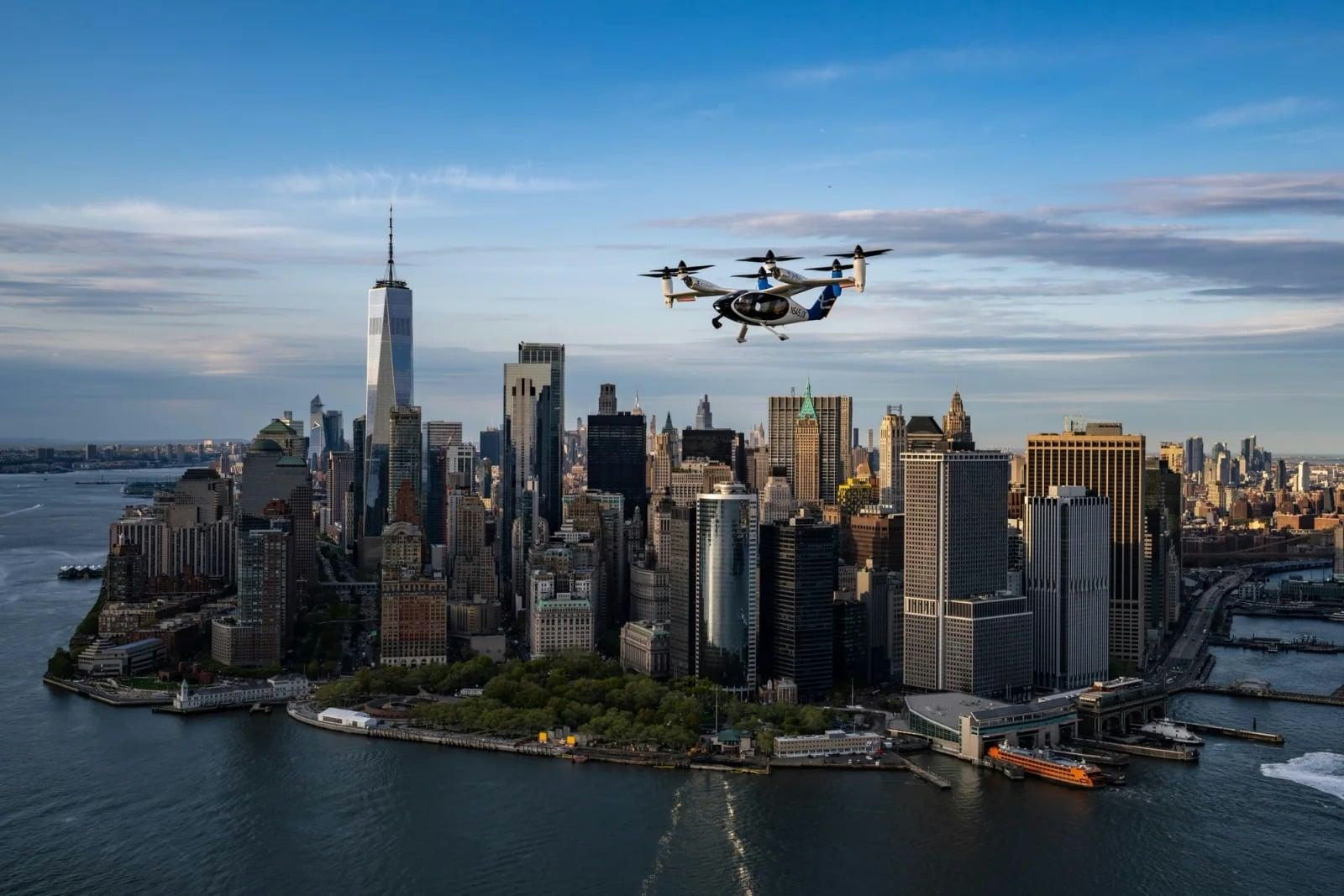
Archer Aviation Forecasts $5 Million Revenue and $263.2 Million Net Loss for 2026
Archer Aviation Inc. has announced projections indicating a modest revenue of $5 million alongside a substantial net loss of $263.2 million for the year 2026. This forecast marks the company’s initial transition into revenue generation, even as its financial losses deepen due to aggressive investments in aircraft development and operational expansion. Compared to the previous year, Archer expects revenue to rise from zero, while the net loss attributable to common stockholders is anticipated to increase from $206 million. Despite the widening loss, diluted loss per share is projected to improve slightly, moving from ($0.36) to ($0.34).
Financial Performance and Revenue Drivers
The projected revenue growth is primarily attributed to new income streams from leases at Hawthorne Airport and fixed-base operator (FBO) services, which have contributed $6.6 million year-to-date, alongside increased utilization of hangar facilities. Archer continues to advance the certification process for its Midnight electric vertical takeoff and landing (eVTOL) aircraft, with plans to initiate international deliveries, particularly targeting the United Arab Emirates. The company aims to commence initial passenger operations within the forecast period.
Strategic partnerships remain a cornerstone of Archer’s expansion strategy. The company has been selected to participate in the U.S. eVTOL Integration Pilot Program and is collaborating with airlines, infrastructure providers, and defense technology firm Anduril. These collaborations focus on exploring both commercial applications and defense uses for Archer’s Halo unmanned aerial system (UAS) platform. Operationally, Archer has increased spending on research and development as well as general and administrative expenses to accelerate aircraft development, scale manufacturing capabilities, and deploy its aviation artificial intelligence system, ZEE.
Challenges and Competitive Landscape
Despite these advancements, Archer anticipates an adjusted EBITDA loss ranging from $170 million to $200 million in the second quarter of 2026, reflecting the high cash burn associated with ongoing R&D and certification efforts. Investor sentiment remains mixed, with some expressing caution over the company’s financial trajectory and concerns about potential dilution from insider share sales. Conversely, others maintain optimism regarding Archer’s progress toward Federal Aviation Administration (FAA) certification and the planned launch of commercial operations.
The competitive environment is intensifying as rivals such as Joby Aviation pursue similar timelines for FAA certification and commercial eVTOL service launches. Established aerospace companies like Boeing are also demonstrating improved financial performance and regulatory compliance, potentially increasing competitive pressures as the urban air mobility sector evolves.
Archer’s capacity to balance its ambitious growth objectives with financial discipline will be critical as it strives to secure a leading position in the emerging market for urban air mobility.

Etihad Airways Suspends Airbus A380 Flights on Key Route

Aditya Birla Group Seeks Approval for Aircraft Leasing in GIFT City

Qatar Airways Highlights Innovation and Connectivity at Arabian Travel Market 2026

Hong Kong's Five-Year Plan Includes Andrew Fan's Aircraft Parts Processing Hub Proposal

ACIA Aero Leasing Delivers ATR72-600 to Air Nostrum

RTX Appoints Jill Albertelli as Head of Pratt & Whitney

TAT Technologies Joins Beyond Aero Hydrogen Aircraft Program

AURAK Study Highlights Barriers to Air Taxi Adoption in Emerging Economies

Xiamen Air Selects Altitude for 787 Maintenance at Heathrow

Etihad and Swissport Extend Global Partnership
