
Trasforma le intuizioni dell’IA in azioni concrete

Tendenze
Categories
Atlas Air Reports Progress in Sustainability as SAF Usage Hits 3.3%
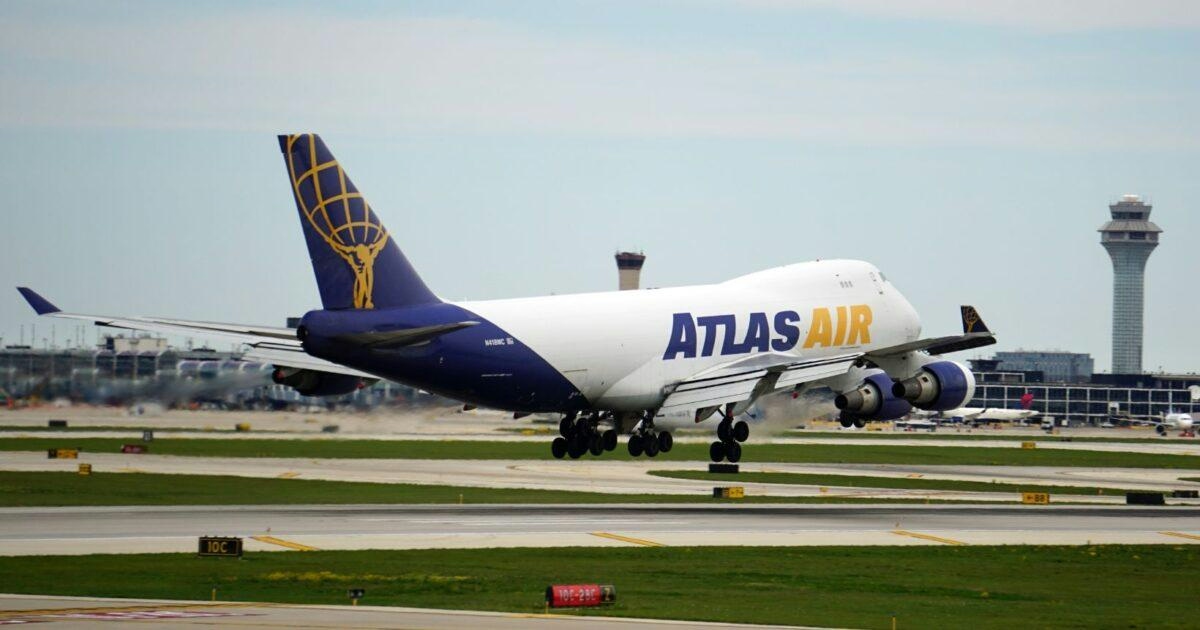
Atlas Air Advances Sustainability Efforts as SAF Usage Surges to 3.3%
Atlas Air Worldwide has reported a substantial advancement in its sustainability initiatives, marked by a tenfold increase in sustainable aviation fuel (SAF) consumption in 2025. According to the company’s seventh annual “Caring for the World We Carry” report, SAF usage reached 3.3 million gallons during the year, with approximately two-thirds of this fuel voluntarily purchased by Atlas Air and its customers. This milestone underscores the cargo airline’s commitment to reducing its environmental impact amid ongoing industry challenges.
Navigating Industry Challenges and Strategic Investments
The aviation sector continues to grapple with the high upfront costs associated with transitioning to SAF and the need for significant investment in next-generation, fuel-efficient aircraft. In response, Atlas Air has placed a record order for 20 Airbus A350F freighters, with options for an additional 20. Deliveries are scheduled to begin in 2029, and the A350F is expected to reduce fuel consumption and emissions by up to 20% compared to current freighters. However, the company must manage supply chain complexities and fluctuating fuel prices, which could influence operational costs and delivery timelines.
Atlas Air’s proactive sustainability strategy is likely to enhance its market position, particularly among environmentally conscious customers and stakeholders. The company’s leadership in this area may also prompt competitors to accelerate their own environmental initiatives in response to regulatory pressures and evolving customer expectations, although some may struggle to keep pace, potentially affecting their market standing.
Commitment to Transparency, Operational Efficiency, and Employee Development
The report highlights Atlas Air’s distinction as the first North American cargo carrier to join the International Air Transport Association’s (IATA) CO2 Connect initiative, which seeks to improve the accuracy and transparency of emissions reporting. The company has also made strides in operational efficiency through technology investments and closer collaboration with customers.
Beyond environmental efforts, Atlas Air has expanded its employee development programs. These include the launch of the Atlas Academy, an Emerging Leaders initiative, an Air-to-Ground transition program designed to assist pilots moving into corporate roles, and a Safety Ambassador Program that recognizes proactive safety reporting.
Atlas Air reaffirmed its target to reduce Scope 1 emissions by 20% by 2035, using 2021 as the baseline year. The company continues to advocate for broader SAF adoption across the aviation industry and supports reforms to Federal Aviation Administration (FAA) mental health reporting requirements.
Michael Steen, chief executive of Atlas Air Worldwide, emphasized the company’s dual focus on growth and responsibility, stating, “As our business grows, so does our responsibility. That’s why we are investing in the future of aviation, advancing sustainable solutions for our customers and building a strong culture where our people can succeed.” Richard Broekman, chief commercial officer and head of sustainability, added, “For many of our customers, sustainability has become a business imperative. They’re looking for practical ways to reduce emissions, meet evolving stakeholder expectations, and make measurable progress toward their decarbonization goals. Our role is to help them do exactly that.”
Atlas Air’s ongoing efforts position it at the forefront of sustainable air cargo, though the company acknowledges that balancing ambitious environmental objectives with cost realities, supply chain resilience, and industry competition will remain a complex challenge.

Hong Kong's Five-Year Plan Includes Andrew Fan's Aircraft Parts Processing Hub Proposal

ACIA Aero Leasing Delivers ATR72-600 to Air Nostrum

RTX Appoints Jill Albertelli as Head of Pratt & Whitney

TAT Technologies Joins Beyond Aero Hydrogen Aircraft Program

AURAK Study Highlights Barriers to Air Taxi Adoption in Emerging Economies

Xiamen Air Selects Altitude for 787 Maintenance at Heathrow

Etihad and Swissport Extend Global Partnership

Sepehran Airlines B737 Returns to Mashhad After Tyre and Engine Issues

Etihad Deploys Widebody Fleet to Meet Strong Demand

Korean Air Finalizes $36.2 Billion Deal with Boeing
