
Trasforma le intuizioni dell’IA in azioni concrete

Tendenze
Categories
Biman Bangladesh Selects Boeing for New Aircraft Order
Biman Bangladesh Selects Boeing for New Aircraft Order
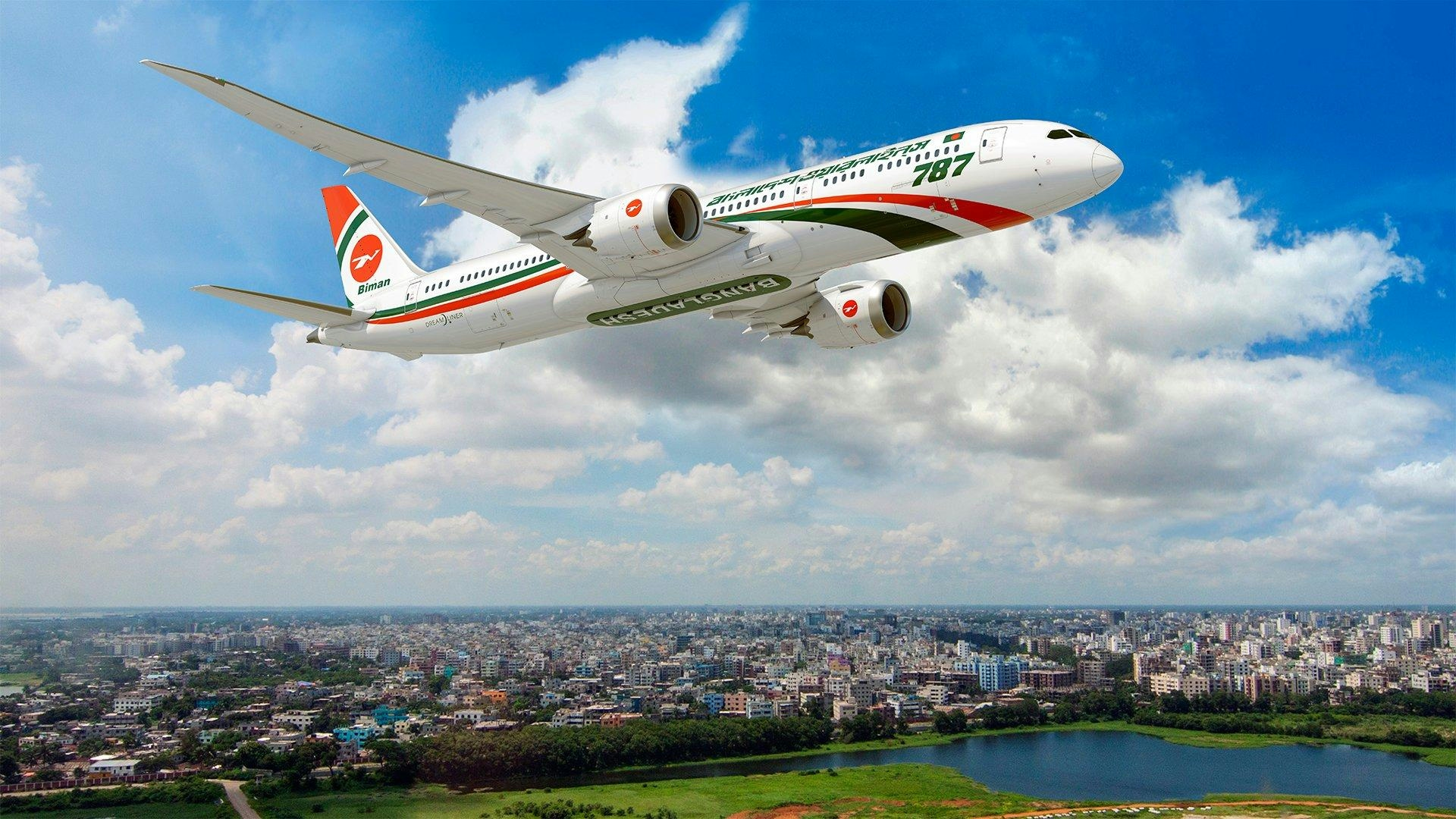
Biman Bangladesh Airlines has taken a decisive step in renewing its fleet by choosing Boeing over its long-standing competitor Airbus. The airline’s board has granted policy-level approval to initiate negotiations with the American manufacturer for a potential order that reportedly includes both widebody 787 Dreamliners and narrowbody 737-8 MAX aircraft. This development effectively concludes years of speculation about whether Airbus could challenge Boeing’s dominance at Bangladesh’s national carrier.
Fleet Composition and Operational Considerations
The proposed deal is believed to encompass 14 aircraft: four 737 MAX jets intended to replace the current 737-800s, and ten 787s, with up to eight being the larger 787-10 variant. The 787-10 models would provide a substantial increase in passenger capacity, accommodating 30 to 40 more travelers than the airline’s existing 787-9s. A key factor influencing Biman’s preference for Boeing is fleet commonality. The airline already operates a predominantly Boeing fleet, utilizing 787s for long-haul routes and 737s for regional services. Maintaining this consistency simplifies pilot training, maintenance, spare parts management, and engineering support, thereby reducing operational complexity and long-term costs. Introducing Airbus aircraft would necessitate parallel training programs, new simulators, and expanded maintenance infrastructure—challenges that could disrupt Biman’s focus on operational stability.
Geopolitical and Trade Implications
Beyond operational logic, geopolitical considerations have played a significant role in the decision. Bangladesh is actively seeking to ease trade tensions with the United States, particularly concerning potential tariffs on its exports. Large aircraft purchases often serve as instruments of diplomacy, and a Boeing order aligns with broader US-Bangladesh trade negotiations. This strategic dimension elevated the decision to the government level, framing it as both a commercial transaction and a diplomatic gesture.
Market Challenges and Competitive Dynamics
Despite the policy-level approval, the path to finalizing the agreement may encounter obstacles. Delays remain possible, and Airbus could still present a competitive offer. Boeing itself faces challenges related to production quality and delivery schedules, especially concerning the 737 MAX program and its integration with Spirit AeroSystems. These issues have contributed to volatility in Boeing’s stock price, particularly amid shifting timelines for the MAX 7 variant. Meanwhile, Airbus continues to strengthen its foothold in the region, recently securing contracts with Chinese carriers such as Air China, Spring Airlines, and Juneyao Air. The broader market remains sensitive to policy shifts and economic indicators, factors that could influence investor confidence in both manufacturers.
Airbus’s Continued Pursuit
Airbus has remained a persistent contender in Bangladesh’s aviation market. The European manufacturer has invested years courting the country, with previous governments expressing interest in Airbus widebodies, notably the A350. High-profile state visits frequently included discussions of potential Airbus sales, and proposals for approximately ten Airbus aircraft were considered, though none culminated in a contract. Biman’s current decision to favor Boeing reflects a combination of operational pragmatism and diplomatic strategy. However, given the evolving market conditions and ongoing negotiations, the final outcome remains subject to change.

Etihad Airways Suspends Airbus A380 Flights on Key Route

Aditya Birla Group Seeks Approval for Aircraft Leasing in GIFT City

Qatar Airways Highlights Innovation and Connectivity at Arabian Travel Market 2026

Hong Kong's Five-Year Plan Includes Andrew Fan's Aircraft Parts Processing Hub Proposal

ACIA Aero Leasing Delivers ATR72-600 to Air Nostrum

RTX Appoints Jill Albertelli as Head of Pratt & Whitney

TAT Technologies Joins Beyond Aero Hydrogen Aircraft Program

AURAK Study Highlights Barriers to Air Taxi Adoption in Emerging Economies

Xiamen Air Selects Altitude for 787 Maintenance at Heathrow

Etihad and Swissport Extend Global Partnership
