
Trasforma le intuizioni dell’IA in azioni concrete

Tendenze
Categories
Body Lotion Additive Significantly Enhances Aircraft Anti-Icing Performance
Body Lotion Additive Significantly Enhances Aircraft Anti-Icing Performance
Innovative Approach to Extending Anti-Icing Fluid Effectiveness
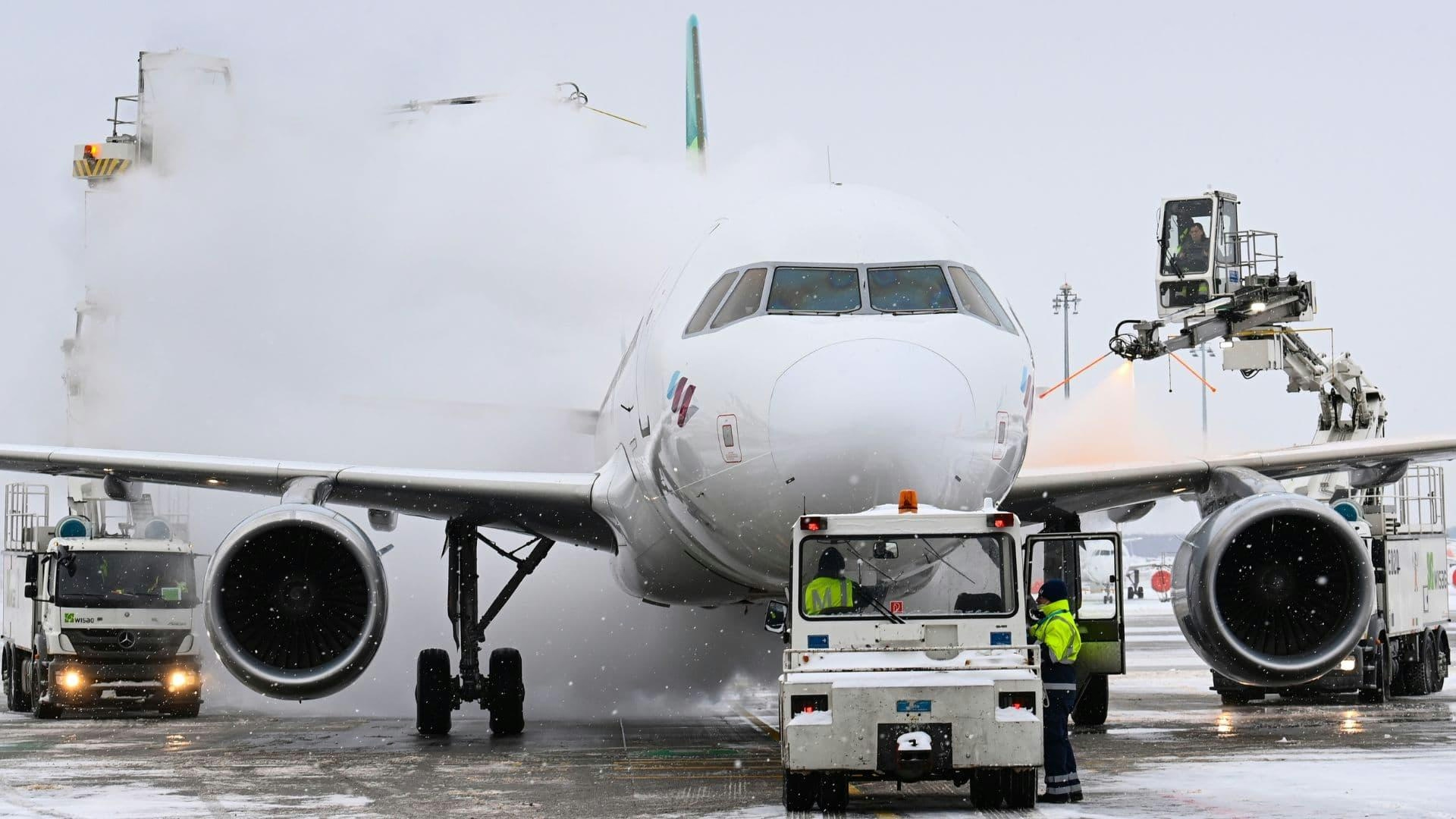
Researchers at the University of York have identified a cost-effective and highly efficient method to improve the performance of anti-icing fluids used in aviation. Their study demonstrates that low-molecular-weight gelators (LMWGs)—molecules commonly found in everyday products such as body lotions and adhesives—can nearly double the duration these fluids prevent ice formation on aircraft surfaces. This discovery offers a notable advancement in enhancing aviation safety.
Ice accumulation on aircraft remains a critical safety issue, as even a thin layer can disrupt airflow, increase drag, and reduce lift, potentially leading to hazardous situations including failed takeoffs or mid-flight stalls. To mitigate these risks, airlines employ various deicing and anti-icing fluids, categorized from Type I to Type IV. Type I fluids, generally a glycol-water mixture, are designed to remove existing ice but do not prevent new ice formation. Types II through IV function as anti-icing agents by creating a protective coating that delays ice buildup. However, the effectiveness of these coatings is limited, typically lasting no more than 70 minutes, which necessitates frequent reapplication and increases operational costs.
Research Collaboration and Experimental Findings
In an effort to extend this "holdover time," the University of York collaborated with Kilfrost, a leading supplier of anti-icing fluids. Their research focused on incorporating LMWGs into existing anti-icing formulations. Known for their ability to thicken and stabilize products at low cost and in minimal quantities, LMWGs were added at a concentration of just 0.25 grams to three different types of anti-icing fluids. Laboratory tests conducted under freezing conditions (23°F or -5°C) revealed that this addition nearly doubled the holdover time to 120 minutes. Furthermore, the enhanced fluids maintained their performance under simulated flight conditions, where shear forces replicate those experienced by aircraft in operation.
Challenges and Industry Implications
Despite the promising results, the widespread adoption of LMWG-enhanced anti-icing fluids faces several challenges. Regulatory approval processes in aviation are stringent, requiring comprehensive validation to ensure any new additives meet rigorous safety and performance standards. Market acceptance will depend on the demonstrated reliability of these enhanced fluids and the readiness of airlines and manufacturers to incorporate new technologies into established maintenance protocols.
The introduction of this additive may also trigger competitive responses within the industry, prompting rival companies to accelerate the development of alternative anti-icing technologies to preserve their market share. Market dynamics will likely be influenced by the additive’s cost-effectiveness and the tangible improvements in performance. Should these benefits be confirmed in operational settings, demand for such innovations could increase substantially, potentially transforming the aircraft anti-icing landscape.
As the aviation sector continues to emphasize safety and operational efficiency, the use of LMWGs represents a promising advancement. Ongoing testing and regulatory review will determine the pace at which this technology transitions from laboratory research to practical application on the runway.

Etihad Airways Suspends Airbus A380 Flights on Key Route

Aditya Birla Group Seeks Approval for Aircraft Leasing in GIFT City

Qatar Airways Highlights Innovation and Connectivity at Arabian Travel Market 2026

Hong Kong's Five-Year Plan Includes Andrew Fan's Aircraft Parts Processing Hub Proposal

ACIA Aero Leasing Delivers ATR72-600 to Air Nostrum

RTX Appoints Jill Albertelli as Head of Pratt & Whitney

TAT Technologies Joins Beyond Aero Hydrogen Aircraft Program

AURAK Study Highlights Barriers to Air Taxi Adoption in Emerging Economies

Xiamen Air Selects Altitude for 787 Maintenance at Heathrow

Etihad and Swissport Extend Global Partnership
