
Trasforma le intuizioni dell’IA in azioni concrete

Tendenze
Categories
Boeing 747-200 Engine Upgrade Ends Anchorage Fuel Stop on New York–Tokyo Flights
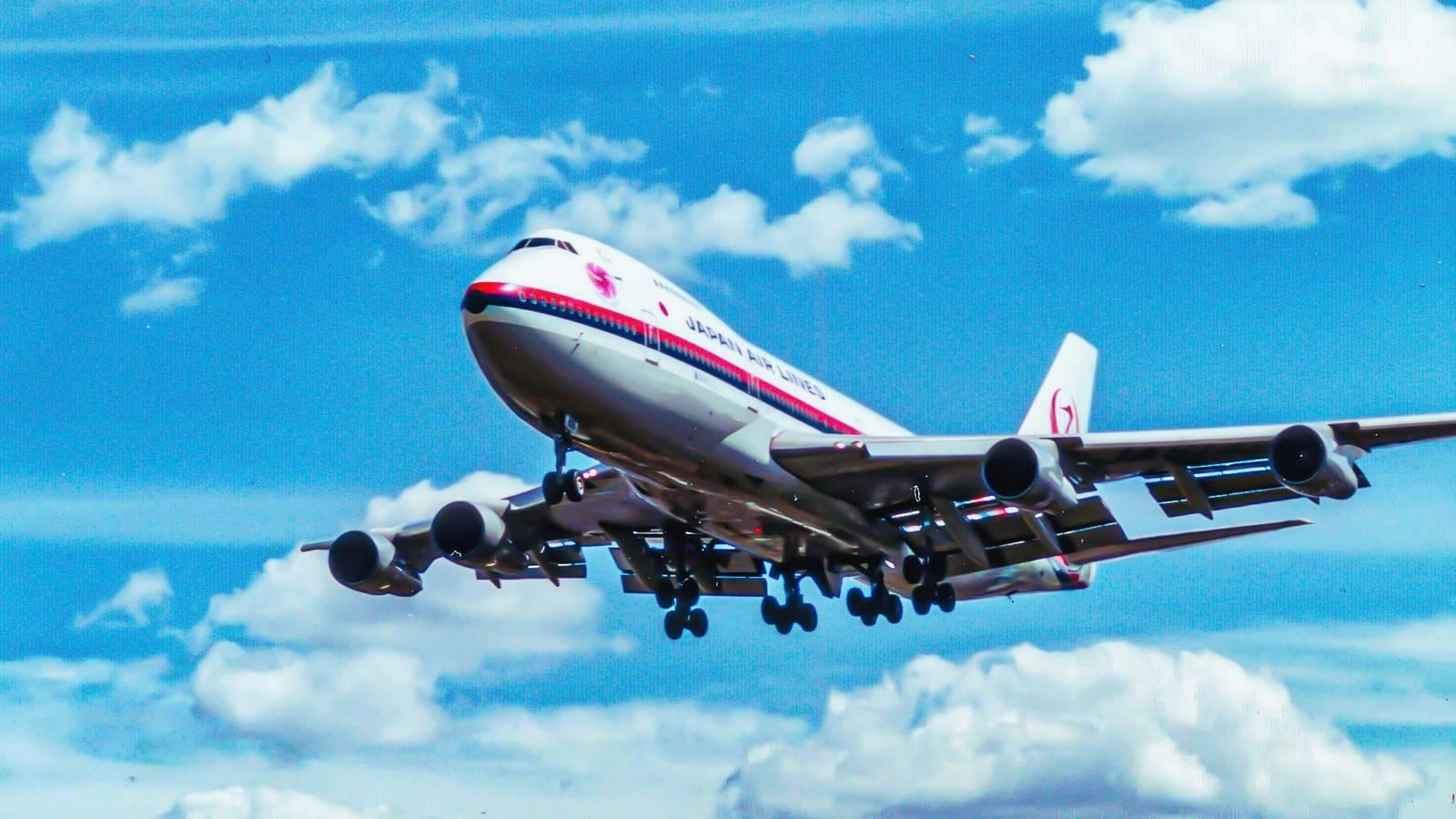
Boeing 747-200 Engine Upgrade Ends Anchorage Fuel Stop on New York–Tokyo Flights
Historical Context of Transpacific Travel
In the late 1960s and early 1970s, passengers traveling from New York to Tokyo aboard a Boeing 747 faced an inevitable and lengthy refueling stop in Anchorage, Alaska. The original 747-100, introduced by Pan Am in 1970, was limited by its fuel capacity and could not complete the transpacific journey nonstop with a full passenger load. Anchorage, strategically located near the midpoint of the great circle route between the U.S. East Coast and Japan, became a vital refueling hub. This stop not only extended travel times but also shaped the operational and commercial dynamics of transpacific air travel during that era.
The 747-100 was powered by four Pratt & Whitney JT9D-3A engines and had a maximum takeoff weight of 735,000 pounds. Its range of approximately 5,300 nautical miles was sufficient for transatlantic flights such as New York to London but fell short of the 5,850 nautical miles required for nonstop New York–Tokyo service. With typical passenger loads of 350 to 400, the aircraft could not reliably complete the Pacific crossing without stopping. Consequently, Anchorage emerged as one of the busiest international transit airports, serving major carriers including Pan Am, Japan Air Lines, Northwest Orient, and Lufthansa.
Technological Advancements and Operational Impact
The operational limitations of the 747-100 spurred airlines and manufacturers to seek solutions that would enable nonstop transpacific flights. The breakthrough came with the Boeing 747-200, which received FAA certification in December 1970 and entered service the following year. While maintaining the fundamental airframe design of its predecessor, the 747-200 incorporated more powerful engines, increased maximum takeoff weight, and enhanced fuel capacity. These improvements extended the aircraft’s range by approximately 1,550 nautical miles, allowing nonstop flights between New York and Tokyo with ample fuel reserves.
This advancement eliminated the need for the Anchorage fuel stop, significantly reducing travel time and operational complexity. Moreover, the extended range capabilities of the 747-200 opened new possibilities for long-haul city pairs that had previously been beyond reach, reshaping airline route networks and passenger expectations.
Broader Industry Implications
The introduction of the 747-200 and its enhanced performance had far-reaching effects beyond passenger convenience. Airlines that adopted longer-range aircraft gained a competitive advantage, as nonstop service became a critical differentiator in a market sensitive to fuel price volatility and evolving regulatory frameworks. The competitive pressures observed during the 747-200’s debut resonate with current industry dynamics, where financially robust carriers leverage investments in advanced aircraft and premium services to outpace weaker rivals.
Regulatory developments continue to influence airline strategies, exemplified by recent FAA actions addressing fuel pump issues and fire risks in modern engines such as the GEnx. Airlines must carefully balance fleet modernization and compliance with safety standards while managing operational costs and maintaining market competitiveness.
The 747-200’s engine and fuel system enhancements marked a pivotal moment in the evolution of long-haul aviation. Its legacy persists in the ongoing pursuit by airlines to optimize range, efficiency, and safety amid an increasingly complex and competitive global aviation landscape.

Hong Kong's Five-Year Plan Includes Andrew Fan's Aircraft Parts Processing Hub Proposal

ACIA Aero Leasing Delivers ATR72-600 to Air Nostrum

RTX Appoints Jill Albertelli as Head of Pratt & Whitney

TAT Technologies Joins Beyond Aero Hydrogen Aircraft Program

AURAK Study Highlights Barriers to Air Taxi Adoption in Emerging Economies

Xiamen Air Selects Altitude for 787 Maintenance at Heathrow

Etihad and Swissport Extend Global Partnership

Sepehran Airlines B737 Returns to Mashhad After Tyre and Engine Issues

Etihad Deploys Widebody Fleet to Meet Strong Demand

Korean Air Finalizes $36.2 Billion Deal with Boeing
