
Trasforma le intuizioni dell’IA in azioni concrete

Tendenze
Categories
Boeing Cites Engine and Seat Issues for 787 Delivery Delays
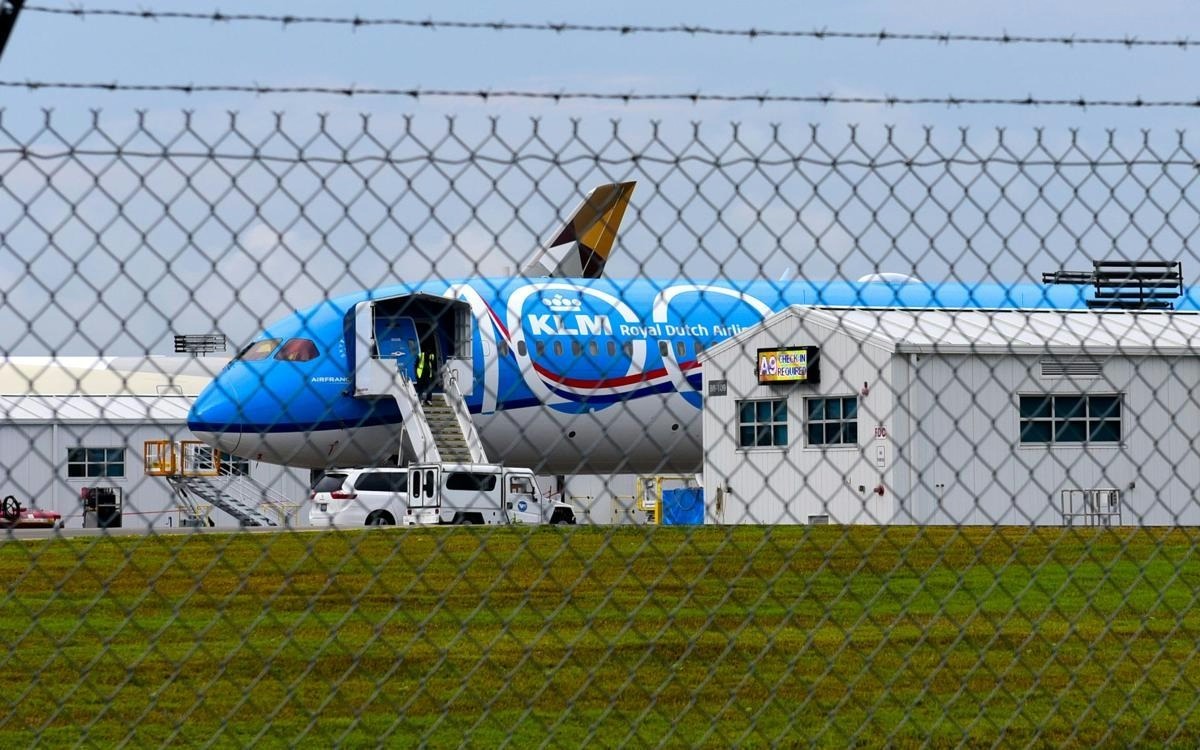
Boeing Faces Delivery Delays for 787 Dreamliner Amid Engine and Cabin Supply Challenges
Boeing has announced new delays in the delivery of its 787 Dreamliner, attributing the setbacks to supply chain constraints involving engines and premium cabin seats. These issues, disclosed during the company’s first-quarter earnings call, highlight persistent challenges within the long-haul aircraft program.
Supply Chain Bottlenecks Impacting Deliveries
CEO Kelly Ortberg revealed that a number of completed 787 aircraft remain undelivered due to these supply disruptions. Several jets are currently awaiting certification for upgraded premium cabin interiors, a process that has particularly affected airlines introducing new business and first-class products. Lufthansa, for instance, has experienced delays in receiving its new 787s following certification setbacks related to its Allegris premium seats.
Engine supply has also emerged as a critical obstacle. Ortberg described the quarter as “tough” in terms of engine deliveries, though he did not specify whether the delays involved GE Aerospace or Rolls-Royce, the two engine suppliers for the Dreamliner. The 787 is among the few widebody aircraft still offering customers a choice between GE’s GEnx and Rolls-Royce’s Trent 1000 engines. Both manufacturers, however, have faced supply chain pressures amid a resurgence in demand for long-haul travel.
Production Targets and Future Outlook
Despite these challenges, Boeing has reaffirmed its annual delivery target of 90 to 100 Dreamliners for 2024. The company delivered 15 aircraft in the first quarter, a modest increase over the same period last year. Demand remains strong, with Boeing ending March with 1,109 unfilled 787 orders, positioning the Dreamliner as a key driver of future widebody production.
To mitigate delays, Boeing has increased the 787 production rate to eight aircraft per month, with plans to raise this to ten per month later in the year. The company is also expanding its 787-9 gear exchange program to address growing demand for landing gear overhauls.
Beyond the 787 program, Boeing remains on schedule to deliver the 777-9 and new variants of the 737 Max next year. Certification for the 737 Max 10 and Max 7 models is anticipated in 2024, with initial deliveries expected in 2027.
While Boeing has stabilized fuselage production following earlier manufacturing disruptions, the latest developments underscore that delivery schedules now depend heavily on the timely supply of engines and premium cabin components. The company continues to collaborate closely with suppliers to resolve these bottlenecks and achieve its production and delivery objectives for the year.

Etihad Airways Suspends Airbus A380 Flights on Key Route

Aditya Birla Group Seeks Approval for Aircraft Leasing in GIFT City

Qatar Airways Highlights Innovation and Connectivity at Arabian Travel Market 2026

Hong Kong's Five-Year Plan Includes Andrew Fan's Aircraft Parts Processing Hub Proposal

ACIA Aero Leasing Delivers ATR72-600 to Air Nostrum

RTX Appoints Jill Albertelli as Head of Pratt & Whitney

TAT Technologies Joins Beyond Aero Hydrogen Aircraft Program

AURAK Study Highlights Barriers to Air Taxi Adoption in Emerging Economies

Xiamen Air Selects Altitude for 787 Maintenance at Heathrow

Etihad and Swissport Extend Global Partnership
