
Trasforma le intuizioni dell’IA in azioni concrete

Tendenze
Categories
Boeing Dismantled Emirates-Bound 777X to Avoid Rework Costs
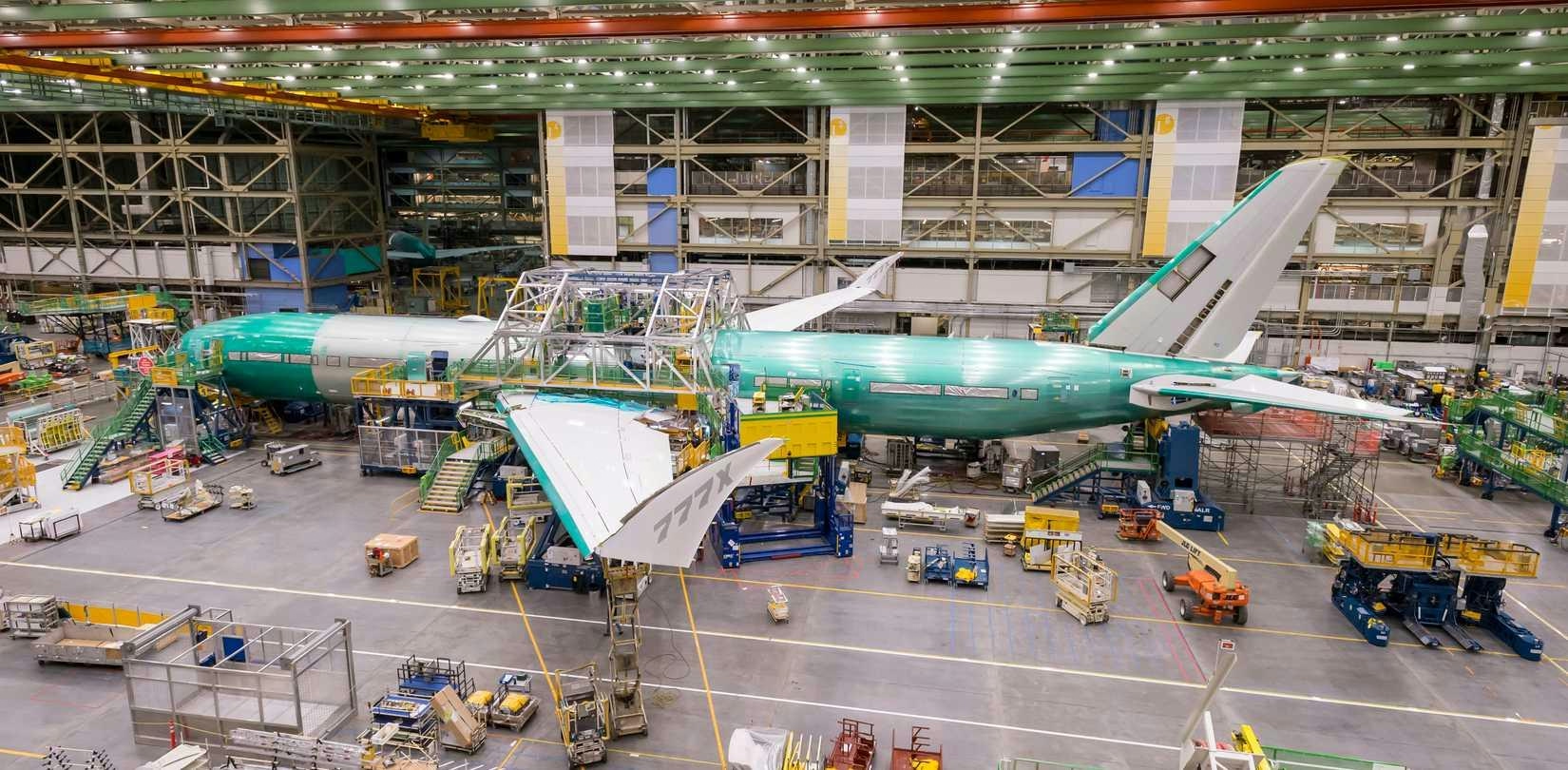
Boeing Dismantles Emirates-Bound 777X to Avoid Costly Rework
Boeing has quietly dismantled one of its earliest 777-9 airframes, originally destined for Emirates, as the company contends with escalating costs and delays in its troubled 777X program. The aircraft, designated WH007 (line number 1611), had been stored at Boeing’s Everett facility since 2019 and was partially painted in Emirates livery. Rather than proceeding to delivery, the jet was taken apart in late summer 2025, reflecting the significant and costly rework required to update early-built 777X models to the latest certification standards.
Challenges in the 777X Program
The scrapping of WH007 occurs amid a broader crisis for Boeing, which faces the daunting task of retrofitting approximately 40 already-built 777X aircraft. These extensive “change incorporation” efforts are necessary to comply with updated regulatory and safety requirements imposed by the Federal Aviation Administration (FAA) following prolonged flight testing and certification delays. Originally scheduled to enter service in 2020, the 777X is now expected to debut with launch customer Lufthansa in 2027.
Boeing has confirmed that WH007, the seventh 777-9 ever constructed, was dismantled and written off in prior financial disclosures, though the company did not specify the exact timing. The aircraft never flew and remained in storage for nearly six years, with its engines never installed and its folding wingtips—painted in Emirates colors—removed shortly after rollout. As an early-build airframe, WH007 was assembled to a preliminary configuration, making the necessary updates particularly complex and expensive.
Financial and Industry Implications
The decision to dismantle the Emirates-bound jet underscores the magnitude of Boeing’s rework challenge. The company has accumulated roughly $15 billion in charges related to the 777X program, with the rework of the 40 affected aircraft expected to span several years. Market reactions have been mixed; some investors express concern over the financial burden, while others view the move as a necessary step to ensure quality and regulatory compliance. Competitors have responded cautiously, with no immediate shifts in market dynamics or public statements exploiting Boeing’s difficulties.
Industry analysts observe that the extensive rework process reflects deeper, long-standing issues within Boeing’s production and quality control systems—problems some describe as decades in the making. The company is now compelled to relearn hard lessons from past errors as it strives to restore confidence in its flagship widebody program.
WH007 was the second 777X built for Emirates, following WH006 (line number 1605), which remains slated to join the airline as A6-EZD. Boeing’s decision to dismantle the aircraft highlights the challenges of delivering early-build jets in a program beset by regulatory hurdles, evolving standards, and rising costs.

Etihad and Swissport Extend Global Partnership

Sepehran Airlines B737 Returns to Mashhad After Tyre and Engine Issues

Etihad Deploys Widebody Fleet to Meet Strong Demand

Korean Air Finalizes $36.2 Billion Deal with Boeing

Australia’s RFDS Queensland Section Orders Six King Air 260Cs

Korean Air Finalizes Order for 103 Boeing Jets and Engines

Embraer E195-E2 Features Distinctive Engine Placement Among Regional Jets

What Passengers Can Expect on Boeing’s New 777X Jet

How Ethiopian Airlines Became Africa’s Leading Carrier Amid Gulf Competition

Joby Aviation Extends Autonomous Flight Capabilities with Cross-Country Tour
