
Trasforma le intuizioni dell’IA in azioni concrete

Tendenze
Categories
Boeing Freighter Gradually Replaces 747 on Factory Floors
Boeing Freighter Gradually Replaces 747 on Factory Floors
Steady Progress Amid Passenger Model Delays
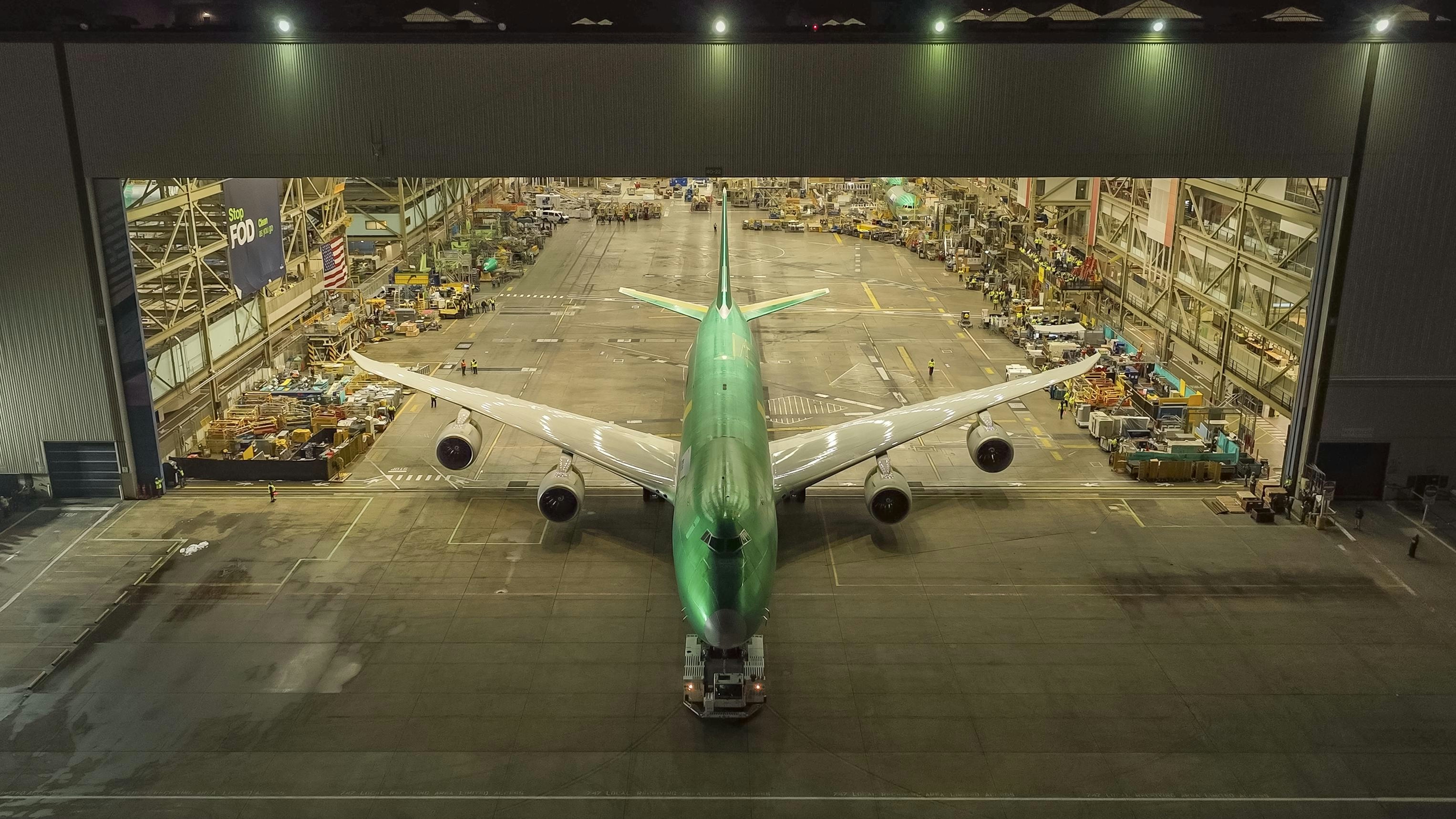
Boeing’s 777-8F freighter program is advancing steadily at the company’s Everett, Washington facility, even as attention remains focused on the delayed and costly passenger 777-9 variant. While the 777-9 has encountered years of certification setbacks and accumulated approximately $15 billion in development charges, the 777-8F has quietly reached significant milestones. Earlier this year, Boeing completed the wing-body join on the first airframe, which is now in advanced final assembly. The manufacturer aims to begin deliveries between 2028 and 2029.
The 777-8F shares its fundamental airframe with the passenger 777-8, including a 235-foot composite wingspan, but is designed specifically as a freighter rather than converted from a passenger aircraft. It offers a maximum structural payload of 118.2 tons and a commercial payload capacity of 112.3 tons. By early 2026, the program had secured 68 firm orders from prominent operators such as Cargolux, Korean Air, and Silk Way West. Although this order book is smaller than that of the broader 777X passenger series, it demonstrates strong commitment from cargo operators to a dedicated freighter model.
In contrast, the 777-9 passenger variant is further along in production, with approximately 30 completed airframes stored at Paine Field awaiting certification and rework. However, the passenger program continues to face regulatory delays. The 777-8F, despite being earlier in its manufacturing timeline, has so far avoided the setbacks that have hindered its passenger counterpart.
Transition Challenges and Market Dynamics
The shift from the iconic 747-400F to the 777-8F is becoming increasingly urgent. The current-generation 777F, in production since 2008, is slated to end production in 2027 due to ICAO emissions standards adopted in 2017 and ratified by global regulators. This creates a potential gap in the freighter market, as the 777-8F is not expected to enter service until 2029—and possibly later if early production capacity is prioritized for the 777-9 passenger model. To address this, Boeing petitioned the U.S. Department of Transportation in December 2025 for an exemption to sell 35 additional 777Fs beyond the 2027 cutoff, emphasizing the critical role of large freighters in global trade. As of April 2026, the Federal Aviation Administration had yet to issue a decision, with public comments still ongoing.
Meanwhile, the aging 747-400F fleet, with most aircraft now between 20 and 30 years old, cannot be maintained indefinitely. Operators face mounting pressure to commit to replacements, which has driven early orders for the 777-8F despite the extended wait for delivery.
Boeing’s transition away from the 747-400F also presents operational challenges on the factory floor. Production lines are being retooled, and long-standing customers must adjust to the 777-8F’s slightly smaller payload capacity. Some traditional 747 operators remain hesitant to switch, favoring the larger payload offered by the 747. Concurrently, Airbus is intensifying competition by expanding orders for its A350 freighter and developing the A330-300 converted freighter. This dynamic has heightened market scrutiny of the 777-8F’s performance and demand relative to both legacy and emerging freighter models.
As Boeing navigates regulatory hurdles, production transitions, and competitive pressures, the 777-8F is positioned to become the cornerstone of the next generation of widebody freighters, gradually supplanting the venerable 747 on factory floors and in global fleets.

Etihad Airways Suspends Airbus A380 Flights on Key Route

Aditya Birla Group Seeks Approval for Aircraft Leasing in GIFT City

Qatar Airways Highlights Innovation and Connectivity at Arabian Travel Market 2026

Hong Kong's Five-Year Plan Includes Andrew Fan's Aircraft Parts Processing Hub Proposal

ACIA Aero Leasing Delivers ATR72-600 to Air Nostrum

RTX Appoints Jill Albertelli as Head of Pratt & Whitney

TAT Technologies Joins Beyond Aero Hydrogen Aircraft Program

AURAK Study Highlights Barriers to Air Taxi Adoption in Emerging Economies

Xiamen Air Selects Altitude for 787 Maintenance at Heathrow

Etihad and Swissport Extend Global Partnership
