Immagine

AeroGenie — Il tuo copilota intelligente.

Chiedi qualsiasi cosa. Analizza tutto. Agisci immediatamente.

Tendenze

Categories

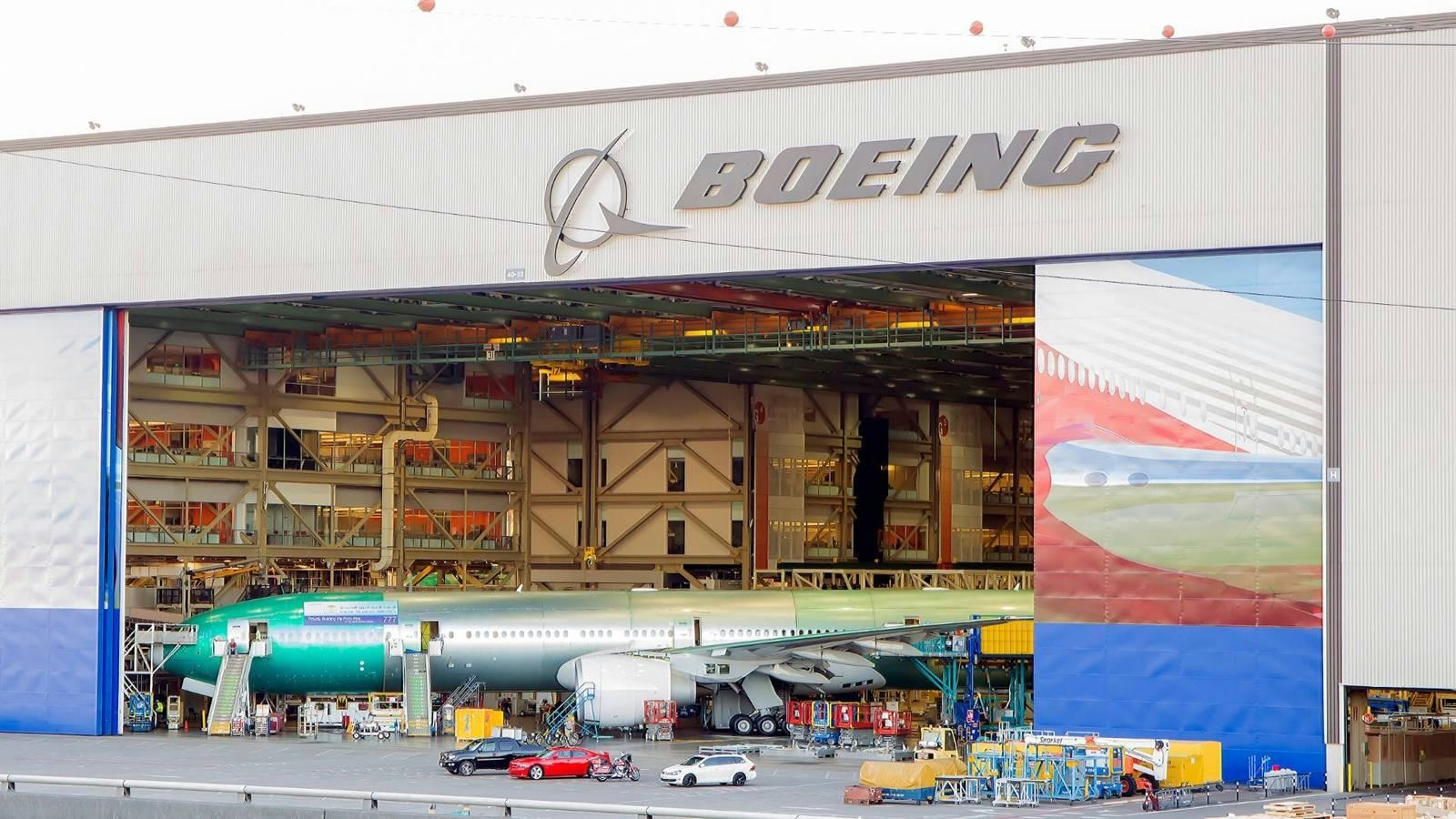
Boeing Outpaces Airbus in January Aircraft Deliveries and Orders
February 10, 2026By ePlane AI
Boeing Outpaces Airbus in January Aircraft Deliveries and Orders
0
0
Boeing
Airbus
Aircraft Deliveries

Boeing Outpaces Airbus in January Aircraft Deliveries and Orders

Boeing has outperformed its European rival Airbus in both aircraft deliveries and new orders for January, marking a significant milestone in the U.S. aerospace manufacturer’s recovery after several difficult years. The company delivered a total of 46 aircraft during the month, including 38 737 MAX jets and five 787 Dreamliners, representing Boeing’s third-strongest January on record. In comparison, Airbus reported just 19 deliveries over the same period.

The surge in Boeing’s new orders was even more pronounced, with 107 gross orders translating into 103 net new orders after cancellations. This figure substantially exceeds Airbus’s 49 net orders for January. Among the notable contracts were an order for 50 737 MAX jets from Aviation Capital Group and 34 new 787 Dreamliners, with 30 of those allocated to Delta Air Lines. This robust demand, particularly for the 737 MAX and the forthcoming 777X, reflects renewed confidence from airline customers in Boeing’s product offerings and may indicate a longer-term shift in market dynamics.

While Airbus maintains a lead in total deliveries for the year so far, Boeing’s strong showing in both deliveries and order intake suggests a potential turning point. The company’s success in securing new business points to a growing preference among airlines for Boeing aircraft as the aviation industry continues its recovery.

Industry Position and Financial Overview

Boeing’s operations span three primary segments: commercial airplanes, defense, space and security, and global services. Its commercial airplanes division directly competes with Airbus in the market for aircraft seating more than 130 passengers. The defense, space, and security segment contends with major players such as Lockheed Martin and Northrop Grumman, while the global services division provides aftermarket support to airlines worldwide.

With a market capitalization of $191.63 billion, Boeing remains a dominant force within the Aerospace & Defense sector. The company’s extensive product portfolio and global reach continue to underpin its competitive advantage.

Financial Health and Market Sentiment

Boeing’s financial position presents a nuanced picture. Over the past three years, the company has achieved modest revenue growth of 1.6%. However, profitability remains a challenge, with an operating margin of -6.05% contrasting with a net margin of 2.5%. The company carries a high debt-to-equity ratio of 9.98, though its current ratio of 1.19 indicates sufficient liquidity to meet short-term obligations.

Risk metrics highlight ongoing concerns, as Boeing’s Altman Z-Score stands at 1.63, placing it within the “distress zone” and signaling a potential bankruptcy risk within two years. On the valuation front, Boeing’s price-to-earnings (P/E) ratio of 121.4 and price-to-sales (P/S) ratio of 2.1 are near historical highs. Analyst sentiment remains broadly positive, with an average target price of $272.48 and a recommendation score of 1.8. Technical indicators, including a relative strength index (RSI 14) of 63.54, suggest the stock is approaching overbought territory.

Outlook

Boeing’s strong performance in January, both in terms of deliveries and new orders, represents a meaningful step forward in its recovery trajectory and may signal a shift in airline industry preferences. Despite ongoing financial and operational challenges, the company’s recent momentum points to renewed market confidence and the possibility of a sustained trend favoring Boeing’s aircraft in the years ahead.

More news
Jet Airways to Sell Three Boeing 777 Airframes and Six Engines for $46 Million

Jet Airways to Sell Three Boeing 777 Airframes and Six Engines for $46 Million

Jet Airways Sells Three Boeing 777 Airframes and Six Engines for $46 Million Grounded Indian carrier Jet Airways has entered into an agreement to sell three Boeing 777 aircraft frames along with six engines to Malta-based Ace Aviation for $46 million (over ₹417 crore). This transaction, disclosed in a filing to the Bombay Stock Exchange on Wednesday, represents a significant step in the ongoing liquidation of the airline, which ceased operations in April 2019 amid mounting financial difficulties. Details of the Sale The sale encompasses three wide-body Boeing 777 airframes, identified as MSN 35159 (VT-JES), MSN 35158 (VT-JEV), and MSN 35162 (VT-JEM), together with six engines. The transaction is divided as follows: MSN 35159 and its two engines (ESN 906336, 906364) were sold for $16 million; MSN 35158 and its engines (ESN 906353, 906298) fetched $12.5 million; and MSN 35162 with its engines (ESN 906351, 906337) was sold for $17.5 million. It is important to note that the aircraft frames refer to the basic structural components of the planes, excluding engines and avionics. Context and Industry Implications Jet Airways, which operated for 25 years and once maintained a fleet exceeding 120 aircraft, was compelled to suspend operations in April 2019 due to severe financial distress and unpaid employee salaries. At the time of its shutdown, the airline owned approximately 16 aircraft. The final Jet Airways flight, S2-3502, departed Amritsar on April 17, 2019, arriving in Mumbai shortly after midnight the following day. Following its collapse, Jet Airways entered insolvency proceedings under India’s Insolvency and Bankruptcy Code (IBC). Despite a resolution process that identified a winning bidder, efforts to revive the airline were unsuccessful due to various complications. After extended legal disputes, the Supreme Court ordered the airline’s liquidation in November 2024. The sale of these aircraft assets occurs amid a challenging global aviation landscape. The market for used wide-body aircraft and engines is currently influenced by broader industry trends, including delivery delays and production adjustments by major manufacturers. Boeing, in particular, faces setbacks with its 777X program, including technical concerns related to the durability of the GE9X engine. These issues may impact market perceptions and the appetite of potential buyers, including airlines seeking fleet expansion and companies operating in the secondary market for aircraft components. Jet Airways has previously divested other assets, such as the transfer of its Mumbai office lease for over ₹370 crore in August of the previous year. Trading in Jet Airways shares remains suspended due to procedural constraints. The sale to Ace Aviation highlights the continued dismantling of Jet Airways’ remaining assets, marking the gradual closure of the airline’s once-prominent legacy amid a difficult environment for both the company and the wider aviation sector.
Challenges Facing the Air Cargo Industry

Challenges Facing the Air Cargo Industry

Challenges Facing the Air Cargo Industry Economic Outlook and Industry Projections Despite ongoing geopolitical tensions and persistent uncertainty, the global trade outlook remains cautiously optimistic. The International Monetary Fund projects global GDP growth to accelerate to 3.3% this year. However, following a record 7% expansion in 2025, the United Nations Conference on Trade and Development expects global trade growth to moderate to 2.6% in the current year. Within this context, the air cargo sector anticipates rising demand and revenues, supported by the broader airline industry's robust performance. The International Air Transport Association (IATA) forecasts that industry revenues will exceed the $1 trillion threshold by 2026, reaching approximately $1.05 trillion. Net profits are expected to increase to $41 billion, up from $39.5 billion last year. Cargo revenues are projected to grow by 2.1%, with volumes rising 2.4% and yields remaining largely stable. Supply Chain Constraints and Operational Challenges Despite these encouraging figures, the air cargo industry faces significant challenges that temper its growth prospects. Demand for air cargo is expected to outpace the availability of aircraft and engines, as the aviation supply chain continues to grapple with bottlenecks and structural vulnerabilities. The sector’s heavy reliance on a limited number of key suppliers exposes it to potential disruptions. IATA predicts that aircraft supply will not align with demand until at least 2031 to 2034. The backlog for new aircraft production has now surpassed 17,000 units, representing nearly 60% of the active global fleet. Engine production is lagging even further behind, resulting in an increasing number of parked aircraft awaiting turbines. These supply chain constraints are exacerbated by rising material costs and volatile freight markets, placing additional pressure on profit margins. Operational expenses are also on the rise. Airlines are expected to incur an additional $4.2 billion in fuel costs as they continue to operate older, less fuel-efficient aircraft for longer periods than initially planned. Overall, supply chain disruptions are estimated to add more than $11 billion in extra costs to the industry. Market Pressures and Strategic Responses The freighter segment of the market faces its own set of challenges. With aging widebody aircraft remaining in passenger service longer, fewer planes are available for conversion to all-cargo configurations, driving up prices for suitable candidates. The introduction of new freighter models and conversion programs is hindered by prolonged certification processes, with aircraft such as the A350 freighter and converted 787s still awaiting regulatory approval. Beyond operational difficulties, the industry must also contend with potential new tariffs, labor disputes, and evolving pricing models influenced by updates to the National Motor Freight Classification (NMFC) and shifts in carrier networks. In response to these pressures, competitors are exploring strategic realignments and increasing investments in emerging technologies, including autonomous systems and hybrid unmanned aerial vehicle (UAV) propulsion, to sustain a competitive advantage. While the air cargo sector’s revenue outlook remains positive, its trajectory is challenged by persistent supply chain disruptions, escalating costs, and shifting market dynamics. The industry’s capacity to navigate these obstacles will be crucial in determining its ability to fully leverage the anticipated growth in global trade.
Tallinn Airport Ranks 31st in Europe’s Top 50 Airports for 2026

Tallinn Airport Ranks 31st in Europe’s Top 50 Airports for 2026

Tallinn Airport Ranks 31st in Europe’s Top 50 Airports for 2026 Tallinn Airport, officially known as Lennart Meri Tallinn Airport, has been ranked 31st in the Travel and Tour World (TTW) listing of Europe’s Top 50 Airports for 2026. This recognition highlights the airport’s growing stature as a digital innovator and an efficient travel hub within Northern Europe. Digital Innovation and Operational Excellence At the core of Tallinn Airport’s ascent is its commitment to a digital-first strategy, which has transformed both passenger experience and operational efficiency. The airport has made significant investments in artificial intelligence, automation, and advanced infrastructure, establishing itself as a modern, sustainable, and customer-focused gateway. Among the key technological advancements are self-service check-in kiosks and automated bag-drop systems, which have substantially reduced wait times and streamlined the boarding process. The introduction of electronic boarding passes and digital security controls has further minimized queues, while smart security screening systems employing 3D imaging technology have expedited baggage checks without compromising safety. These innovations position Tallinn Airport as one of Europe’s most technologically advanced facilities. The airport also utilizes connected sensors, digital signage, and data analytics to monitor operations in real time. Centralized software systems manage baggage handling, gate allocation, and passenger flow, enabling swift responses to operational challenges and enhancing the overall passenger journey. Despite its relatively modest size, Tallinn Airport has demonstrated remarkable growth and efficiency, handling a record 3.5 million passengers in 2024 and 2025, underscoring its appeal to both business and leisure travelers. Expansion, Competition, and Regulatory Challenges Looking forward, Tallinn Airport is preparing for a significant expansion aimed at increasing its capacity by 6 million passengers through the construction of a new pier. This development seeks to establish new standards in quality, efficiency, and passenger comfort. However, the airport faces considerable challenges in maintaining its competitive edge amid rising industry standards. Major European airports, including Heathrow, are investing heavily in advanced security scanning technologies and upgraded passenger amenities, raising expectations across the sector. To remain competitive, Tallinn Airport will need to continue enhancing its facilities and services. Financial pressures also pose a challenge. The European Airports Body has emphasized the difficulties smaller airports face in securing investment for modernization. Tallinn’s ambitious expansion plans will require substantial funding, necessitating careful navigation of financial constraints. Additionally, the recent approval by the European Parliament of revised air passenger rights introduces new regulatory requirements. As airlines and airports adapt to these changes, Tallinn must remain agile to meet evolving standards and market demands. Tallinn Airport’s 31st-place ranking reflects its success in digital innovation and operational excellence. As it embarks on expansion and modernization, balancing growth ambitions with financial realities and competitive pressures will be essential to sustaining its position among Europe’s leading airports.
Singapore Airshow Marks 20 Years as Asia-Pacific Shapes Aerospace Industry

Singapore Airshow Marks 20 Years as Asia-Pacific Shapes Aerospace Industry

Singapore Airshow Marks Two Decades of Aerospace Leadership in Asia-Pacific The Singapore Airshow is poised to celebrate its 20th anniversary in 2026, marking two decades of significant influence on the global aerospace industry. As the Asia-Pacific region solidifies its position as a pivotal force driving aerospace growth and innovation, this milestone edition will highlight both the sector’s accomplishments and the emerging challenges it faces in an evolving market. Adapting to Industry Shifts and Technological Advances Central to the event is the AeroForum, which will gather senior executives and technical experts to deliberate on pressing issues such as market dynamics, defense spending trends, autonomy and human-machine collaboration, cyber resilience, sustainable aviation, advanced air mobility, workforce development, and the commercialization of cutting-edge technologies. The forum is organized in collaboration with prominent industry partners including Alton Aviation Consultancy, Aviation Week Network, Bloomberg, FlightGlobal, and NexAvian. Organizers recognize the necessity of adapting to the changing landscape of business aviation as market demands fluctuate. The commercial aviation sector’s uneven performance in recent years has introduced new complexities to the region’s aerospace environment. Meanwhile, competitors are expected to unveil new aircraft models such as Embraer’s C-390 and AVIC’s J-35, positioning them as alternatives to established platforms like the F-35. Innovations including electric vertical takeoff and landing (eVTOL) aircraft and the recent certification of automatic refueling capabilities for the Airbus A330 tanker are anticipated to further influence market dynamics and industry priorities. Fostering Collaboration and Talent Development The Airshow will also emphasize connectivity and talent cultivation through initiatives like AeroConnect, an AI-driven matchmaking platform designed to facilitate strategic partnerships and business opportunities during the trade days. Complementing this, AeroCampus will bring together educational institutions, trainers, and industry stakeholders to engage students and young professionals, introducing them to evolving career pathways and essential skills in aviation and defense sectors. Expanding Horizons: Space and International Cooperation The 2026 edition will feature a notable presence from leading global space agencies, including NASA, the European Space Agency, the Indian National Space Promotion and Authorization Centre, and the UAE Space Agency. Their participation underscores the increasing significance of space technology and international collaboration within the Asia-Pacific aerospace agenda. Insightful Industry Discussions The AeroForum’s agenda includes in-depth sessions such as “Airline Performance and Fleet Trends in Asia-Pacific,” which will examine fleet developments, network strategies, and market drivers to identify potential industry leaders and laggards through 2026 and beyond. Additionally, the Commercial Aviation Leadership Summit will convene top executives to explore the key forces shaping the aviation market across the region. As the Singapore Airshow reaches this landmark anniversary, it continues to serve as a vital platform at the nexus of tradition and transformation. Its focus on innovation, sustainability, workforce development, and responsiveness to emerging technologies and market shifts positions the event as a critical indicator of the aerospace sector’s future trajectory in the Asia-Pacific region and globally.
Airlines Take Cautious Steps Toward AI Adoption

Airlines Take Cautious Steps Toward AI Adoption

Airlines Take Cautious Steps Toward AI Adoption Airlines are approaching the integration of artificial intelligence (AI) with notable caution, as recent research reveals a limited connection between AI deployment and direct revenue growth within the sector. An Accenture study highlights that only 12% of airlines currently associate AI initiatives with revenue generation, a figure that contrasts sharply with other consumer industries where AI is deeply embedded in marketing, e-commerce, and customer service operations. Current State of AI Integration in Airlines The study, shared exclusively with PhocusWire, indicates that most airlines treat generative AI as an ancillary tool rather than a fundamental component of their business models. Approximately 58% of carriers are applying AI as an overlay on existing legacy systems instead of fully integrating it into their core infrastructure. This approach restricts the potential impact of AI technologies. In contrast, consumer and retail sectors are increasingly “weaving AI into the fabric of their businesses,” a strategy that the report warns airlines must adopt to avoid falling behind. Industry experts attribute the sector’s cautious stance to the inherent complexity of airline operations, stringent regulatory requirements, and an overriding emphasis on safety. These factors, combined with narrow profit margins, foster a risk-averse culture that is reluctant to disrupt established systems. The scale and cost of rearchitecting core systems to accommodate AI are substantial. Nonetheless, there are emerging signs of increased commitment. Research from SITA published in 2025 found that 56% of airline IT professionals now rank generative AI as a top spending priority, signaling a growing recognition of its strategic importance. Challenges and Opportunities Ahead Despite this momentum, airlines face significant challenges in fully embracing AI. Concerns about job displacement, the broader socio-economic implications of automation, and the necessity for extensive data to achieve meaningful returns contribute to a measured approach. The wider market has also responded to AI’s disruptive potential with volatility, particularly in software stocks, as AI threatens to transform traditional service models. Responses among competitors vary, with some companies actively leveraging AI to enhance their operations, while others remain hesitant. Regulatory scrutiny is intensifying, with policymakers cautioning that sectors such as financial services may be ill-prepared for major AI-related incidents, a warning that could influence airline adoption strategies. Emily Weiss, travel industry lead at Accenture, acknowledges progress in customer-facing AI applications but emphasizes the greater potential in transforming core operational processes. She notes, “Too many airlines are still experimenting with small pilots or layering AI on top of legacy systems, which constrains scale and impact. To capture the full value, airlines must re-architect their systems with AI at the core, scale initiatives across functions, and tie them directly to revenue outcomes.” Supporting this perspective, a separate report from NTT Data found that organizations effectively implementing AI are 2.5 times more likely to achieve revenue growth exceeding 10%. Airline technology providers echo the call for a revenue-centric approach. Gaurav Roy, CTO at Accelya, described AI as a “transformational” driver of revenue, highlighting that real-time AI execution can increase fare revenue by up to 6% through dynamic pricing. However, a disconnect persists between AI-generated insights and their translation into tangible revenue gains. Roy advises that airlines should prioritize AI systems capable of actively managing pricing, offers, orders, and disruptions in real time within defined operational parameters. Despite this, Accenture’s research reveals that most carriers are still conducting only limited pilot projects, whereas nearly half of other consumer-facing companies are scaling AI initiatives more broadly. As airlines continue to balance the risks and opportunities presented by AI, the industry’s forthcoming decisions will be critical in determining whether it can unlock the full potential of AI or remain overshadowed by more agile sectors.
China Eastern Airlines Partners with Alibaba on AI Collaboration

China Eastern Airlines Partners with Alibaba on AI Collaboration

China Eastern Airlines Partners with Alibaba on AI Collaboration Strategic Partnership to Enhance Travel Services China Eastern Airlines (00670.HK) has entered into a strategic partnership with Alibaba’s Qwen and Fliggy platforms to leverage artificial intelligence in improving its ticketing and lifestyle services. As part of the agreement, users of the Qwen app and Fliggy’s AI-powered services will benefit from exclusive subsidies when purchasing China Eastern Airlines tickets. The Qwen app will prominently feature a “Qwen Exclusive Price” label on eligible flights, enabling customers to access special discounts amounting to several tens of yuan at the time of booking. The collaboration is poised to expand beyond ticketing, with plans to develop “flight ticket+” products and integrate AI-driven solutions into broader lifestyle service scenarios. Both companies intend to introduce more interactive initiatives aimed at enhancing the customer experience and streamlining travel-related offerings through advanced artificial intelligence technologies. Alibaba’s Growing AI Ambitions and Market Context This partnership aligns with Alibaba’s intensified focus on artificial intelligence across its various business segments. Recent developments, including the launch of the RynnBrain robotics model and preparations to acquire Nvidia H200 AI chips, highlight Alibaba’s strategic pivot toward AI-driven applications. Industry analysts from Bank of America and Goldman Sachs have recognized Alibaba’s strong AI capabilities and its expanding role within China’s internet ecosystem, positioning the company as a significant contender in the rapidly evolving AI landscape. Nonetheless, the collaboration faces potential challenges amid shifting market dynamics and increasing competition. The swift pace of AI innovation has contributed to market volatility, with investor sentiment fluctuating in response to technological advancements and ongoing geopolitical tensions. The success of this partnership will depend on the ability of both China Eastern Airlines and Alibaba to navigate these uncertainties while effectively harnessing Alibaba’s technological expertise. Implications for the Travel Industry Despite these challenges, the alliance between China Eastern Airlines and Alibaba highlights the growing influence of artificial intelligence in transforming the travel sector. By combining China Eastern’s aviation expertise with Alibaba’s advanced AI solutions, the partnership aims to deliver enhanced value and convenience to travelers. This collaboration sets a new standard for digital innovation within the industry, reflecting the increasing integration of AI technologies in shaping the future of travel services.
Boeing Leads Airbus in Orders and Deliveries at Start of 2026

Boeing Leads Airbus in Orders and Deliveries at Start of 2026

Boeing Surpasses Airbus in Orders and Deliveries at the Start of 2026 Boeing has established a decisive lead over Airbus in the initial months of 2026, signaling a notable shift in the competitive dynamics between the world’s two largest aircraft manufacturers. Data from January 2026 reveals that Boeing delivered 46 aircraft to customers, more than twice the 19 deliveries recorded by Airbus during the same period. This strong performance is mirrored in new order volumes, with Boeing outselling Airbus for the first time since 2018. Strong Demand and Production Drive Boeing’s Early Success Boeing’s robust start to the year is largely driven by heightened leasing activity and sustained global demand for commercial jets. In January alone, the company delivered 38 of its widely favored 737 MAX narrowbody aircraft alongside five 787 Dreamliners, underscoring renewed market confidence in its product range. Boeing’s total deliveries for 2026 are projected to reach 600 aircraft, marking the highest annual output the company has achieved in seven years. This resurgence is widely attributed to Boeing’s recent “industrial reset” and a renewed emphasis on safety, particularly following previous challenges with the 737 MAX. These strategic efforts have strengthened customer trust in both the 737 MAX and the upcoming 777X widebody model, contributing to increased orders and deliveries. Airbus Maintains Market Strength Amidst Boeing’s Momentum Despite Boeing’s strong performance at the outset of 2026, Airbus remains a formidable competitor. The European manufacturer delivered more aircraft overall in 2025, although at a slower pace compared to its record-setting year in 2019. Airbus continues to dominate the single-aisle market with its A320neo family, while Boeing has made significant gains in the widebody segment. Industry analysts observe that Boeing’s current momentum points to a highly profitable start to the fiscal year and could potentially alter the competitive landscape if sustained. Both manufacturers are expected to increase production to satisfy ongoing demand from airlines and leasing companies, as the global aviation sector continues its recovery from the pandemic.
Gazprom Neft Conducts Ground-Based Engine Tests Using Sustainable Fuel

Gazprom Neft Conducts Ground-Based Engine Tests Using Sustainable Fuel

Gazprom Neft Advances Ground-Based Engine Tests with Sustainable Aviation Fuel Russian oil refining giant Gazprom Neft has successfully conducted ground-based engine tests using what it describes as the country’s first sustainable aviation fuel (SAF). This development marks a notable milestone in Russia’s pursuit of decarbonizing its air transport sector. The low-carbon fuel is produced from renewable organic materials, including waste frying oil and animal fats. During the tests, the fuel was evaluated on a jet engine rig designed to simulate the critical phases of flight—take-off, cruise, and landing—demonstrating both efficient engine performance and a reduced environmental footprint. Regulatory and Market Challenges Gazprom Neft aims to leverage these test results to contribute to the creation of a unified standard for sustainable aviation fuel components within Russia. However, the establishment of such a standard faces significant regulatory hurdles. The country must navigate the complexities of aligning its framework with international SAF benchmarks while promoting widespread industry adoption. Additionally, Gazprom Neft confronts stiff competition from established global players in the rapidly expanding sustainable aviation fuel market, which is projected to reach $50 billion by 2036. Scaling up production and distribution will require substantial investment in infrastructure, adding further complexity to the company’s ambitions. Market responses to Gazprom Neft’s initiative have been mixed. Some traditional fuel suppliers and airlines have expressed skepticism regarding the feasibility and cost-effectiveness of large-scale SAF implementation. Conversely, competitors may accelerate their own sustainable fuel projects to maintain relevance in an industry increasingly driven by environmental considerations. Industry Perspectives and Collaborative Efforts Russian flag carrier Aeroflot has identified sustainable development as a strategic priority. Andrei Chikhanchin, Aeroflot’s deputy chief, emphasized the importance of leading efforts to combat climate change by reducing greenhouse gas emissions and enhancing energy efficiency. He acknowledged that while widespread adoption of sustainable fuels remains a medium- to long-term goal, the industry is making measurable progress. Denis Demin, head of innovation and sustainable development at Gazprom Neft, described the introduction of domestically produced sustainable aviation fuel as the “next stage of transport decarbonisation.” This initiative follows the company’s earlier advancements in biofuels for the marine sector. The project is being developed in partnership with specialist firm Ecoway and the restaurant chain Vkusno i Tochka, which supplies waste oil for fuel production. As the global aviation industry intensifies its focus on sustainable alternatives, Gazprom Neft’s efforts highlight both the opportunities and challenges facing Russian enterprises in the transition to cleaner energy sources. The company’s progress will be closely monitored as it seeks to establish a foothold in the evolving SAF market and contribute to broader climate objectives.
Russia Conducts Maiden Flight of Il-96-400M, Its Largest Widebody Aircraft

Russia Conducts Maiden Flight of Il-96-400M, Its Largest Widebody Aircraft

Russia Conducts Maiden Flight of Il-96-400M, Its Largest Widebody Aircraft A Milestone in Russian Civil Aviation On November 1, 2023, Russia achieved a significant milestone in its civil aviation industry with the maiden flight of the Il-96-400M, the country’s largest widebody aircraft to date. The inaugural flight took place at the Voronezh industrial facility, marking a renewed emphasis on technological self-sufficiency and the preservation of domestic expertise in large aircraft manufacturing—a field historically dominated by Western manufacturers. The prototype’s first sortie lasted 26 minutes and followed a conservative test profile typical of initial flight phases. During this flight, the aircraft reached an altitude of 2,000 meters and a speed of 390 km/h. These parameters were selected to validate the basic in-flight behavior and the performance of critical systems. According to the United Aircraft Corporation (UAC), the primary goal was to confirm the Il-96-400M’s stability, controllability, and the operation of essential onboard systems. These initial assessments are vital before expanding the flight envelope in subsequent testing stages. Technical Advancements and Domestic Production The Il-96-400M represents an evolution of the established Il-96 family, featuring a lengthened fuselage that extends the aircraft to nearly 64 meters. This structural modification, combined with subsystem upgrades and updated avionics, positions the -400M as a modernized four-engine jet powered by Aviadvigatel PS-90A1 engines—an improved variant within the PS-90 series. A notable aspect of the aircraft is the significant proportion of equipment sourced from Russian suppliers, underscoring the focus on domestic production and reducing reliance on foreign technology. Industry officials and government representatives have hailed the flight as an industrial achievement, emphasizing Russia’s determination to maintain the capability to design, integrate, and test widebody civilian aircraft domestically. The UAC reported that the test program was successful, with all systems operating within expected parameters. Market Context and Future Prospects The introduction of the Il-96-400M occurs amid a global widebody market largely dominated by Airbus and Boeing. While Airbus currently leads in single-aisle aircraft sales, Boeing retains an advantage in widebody deliveries. The emergence of the Il-96-400M may prompt strategic responses from these established players. Boeing could intensify efforts to regain narrowbody market share, whereas Airbus might focus on increasing widebody production rates to defend its position. Market analysts remain divided on the potential impact of the Il-96-400M. Some view the aircraft as a potential disruptor in the widebody segment, while others express skepticism regarding its commercial viability and production prospects amid ongoing geopolitical and economic challenges. Nonetheless, the aircraft’s debut reinforces Russia’s intent to sustain a presence in the global civil aviation industry and to reduce dependence on foreign technology. As the Il-96-400M advances through its flight test program, its performance and reception in the market will be closely monitored both within Russia and by international competitors seeking to maintain their foothold in the widebody sector.
Airbus and Boeing Report January 2026 Aircraft Orders and Deliveries

Airbus and Boeing Report January 2026 Aircraft Orders and Deliveries

Airbus and Boeing Report January 2026 Aircraft Orders and Deliveries In January 2026, Boeing emerged as the leader in commercial aircraft deliveries, handing over 46 aircraft compared to Airbus’s 19. Both manufacturers are navigating evolving market conditions and regulatory changes that continue to shape their production and order strategies. Boeing’s Delivery Surge and Regulatory Developments Boeing’s delivery performance was notably bolstered by its narrowbody 737 MAX program, with 37 aircraft delivered during the month. This increase followed the Federal Aviation Administration’s decision to lift the production cap on the 737 MAX, enabling Boeing to stabilize output at 42 aircraft per month. The regulatory adjustment marks a significant milestone for Boeing, which has faced intense scrutiny to comply with stringent safety requirements. Beyond the narrowbody segment, Boeing also delivered nine widebody aircraft, comprising five 787s, three 777s, and one 767. Although widebody production remains modest relative to the company’s long-term objectives, Boeing’s renewed emphasis on safety and operational consistency has strengthened its competitive position in the global aerospace market. Airbus Maintains Narrowbody Leadership Amid Early-Year Slowdown Airbus’s deliveries in January were predominantly focused on the single-aisle segment, with 15 A320neo-family aircraft and three A220s delivered. Widebody deliveries were limited to a single A350-900, with no A330 aircraft handed over during the month. This relatively low delivery volume reflects the typical early-year slowdown following a surge at the end of the previous year, rather than any reduction in production capacity. Despite Boeing’s recent delivery gains, Airbus continues to lead in overall deliveries and maintains its dominant position in the narrowbody market. Order Activity Reflects Continued Narrowbody Demand Order activity in January highlighted airlines’ sustained focus on renewing short- and medium-haul fleets. Boeing secured 107 gross orders, significantly outpacing Airbus’s 49. The majority of Boeing’s orders—73 in total—were for 737 MAX aircraft, underscoring the company’s efforts to regain market share in the narrowbody segment. The remaining 34 orders were for widebody aircraft, including a substantial commitment from Delta Air Lines for 30 787-10s. This order represents a strategic pivot for Delta, which had previously concentrated on Airbus widebodies, and signals renewed confidence in Boeing’s twin-aisle offerings. Airbus’s 49 orders were overwhelmingly for the A320neo family, with 48 aircraft booked in this category. Widebody demand remained subdued, with only one A330 order recorded and no new A350 commitments during the month. Market Outlook The data from early 2026 underscores a market still heavily driven by narrowbody demand, as airlines prioritize fleet modernization and capacity expansion for short- and medium-haul routes. While Airbus retains its leadership in single-aisle deliveries and orders, Boeing’s regulatory progress and industrial adjustments have restored a degree of stability and competitiveness, particularly as it seeks to reclaim ground in the narrowbody sector. *Note: A320neo figures include all family variants. Boeing order numbers exclude ASC 606 accounting adjustments and represent gross orders.*
line










