
Trasforma le intuizioni dell’IA in azioni concrete

Tendenze
Categories
Boeing Removes Engine Chevrons Citing Noise Trade-Off
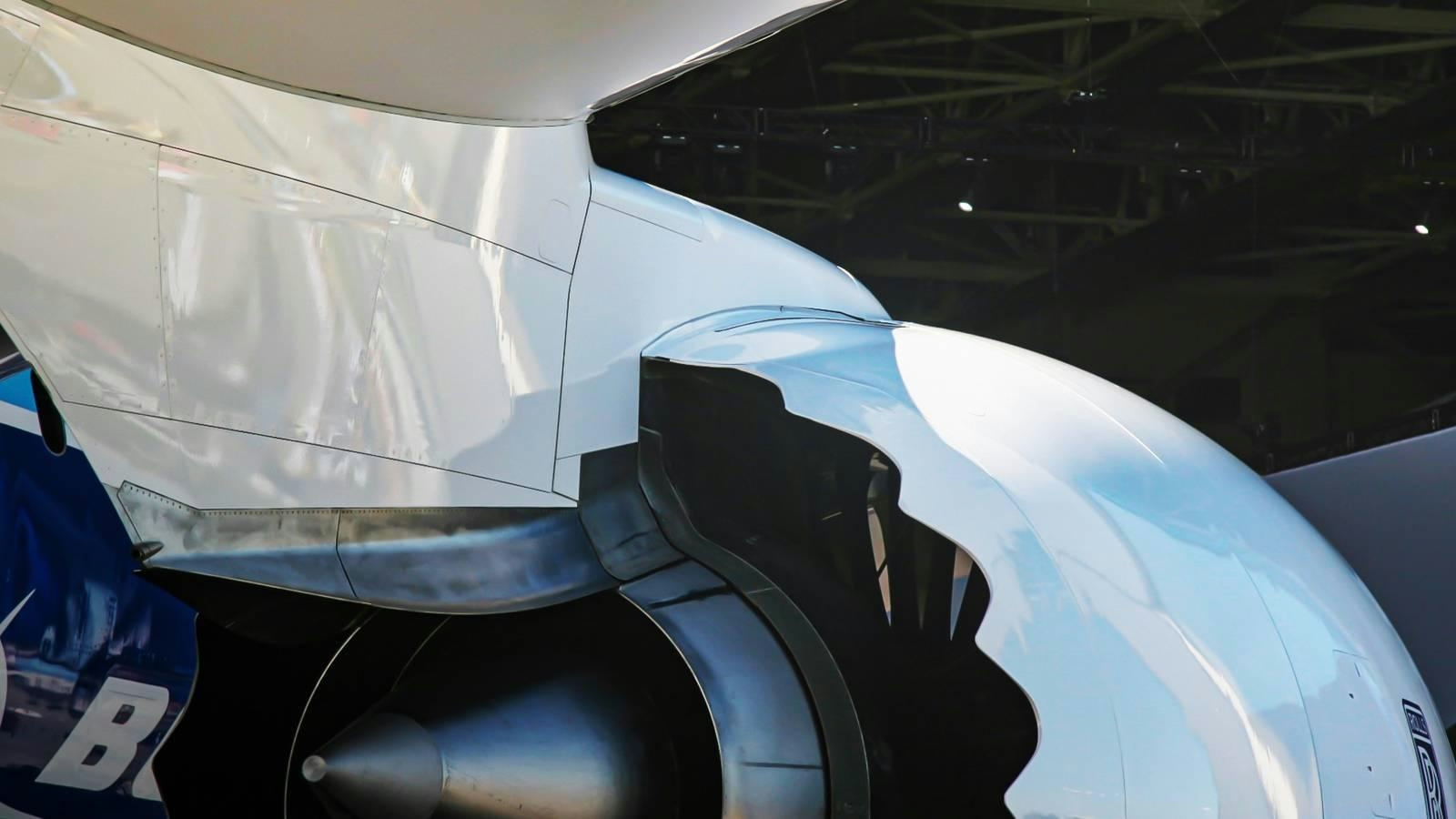
Boeing Removes Engine Chevrons on 777X, Signaling Shift in Noise Reduction Strategy
Boeing has announced the removal of chevron nozzles from the engines of its forthcoming 777X aircraft, marking a notable departure from its previous noise reduction approach. Chevron nozzles—jagged edges on engine exhausts developed in collaboration with NASA—were previously employed on models such as the 787 Dreamliner, 737 MAX, and 747-8 to reduce engine noise by up to six decibels. This design choice, however, is being reconsidered in light of new technological advancements and operational priorities.
Reevaluating Noise Reduction and Aerodynamic Efficiency
The decision to eliminate chevrons reflects Boeing’s reassessment of the trade-offs between noise mitigation and aerodynamic performance. While chevrons contributed to meeting stringent airport noise regulations, they also imposed a thrust penalty ranging from 0.25 to 0.5 percent and increased aerodynamic drag. Advances in engine technology, particularly improvements in fan blade design and higher bypass ratios, have enabled Boeing engineers to achieve the necessary noise reduction internally, without relying on chevrons. This shift allows for a simpler and lighter engine nacelle design, which may enhance long-term operational efficiency.
The 777X, powered by General Electric’s GE9X engines, will be the first major Boeing aircraft in recent years to omit chevrons entirely. This strategic pivot comes amid intense scrutiny from the Federal Aviation Administration (FAA) and ongoing production challenges. Boeing’s engineering teams carefully balanced regulatory compliance, performance, and cost-effectiveness, ultimately concluding that newer technologies offer a more optimal solution.
Market Implications and Industry Response
Boeing’s move contrasts with Airbus’s approach, as the European manufacturer has never incorporated chevrons on its A320neo, A330neo, or A350 models, instead employing alternative noise reduction techniques. With Boeing stepping away from chevrons, Airbus may leverage this development to further distinguish its aircraft designs and technologies. The change could also influence market dynamics, as airlines evaluate the operational efficiencies and maintenance benefits associated with simpler engine configurations.
Industry analysts suggest that Boeing’s decision may shift customer preferences, particularly among carriers prioritizing fuel efficiency and reduced maintenance costs. Nonetheless, the approach carries risks, as regulatory authorities will closely monitor whether the new noise reduction methods consistently meet international standards. Any shortcomings could affect Boeing’s production schedules and market reputation.
The removal of chevrons on the 777X indicates that the technology is no longer regarded as cost-effective for future aircraft designs. As engine manufacturers continue to refine internal noise mitigation techniques, it appears unlikely that chevrons will reappear on upcoming Boeing models. This development underscores the evolving nature of aircraft design, where innovation is increasingly driven by the need to balance environmental compliance, operational efficiency, and competitive differentiation.

Etihad and Swissport Extend Global Partnership

Sepehran Airlines B737 Returns to Mashhad After Tyre and Engine Issues

Etihad Deploys Widebody Fleet to Meet Strong Demand

Korean Air Finalizes $36.2 Billion Deal with Boeing

Australia’s RFDS Queensland Section Orders Six King Air 260Cs

Korean Air Finalizes Order for 103 Boeing Jets and Engines

Embraer E195-E2 Features Distinctive Engine Placement Among Regional Jets

What Passengers Can Expect on Boeing’s New 777X Jet

How Ethiopian Airlines Became Africa’s Leading Carrier Amid Gulf Competition

Joby Aviation Extends Autonomous Flight Capabilities with Cross-Country Tour
