
Trasforma le intuizioni dell’IA in azioni concrete

Tendenze
Categories
Boeing Reports Improvements in Supply Chain Quality
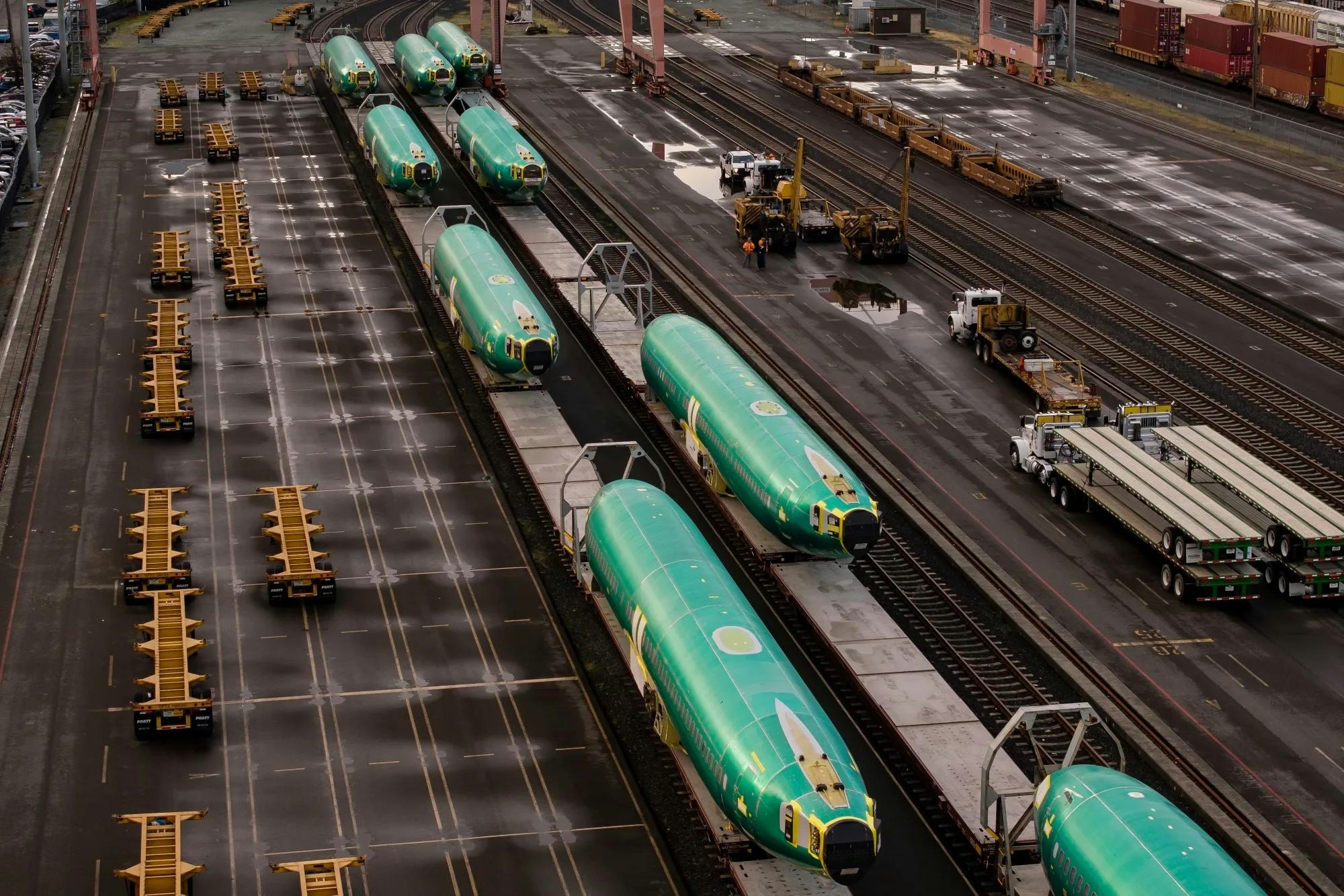
Boeing Reports Progress in Supply Chain Quality Amid Ongoing Challenges
Boeing has announced notable advancements in the quality of its commercial airplane supply chain over the past two years, according to senior executives at a recent industry supplier conference near Seattle. Ihssane Mounir, Boeing’s senior vice president for global supply chain and fabrication, highlighted that the company now spends significantly less time addressing supplier-related issues. The time required to resolve supply chain problems has decreased by approximately 40% compared to 2024, reflecting substantial operational improvements.
Enhanced Quality Control and Strategic Acquisition
A major factor driving these improvements has been the implementation of enhanced quality control inspections, particularly in collaboration with Spirit AeroSystems, the manufacturer of 737 fuselages and other aerostructures. Defects associated with Spirit have declined by around 60% since Boeing introduced additional inspection protocols, Mounir reported, referencing data shared with Reuters. Spirit AeroSystems had been responsible for the manufacture and installation of a 737 MAX door plug involved in an in-flight failure on an Alaska Airlines aircraft in early 2024. This high-profile incident prompted the Federal Aviation Administration to impose production limits on Boeing.
In response to these challenges, Boeing reacquired Spirit AeroSystems, based in Wichita, Kansas—a move Mounir described as “probably the best thing that’s happened in my career.” This acquisition, which brings Spirit back under Boeing’s direct oversight after nearly two decades as an independent supplier, is expected to enhance Boeing’s control over its aerostructures supply chain. Spirit AeroSystems was originally formed in 2005 following Boeing’s divestiture of parts of its aerostructures business.
Ongoing Challenges and Industry Context
These supply chain improvements come as Boeing and the wider aerospace industry continue to recover from disruptions caused by the COVID-19 pandemic. Previously, quality issues among suppliers had impeded efforts to increase jetliner production rates. While Boeing’s intensified inspections and closer integration with key suppliers have produced measurable gains, the company still confronts persistent challenges, including workforce shortages and ongoing component supply constraints.
Adapting to advanced aircraft models and integrating emerging technologies such as automation and robotics present additional complexities for Boeing’s supply chain management. Despite these hurdles, market responses have been favorable: Boeing’s stock has risen approximately 16% year to date, supported by production gains and increased aircraft deliveries. Competitors are also investing in supply chain enhancements to maintain competitiveness as the aerospace aftermarket recovers from recent pressures.
Boeing executives emphasize that sustaining these quality improvements will require ongoing vigilance and adaptability as the company navigates evolving industry demands and technological advancements.

Etihad Airways Suspends Airbus A380 Flights on Key Route

Aditya Birla Group Seeks Approval for Aircraft Leasing in GIFT City

Qatar Airways Highlights Innovation and Connectivity at Arabian Travel Market 2026

Hong Kong's Five-Year Plan Includes Andrew Fan's Aircraft Parts Processing Hub Proposal

ACIA Aero Leasing Delivers ATR72-600 to Air Nostrum

RTX Appoints Jill Albertelli as Head of Pratt & Whitney

TAT Technologies Joins Beyond Aero Hydrogen Aircraft Program

AURAK Study Highlights Barriers to Air Taxi Adoption in Emerging Economies

Xiamen Air Selects Altitude for 787 Maintenance at Heathrow

Etihad and Swissport Extend Global Partnership
