imabge

AeroGenie: il tuo copilota intelligente.

Chiedi qualsiasi cosa. Analizza tutto. Agisci all'istante.

Tendenze

Categories

Boeing Resumes Operations in China
June 9, 2025By ePlane AI
Boeing Resumes Operations in China
0
0
Boeing
737 MAX
China Market Access

Boeing Resumes Operations in China

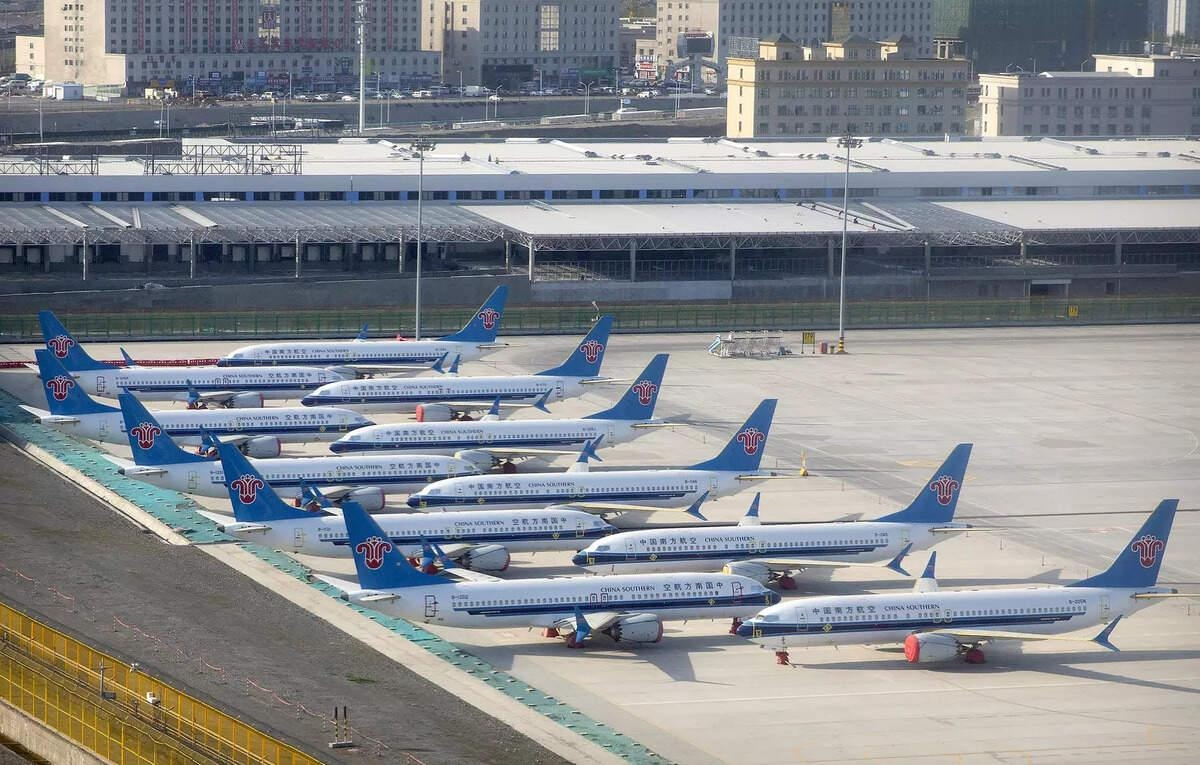
A Boeing 737 MAX jet arrived in China on Monday, signaling the American aerospace giant’s return to the Chinese market after nearly two months of halted deliveries. The aircraft, bearing the livery of Xiamen Airlines, touched down at Boeing’s Zhoushan completion center near Shanghai following its journey from Seattle with stops in Hawaii and Guam. This delivery marks a significant step in restoring Boeing’s presence in China amid recent trade tensions.

Background and Trade Disputes

The delivery suspension began in April when the United States imposed tariffs of up to 145% on Chinese imports under President Donald Trump’s “Liberation Day” initiative. In response, China retaliated with tariffs of 125% on U.S. goods and directed domestic airlines to suspend acceptance of Boeing aircraft and related equipment. The ensuing disruption left several 737 MAX jets stranded at Boeing’s Zhoushan facility, with the company even considering reselling planes originally intended for Chinese carriers. A 90-day tariff pause announced by the White House later paved the way for Boeing to recommence deliveries in June.

China remains a vital market for Boeing, representing approximately 10% of its order backlog. Prior to the suspension, Boeing had planned to deliver 50 jets to Chinese airlines in 2025, with 41 already in various stages of production or pre-assembly. The resumption of deliveries is therefore critical to Boeing’s broader strategic and financial outlook.

Industry Challenges and Market Response

Boeing’s return to China occurs amid ongoing industry challenges and evolving market conditions. The company faces the dual pressures of accelerating production to meet renewed demand while managing heightened expectations from customers and investors. Despite these challenges, market sentiment has been largely positive. Emirates has expressed confidence in Boeing’s recovery, and the company’s stock has risen by more than 8% in the past month and over 22% year-to-date in 2025.

Responses from competitors and partners have been varied. Qatar Airways recently placed a substantial order with Boeing, signaling continued confidence in the manufacturer. Conversely, NASA’s delay of the next flight of Boeing’s Starliner spacecraft underscores persistent operational hurdles. Additionally, delivery delays for the 737 MAX 10 model could affect key customers such as United Airlines, adding further complexity to Boeing’s production schedule.

Financial Implications and Outlook

The resumption of deliveries to China is expected to bolster Boeing’s financial position, supported by recent new orders and improved cash flow. However, the company must carefully navigate potential production bottlenecks to sustain momentum in a highly competitive global market. Industry observers and investors will be closely monitoring Boeing’s ability to resolve these challenges and fulfill its commitments to customers as it reestablishes its foothold in China.

More news
The Small Cold War Helicopter Considered by the Marines for Combat

The Small Cold War Helicopter Considered by the Marines for Combat

The Small Cold War Helicopter Considered by the Marines for Combat The 1950s were a transformative era in aviation, characterized by rapid technological advancements as the world adjusted to the post-World War II landscape. Amid the escalating tensions of the Cold War, the United States military pursued innovative solutions to gain strategic advantages. Among these efforts were pioneering experiments in personal rotorcraft, notably the Hiller YROE-1 Rotorcycle and the Hiller Flying Platform. These early single-person aircraft concepts aimed to revolutionize reconnaissance, personal mobility, and combat tactics. The Drive for Personal Helicopters In the aftermath of World War II, the U.S. military identified a critical need for enhanced battlefield mobility. While traditional helicopters had already demonstrated their value, their size and logistical demands limited their deployment in certain combat scenarios. This spurred interest in developing compact, collapsible helicopters capable of rapid, tactical movement, particularly in environments where larger aircraft faced operational constraints. Hiller Aircraft Corporation, a prominent innovator in rotorcraft technology, undertook two ambitious projects sponsored by the U.S. Navy and the Office of Naval Research: the Hiller YROE-1 Rotorcycle and the Hiller Flying Platform. These designs sought to expand the possibilities of vertical takeoff and landing (VTOL) technology by creating lightweight, portable aircraft for individual use. The Hiller YROE-1 Rotorcycle The Rotorcycle was conceived as a small, single-seat helicopter emphasizing portability and ease of operation. Its primary role was envisioned as reconnaissance and liaison for the U.S. Marine Corps rather than direct combat or heavy transport. A distinctive feature of the Rotorcycle was its collapsible frame, which allowed it to be packed for transport or even delivered by parachute to isolated personnel such as downed pilots or small units in the field. This capability promised to provide dispersed forces with unprecedented rapid mobility. Designed for simplicity, the Rotorcycle could reportedly be piloted by individuals with minimal training—Hiller claimed that a nonpilot could master solo flight after approximately eight hours of instruction. The aircraft cruised at around 52 miles per hour and had an operational range near 40 miles, marking a significant step toward practical personal vertical flight. Modern Parallels and Continuing Challenges Although the Rotorcycle never entered active service, its conceptual legacy persists in contemporary efforts to develop agile, deployable aerial platforms. The U.S. Marine Corps continues to investigate advanced technologies such as the Neros Archer unmanned aerial vehicles (UAVs) to enhance battlefield reconnaissance and mobility. However, these modern systems face challenges reminiscent of those encountered in earlier experimental programs. Regulatory constraints imposed by the Federal Aviation Administration complicate scheduling for UAV training ranges, while technical difficulties including communication link losses and mechanical failures remain ongoing concerns. Simultaneously, the broader aerospace and defense sectors are advancing with programs like the U.S. Army’s Future Long-Range Assault Aircraft and the U.S. Air Force’s Collaborative Combat Aircraft initiative. These developments unfold amid economic uncertainties shaped by internal Federal Reserve divisions and volatile market conditions, factors expected to influence defense procurement and innovation through 2026. A Legacy of Innovation While the Hiller Rotorcycle and Flying Platform never saw combat deployment, their development represents a pivotal chapter in the evolution of vertical flight and personal aviation. The enduring pursuit of enhanced battlefield mobility and adaptability continues to drive military innovation, underscoring the relevance of these early Cold War experiments in today’s defense landscape.
Boeing and Airbus Orders Race in 2025: Who Leads?

Boeing and Airbus Orders Race in 2025: Who Leads?

Boeing and Airbus Orders Race in 2025: Who Leads? The commercial aircraft market in 2025 remains firmly dominated by two industry titans: Boeing and Airbus. While other manufacturers such as Embraer and China’s COMAC maintain a presence, they do not rival the scale or global influence of these aerospace giants. This year, the competition between Boeing and Airbus intensified, with Boeing ultimately emerging as the leader in overall aircraft orders. Market Performance and Order Statistics Airbus, established in 1970, has long been Boeing’s principal competitor. The company marked a significant achievement in October 2025 when its A320 family became the most-delivered aircraft globally, surpassing Boeing’s 737 series. Data from September 2025 revealed that the Airbus A320 family logged 1,414,516 total flights, outstripping the Boeing 737 family’s 1,102,536 flights. This milestone underscores Airbus’s dominance in the narrowbody segment, particularly bolstered by the A220, a model without a direct Boeing counterpart. Despite Airbus’s strong showing in narrowbody aircraft, Boeing demonstrated notable resilience and regained momentum throughout 2025. In November alone, Boeing secured 149 new orders, nearly doubling Airbus’s 75 orders for the month. This surge was instrumental in Boeing’s overall lead in the annual orders tally, with the company selling 812 commercial aircraft compared to Airbus’s 640. Segment-Specific Dynamics In the small narrowbody category, Airbus maintained its lead, largely driven by the A220, which Boeing does not directly compete against. The large narrowbody segment saw Airbus narrowly outpace Boeing, with 504 orders for the A320neo family compared to 461 for Boeing’s 737 MAX series. However, Boeing dominated the medium widebody segment, where the 787 Dreamliner secured 351 orders, significantly surpassing the Airbus A330neo’s 96 orders. While Airbus experienced a decline in A320neo deliveries in November, Boeing benefited from strong demand for its 787 models. This positive market momentum was reflected in Boeing’s stock performance, which closed at $204.38 on December 12, 2025, marking a 1.2% increase for the week. The stock gains were supported by factors including the integration of Spirit AeroSystems and ongoing Federal Aviation Administration (FAA) scrutiny of the 737 MAX 10. External Influences and Defense Contracts Boeing’s resurgence in 2025 was also shaped by broader geopolitical and trade factors. Efforts by the Trump administration to negotiate trade agreements and address trade deficits contributed to increased international orders for Boeing aircraft. Despite challenges such as safety concerns related to the 737 MAX, Boeing’s reputation as a reliable global supplier remained intact. In addition to its commercial aviation success, Boeing secured significant contracts in the defense sector. The U.S. military awarded Boeing a $2.7 billion contract for post-production support of the Apache helicopter fleet, following a previous $4.7 billion contract for the Apache AH-64E attack helicopter and associated systems. These defense contracts further bolstered Boeing’s position in 2025. Outlook While Airbus continues to excel in narrowbody aircraft and maintains a strong global footprint, 2025 saw Boeing reclaim the lead in overall aircraft orders. With sustained demand for its widebody jets and key defense contracts, Boeing appears well-positioned to maintain its momentum as the year concludes.
Air China Shares Rise After $9.5 Billion Airbus Jet Order

Air China Shares Rise After $9.5 Billion Airbus Jet Order

Air China Shares Rise Following $9.5 Billion Airbus Jet Order Air China’s shares listed in Shanghai closed 3.3% higher at 9.37 yuan after the airline announced a significant order for 60 Airbus A320neo aircraft, valued at approximately $9.5 billion at list prices. The jets are scheduled for delivery between 2028 and 2032, according to a filing with the Shanghai Stock Exchange. This purchase, revealed just before the Chinese stock markets closed for the New Year holiday, underscores the airline’s commitment to fleet expansion despite ongoing challenges in the aviation sector, including fare pressures and intense competition. Growing Demand for Airbus Amid Industry Challenges The order adds to a recent wave of Airbus purchases by Chinese carriers, with Spring Airlines and Juneyao Airlines also announcing substantial acquisitions of Airbus aircraft in recent weeks. This trend reflects strong demand for the A320neo, Airbus’s updated, fuel-efficient single-aisle model, even as the manufacturer grapples with operational difficulties. Airbus is currently addressing a software issue affecting approximately 6,000 A320-family jets, alongside quality concerns related to fuselage panels. These problems have contributed to a sharp decline in Airbus’s share price and raised doubts about its ability to meet delivery targets for 2025. Nevertheless, the positive market reaction to Air China’s order indicates sustained confidence in Airbus’s product offerings. The purchase is part of a broader 2022 framework agreement between China Aviation Supplies Holding Company and Airbus, which encompasses 132 A320-family aircraft and eight A350 widebodies. Li Hanming, a U.S.-based independent aviation analyst, noted that “negotiations for individual contracts take time,” highlighting the ongoing nature of these procurement discussions. Strategic Shifts in China’s Aviation Market The order also reflects shifting dynamics within China’s aviation industry, where Airbus has gained a competitive edge over Boeing amid persistent geopolitical tensions between Beijing and Washington. These tensions have hindered Boeing’s ability to secure new orders in China, thereby strengthening Airbus’s market position. Investor attention remains focused on Air China’s long-term capital expenditure and fleet renewal strategy, with deliveries commencing in 2028. The airline’s move coincides with a broader recovery among China’s three largest carriers—including China Southern Airlines and China Eastern Airlines, which saw share gains of 4.6% and 5.8% respectively—following a return to collective profitability in the third quarter of 2025, supported by robust summer travel demand. However, analysts caution that the recovery remains fragile due to intense domestic competition and the impact of high-speed rail on short-haul routes. In addition to the aircraft order, Air China has announced plans to raise up to 20 billion yuan through a private placement aimed at strengthening its balance sheet. This initiative keeps investor focus on the airline’s cost management and pricing power as the industry continues to rebuild international routes and expand capacity. Market participants are closely monitoring passenger yields and fuel prices amid this evolving landscape. China’s stock and interbank foreign exchange markets remain closed for the New Year holiday and are expected to resume trading next week. Despite recent setbacks faced by Airbus, the strong market response to Air China’s order signals enduring optimism about the future prospects of China’s aviation sector.
Why Airbus Chose Four Engines for the A380

Why Airbus Chose Four Engines for the A380

Why Airbus Chose Four Engines for the A380 The Airbus A380 remains one of the most iconic aircraft in aviation history, distinguished by its two full-length passenger decks, an expansive wingspan of nearly 80 meters (262 feet), and four powerful high-bypass turbofan engines. Despite its engineering marvel and impressive size, the A380 faced significant operational challenges. Its large dimensions often rendered it unprofitable for many airlines, and its fuel consumption was notably higher than that of its twin-engine competitors. The Four-Engine Configuration and Its Implications A central factor contributing to the A380’s operational difficulties was its four-engine design. The aircraft was equipped with either the Engine Alliance GP7200 or Rolls-Royce Trent 900 engines, both advanced for their time. However, the presence of four engines inherently resulted in greater fuel consumption and elevated maintenance costs compared to twinjets such as the Boeing 777. The complexity and expense of maintaining two additional engines increased the overall operating costs, making the A380 less appealing to airlines prioritizing efficiency and cost-effectiveness. This dynamic is evident in the aircraft’s sales performance. Airbus delivered only 251 A380s, a stark contrast to the over 800 units sold of Boeing’s largest 777 variant, the 777-300ER. The market’s preference for twin-engine aircraft has only intensified, as demonstrated by the commercial success of the Airbus A350 and Boeing 787, both designed around the principle of maximizing efficiency with just two engines. The Necessity Behind Four Engines Airbus’s decision to equip the A380 with four engines was driven primarily by the aircraft’s unprecedented scale. With a maximum takeoff weight (MTOW) of 575 tonnes—significantly heavier than the 777-300ER’s 351 tonnes—the A380 required more thrust than the most powerful twinjet engines available could deliver. Each of the A380’s engines produces up to 76,752 pounds of thrust, enabling the aircraft to generate over 307,000 pounds of thrust at takeoff, a level unattainable with a twin-engine configuration. The timing of the A380’s development further influenced its design and commercial trajectory. Its engines were based on late-1990s technology, introduced after earlier widebody aircraft but before the advent of the next generation of highly efficient engines featured on the Boeing 787 and Airbus A350. Consequently, the A380 was caught between technological eras, unable to capitalize on the latest advancements in fuel efficiency. Market Response and Airbus’s Broader Challenges Reactions within the aviation industry to Airbus’s four-engine strategy have been mixed. Some carriers, such as Global Airlines, continue to operate the A380 despite skepticism and rising operational costs. Meanwhile, competitors have intensified their focus on developing more fuel-efficient twinjets, further diminishing the A380’s market share. Compounding Airbus’s challenges are recent issues with its A320 family, including a software recall and concerns over the quality of metal panels. These problems have complicated Airbus’s position in an increasingly competitive market. In essence, the A380’s four-engine configuration was a technical necessity born of ambition and the aircraft’s immense size. However, it also came to symbolize the commercial difficulties faced by the A380 in an era dominated by the pursuit of efficiency.
Key Defense Aviation Trends to Watch in 2026

Key Defense Aviation Trends to Watch in 2026

Key Defense Aviation Trends to Watch in 2026 As the defense aviation sector moves beyond the exploratory phase of emerging technologies witnessed in 2025, 2026 is set to be a year where these advancements translate into concrete operational decisions. Air forces around the world are shifting focus from debating the relevance of autonomy, artificial intelligence, and immersive training to determining how rapidly these technologies can be trusted, integrated, and scaled. Several key trends are expected to define the landscape of defense aviation in the coming year, shaped by evolving market and strategic dynamics. Autonomous Aircraft and Loyal Wingmen Assume a Central Role Significant progress in autonomy was achieved in 2025, with loyal wingman programs advancing notably in the United States, Australia, and Europe. Uncrewed aircraft have transitioned from niche assets to essential force multipliers. In 2026, autonomy will become increasingly critical as air forces grapple with persistent pilot shortages and escalating platform costs. Programs associated with the U.S. Air Force’s Next Generation Air Dominance (NGAD) initiative and Australia’s MQ-28 Ghost Bat are anticipated to make further strides in weapons integration and distributed sensing capabilities. The pivotal question has shifted from whether autonomous systems can operate effectively to the extent of decision-making authority commanders are prepared to delegate to these systems. Artificial Intelligence as an Operational Imperative Artificial intelligence quietly became embedded within defense aviation infrastructure throughout 2025, evolving from experimental applications to indispensable operational tools. In 2026, AI will serve as a vital decision accelerator, enabling air forces to compress the observe–orient–decide–act (OODA) loop in contested environments. There will be increased emphasis on AI-driven battle management, threat prioritization, and coordination across multiple domains. However, as AI’s operational role expands, scrutiny regarding explainability, verification, and trustworthiness will intensify, reflecting the critical need for transparency and reliability in high-stakes scenarios. Immersive Training Revolutionizes Pilot Preparedness Pilot training emerged as a critical focus in 2025, with immersive technologies gaining prominence amid challenges in producing sufficient trained aircrew while preserving frontline aircraft. Virtual reality (VR) and high-fidelity simulation platforms now facilitate complex mission rehearsals and emergency scenario training. In 2026, VR will be indispensable for maintaining readiness, offering accelerated training throughput, reduced costs, and the capacity to simulate rare or high-risk situations. The integration of VR with digital twins and live-virtual-constructive environments is expected to deepen, enhancing the realism and effectiveness of training programs. Electronic Warfare and GPS Resilience as Fundamental Priorities The events of 2025 underscored that airpower can no longer rely on uncontested electromagnetic environments. Persistent threats such as GPS jamming, spoofing, and electronic attacks have become commonplace. Consequently, electronic warfare (EW) resilience will be a defining priority in 2026. Upgrades to defensive aids, alternative navigation systems, and spectrum management tools are increasingly regarded as essential, on par with new aircraft acquisitions. Air forces are now treating EW survivability as a baseline operational requirement rather than a specialized capability. Challenges in Fleet Sustainment and Readiness Amid Modernization While modernization efforts accelerate, sustaining fleet readiness remains a significant challenge. The competition for fighter aircraft contracts is intensifying, representing an $83 billion market opportunity. The U.S. Air Force’s decision to cancel the E-7 program in favor of other priorities signals a shift in procurement strategies. Meanwhile, Europe has allocated €1 billion to its 2026 defense fund, focusing on hypersonic defense capabilities, and South Korea is increasing its defense budget alongside munitions procurement. These developments are prompting rapid responses from competitors and are shaping the global defense market landscape. Market Outlook and Industry Adaptation The positive outlook for defense stocks reflects these evolving trends. Industry analysts, including Scott Helfstein of Global X ETFs, identify companies such as BAE Systems and BWX Technologies as well-positioned to capitalize on the growing demand for advanced defense capabilities. As air forces and defense industries adapt to new operational realities, 2026 is poised to be a pivotal year for innovation and investment in defense aviation.
Body Lotion Additive Significantly Enhances Aircraft Anti-Icing Performance

Body Lotion Additive Significantly Enhances Aircraft Anti-Icing Performance

Body Lotion Additive Significantly Enhances Aircraft Anti-Icing Performance Innovative Approach to Extending Anti-Icing Fluid Effectiveness Researchers at the University of York have identified a cost-effective and highly efficient method to improve the performance of anti-icing fluids used in aviation. Their study demonstrates that low-molecular-weight gelators (LMWGs)—molecules commonly found in everyday products such as body lotions and adhesives—can nearly double the duration these fluids prevent ice formation on aircraft surfaces. This discovery offers a notable advancement in enhancing aviation safety. Ice accumulation on aircraft remains a critical safety issue, as even a thin layer can disrupt airflow, increase drag, and reduce lift, potentially leading to hazardous situations including failed takeoffs or mid-flight stalls. To mitigate these risks, airlines employ various deicing and anti-icing fluids, categorized from Type I to Type IV. Type I fluids, generally a glycol-water mixture, are designed to remove existing ice but do not prevent new ice formation. Types II through IV function as anti-icing agents by creating a protective coating that delays ice buildup. However, the effectiveness of these coatings is limited, typically lasting no more than 70 minutes, which necessitates frequent reapplication and increases operational costs. Research Collaboration and Experimental Findings In an effort to extend this "holdover time," the University of York collaborated with Kilfrost, a leading supplier of anti-icing fluids. Their research focused on incorporating LMWGs into existing anti-icing formulations. Known for their ability to thicken and stabilize products at low cost and in minimal quantities, LMWGs were added at a concentration of just 0.25 grams to three different types of anti-icing fluids. Laboratory tests conducted under freezing conditions (23°F or -5°C) revealed that this addition nearly doubled the holdover time to 120 minutes. Furthermore, the enhanced fluids maintained their performance under simulated flight conditions, where shear forces replicate those experienced by aircraft in operation. Challenges and Industry Implications Despite the promising results, the widespread adoption of LMWG-enhanced anti-icing fluids faces several challenges. Regulatory approval processes in aviation are stringent, requiring comprehensive validation to ensure any new additives meet rigorous safety and performance standards. Market acceptance will depend on the demonstrated reliability of these enhanced fluids and the readiness of airlines and manufacturers to incorporate new technologies into established maintenance protocols. The introduction of this additive may also trigger competitive responses within the industry, prompting rival companies to accelerate the development of alternative anti-icing technologies to preserve their market share. Market dynamics will likely be influenced by the additive’s cost-effectiveness and the tangible improvements in performance. Should these benefits be confirmed in operational settings, demand for such innovations could increase substantially, potentially transforming the aircraft anti-icing landscape. As the aviation sector continues to emphasize safety and operational efficiency, the use of LMWGs represents a promising advancement. Ongoing testing and regulatory review will determine the pace at which this technology transitions from laboratory research to practical application on the runway.
Why the Boeing 747-400 Uses Three Different Engine Types

Why the Boeing 747-400 Uses Three Different Engine Types

Why the Boeing 747-400 Uses Three Different Engine Types The Boeing 747-400, introduced in the late 1980s, represented a significant advancement for the iconic jumbo jet. It featured state-of-the-art avionics, enhanced aerodynamics, and improved fuel efficiency. Among its most notable characteristics was Boeing’s decision to certify the aircraft with three distinct engine options: the General Electric CF6-80C2, Pratt & Whitney PW4000-94, and Rolls-Royce RB211-524. This choice was not merely about redundancy but was a strategic response to the complex demands of the global aviation market and the intense competition prevailing at the time. Catering to Diverse Airline Requirements Airlines operate under a variety of strategic frameworks, maintenance capabilities, and cost structures. By providing multiple engine options, Boeing allowed carriers to select powerplants that aligned with their existing fleets and operational preferences. Fleet commonality is a critical factor for many airlines, as utilizing the same engine family across different aircraft reduces training expenses for pilots and maintenance personnel, streamlines spare parts inventories, and simplifies simulator requirements. Familiarity with a particular engine type enhances operational efficiency and mitigates the need for costly retraining programs. This approach enabled airlines to maintain loyalty to their preferred engine manufacturers, integrating the 747-400 into their operations without disrupting established maintenance regimes or renegotiating support contracts. Such flexibility broadened the aircraft’s appeal, maximizing sales potential and fostering long-term satisfaction among operators. Addressing Market and Regulatory Complexities The decision to offer three engine types was also influenced by varying market demands and regulatory environments across different regions. Airlines often maintain longstanding relationships with specific engine manufacturers or have existing maintenance agreements that heavily influence their purchasing decisions. In numerous instances, the choice of engine serves as a decisive factor in aircraft procurement. Nonetheless, supporting multiple engine variants introduced additional challenges. It increased complexity within Boeing’s supply chain and maintenance logistics. While some investors expressed concerns regarding the operational burdens this entailed, others regarded the strategy as a competitive advantage, enabling Boeing to accommodate a wider spectrum of customer preferences. Industry Competition and Strategic Implications Boeing’s multi-engine certification strategy attracted attention from competitors. Airbus, for example, responded by adjusting its delivery targets and emphasizing tailored engine options for its own aircraft. This dynamic reflects a broader industry trend wherein manufacturers must continuously adapt to diverse operational and regulatory landscapes, balancing the benefits of flexibility against the challenges posed by increased complexity. The Boeing 747-400’s adoption of three different engine types thus exemplifies how aircraft design decisions are shaped by economic considerations, competitive pressures, and the imperative for operational adaptability. While this approach introduced logistical complexities, it ultimately expanded the aircraft’s market appeal and demonstrated Boeing’s commitment to addressing the varied needs of airlines worldwide.
DGCA Questions AI System Over Dreamliner Operations Amid Technical Issues

DGCA Questions AI System Over Dreamliner Operations Amid Technical Issues

DGCA Questions Air India Over Dreamliner Operations Amid Technical and AI System Concerns India’s Directorate General of Civil Aviation (DGCA) has issued a show-cause notice to Air India following the operation of a Boeing 787-8 Dreamliner despite persistent technical issues. The notice, sent this week, specifically addresses concerns related to aircraft VT-ANI and highlights non-compliance with the Minimum Equipment List (MEL) during a flight conducted on June 28. Investigation into AI System and Safety Protocols The DGCA’s inquiry extends beyond mechanical faults to scrutinize the role of an artificial intelligence (AI) system employed in Dreamliner operations. The regulator is investigating whether reliance on AI may have contributed to lapses in safety protocols and operational efficiency. Key issues under review include aircraft dispatch safety, adherence to MEL requirements, and flight crew decision-making during flights AI 258 and AI 357 on the Delhi-Tokyo route. Sources indicate that the aircraft was operated despite prior awareness of recurring technical faults and ongoing system degradations. Industry Reactions and Broader Regulatory Context The DGCA’s actions have elicited mixed reactions within the aviation market. Some investors have expressed concerns about the potential impact on Air India’s profitability, while others view the scrutiny as a catalyst for technological advancement in the sector. Competitor airlines are reportedly reassessing their own AI systems to ensure compliance with safety standards amid the regulator’s intensified focus. This development occurs against a backdrop of heightened regulatory oversight in India’s aviation industry. Recently, IndiGo, the country’s largest airline, experienced significant operational disruptions, canceling over 300 flights within two days due to a combination of operational challenges, adverse weather, and new crew rostering rules. The DGCA has launched an investigation into these disruptions and is collaborating with IndiGo to resolve the issues. The stock exchange has also sought clarifications from IndiGo following a decline in its share price. Air India has yet to comment on the DGCA’s notice, and the current operational status of Dreamliner VT-ANI remains unclear. The regulator’s intervention underscores a broader commitment to ensuring that both traditional and AI-driven aviation systems adhere to rigorous safety and compliance standards.
The New Aircraft Poised to Replace a Leading Narrowbody Model

The New Aircraft Poised to Replace a Leading Narrowbody Model

The New Aircraft Poised to Replace a Leading Narrowbody Model When Boeing ceased production of the 757 in 2004, it marked the end of an era for a uniquely versatile aircraft. Known as the “flying pencil” due to its long and slender fuselage, the 757 established a distinctive role in commercial aviation. It was capable of operating from short, hot runways at full capacity, crossing the Atlantic with the range and comfort typically associated with smaller widebody aircraft, and efficiently serving busy domestic routes. For carriers such as United, Delta, and Icelandair, the 757 was the preferred solution for challenging routes that demanded capabilities beyond those of a standard narrowbody. Two decades on, the aging 757 fleet faces increasing operational challenges. Stricter noise and environmental regulations, alongside rising fuel costs, have reshaped airline requirements. Boeing never introduced a direct successor to the 757, leaving a gap that competitors have sought to fill. Airbus has advanced its A320 family with the introduction of the long-range A321XLR, a model designed to cover many of the 757’s traditional routes while offering significantly improved fuel efficiency. The industry’s current focus has shifted from replicating the 757’s unique characteristics to assessing whether the A321XLR can quietly assume much of its demanding workload. Meanwhile, emerging competitors such as Natilus are developing the Horizon, an aircraft promising 25% lower fuel burn and 40% more cabin space, potentially setting new standards for efficiency and passenger comfort. These developments come amid fluctuating market dynamics: Boeing’s stock has surged following a 2026 cash-flow pledge, while Airbus has reduced its delivery targets due to recent technical issues. Both manufacturers are contending with regulatory changes, production pressures, and certification timelines, as industry observers closely monitor how established players and new entrants will respond. The Boeing 757’s Enduring Legacy The 757-200 was a product of its time, designed when powerful engines were essential to meet performance demands. Sharing a cockpit design with the Boeing 767 but tailored for different missions, the 757-200 was equipped with robust Rolls-Royce RB211-535 or Pratt & Whitney PW2000 engines, each producing approximately 43,500 pounds of thrust. This gave the aircraft a thrust-to-weight ratio more comparable to a military jet than a typical commercial narrowbody. For airlines, the 757-200 was a versatile workhorse. It could operate short flights, such as New York LaGuardia to Boston in the morning, and then undertake a six-hour transcontinental journey later the same day. It excelled at “hot and high” airports like Denver and Mexico City, where thin air presents significant challenges to aircraft performance. Crucially, it could perform these missions fully loaded, whereas other narrowbodies often had to reduce passenger or cargo loads. The 757-200’s combination of range, climb performance, and payload capacity made it a formidable aircraft to replace. Any successor must match its operational reach and runway capabilities while delivering improved fuel efficiency and reduced emissions to meet contemporary economic and environmental standards. As the last 757s continue to operate on demanding long-haul narrowbody routes, the competition to replace them is intensifying. With new models like the A321XLR and innovative challengers such as Natilus’ Horizon entering the market, the next chapter in narrowbody aviation is unfolding—one defined by efficiency, adaptability, and heightened competition.
The Future of Travel, According to the CEO of Europe’s Busiest Airport

The Future of Travel, According to the CEO of Europe’s Busiest Airport

The Future of Travel, According to the CEO of Europe’s Busiest Airport Istanbul Airport has rapidly emerged as a dominant force in global aviation, now serving over 80 million passengers annually. A November report by the European Air Traffic Safety Organization (EUROCONTROL) identified it as Europe’s busiest airport by average daily flights. Furthermore, Airports Council International (ACI) Europe recognized Istanbul Airport as the world’s most connected airport in its 2025 analysis, with direct flights to approximately 340 destinations worldwide. Pioneering Automation and Passenger Experience Beyond its impressive scale and connectivity, Istanbul Airport is positioning itself as a model for the future of air travel through advanced automation. CEO Selahattin Bilgen emphasized that the airport’s greatest achievement lies in its seamless, largely automated operations. He described an intricate ecosystem where over 100 integrated systems enable the airport to manage nearly 300,000 passengers and close to 2,000 air traffic movements daily with minimal human intervention. “We turn that operation on automatically, without human touch,” Bilgen explained, highlighting the airport’s sophisticated technological infrastructure. Automation also enhances the passenger experience. The airport employs an AI-powered indoor navigation system designed to assist travelers, including those with disabilities, in efficiently navigating the terminal, locating amenities, and reaching their gates. This integration of technology aims to streamline travel and reduce stress for passengers. Commitment to Sustainability and Industry Challenges Istanbul Airport is also setting new standards in sustainability. It has become the world’s first major airport to fulfill all its electricity needs through solar power. The airport’s Eskişehir Solar Power Plant, covering approximately three million square meters, is projected to generate 340 million kilowatt-hours of solar energy annually—sufficient to power a mid-sized city. Bilgen noted, “Currently, Istanbul Airport is the first major airport that is capable of producing its own electricity from solar power plants.” This initiative forms part of a broader strategy to achieve net-zero emissions, encompassing not only the airport itself but also all companies operating within its ecosystem. In 2024, the airport reported greenhouse gas emissions 1.4 percent lower than the previous year and 10.5 percent below earlier benchmarks. Despite these advancements, the future of travel faces significant challenges. Olivier Jankovec, Director General of ACI Europe, has drawn attention to rising operational pressures and capacity constraints across European airports. Only 53 percent of airports on the continent have returned to pre-pandemic traffic levels, exposing ongoing performance gaps. Concurrently, airports confront structural revenue declines and escalating costs, necessitating a reassessment of performance management strategies. In response to these pressures, the aviation industry is witnessing a shift toward premium travel products, with premium airline traffic growth consistently outpacing economy travel since the pandemic. Major airline mergers involving carriers such as Air France-KLM, Lufthansa Group, Korean Air, and Alaska Airlines are expected to reshape the competitive landscape. Airports are also investing in enhanced facilities to improve passenger experience and increasingly leveraging data analytics to optimize business travel. As Istanbul Airport continues to innovate in automation and sustainability, it exemplifies how major hubs can adapt to evolving industry challenges while setting new benchmarks for operational efficiency and environmental responsibility.
Ask AeroGenie










