
Trasforma le intuizioni dell’IA in azioni concrete

Tendenze
Categories
Boeing Surpasses Airbus Orders in 2025 as Deliveries Total 600
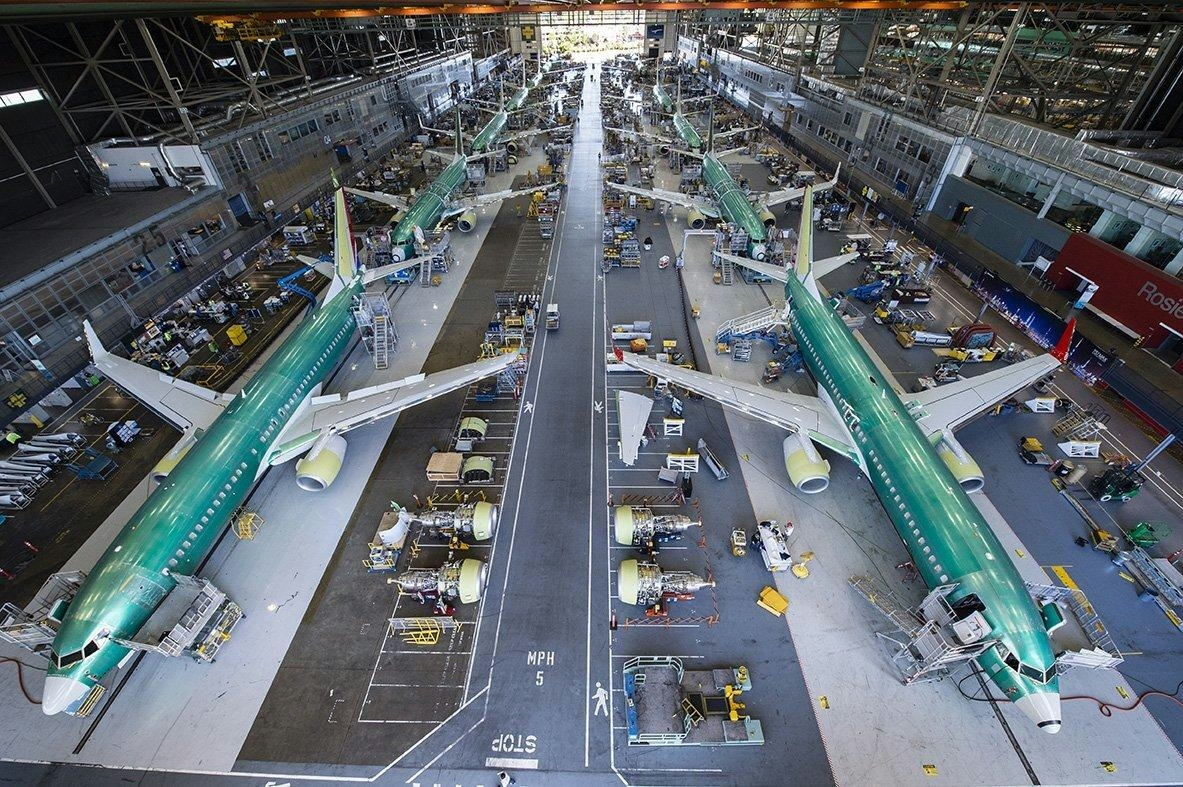
Boeing Surpasses Airbus in 2025 Aircraft Orders as Deliveries Reach Seven-Year High
In a notable shift in the aerospace industry, Boeing has overtaken Airbus in aircraft orders for the first time since 2018, signaling a significant development in the longstanding competition between the two manufacturers. In 2025, Boeing secured 1,173 net orders, surpassing Airbus’s 889 net orders and ending a seven-year period of Airbus dominance in order volumes. Boeing’s gross orders reached 1,175, compared to Airbus’s 1,000.
Strong Demand for Boeing’s 737 MAX and 787 Dreamliner
The surge in Boeing’s orders was primarily driven by the popularity of its 737 MAX family, which accounted for 591 new orders and 447 of the company’s total 600 deliveries. The fourth quarter alone saw the delivery of 117 737 MAX aircraft. Alaska Airlines emerged as a significant customer, placing its largest-ever order in December for 105 Boeing 737-10s. This order increased Alaska’s total 737 MAX order book to 174 aircraft, alongside an additional purchase of five 787 Dreamliners.
Boeing’s 787 Dreamliner series also experienced strong demand, particularly from Middle Eastern carriers such as Qatar Airways and Etihad Airways. Overall, Boeing received orders for 381 aircraft in the 787 family, with other notable customers including Turkish Airlines, British Airways, Alaska Airlines, and Gulf Air. The momentum continued into 2026, with Delta Airlines ordering 60 Dreamliners and Aviation Capital Group acquiring 50 737 MAX jets.
Delivery Figures and Industry Challenges
Despite Boeing’s impressive order performance, Airbus maintained its lead in deliveries, delivering 793 aircraft in 2025 compared to Boeing’s 600. Nevertheless, Boeing’s delivery total represents its highest output in seven years. Both companies continue to grapple with challenges such as engine and supply chain constraints, which have impeded production and delivery schedules. Airbus, for example, revised its delivery targets last year following a major recall of its A320 family due to concerns over solar radiation affecting flight control data.
Boeing has faced intense scrutiny following several high-profile incidents, including two fatal 737 MAX crashes in Indonesia and Ethiopia, as well as the June 2024 Air India crash. The company also encountered renewed criticism after a door plug incident on an Alaska Airlines 737 MAX. However, after extensive safety evaluations, the Federal Aviation Administration (FAA) expressed renewed confidence in Boeing, permitting an increase in production from 38 to 42 jets per month. The 737 MAX 10 recently advanced to the second phase of FAA certification after delays related to engine de-icing issues.
Market Response and Competitive Outlook
The market has shown interest in Boeing’s recovery, though industry analysts and competitors remain cautious about the company’s ability to sustain its delivery momentum. Rival manufacturers are focusing on strategies to reclaim market share, particularly in the highly competitive narrowbody segment where Boeing has recently made significant gains.
As Boeing and Airbus continue to navigate operational and regulatory challenges, the competition for market leadership in the global aviation industry remains intensely contested.

Etihad Airways Suspends Airbus A380 Flights on Key Route

Aditya Birla Group Seeks Approval for Aircraft Leasing in GIFT City

Qatar Airways Highlights Innovation and Connectivity at Arabian Travel Market 2026

Hong Kong's Five-Year Plan Includes Andrew Fan's Aircraft Parts Processing Hub Proposal

ACIA Aero Leasing Delivers ATR72-600 to Air Nostrum

RTX Appoints Jill Albertelli as Head of Pratt & Whitney

TAT Technologies Joins Beyond Aero Hydrogen Aircraft Program

AURAK Study Highlights Barriers to Air Taxi Adoption in Emerging Economies

Xiamen Air Selects Altitude for 787 Maintenance at Heathrow

Etihad and Swissport Extend Global Partnership
