
Trasforma le intuizioni dell’IA in azioni concrete

Tendenze
Categories
Can Malaysia become Southeast Asia’s top aircraft maintenance hub?
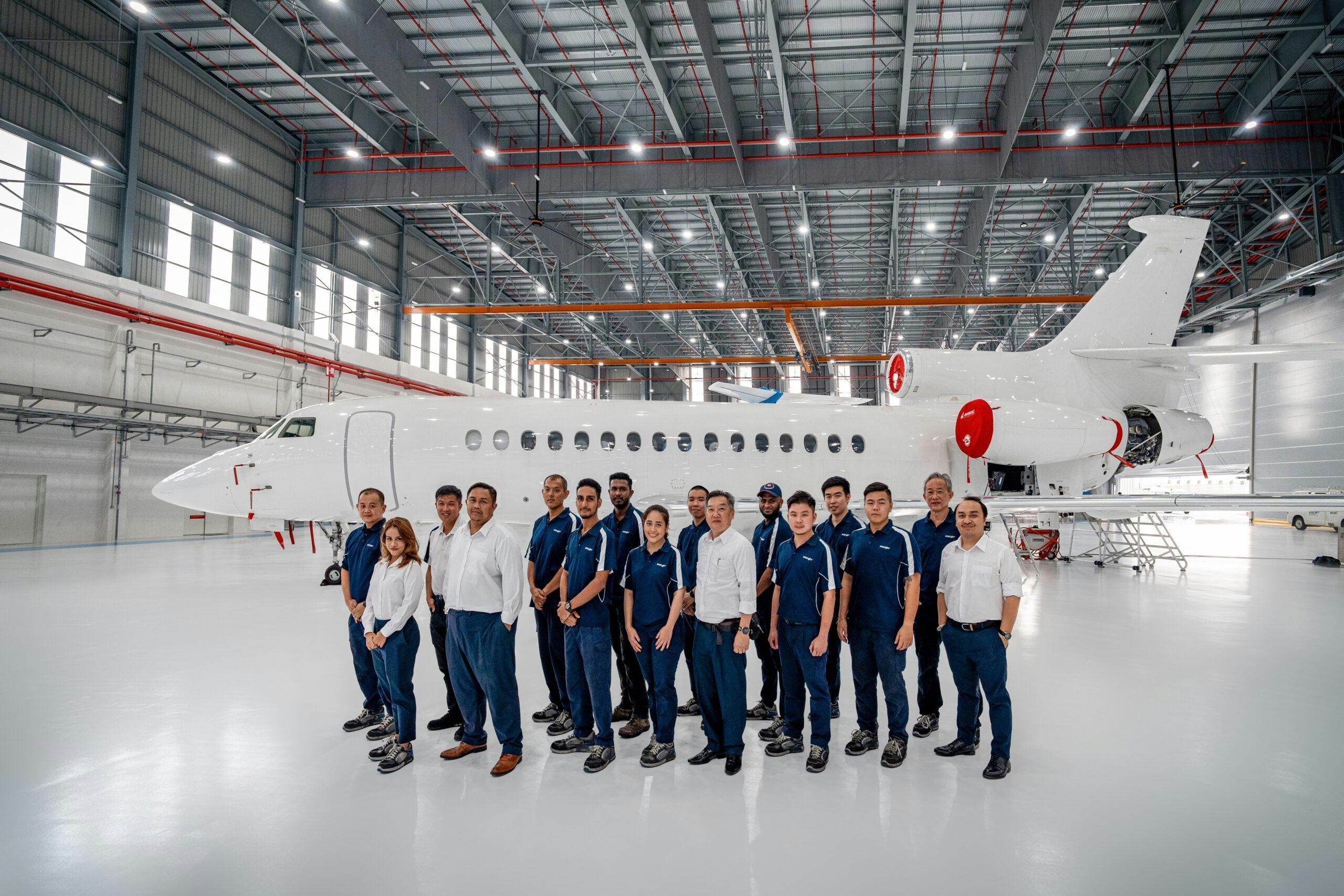
Malaysia’s Ambition to Lead Southeast Asia’s Aircraft Maintenance Sector
Malaysia aims to establish itself as Southeast Asia’s premier aircraft maintenance, repair, and overhaul (MRO) hub, setting an ambitious target to capture 50 percent of the regional MRO market by 2030. This goal, championed by Prime Minister Anwar Ibrahim’s administration, seeks to surpass Singapore, the current market leader. The aspiration aligns with the rapid growth of Southeast Asia’s aviation industry, which is among the fastest expanding globally. According to Mordor Intelligence, the region’s MRO sector is expected to grow at an annual rate of nearly 6 percent, reaching a market value of approximately US$7.6 billion by 2030, up from US$5.3 billion in 2024.
Currently, Malaysia holds the position of the second-largest MRO provider in Southeast Asia. However, industry experts emphasize that achieving the government’s target will require overcoming significant hurdles, particularly in expanding operational capacity. Mahesh Kumar, CEO of Asia Digital Engineering (ADE)—a subsidiary of Capital A, the parent company of AirAsia—highlighted the pressing need for additional infrastructure. ADE operates Malaysia’s largest MRO facility, a 380,000 square foot hangar at Kuala Lumpur International Airport capable of accommodating 16 aircraft. This facility is fully booked until late 2026 and presently services only 70 percent of AirAsia’s fleet, underscoring the urgent demand for increased capacity.
Challenges and Competitive Landscape
Malaysia’s pursuit of market leadership is complicated by intense competition from established regional players such as Singapore and Thailand. The competitive environment is further strained by rising tariffs and ongoing geopolitical tensions, which could impede Malaysia’s efforts to expand its market share. The MRO industry’s dependence on a resilient supply chain and strategic partnerships adds another layer of complexity. Recent strategic moves by airlines like AirAsia X and Air Mauritius to forge new alliances illustrate the critical role of collaboration in securing business and maintaining competitiveness.
Singapore’s ST Engineering exemplifies the proactive approach required to navigate these challenges, continuing to pursue growth despite tariff disruptions. This highlights the economic pressures that Malaysia must contend with as it seeks to elevate its position in the regional MRO market. To compete effectively, Malaysia will need to invest not only in expanding infrastructure and developing a skilled workforce but also in cultivating strategic partnerships and adapting to the evolving geopolitical and economic landscape.
As Malaysia accelerates efforts to scale up its facilities and workforce, its capacity to address these multifaceted challenges will be pivotal in determining whether it can fulfill its vision of becoming Southeast Asia’s leading aircraft maintenance hub by 2030.

Etihad Airways Suspends Airbus A380 Flights on Key Route

Aditya Birla Group Seeks Approval for Aircraft Leasing in GIFT City

Qatar Airways Highlights Innovation and Connectivity at Arabian Travel Market 2026

Hong Kong's Five-Year Plan Includes Andrew Fan's Aircraft Parts Processing Hub Proposal

ACIA Aero Leasing Delivers ATR72-600 to Air Nostrum

RTX Appoints Jill Albertelli as Head of Pratt & Whitney

TAT Technologies Joins Beyond Aero Hydrogen Aircraft Program

AURAK Study Highlights Barriers to Air Taxi Adoption in Emerging Economies

Xiamen Air Selects Altitude for 787 Maintenance at Heathrow

Etihad and Swissport Extend Global Partnership
