imabge

AeroGenie: il tuo copilota intelligente.

Chiedi qualsiasi cosa. Analizza tutto. Agisci all'istante.

Tendenze

Categories

China Suspends Boeing Orders Amid Ongoing Trade Dispute
June 5, 2025By ePlane AI
China Suspends Boeing Orders Amid Ongoing Trade Dispute
0
0
Boeing
China Trade
Aircraft Orders

China Suspends Boeing Orders Amid Ongoing Trade Dispute

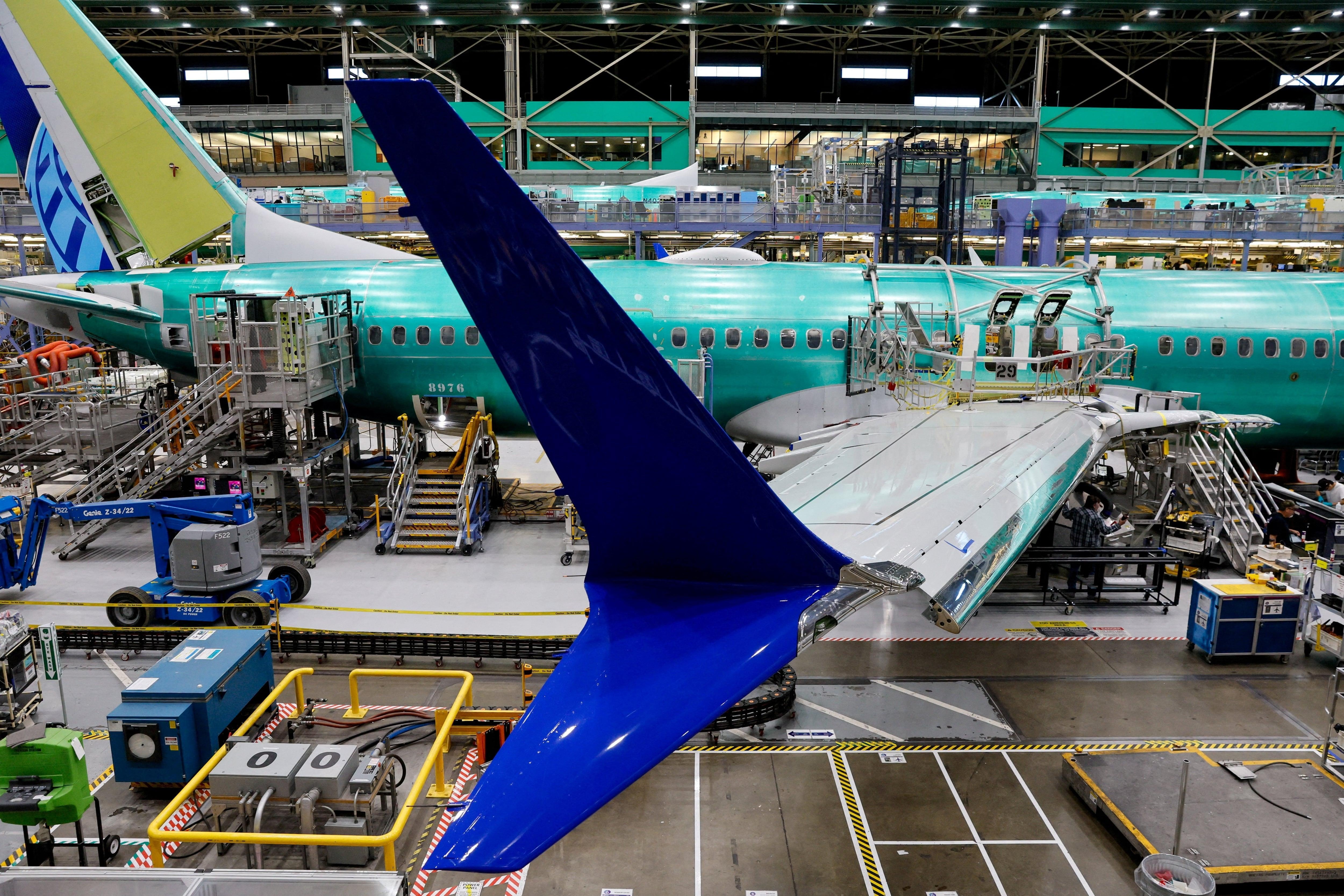
China has announced the suspension of new orders for Boeing aircraft, intensifying the ongoing trade tensions between the United States and China. This move marks a significant escalation in the dispute, which has already affected multiple sectors of bilateral trade and investment.

Impact on the Aviation Industry

The decision to halt Boeing orders comes amid a broader context of strained economic relations between the two countries. China, one of the largest markets for commercial aircraft, has been a critical customer for Boeing, with numerous deals signed over the past decade. The suspension not only disrupts Boeing’s sales pipeline but also signals potential challenges for the global aviation supply chain, given China’s role in manufacturing and assembling aircraft components.

Industry analysts suggest that this development could lead to delays in aircraft deliveries and increased costs for Boeing, as the company may need to seek alternative markets or adjust its production strategies. The move also underscores the vulnerability of multinational corporations to geopolitical disputes, particularly in sectors heavily reliant on international cooperation and trade.

Broader Trade Dispute Context

The suspension of Boeing orders is part of a series of retaliatory measures between the United States and China, which have included tariffs, restrictions on technology transfers, and limitations on investment. Both governments have expressed a willingness to negotiate, but progress has been slow and intermittent. The aviation sector, given its economic significance and symbolic value, has become a focal point in these negotiations.

China’s decision reflects its strategic use of economic leverage to influence trade discussions and assert its interests. It also highlights the complexities of the global trade environment, where political considerations increasingly intersect with commercial decisions. Observers note that the resolution of this dispute will require careful diplomacy and a balanced approach to address the concerns of both parties while minimizing disruption to global markets.

As the situation develops, stakeholders in the aviation industry and international trade will be closely monitoring further announcements and potential shifts in policy that could affect the trajectory of this high-stakes dispute.

More news
IATA Identifies Africa as the Most Expensive Region for Airline Operations

IATA Identifies Africa as the Most Expensive Region for Airline Operations

IATA Identifies Africa as the Most Expensive Region for Airline Operations The International Air Transport Association (IATA) has designated Africa as the most costly region worldwide for airline operations, attributing this status to elevated jet fuel prices, excessive taxes and fees, and a range of operational challenges that collectively drive up expenses for carriers across the continent. Cost Drivers and Operational Challenges IATA reports that African airlines incur unit costs nearly double the global average, standing at $140 per available tonne-kilometre compared to approximately $70 globally. A significant contributor to this disparity is the price of jet fuel, which is on average 17% higher in Africa. This premium is largely due to limited local refining capacity, inefficiencies in supply chains, and a heavy dependence on imported fuel. Consequently, fuel expenses can represent up to 40% of an African airline’s operating costs, markedly higher than the 25% typical in other regions. In addition to fuel costs, taxes and fees impose a substantial burden on African carriers. These charges account for between 12% and 15% of total costs, with statutory levies in some markets adding $60 to $80 to a base fare of $100. Such financial impositions effectively render air travel a luxury for many Africans. Airport and air navigation fees are also notably higher, exceeding those in other regions by 10 to 12%. Kamil Alawadhi, IATA’s Regional Vice President for Africa and the Middle East, emphasized these challenges during the IATA Global Media Day. He highlighted that African airlines operate on a razor-thin net profit margin of just 1.3%, the lowest worldwide. On a per-seat basis, African carriers generate only $1.20 in revenue, compared to a global average of $7.70. The operational difficulties are further compounded by aging fleets, with African aircraft averaging five years older than the global norm. This results in increased maintenance requirements and higher fuel consumption. The scarcity of local Maintenance, Repair, and Overhaul (MRO) facilities forces airlines to procure parts and services from overseas at a premium cost. Financial Constraints and Market Fragmentation A critical financial obstacle facing African airlines is the issue of blocked funds. As of late 2025, Africa accounts for approximately 79%—or $954 million—of the world’s total blocked airline funds. Government restrictions on converting local earnings into hard currency severely limit airlines’ ability to meet dollar-denominated expenses such as aircraft leases, fuel purchases, and insurance premiums. This situation creates significant cash flow risks and often compels airlines to reduce or suspend services to affected countries. Market fragmentation and protectionist policies further impede the development of the continent’s aviation sector. Only 19% of intra-African routes offer direct flights, forcing many passengers to transit through Europe or the Middle East to reach other African destinations. The majority of African airlines are small operators lacking the economies of scale necessary to compete effectively on a global stage. Initiatives and Future Outlook In response to these persistent challenges, airlines and regional associations are forming task forces and exploring collaborative strategies aimed at improving safety standards and reducing operational costs. IATA plans to introduce new initiatives focused on safety and efficiency at the upcoming Focus Africa event in April 2026, targeting the structural issues that have hindered the continent’s aviation progress. Despite forecasts projecting a 6.0% growth in air traffic across Africa in 2026—outpacing the global average—the industry continues to struggle with high costs and minimal profitability. This underscores the pressing need for coordinated reforms to unlock the sector’s full potential.
From Acquisition to Growth

From Acquisition to Growth

From Acquisition to Growth Sharon Green, Chief Executive of Unical Aviation, details how a recent acquisition combined with a pioneering blockchain partnership is reshaping the company’s strategy in aircraft recycling and asset management. Strategic Expansion Through Acquisition On September 5, 2024, Unical Aviation completed the acquisition of ecube Solutions, a specialist in aircraft storage, disassembly, and transition services operating across the UK, Spain, and the United States. This strategic acquisition significantly broadens Unical’s presence throughout Europe, the Middle East, and Africa, uniting two complementary capabilities into a consolidated force within the aviation reuse sector. The merged entity is now positioned to lead the industry with innovative initiatives, including A320neo teardowns, while accelerating the global delivery of critical aircraft parts. This acquisition occurs within a broader context where mergers and acquisitions are actively reshaping various industries, including aviation and insurance. Companies engaged in M&A must navigate a complex environment marked by evolving disclosure requirements, increased oversight of artificial intelligence, and geopolitical uncertainties. At the same time, they must prepare for renewed deal activity and market realignment. The growing role of private equity in M&A is particularly notable, bringing expertise in growth strategies and technology-driven business models. However, as demonstrated by regulatory scrutiny in cases such as Henkel’s attempted acquisition of Liquid Nails and the integration challenges faced by Omnicom and Interpublic, these transactions carry inherent risks. Potential pitfalls include the loss of key personnel, substantial merger-related costs, and intensified regulatory oversight. Innovation Through Blockchain Integration In tandem with the acquisition, Unical and ecube have partnered with Block Aero Technologies to register their next 100 aircraft recycling projects under the AFRA CAAC programme, employing blockchain-powered Registry as a Service. This cutting-edge approach generates secure digital product passports for every recovered component, providing unparalleled traceability from disassembly through to reuse in active fleets. The used serviceable materials (USM) sector has historically grappled with a lack of transparent and verifiable records for aircraft parts. The absence of a universally accessible and tamper-proof digital trail has often resulted in delays, additional inspections, or even abandoned transactions due to trust concerns. These inefficiencies have impeded maintenance schedules, increased costs, and diminished the resale value of valuable components. Blockchain technology offers a direct solution to these challenges by establishing an immutable, real-time ledger accessible to all stakeholders. This system serves as a trusted source of truth for component provenance, streamlining compliance with Civil Aviation Administration of China (CAAC) regulations, enhancing operational efficiency, and providing customers worldwide with instant visibility into part histories through an open registry portal. By embedding blockchain technology into its circular economy strategy, Unical is setting a new benchmark for sustainability, transparency, and value recovery in aviation. The integration of secure digital records with physical asset reuse not only bolsters customer confidence and regulatory compliance but also underscores Unical’s commitment to innovation throughout the aviation lifecycle. As M&A activity continues to transform the sector, Unical’s approach exemplifies both the opportunities and complexities companies face when pursuing growth through strategic partnerships and technological advancement.
UAE Airports Adopt AI to Manage Rising Passenger Traffic

UAE Airports Adopt AI to Manage Rising Passenger Traffic

UAE Airports Embrace Artificial Intelligence to Address Rising Passenger Traffic Airports across the United Arab Emirates are increasingly turning to artificial intelligence (AI) to manage surging passenger volumes, enhance operational efficiency, and reduce costs. This strategic shift comes amid record-breaking passenger numbers and evolving industry demands. However, experts caution that the integration of AI faces significant hurdles, including fragmented legacy systems and workforce adaptation challenges. Advancing AI Integration in UAE Airports In a recent development, Dubai Airports Company announced the deployment of an AI-powered turnaround solution at Dubai International Airport (DXB) in collaboration with Assaia, a technology provider with a presence in major global hubs such as New York JFK, Rome Fiumicino, and Seattle-Tacoma. This initiative aims to streamline aircraft movements and improve overall operational efficiency. Similarly, Abu Dhabi Airports has partnered with technology firm SITA to explore AI-driven management systems at Zayed Airport. The objective is to anticipate operational disruptions and optimize resource allocation, thereby enhancing airport performance. These initiatives coincide with a notable increase in passenger traffic. DXB recorded 24 million passengers in the third quarter of 2025, marking a 2% year-on-year growth. Meanwhile, Abu Dhabi Airports processed nearly 16 million passengers in the first half of 2025, reflecting a 13% increase compared to the previous year. Potential Benefits and Industry Challenges AI applications in airport operations are expected to deliver substantial efficiency improvements across various domains, including demand forecasting, biometric identification, autonomous baggage handling, and terminal maintenance. Usman Tahir, head of aviation at Roland Berger Middle East, emphasized that AI can significantly reduce gate taxi-in times, leading to lower fuel consumption and fewer delays. Supporting this, a Synaptic Aviation report highlighted that AI-driven gate readiness tracking reduced delays by 21% at a US airport, generating savings exceeding $40,000 per gate annually. Sal Salman, president of Synaptic Aviation, remarked that these operational efficiencies can be realized immediately without necessitating major infrastructure overhauls. Despite these promising prospects, global readiness for AI adoption remains limited. According to Roland Berger, only one-third of airport executives worldwide feel adequately prepared to implement AI solutions. In the Middle East and Africa, none of the surveyed executives rated their airports as having “very high readiness” for digital transformation. Leo Levit, chairman of ONVIF, pointed out that the absence of unified data models and shared standards complicates the integration of AI with existing legacy systems. Workforce Implications and Market Dynamics The transition to AI also presents significant workforce challenges. The UAE’s AI Strategy 2031 projects that nearly half of the national workforce will require upskilling by 2030 to keep pace with technological advancements. As AI automates an increasing number of airport functions, up to 30% of jobs could be at risk, underscoring the urgency of comprehensive retraining programs. Investor interest in AI infrastructure has surged despite concerns over inflated valuations and the possibility of an AI bubble. Globally, technology giants such as Alphabet, Meta, and Oracle are intensifying their AI investments to maintain competitive advantage. The UAE’s innovative approach to AI, exemplified by projects like AI-powered racecars for autonomous driving technology, is establishing new standards in safety, governance, and innovation. This leadership position may influence global benchmarks and encourage other nations to adopt similarly advanced AI strategies. As UAE airports continue to integrate AI technologies, the sector confronts a complex landscape of opportunities and challenges. The successful navigation of these developments has the potential to reshape the global aviation industry.
Spain’s Leading Airlines and Hotels Use Google Flights AI to Enhance Holiday Offers

Spain’s Leading Airlines and Hotels Use Google Flights AI to Enhance Holiday Offers

Spain’s Leading Airlines and Hotels Use Google Flights AI to Enhance Holiday Offers Spain remains a premier destination for travelers worldwide, celebrated for its rich culture, breathtaking landscapes, and renowned cuisine. As the holiday season approaches, the country’s foremost airlines and hotels are increasingly adopting Google Flights’ advanced artificial intelligence (AI) tools to provide travelers with exceptional savings and a more seamless booking experience. AI-Powered Travel Planning and Accommodation Google Flights has revolutionized the process of searching and booking flights through its latest AI-driven features. These tools enable users to find optimal deals using natural language queries, such as “cheap flights to Spain for a week-long vacation,” thereby eliminating the need for exhaustive manual searches. This innovation benefits travelers by simplifying their planning process and allows airlines including Iberia, Vueling, and Air Europa to reach a wider audience seeking affordable holiday options. By integrating with Google’s enhanced flight offerings, these airlines can showcase competitive fares to travelers departing from major hubs such as New York, London, and Madrid. The platform’s flexibility in adjusting travel dates and its side-by-side airline comparisons empower users to select tickets that align with both their budgets and schedules. Similarly, Spain’s leading hotels are leveraging Google’s AI-driven tools to attract holidaymakers. Real-time pricing updates and personalized accommodation recommendations enable travelers to uncover exclusive discounts and tailored offers, whether they are seeking a luxurious stay in Barcelona or a boutique experience in Madrid. These AI enhancements are broadening access to dream vacations by making them more affordable and accessible to a diverse range of visitors. Industry Impact and Emerging Challenges The adoption of Google Flights’ AI capabilities by Spain’s airlines and hotels is reshaping the travel industry landscape. Google’s agentic AI technology aggregates offers and provides real-time pricing, a development that could potentially redirect traffic away from established online travel agencies such as Booking.com and Expedia. While Google emphasizes that it does not intend to become a full-fledged online travel agency—stressing that bookings continue to be completed through partner platforms—this shift has raised concerns among competitors regarding increased competition and evolving distribution channels. Furthermore, the introduction of agentic travel booking forms part of Google’s broader strategy to enhance its AI offerings. Despite these advancements, consumer trust in fully autonomous AI travel booking remains cautious. To mitigate these concerns, Google is implementing these features gradually and in close collaboration with industry partners, ensuring that travelers maintain control and confidence throughout the booking process. As Spain’s airlines and hotels continue to integrate AI-powered solutions, travelers stand to benefit from more personalized, efficient, and cost-effective holiday planning. However, the expanding role of AI in travel also prompts important considerations about competition, consumer trust, and the future dynamics of online travel agencies. For now, those planning a trip to Spain can utilize these cutting-edge tools to secure the best deals, making their dream vacations more attainable than ever.
Vietnam Grounds 28 Aircraft Amid Global Engine Shortage

Vietnam Grounds 28 Aircraft Amid Global Engine Shortage

Vietnam Grounds 28 Aircraft Amid Global Engine Shortage Operational Impact of Engine Supply Constraints HANOI — Vietnam’s aviation industry is grappling with significant operational disruptions as a global shortage of aircraft engines has compelled the grounding of 28 commercial planes. This development stems from worldwide recall and repair directives issued by engine manufacturer Pratt & Whitney, illustrating the extensive repercussions of ongoing engine supply challenges on both Vietnamese and international airlines. The Civil Aviation Authority of Vietnam (CAAV) reports that the affected fleet comprises 24 Airbus A321neo, three Airbus A350, and one Airbus A320ceo aircraft. These grounded planes represent 13.1% of the country’s total commercial fleet, with 28 out of 213 operational aircraft currently out of service. Although this figure is five fewer than the same period last year, signaling some improvement, the shortage continues to disrupt airline operations and scheduling across the sector. Industry Dynamics and Market Responses The persistent scarcity of engines has intensified demand for maintenance, repair, and operations (MRO) services, as airlines face constraints in acquiring new aircraft and contend with aging fleets. Industry analysts highlight that this environment is heightening competition among engine manufacturers, which may lead to increased costs and pressure on airline profitability. Airlines are consequently exposed to greater operational disruptions, financial strain, and scheduling delays as they adjust to reduced fleet availability. In response to these challenges, engine manufacturers and industry players are pursuing strategic partnerships, accelerating production efforts, and investing in technological innovations to secure market share and address the surging demand for engine components and services. Vietnam’s Aviation Network and Passenger Traffic Despite these operational hurdles, Vietnamese carriers continue to maintain extensive domestic and international networks. Core routes connect Hà Nội (HAN) and Ho Chi Minh City (SGN), the nation’s principal aviation hubs, with nearly 50 domestic routes linking 20 airports nationwide. On the international front, Vietnamese airlines operate 113 routes to 24 countries and territories, while foreign carriers from 30 countries serve Vietnam through 142 regular international routes, underscoring the country’s strong global air connectivity. As of December 11, 2025, Vietnam’s registered aircraft fleet comprises 262 units, including 235 fixed-wing aircraft and 27 helicopters. Of these, 213 are engaged in commercial operations, with the remainder serving general aviation and specialized functions. Passenger traffic data reflects resilience amid the challenges. International air passenger volume is projected at 46.9 million for the year, marking a 13.3% increase over 2024. Vietnamese airlines transported 19.4 million international passengers, a 5.2% rise year-on-year, accounting for 41.4% of total international traffic. Domestic passenger numbers also grew, reaching 36.6 million travelers, a 7.5% increase from the previous year. Overall, total passenger volume expanded by 6.7%, while cargo volume rose by 4.6%. The ongoing engine shortage underscores the necessity for strategic industry responses and sustained investment in fleet maintenance and innovation to support Vietnam’s aviation growth and operational reliability.
United Airlines Flight Returns to Dulles After Engine Failure on Takeoff

United Airlines Flight Returns to Dulles After Engine Failure on Takeoff

United Airlines Flight Returns to Dulles Following Engine Failure on Takeoff United Airlines Flight 803 was compelled to return to Washington Dulles International Airport on Thursday after experiencing an engine failure shortly after departure. The Boeing 777, en route to Tokyo, was carrying 275 passengers and 15 crew members at the time of the incident. Incident and Response The Federal Aviation Administration (FAA) confirmed the engine failure and has initiated a formal investigation into the circumstances surrounding the event. Following the malfunction, emergency crews responded promptly to reports of smoke and fire near the runway. The fire was swiftly extinguished, and the aircraft was able to land safely back at Dulles without any injuries reported among those on board. Airline Statement and Next Steps United Airlines announced that it is arranging for an alternative aircraft to continue the journey to Tokyo later the same day. The airline emphasized that the safety of its passengers and crew remains its highest priority and expressed gratitude to the emergency responders for their rapid and effective action. The FAA will maintain its investigation to determine the cause of the engine failure.
United Airlines flight makes emergency landing at Dulles after engine failure

United Airlines flight makes emergency landing at Dulles after engine failure

United Airlines Flight Makes Emergency Landing at Dulles Following Engine Failure A United Airlines flight destined for Tokyo was compelled to execute an emergency landing at Washington Dulles International Airport (IAD) on Saturday afternoon after experiencing engine failure shortly after takeoff, according to statements from the airline and federal authorities. Incident Details and Response United Airlines Flight 803, operated by a Boeing 777-200ER and carrying 275 passengers alongside 15 crew members, departed from Dulles but soon reported a loss of power in one of its engines. The Federal Aviation Administration (FAA) confirmed that the aircraft safely returned to the airport, landing without further complications at approximately 1:20 p.m. local time on December 13. United Airlines emphasized that no injuries were reported and expressed gratitude toward its flight crew and the teams at Washington Dulles for their efforts in ensuring the safety of all onboard. During the aircraft’s departure, airport officials observed that the plane ignited brush near the runway around 12:20 p.m., resulting in several small fires. Fire crews from the airport, with support from Loudoun County Fire and Rescue, responded promptly and successfully contained the flames without further incident. Passenger Support and Ongoing Investigation In the aftermath of the emergency landing, United Airlines temporarily closed a United Club lounge at Dulles to enable staff to assist affected passengers with rebooking and travel arrangements. The airline is coordinating the deployment of an alternative aircraft to operate the flight to Tokyo later the same day. The FAA has announced it will conduct a thorough investigation into the incident. United Airlines reaffirmed its commitment to passenger safety and extended thanks to both its crew and airport personnel for their swift and effective response. Further updates will be provided as additional information becomes available.
The Impact of the New Air Force One’s Delayed 2028 Arrival on Aviation and Travel

The Impact of the New Air Force One’s Delayed 2028 Arrival on Aviation and Travel

The Impact of the New Air Force One’s Delayed 2028 Arrival on Aviation and Travel Air Force One has long symbolized American power, technological innovation, and aviation excellence. For aviation enthusiasts and global travelers alike, the aircraft represents the pinnacle of airborne luxury and cutting-edge engineering. The forthcoming generation of Air Force One, designated the VC-25B and based on Boeing’s 747-8 platform, is expected to raise these standards further with advanced communications, extended range, and enhanced safety features. Delivery Delayed Until 2028 The arrival of the new Air Force One has been postponed once again, with officials confirming that the first of the two aircraft will not be delivered until mid-2028, marking a four-year delay from the original schedule. This setback highlights the inherent complexities involved in custom aircraft programs and has led the U.S. Air Force to explore interim solutions, including the potential use of a Boeing 747 previously owned by Qatar. The delay has attracted criticism, notably from former President Donald Trump, who publicly expressed dissatisfaction with Boeing’s management of the project. The postponement coincides with Lufthansa’s recent sale of two Boeing 747-8s, a development that may be connected to the ongoing challenges faced by the Air Force One program. Understanding the Significance of the Delay While the delay primarily affects the presidential fleet, it offers insight into the intricate nature of bespoke aviation. Unlike commercial airliners, which generally adhere to predictable production timelines, specialized government aircraft such as Air Force One require extensive modifications and rigorous testing. These projects demand patience and meticulous planning, reflecting the complexities inherent in long-haul travel and high-stakes aviation endeavors. Several factors have contributed to the revised timeline. The transformation of the Boeing 747-8 into a secure presidential aircraft involves significant structural and technological modifications. The installation and testing of secure, global communication systems is a delicate and time-intensive process. Additionally, integrating sensitive defense systems necessitates high-level clearances and thorough vetting of personnel, further complicating the schedule. Features of the Next Air Force One The VC-25B is designed to serve as a flying command center, equipped with capabilities that include extended range for intercontinental flights without frequent stops, secure global communication systems to ensure uninterrupted connectivity worldwide, and advanced defensive measures that make it one of the safest aircraft ever constructed. Its spacious interiors will accommodate office, medical, and operational spaces, enabling continuous presidential functionality during flight. For aviation enthusiasts, these innovations often presage trends that eventually permeate commercial aviation, such as improved fuel efficiency and advanced onboard technology. Broader Implications for Aviation and Travel Although the delay of Air Force One does not directly affect commercial air travel, it underscores the ongoing global process of aviation innovation. The challenges and breakthroughs encountered in such high-profile projects frequently influence the future of commercial aviation, shaping passenger comfort, safety standards, and technological advancements. For travelers and aviation aficionados, the development of Air Force One remains a compelling example of the complexity and ambition that propel the industry forward.
United Airlines Restarts Controversial AI Scheduling for Flight Attendants

United Airlines Restarts Controversial AI Scheduling for Flight Attendants

United Airlines Restarts Controversial AI Scheduling for Flight Attendants United Airlines has reignited tensions with its flight attendants by announcing the reintroduction of an artificial intelligence-driven scheduling system, months after suspending the initiative amid union opposition. The Chicago-based carrier informed its flight attendants via email that it has initiated a “joint process with AFA to modernize bidding in a way that gives flight attendants more say in their schedules and more flexibility around what they value most.” This development coincides with renewed contract negotiations between United and the Association of Flight Attendants (AFA-CWA), following the union’s rejection of a tentative agreement in July. The Preferential Bidding System and Union Concerns The proposed scheduling tool, known as the Preferential Bidding System (PBS), is already employed by several major airlines worldwide. PBS enables crew members to submit detailed monthly preferences regarding destinations, layovers, days off, and aircraft types. While designed to better accommodate individual lifestyles, the system ultimately prioritizes the airline’s operational requirements, which can supersede personal preferences. Traditionally, United’s flight attendants have relied on a seniority-based line bidding system, selecting from pre-constructed trips in order of seniority. This approach has been praised for its transparency and predictability, particularly benefiting less-senior employees who can realistically assess available trips. The union has consistently opposed the PBS, arguing that it diminishes transparency and risks disadvantaging junior staff. Industry Trends and Competitive Pressures United’s renewed push for AI-driven scheduling reflects broader trends within the airline industry, where companies are increasingly adopting AI and automation not only in crew scheduling but also in pricing strategies. This technological shift has attracted regulatory scrutiny and raised concerns about surveillance and personalized pricing models. Notably, major carriers such as Lufthansa Group and Tripadvisor have attributed significant workforce reductions to AI and automation, intensifying debates over job security and labor relations. The competitive environment among U.S. airlines is also heating up. American Airlines, the market leader, has responded assertively to United’s initiatives. CEO Robert Isom recently underscored American’s strong market position and successful loyalty program in response to remarks from United CEO Scott Kirby. These exchanges underscore the high stakes as airlines leverage technology to secure operational efficiencies and financial gains. Broader Implications of AI Adoption Beyond aviation, the AI sector faces its own challenges. Alphabet CEO Sundar Pichai has cautioned against “irrationality” in the current surge of trillion-dollar AI investments, warning that overinvestment could have far-reaching consequences across multiple industries, including aviation. As United moves forward with its plans to modernize scheduling, it must carefully balance the pursuit of operational efficiency with the concerns of its workforce. The outcome of ongoing negotiations with the flight attendants’ union will likely influence how airlines integrate automation technologies while maintaining constructive labor relations in an increasingly AI-driven industry.
Joby Aviation’s Air Taxis Poised to Change Urban Travel and Tourism

Joby Aviation’s Air Taxis Poised to Change Urban Travel and Tourism

Joby Aviation’s Air Taxis Set to Transform Urban Travel and Tourism in the Middle East A new chapter in regional tourism is unfolding as Joby Aviation, a leader in electric vertical takeoff and landing (eVTOL) technology, prepares to expand its air taxi services across the Middle East. These innovative air taxis are poised to offer fast, environmentally friendly, and visually captivating travel options between major cities and renowned tourist destinations, potentially redefining how visitors experience the United Arab Emirates, Saudi Arabia, and neighboring countries. Advancing Sustainable and Efficient Urban Air Mobility Joby Aviation’s eVTOL aircraft combine the agility of helicopters with the efficiency of fixed-wing planes, operating with minimal noise and zero emissions during flight. This positions them as a sustainable alternative to conventional transportation methods. Regional governments are collaborating closely with aviation regulators to ensure that these services adhere to rigorous safety and operational standards. For tourists, the introduction of air taxis promises smoother and faster transfers between key attractions, eliminating the delays caused by urban congestion. Passengers will have the opportunity to enjoy panoramic aerial views, transforming routine travel into an immersive sightseeing experience. By soaring above city traffic, travelers can save valuable time while gaining unique perspectives of urban landscapes and natural surroundings. Revolutionizing Urban Mobility and Enhancing Tourism Experiences In metropolitan hubs such as Dubai and Riyadh, where traffic congestion often hampers mobility, air taxis could dramatically reduce travel times from hours to mere minutes. The development of vertiports—specialized takeoff and landing facilities—is underway, with locations strategically chosen near major tourist sites, luxury hotels, and transportation centers. This infrastructure will facilitate seamless connections, for example, enabling journeys from the Dubai Mall to upscale resorts while offering sweeping views of the city skyline and coastline. Beyond efficiency, these flights are designed to provide memorable experiences. Tourists will be able to admire iconic landmarks such as the Burj Khalifa or the expansive desert vistas surrounding Riyadh from vantage points inaccessible by traditional sightseeing methods. This blend of practicality and spectacle is expected to enhance the appeal of urban air mobility as a new mode of travel. Navigating Challenges and Market Dynamics Despite significant progress, Joby Aviation faces considerable challenges in realizing its vision. Regulatory approval processes, safety assurances, and technological development remain critical hurdles to widespread adoption. Investor sentiment is mixed, reflecting both optimism about the potential of urban air mobility and caution regarding its commercial viability. The competitive landscape is intensifying, exemplified by legal disputes such as Joby’s lawsuit against rival Archer Aviation, alongside Archer’s strategic efforts to forge partnerships and expand its market presence. To strengthen its position, Joby is pursuing a vertically integrated approach, encompassing acquisitions and pilot training initiatives aimed at building a comprehensive ecosystem for eVTOL operations. Preparing for the Future of Urban Air Travel Governments throughout the Middle East are actively laying the groundwork for integrating air taxis into existing urban transport networks. Investments in infrastructure, the establishment of safety regulations, and close cooperation with companies like Joby Aviation form part of broader strategies to boost tourism, alleviate congestion, and reduce carbon emissions. Initial air taxi services are expected to launch on select routes, with gradual expansion contingent on infrastructure development and certification milestones. For travelers, this innovation promises a secure, regulated, and exciting new way to explore the region, combining the convenience of air travel with unparalleled aerial views of iconic sights. As the sector evolves, tourists are advised to follow updates from official tourism and aviation authorities to stay informed about service availability and safety guidelines.
Ask AeroGenie










