Immagine

AeroGenie — Il tuo copilota intelligente.

Chiedi qualsiasi cosa. Analizza tutto. Agisci immediatamente.

Tendenze

Categories

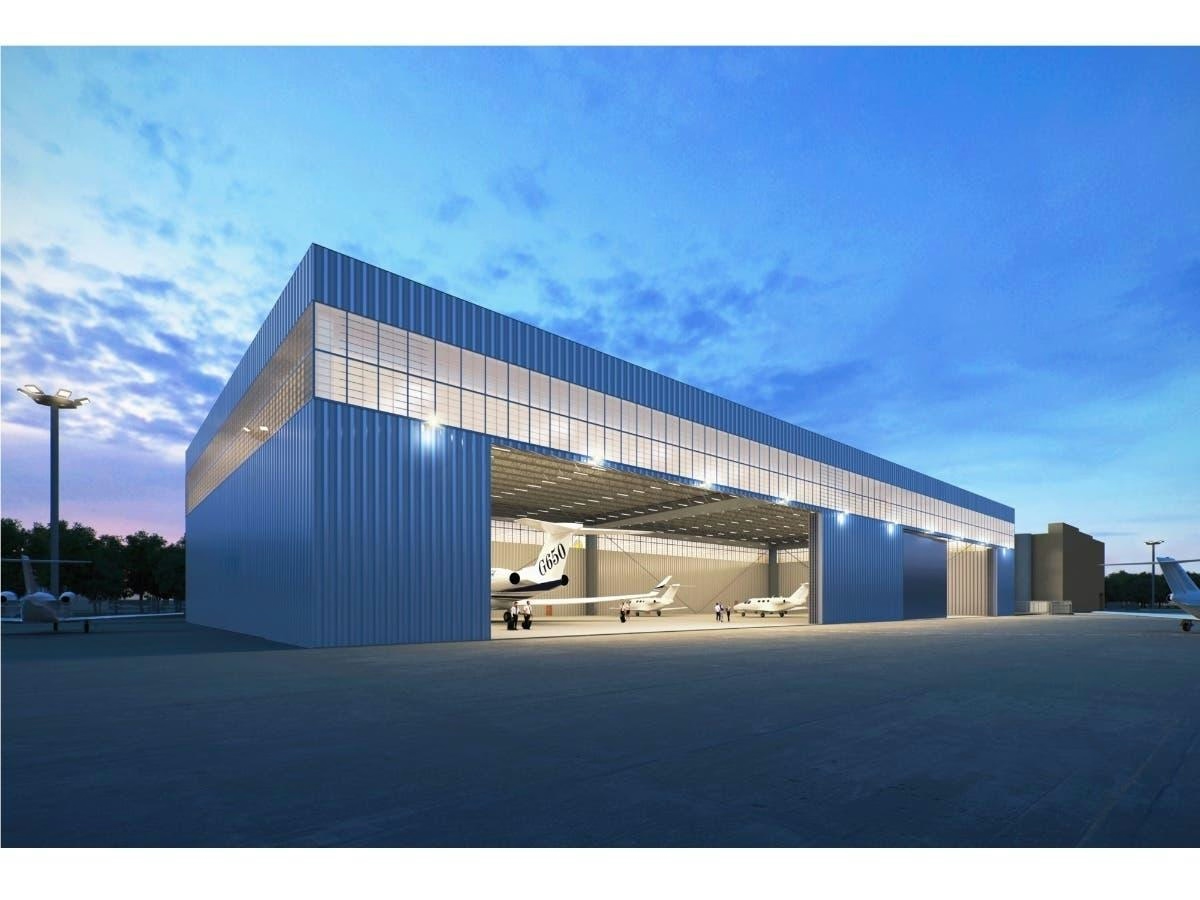
Community Responds to Proposed Jet Hangar at Farmingdale Republic Airport
March 12, 2026By ePlane AI
Community Responds to Proposed Jet Hangar at Farmingdale Republic Airport
0
0
Farmingdale Republic Airport
Jet Hangar Development
SR Aviation Infrastructure

Community Divided Over Proposed Jet Hangar at Farmingdale Republic Airport

FARMINGDALE, NY — Plans to develop new jet hangar facilities at Farmingdale Republic Airport have elicited a range of responses from the local community, highlighting concerns over environmental impact, regulatory challenges, and the future of private aviation infrastructure in the region.

Development Plans and Industry Context

SR Aviation Infrastructure (SRAI), a real estate investment and development firm with offices in New York and Nashville, recently acquired 50 acres of developable land at Republic Airport. Under the leadership of President Jonathon Reeser, the company intends to construct hangars featuring 28-foot door heights to accommodate modern aircraft. Construction is anticipated to commence later this year. The new facilities, branded as SRAI Farmingdale, will be available for lease to corporate flight departments, government agencies, and private aircraft owners.

Reeser emphasized that the project seeks to address the significant demand for private aviation infrastructure in the greater New York area, which he described as “one of the strongest and most supply-constrained private aviation markets in the U.S.” The development aims to enhance capacity and service options for business aviation in a region where such facilities are limited.

Community Concerns and Environmental Considerations

Despite the potential economic benefits, the proposal has raised apprehension among residents living near the airport. Nancy Cypser, a Farmingdale resident for over five decades and president of both the Woodland Civic Association and the Long Island Civic Alliance, expressed concerns about increased noise pollution and air traffic. She noted, “No matter who develops the land, any additional air traffic is of concern to anyone living under the flight paths. We expect development of the five parcels now under the control of SRAI to increase the disruption and noise we already experience.”

Cypser also questioned the developers’ experience, pointing out that Somera Road, SRAI’s parent company, has been in operation for only ten years, while SRAI itself was established just 15 months ago.

Republic Airport is among the busiest in New York State, recording 15,203 total operations in January alone—approximately 2,000 more than Long Island MacArthur Airport, according to Federal Aviation Administration data. Unlike major airports such as JFK and LaGuardia, which are situated near water, Republic Airport is surrounded by residential neighborhoods, intensifying concerns about noise, air pollution, and traffic congestion.

The proposed hangar project is expected to face regulatory scrutiny and environmental impact assessments due to its proximity to homes and the potential for increased emissions. These challenges reflect broader national trends, where airport expansions often prompt rigorous reviews and community opposition.

Market Implications and Future Outlook

The addition of new hangar space at Republic Airport could alter the competitive landscape for business aviation services in the region. Increased capacity may lead to intensified competition among service providers, potentially resulting in either higher prices or improved offerings. Similar dynamics have been observed at other airports, including North Carolina Genav Airport and Dallas Love Field, where expansions have spurred facility upgrades and competitive responses.

While some community members welcome the project for its economic prospects and the opportunity to see more jets at the airport, others remain cautious. As the development progresses, balancing economic growth with community impact will continue to be a central issue in the ongoing dialogue surrounding the future of Farmingdale Republic Airport.

More news
Electric air taxis could transform travel in growing cities like Atlanta

Electric air taxis could transform travel in growing cities like Atlanta

Electric Air Taxis Poised to Revolutionize Urban Travel in Cities Like Atlanta The landscape of urban transportation in rapidly growing and congested cities such as Atlanta is on the cusp of a significant transformation. Electric air taxis—vehicles capable of vertical takeoff and landing (eVTOL) and designed to fly like airplanes—are being developed to alleviate ground traffic congestion by offering an aerial alternative for commuters. At VertiCon, an aviation conference held at the Georgia World Congress Center from March 10 to 12, leading companies in the eVTOL sector presented their visions for how this emerging technology could reshape metropolitan travel. Emerging Technologies and Market Timelines Executives from Eve Air Mobility revealed that their eVTOL aircraft could begin operating in U.S. cities as early as late 2027, contingent upon regulatory approval. Megha Bhatia, Chief Commercial Officer at Eve, emphasized that these aircraft are specifically engineered for urban environments, with cities like Atlanta identified as prime candidates due to their chronic congestion challenges. Similarly, Vertical Aerospace anticipates that its VX4 model will first secure certification in Europe, with plans to enter the U.S. market around 2029. Michael Cervenka, Chief Commercial and Strategy Officer at Vertical Aerospace, outlined that both companies envision their aircraft serving a variety of roles, including passenger transport, cargo delivery, and emergency response, typically over short distances ranging from 20 to 60 miles. One of the most compelling use cases is the connection between downtown Atlanta and Hartsfield-Jackson Atlanta International Airport. During peak traffic hours, this journey can exceed an hour by car, but developers suggest that eVTOLs could reduce travel time to between 10 and 20 minutes. The VX4, designed to cruise at approximately 150 miles per hour, exemplifies the potential for rapid transit linking airports with business districts. Cervenka noted, “That airport-to-city connection is really the dominant use case we see around the world.” Regulatory Hurdles and Safety Considerations Despite the promising outlook, the path to widespread adoption of electric air taxis faces significant regulatory and technical challenges. The certification process for eVTOL aircraft is stringent, requiring safety standards on par with those of commercial airliners. Vertical Aerospace plans to conduct extensive flight testing throughout 2027 and 2028 before seeking approval from European authorities and validation from the Federal Aviation Administration (FAA). Both Eve and Vertical Aerospace emphasize the incorporation of multiple redundant safety systems. For instance, the VX4 is equipped with eight propellers powered by multiple motors, eight independent batteries, three flight control computers, and backup structural components. Eve’s aircraft similarly features redundant systems in both rotors and propulsion to ensure passenger safety. Noise pollution is another critical consideration for urban deployment. Developers assert that electric air taxis are substantially quieter than traditional helicopters. Cervenka highlighted that the VX4 produces noise comparable to a loud conversation during takeoff and landing, with noise levels decreasing further during forward flight. Industry Challenges and Market Momentum The industry also contends with complex legal and regulatory challenges. Recent disputes, such as the countersuit between Archer and Joby Aviation over alleged undisclosed Chinese affiliations and government funding, underscore the competitive and intricate nature of the emerging market. Additionally, concerns remain regarding energy efficiency and the integration of eVTOLs into already crowded urban airspace. Nonetheless, momentum is building. The FAA has approved eight pilot programs across 26 states to test electric aircraft, including urban air taxis. Companies such as Archer, Joby, Eve, and Vertical Aerospace are actively competing to lead this nascent market, with the shared goal of making airborne commuting a practical reality for cities like Atlanta in the near future.
Cirrus SR22 Crashes Due to Fuel Contamination

Cirrus SR22 Crashes Due to Fuel Contamination

Cirrus SR22 Crash Attributed to Fuel Contamination Raises Safety Concerns A Cirrus SR22 aircraft crashed near Whitethorn, California, following a total engine power loss linked to fuel contamination, according to preliminary investigations. The flight had departed from Shelter Cove Airport (0Q5) and was en route to Santa Rosa, California, when the incident occurred. Sequence of Events and Pilot Response As the aircraft ascended through 2,600 feet mean sea level, the engine began to sputter before losing power entirely. The pilot attempted multiple corrective actions, including switching fuel tanks, activating the electric boost pump, and adjusting the mixture and throttle controls, but these efforts failed to restore engine function. With no engine power, the pilot deployed the Cirrus Airframe Parachute System (CAPS), enabling the aircraft to descend under canopy into densely wooded terrain. The plane struck tree limbs during descent and ultimately came to rest inverted, sustaining significant damage to the fuselage and empennage. The pilot and one passenger sustained minor injuries, while a second passenger was unharmed. Investigators noted that the pilot had not flown the aircraft frequently in the months prior to the accident. On the day of the flight, the pilot conducted a preflight inspection and visually confirmed sufficient fuel levels but could not recall whether a fuel sample was taken. Recovery teams observed fuel leaking from the wreckage, recovering approximately 26 gallons from the left wing, with no fuel recovered from the right wing. Technical Findings and Safety Implications The aircraft was equipped with Avidyne primary and multi-function flight displays, which were analyzed by the National Transportation Safety Board (NTSB). Data revealed normal climb performance until a rapid decline in engine speed and fuel flow began at 2,376 feet. By the final recorded data point, engine speed had dropped to 1,310 rpm and fuel flow to 0.4 gallons per hour. Post-accident examinations confirmed flight control continuity and proper operation of throttle, mixture, and propeller controls. The fuel system was visually inspected, establishing continuity from the wing roots to the fuel injectors. The airframe fuel strainer was found free of fluid and debris. Although the engine was separated from its mount, no external mechanical damage was identified. This incident has renewed scrutiny from aviation authorities concerning the risks posed by fuel contamination in general aviation. Regulatory bodies are expected to intensify safety investigations, which may result in increased insurance premiums and a potential decline in Cirrus SR22 sales. Competitors such as Epic, Pilatus, and Daher have responded to market concerns by enhancing safety features and implementing stricter quality control measures across their aircraft lines. Industry Response and Technological Advancements In response to ongoing safety challenges, Cirrus has introduced the G7+ versions of the SR20, SR22, and SR22T models, now equipped with emergency autoland capability. These advancements reflect a broader industry trend toward integrating advanced safety technologies in light aircraft cockpits, aiming to mitigate risks associated with in-flight emergencies such as fuel contamination.
US Airlines Introducing Updated Widebody Cabins in 2026

US Airlines Introducing Updated Widebody Cabins in 2026

US Airlines to Launch Upgraded Widebody Cabins in 2026 American Airlines and United Airlines are embarking on significant fleet enhancements, focusing on premium-heavy widebody aircraft that signal a strategic evolution in the US long-haul aviation market. Both carriers have committed to the Boeing 787 Dreamliner series, with American currently leading the charge and United poised to expand aggressively in the coming years. Meanwhile, Delta Air Lines has taken a divergent path, favoring Airbus twin-aisle jets and only recently entering the Dreamliner market. American Airlines’ Premium-Heavy Dreamliners American Airlines introduced its 787-9P Dreamliner in the summer of 2025, marking a substantial shift in cabin configuration. The new aircraft feature a 65% increase in premium seating compared to previous models, achieved by removing the traditional first-class cabin to expand business class offerings. Each plane includes 51 Flagship Suite seats and 32 premium economy seats, totaling 83 premium seats per aircraft. The Flagship Suite is a notable innovation, offering sliding privacy doors on every business class seat for the first time in American’s fleet. The front-row suites provide over 40% more space than standard seats and include a unique chaise longue, a feature unprecedented in commercial aviation. Premium economy passengers also benefit from enhanced amenities, including privacy headrest wings, 13-inch 4K screens, and wireless charging at every seat. These Dreamliners are the first in American’s fleet to be equipped with Viasat’s high-capacity Ka-band Wi-Fi, which will be complimentary for AAdvantage members. Beyond new deliveries, American is undertaking a retrofit program to upgrade its entire fleet of 20 Boeing 777-300ERs to the same premium standard. United Airlines’ Ambitious Expansion United Airlines plans to introduce its premium-heavy 787 Dreamliners nearly a year after American’s debut, with an even greater emphasis on premium seating. Each United Dreamliner will offer 99 premium seats, the highest number of any US jetliner to date. United’s long-term strategy involves acquiring nearly three times as many premium-heavy Dreamliners as American, positioning the airline to dominate the premium long-haul segment in the years ahead. Industry Challenges and Competitive Dynamics The introduction of these upgraded widebody cabins presents several challenges. Airlines must contend with the high costs associated with retrofitting existing aircraft and address potential resistance from passengers accustomed to older cabin layouts. Additionally, extensive training will be necessary for cabin crews to deliver service aligned with the new features and elevated standards. The competitive landscape is expected to intensify as carriers seek to attract travelers through enhanced onboard experiences. Delta and other major airlines may respond with similar cabin upgrades or new orders for modern widebody aircraft from Boeing and Airbus. Industry data from January 2026 highlights Boeing’s current advantage, with eight widebody deliveries compared to just one from Airbus. As American and United advance their premium-heavy strategies, the US airline industry is entering a new phase of long-haul travel characterized by upgraded cabins, heightened competition, and evolving passenger expectations.
SkySelect Raises $9 Million to Modernize Aircraft Parts Procurement Using AI

SkySelect Raises $9 Million to Modernize Aircraft Parts Procurement Using AI

SkySelect Secures $9 Million to Revolutionize Aircraft Parts Procurement with AI SkySelect, an Estonian-founded procurement platform powered by artificial intelligence, has successfully raised $9 million to accelerate its efforts in transforming the sourcing of aircraft parts for airlines and maintenance providers. The funding round was co-led by Verb Ventures and RockCreek, with additional participation from the SmartCap Green Fund—backed by the European Union’s NextGenerationEU initiative—and existing investors Bain Capital Ventures and Lux Capital. Addressing Inefficiencies in Aircraft Parts Supply Chains The global airline industry faces mounting pressure to modernize its procurement systems, which remain largely outdated and inefficient. Currently, the sector holds an estimated $50 billion in excess parts inventory, a consequence of fragmented and manual sourcing processes. When aircraft are grounded due to missing components—a situation known as aircraft-on-ground (AOG)—airlines often endure costly delays that can last days or even weeks. These AOG incidents result in approximately $30 billion in annual losses, while excess inventory ties up over $10 billion in capital, highlighting a critical need for innovation. SkySelect’s AI-driven platform tackles these challenges by employing specialized algorithms that match aircraft part requests with the most suitable suppliers from a global network comprising thousands of vendors. This approach provides real-time market visibility and enables just-in-time procurement, significantly reducing the reliance on costly safety stock and lowering logistics expenses. Unlike generalized large language models, SkySelect’s targeted AI is designed specifically for the aviation supply chain. The platform also integrates seamlessly with major enterprise resource planning (ERP) systems, streamlining procurement workflows for airlines and maintenance, repair, and overhaul organizations (MROs). Since its inception, SkySelect has facilitated transactions exceeding $6 billion, including $1.3 billion in 2025 alone. The company continues to expand its client base at a rate of approximately one major customer per month, with recent additions such as JetBlue, Sun Country Airlines, Air Transport Services Group, Widerøe, and Vueling. Navigating a Competitive and Consolidating Market The latest funding round arrives amid a surge in AI-driven mergers and acquisitions within the U.S. aerospace market, intensifying competition and prompting consolidation among firms specializing in aerospace and artificial intelligence. This trend has attracted heightened attention from both investors and regulators as AI technologies become increasingly embedded in procurement and supply chain operations. Competitors are making substantial investments to enhance their AI capabilities, exemplified by Didero’s recent $30 million raise for agentic procurement automation and Naboo’s $70 million funding for an AI-powered event procurement platform. These developments underscore the strategic imperative for legacy companies to adapt swiftly to the accelerating AI supercycle. Erkki Brakmann, SkySelect’s CEO and co-founder, emphasized the platform’s role in addressing systemic inefficiencies: “Legacy procurement systems and processes are fundamentally broken. Airlines invest over $40 billion annually in aircraft parts while simultaneously carrying $50 billion in excess inventory—a massive inefficiency that our AI-driven platform directly addresses. This growth funding validates both our early-mover advantage in applying AI to aviation procurement and the tangible value we're delivering to customers.” Alexander Chikunov, founding partner at Verb Ventures, highlighted the platform’s market potential, stating, “SkySelect exemplifies the kind of B2B platform we back: one that brings transparency to opaque supply chains through data and automation. This new funding positions SkySelect to capture a larger share of the $40 billion aircraft materials market.” Anahita Smeets, Managing Director at RockCreek, added, “SkySelect addresses a critical bottleneck in aviation by using AI to match supply and demand for parts. With airlines facing billions in losses from aircraft-on-ground delays and excess inventory, we believe SkySelect's platform offers a compelling solution at scale.” Future Plans and Expansion SkySelect intends to deploy the new capital to further enhance its AI sourcing and procurement optimization tools, enabling airlines and MROs to build more reliable, predictable, and sustainable supply chains. The company also plans to expand its workforce as it continues to scale operations and deepen its impact on the aviation procurement landscape.
Why the Boeing 777X Has Unique Wingtips Compared to Other Widebodies

Why the Boeing 777X Has Unique Wingtips Compared to Other Widebodies

Why the Boeing 777X Features Unique Folding Wingtips The Boeing 777X, while appearing as a modern evolution of the long-standing 777 family that has transported nearly four billion passengers since 1995, distinguishes itself through a singular design innovation: its folding wingtips. Unlike any other commercial widebody aircraft, the 777X’s outer wing sections fold upward when the plane is on the ground, creating a distinctive visual during taxiing and gate operations. Addressing Practical Challenges with Folding Wingtips The primary motivation behind this design lies in reconciling aerodynamic efficiency with airport infrastructure limitations. The 777X boasts the largest wingspan ever installed on a commercial airliner, measuring 235 feet (71.8 meters) when fully extended. This expansive wingspan significantly enhances aerodynamic performance by increasing lift and reducing drag, which translates into up to 20% lower fuel consumption and emissions compared to earlier models. Such improvements make the aircraft more economical and environmentally sustainable for long-haul flights. However, the increased wingspan presents a logistical challenge. Aircraft with such dimensions typically fall into a higher airport compatibility category, necessitating costly upgrades to airport gates and taxiways. To circumvent this, Boeing engineered folding wingtips that reduce the wingspan to 212 feet (64.9 meters) while on the ground. This innovation allows the 777X to utilize existing airport infrastructure designed for its predecessors and the 787 Dreamliner, facilitating a smoother integration into airline fleets without extensive facility modifications. The Folding Mechanism and Operational Integration The folding wingtip system is both elegant and functional. Each wing’s outer segment is hinged to rotate upward during ground operations. This mechanism is engaged after landing and during taxiing, effectively reducing the aircraft’s footprint and easing maneuverability on the tarmac. Prior to takeoff, the wingtips are extended and securely locked, restoring the full wingspan necessary for optimal aerodynamic performance during flight. Implications for the Aviation Industry The introduction of folding wingtips on the 777X marks a significant advancement in commercial aircraft design. While the technology adds complexity and cost to manufacturing, the anticipated benefits in fuel efficiency and operational flexibility have garnered positive responses from airlines and industry experts alike. This innovation may prompt competitors to explore similar wingtip technologies to maintain market relevance. Boeing’s pioneering approach with the 777X could establish folding wingtips as a new standard for future widebody aircraft, potentially shaping design trends and operational practices across the aviation sector.
RCAA Enhances Aviation Expertise Through Partnership with JAA TO

RCAA Enhances Aviation Expertise Through Partnership with JAA TO

RCAA Enhances Aviation Expertise Through Partnership with JAA TO Strengthening Regulatory Capacity Through International Collaboration The Romanian Civil Aeronautical Authority (RCAA) has entered into a formal training partnership with the Netherlands-based JAA Training Organisation (JAA TO) to enhance its aviation regulatory expertise and invest in the professional development of its personnel. This two-year agreement, established following a productive meeting and state visit in Bucharest in August 2025, sets the foundation for closer cooperation between the two entities. Through this collaboration, RCAA will gain structured access to JAA TO’s comprehensive portfolio of specialized training programs. These courses encompass critical areas such as Safety Oversight, Airworthiness, Aerodromes, Aviation Security, and Safety Management Systems. The agreement was signed by Nicolae Stoica, Director General of RCAA, and Paula V. de Almeida, Chief Executive Officer of JAA TO, during JAA TO’s annual High-Level Training Workshop for ECAC Member States. Paula Vieira de Almeida, CEO of JAA TO, emphasized the significance of the partnership, stating, “This new agreement with the CAA marks an important step in expanding our cooperation with Romania. Supporting States and Aviation Authorities in strengthening regulatory expertise and institutional capacity remains central to JAA TO’s mission. We look forward to working closely with CAA Romania and contributing to the continued development of its aviation oversight capabilities.” Context and Implications for the Aviation Sector This partnership emerges amid a complex global aviation landscape, where authorities face evolving market dynamics and regulatory challenges. Industry leaders, such as Azul CEO John Rodgerson, have drawn attention to structural barriers and underdeveloped aviation markets in regions like Brazil, which also contend with a disproportionate share of global passenger lawsuits. These factors highlight the critical need for robust regulatory frameworks and continuous professional development within aviation authorities. Market responses to such initiatives vary. While some investors remain cautious due to persistent structural issues in certain regions, others recognize the potential for growth that enhanced regulatory expertise can unlock. Competitors in expanding markets, particularly in countries like Brazil, may similarly seek partnerships to strengthen their aviation oversight capabilities. For Romania, the agreement with JAA TO represents a strategic commitment to advancing regulatory capacity, improving oversight, and aligning with European and international aviation standards. By prioritizing advanced training and international cooperation, RCAA aims to address both current and emerging challenges in the aviation sector, thereby safeguarding safety and maintaining competitiveness on a global scale.
Comparing the Engines of the Boeing 747-8 and 787

Comparing the Engines of the Boeing 747-8 and 787

Comparing the Engines of the Boeing 747-8 and 787 Aviation enthusiasts often fall into three categories: those who can identify different aircraft types, those who recognize the engines powering them—whether General Electric or Rolls-Royce—and those who discern the subtle distinctions between engine variants that appear nearly identical. A prime example lies in the General Electric GEnx family, specifically the GEnx-1B engine on the Boeing 787 Dreamliner and the GEnx-2B on the Boeing 747-8. At first glance, the engines mounted on the wings of the Boeing 747-8 and 787 Dreamliner seem almost indistinguishable. Both belong to GE’s advanced GEnx turbofan series, celebrated for their high thrust and fuel efficiency. However, beneath this superficial similarity lie two fundamentally different design philosophies that have influenced technological development and market demand in the aviation industry. Engineering Philosophies: Bleed Air Versus Electrical Systems The most notable engineering divergence between the 747-8 and 787 engines is not their size or thrust capacity but the manner in which each aircraft harnesses the engine’s energy. Traditionally, commercial airliners have relied on bleed air systems, which extract high-pressure air from the engine’s compressor to power essential onboard functions. These include engine starting, cabin air conditioning, wing and engine anti-icing, cabin pressurization, hydraulic pumps, and thrust reversers. The Boeing 747-8’s GEnx-2B engine adheres to this conventional approach, utilizing bleed air to support these critical systems. In contrast, the Boeing 787 Dreamliner introduces a paradigm shift with its GEnx-1B engine, often described as “bleedless.” Rather than extracting high-pressure air, the 787 employs two Variable Frequency Starter Generators (VFSG) per engine to produce substantial electrical power. This electrical generation enables the aircraft to operate most onboard systems electrically, enhancing overall efficiency and mitigating the performance penalties associated with bleed air extraction. This fundamental difference manifests in how key systems are powered: the 747-8 relies on bleed air for cabin pressurization, anti-icing, and hydraulic systems, whereas the 787 operates these systems electrically. Enhancing Passenger Comfort and Operational Efficiency The 787’s bleedless design offers significant advantages in both passenger experience and operational performance. By powering environmental control systems electrically, the aircraft achieves more precise cabin management, resulting in higher humidity levels and more stable temperatures. These improvements contribute to enhanced passenger comfort, particularly on long-haul flights. From an operational standpoint, the electrical systems increase engine efficiency and reduce maintenance complexity, offering tangible benefits to pilots and airline operators alike. Market Dynamics and Industry Response The distinct engineering choices embodied in the 747-8 and 787 engines have shaped market dynamics within the commercial aviation sector. Airlines have demonstrated strong demand for both aircraft, drawn by the fuel efficiency and reduced operating costs associated with their respective engines. The 747-8’s GEnx engines are lauded for their high thrust and reliability, while the 787’s advanced electrical systems, combined with its extensive use of lightweight composite materials, deliver further fuel savings and operational advantages. In response to these developments, competitors have adapted their strategies. Rolls-Royce, for instance, developed the Trent 1000 engine for the 787, aligning with GE’s emphasis on efficiency and cutting-edge technology. Both General Electric and Rolls-Royce continue to drive innovation in engine design to maintain their competitive positions in the market. While the Boeing 747-8 and 787 may appear similar at a glance, their engines represent divergent approaches to aircraft design, each with distinct technical, operational, and market implications.
China Sets Five-Year Targets for C919 Production, New Engine Development, and Reduced Foreign Dependence

China Sets Five-Year Targets for C919 Production, New Engine Development, and Reduced Foreign Dependence

China Sets Ambitious Five-Year Targets for Aviation Industry Expansion China is intensifying its efforts to expand its domestic commercial aircraft industry by setting ambitious targets for the production of its C919 narrowbody jet, the development of new engines, and the reduction of reliance on foreign suppliers. This initiative, outlined in the forthcoming national five-year plan covering 2026 to 2030, also encompasses the C909 regional jet and the C929 widebody aircraft. It forms a central component of China’s broader strategy to challenge the longstanding dominance of Boeing and Airbus in the global aviation market. Strategic Objectives and Industry Focus The upcoming five-year plan, expected to be ratified by China’s top legislative body this week, aims to guide the country’s socio-economic and industrial development with a strong emphasis on the aerospace sector. Key objectives include increasing aircraft production capacity, strengthening domestic supply chains, and accelerating the certification and deployment of the CJ-1000 high-bypass turbofan engine, which is developed entirely within China. The plan further calls for the development of specialized aircraft variants, such as a high-plateau model tailored for operations at high-altitude airports where thinner air presents challenges to engine performance and lift. Industry experts highlight the critical nature of the next five years for the success of these aircraft programs and the deepening of component localization, particularly in engine manufacturing. Brian Yang Bo, a seasoned aviation consultant, remarked, “For the C919, the key words are output and supply chains. This is a candid admission of the challenges it has faced, and thus the focus is squarely on stabilizing and growing output.” The C919, produced by the Commercial Aircraft Corporation of China (Comac), entered domestic service in May 2023 and is widely regarded as the flagship of China’s aviation ambitions. Challenges and Global Market Dynamics Despite these ambitious plans, China’s aviation sector faces significant technological and market challenges. Developing widebody jets and advanced engines that can compete on a global scale remains a formidable hurdle. Investor skepticism has been evident, with stock prices of companies involved in the sector experiencing volatility amid doubts about China’s ability to meet its production and technological targets. Meanwhile, established aerospace manufacturers in the United States and Europe are responding by intensifying research and development efforts and forging strategic partnerships to protect their market positions. The five-year plan also addresses vulnerabilities exposed by recent global disruptions and geopolitical tensions. It underscores the importance of building resilient supply chains and reducing dependence on foreign technology and components. By prioritizing innovation and self-reliance, China aims to strengthen its position in the global aerospace industry. However, the path forward will require overcoming both technical challenges and competitive pressures in the international market. As China embarks on implementing this comprehensive five-year roadmap, the coming years will be pivotal in determining its ability to realize these ambitious goals and reshape the competitive dynamics of the global aviation sector.
Louisiana Launches New Pilot Program to Advance Aviation Innovation

Louisiana Launches New Pilot Program to Advance Aviation Innovation

Louisiana Launches New Pilot Program to Advance Aviation Innovation A New Frontier in Aviation Testing Louisiana is poised to become a pivotal hub for the future of aviation with the inauguration of a pilot program at Houma-Terrebonne Airport. The Advanced Air Mobility and Electric Vertical Takeoff and Landing (eVTOL) Integration Pilot Program, recently approved by federal authorities, aims to test the transportation of cargo and personnel using advanced aircraft. These operations will extend over the Gulf of Mexico, connecting commercial facilities across Louisiana, Texas, and Mississippi. This initiative represents a significant advancement in integrating cutting-edge aviation technologies into regional transportation networks. Political Advocacy and Federal Support U.S. Senator Bill Cassidy (R-LA) was instrumental in securing Louisiana’s selection as a pilot site. He actively lobbied the Federal Aviation Administration (FAA) to designate the state for this program, emphasizing the importance of positioning Louisiana at the forefront of 21st-century aviation. Following discussions with FAA Deputy Administrator Chris Rocheleau, Cassidy expressed his support for the initiative and praised both the FAA and the U.S. Department of Transportation for their commitment to advancing aviation innovation in the region. Challenges and Industry Implications Despite the program’s promising outlook, several challenges remain. Regulatory complexities pose a significant hurdle, as the integration of eVTOL aircraft into the national airspace demands rigorous testing and the establishment of clear safety guidelines. Additionally, adapting existing airport infrastructure to accommodate these new technologies and ensuring operational reliability will require substantial effort. Public acceptance also presents a potential obstacle. Some community members and traditional aviation stakeholders have voiced skepticism regarding the adoption of advanced air mobility solutions. The market response may include resistance from established aviation companies, which could either increase investments in competing technologies or intensify lobbying efforts to influence regulatory policies in their favor. The FAA’s broader eVTOL pilot program highlights the critical need for regulatory clarity and robust safety protocols as these innovative aircraft are introduced. Louisiana’s participation in this initiative places the state at the vanguard of aviation development, navigating the complex interplay of opportunity and challenge inherent in integrating next-generation aircraft into commercial operations.
Airbus Helicopters and GE to Continue Joint Research Collaboration

Airbus Helicopters and GE to Continue Joint Research Collaboration

Airbus Helicopters and GE Aerospace Advance Joint Research on Next-Generation Rotorcraft Engines Airbus Helicopters and GE Aerospace have announced the extension of their collaborative research aimed at developing a next-generation rotorcraft propulsion system. This initiative seeks to achieve a significant reduction in fuel consumption compared to existing engines. The partnership has now entered its second phase, which will concentrate on refining detailed engine design concepts and assessing efficiencies at the component level. The initial phase, launched in early 2024, focused primarily on foundational research. Objectives and Challenges of the Collaboration The joint effort aspires to produce an engine that establishes new standards in efficiency, reliability, and environmental performance. According to a joint statement from the companies, the ongoing study will explore opportunities to substantially reduce fuel consumption and carbon dioxide emissions while preserving the performance, durability, and reliability required by next-generation rotorcraft. However, specific technical details such as the engine’s power class or targeted fuel-burn reductions have not been disclosed. Elissa Lee, executive director of commercial turboshaft engines at GE Aerospace, highlighted the critical balance between sustainability and operational requirements. She noted that the collaboration is focused on understanding the necessary steps to deliver meaningful gains in sustainability and efficiency without compromising the demanding mission profiles of helicopter operators. The project faces considerable challenges, including meeting stringent mission requirements alongside ambitious environmental and efficiency goals. Industry observers are closely monitoring the anticipated improvements in performance and emissions, which could have significant implications for the rotorcraft market. The initiative is also expected to intensify competition, prompting rival manufacturers to accelerate their own next-generation engine development programs. For instance, Korea Aerospace Industries is actively marketing its Surion helicopter internationally, while Safran’s Aneto engine is powering new Bell 214ST models, underscoring the competitive environment. Strategic Implications for Airbus Helicopters Historically, Airbus Helicopters has sourced propulsion systems primarily from France-based Safran Helicopter Engines and Pratt & Whitney Canada. Among its current production platforms, only the NH Industries NH90 is equipped with GE engines. The deepening collaboration with GE may indicate a strategic shift in Airbus Helicopters’ approach to propulsion, particularly as the company participates in NATO’s Next Generation Rotorcraft Capabilities study. This involvement could further position Airbus Helicopters at the forefront of advanced rotorcraft technology and influence future market dynamics. As the project progresses into its next phase, the aerospace industry will be closely observing how Airbus Helicopters and GE address the technical and environmental challenges inherent in developing next-generation rotorcraft engines, and how their partnership may shape the future of rotorcraft propulsion.
line










