
Trasforma le intuizioni dell’IA in azioni concrete

Tendenze
Categories
Comparing Cabin Widths of the Airbus A320neo and Boeing 737 MAX
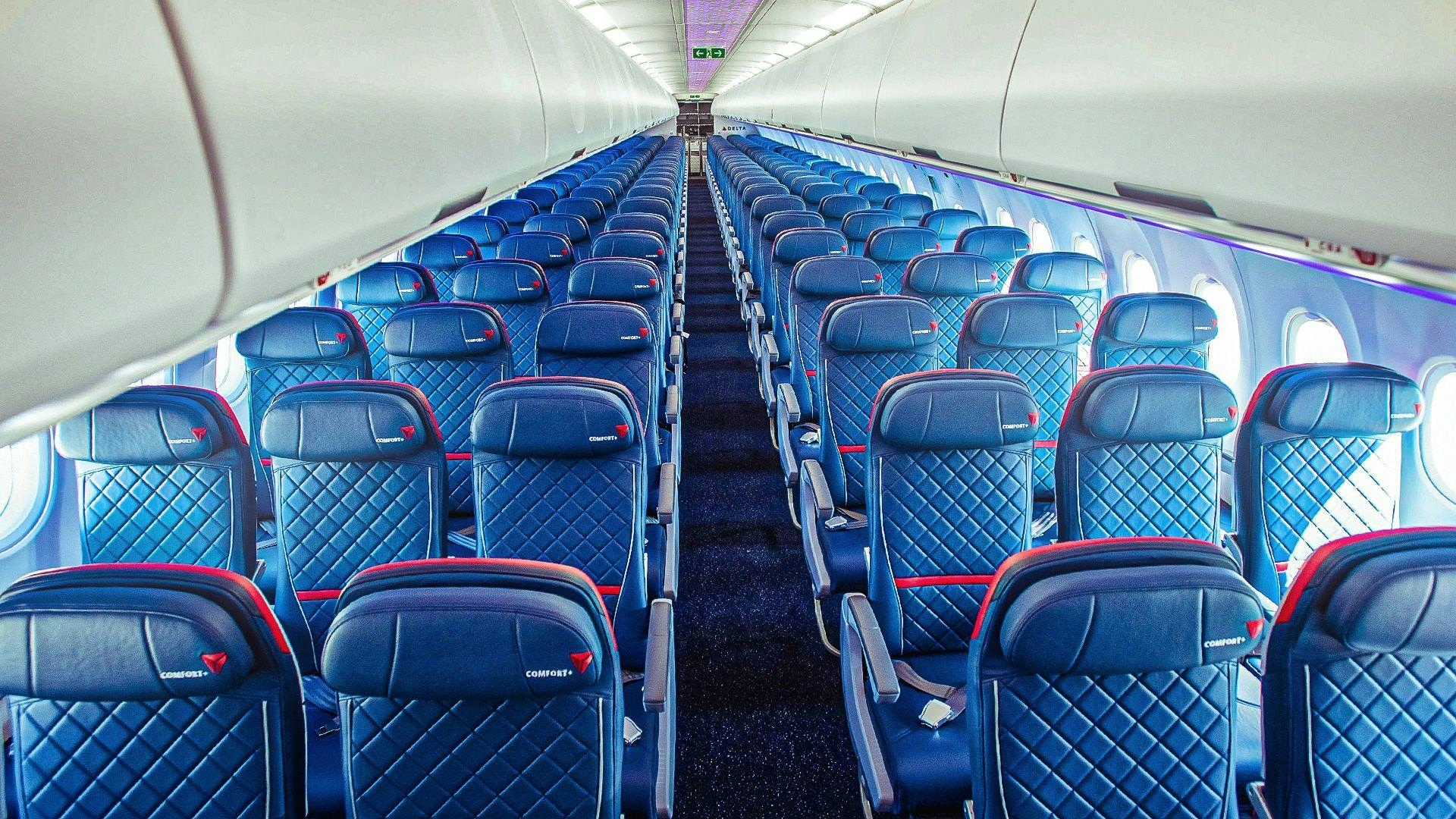
Comparing Cabin Widths of the Airbus A320neo and Boeing 737 MAX
Cabin Dimensions and Passenger Comfort
In the narrowbody aircraft segment, Airbus maintains a distinct advantage over Boeing with its A320 family, which features a notably wider cabin than the Boeing 737 series. The Airbus A320 family, introduced in the 1980s, has a fuselage cross-section measuring 13 feet (3.95 meters) and an internal cabin width of 12 feet 2 inches (3.7 meters). This cabin width remains consistent across all A320 variants, including the A319, A320, A321, and the newer A320neo models.
By comparison, the Boeing 737, which first entered service in the 1960s, has an external fuselage width of 12 feet 4 inches and an internal cabin width of 11 feet 7 inches (3.54 meters). This results in a cabin approximately nine inches narrower than that of the A320. Both aircraft typically seat six passengers abreast in economy class, but the additional width of the A320 translates into a marginally more spacious environment for travelers.
Despite this difference, passengers flying on low-cost carriers may not always perceive a significant variation in seat width. Much of the extra space in the A320 cabin is allocated to wider aisles and structural components such as sidewalls. Economy seats on the A320 generally measure between 17.5 and 18 inches in width, roughly half an inch wider than the 17 to 17.5 inches typical on the 737. Additionally, the A320’s seats tend to have less aggressive tapering at the hips and shoulders, which can contribute to a reduced sense of confinement.
Range, Engine Technology, and Market Dynamics
Beyond cabin dimensions, the A320neo family offers generally longer range capabilities compared to the 737 MAX series. For instance, the A321XLR variant boasts a range of up to 4,700 nautical miles, while the standard A321neo achieves approximately 4,000 nautical miles. In contrast, the longest-range 737 MAX currently in service, the MAX 8, has a maximum range of 3,500 nautical miles, with the uncertified MAX 7 projected to reach 3,800 nautical miles. Actual operational range varies depending on payload and other factors.
Engine design further distinguishes the two aircraft families. The A320neo is powered by the larger CFM International LEAP-1A engines, whereas the 737 MAX utilizes the smaller LEAP-1B engines. Boeing is actively addressing cabin-smoke concerns associated with the 737 MAX through an upcoming software update for the LEAP-1B engine.
Market considerations also play a significant role in the competition between these aircraft. The secondary market for landing gear parts remains stronger for older models, influencing airline fleet decisions. Boeing is currently ramping up 737 MAX production to 47 jets per month, with plans to increase output to 52 and potentially 70 per month. This escalation aims to keep pace with Airbus’ ambitious A320neo production targets. These production strategies underscore the intense rivalry as both manufacturers respond to growing demand and shifting airline preferences.

Etihad Airways Suspends Airbus A380 Flights on Key Route

Aditya Birla Group Seeks Approval for Aircraft Leasing in GIFT City

Qatar Airways Highlights Innovation and Connectivity at Arabian Travel Market 2026

Hong Kong's Five-Year Plan Includes Andrew Fan's Aircraft Parts Processing Hub Proposal

ACIA Aero Leasing Delivers ATR72-600 to Air Nostrum

RTX Appoints Jill Albertelli as Head of Pratt & Whitney

TAT Technologies Joins Beyond Aero Hydrogen Aircraft Program

AURAK Study Highlights Barriers to Air Taxi Adoption in Emerging Economies

Xiamen Air Selects Altitude for 787 Maintenance at Heathrow

Etihad and Swissport Extend Global Partnership
