
Trasforma le intuizioni dell’IA in azioni concrete

Tendenze
Categories
Comparing GE Aerospace and Pratt & Whitney Engines
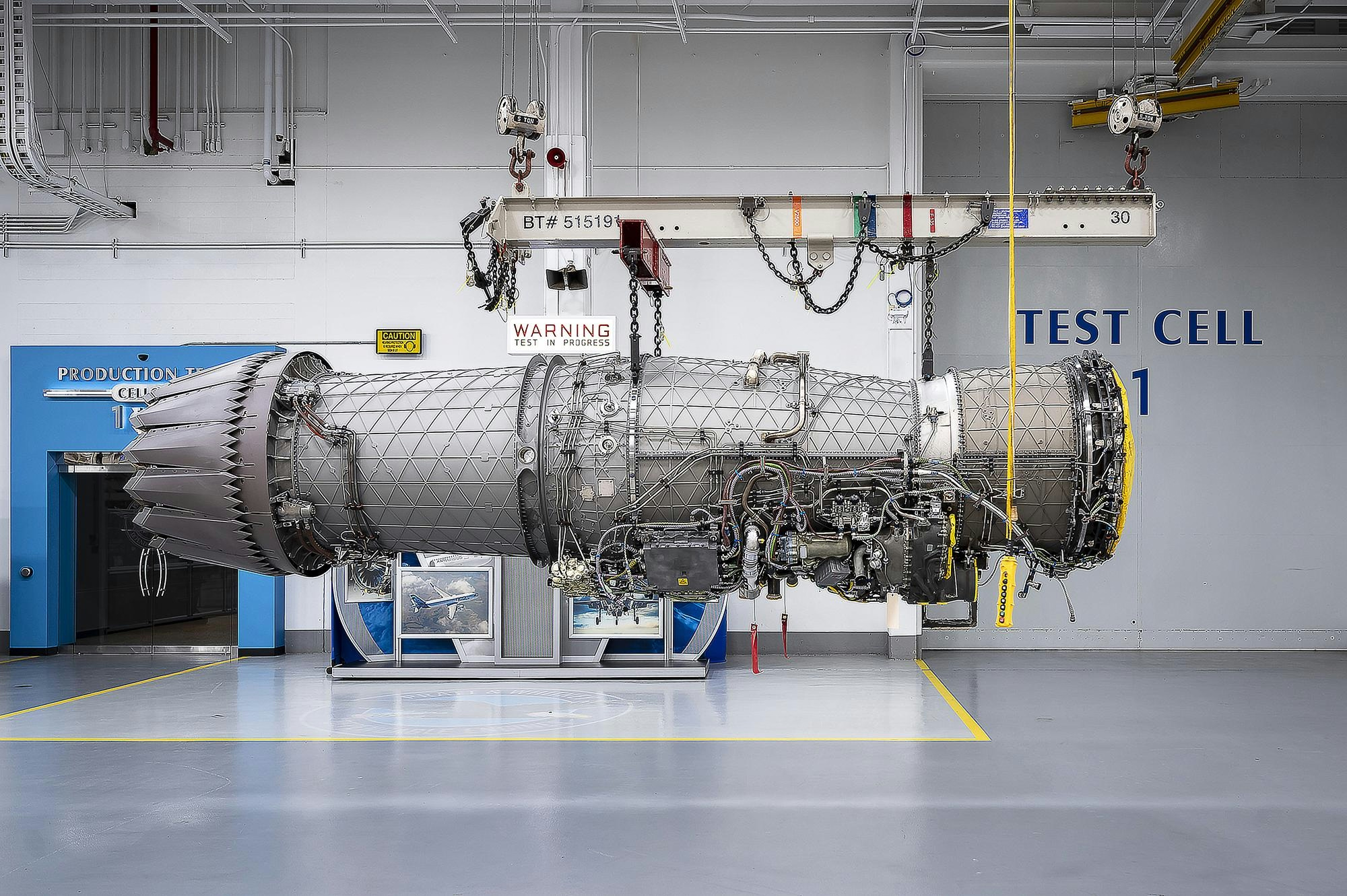
Comparing GE Aerospace and Pratt & Whitney Engines
Pratt & Whitney and GE Aerospace are two of the most influential engine manufacturers in the history of aviation. These American engineering powerhouses have each left a distinct mark on the aerospace industry through decades of innovation and technological achievement.
Historical Foundations and Legacy
Pratt & Whitney, established in 1925, gained early recognition with its radial R-1340 Wasp engine, notable for its exceptional power-to-weight ratio—a design that remains relevant today. The company’s founder, Frederick Rentschler, famously asserted that “the best airplane could only be designed around the best engine,” a guiding principle that continues to shape the company’s approach. Over the years, Pratt & Whitney has produced more than 85,000 engines serving over 17,000 customers worldwide. Its engines are vital to both commercial and military aviation, powering aircraft such as the Airbus A320 family and Lockheed Martin’s fifth-generation fighters, the F-22 and F-35.
GE Aerospace’s origins lie in the development of the turbo supercharger, a critical technology that enhanced aircraft performance during both World Wars by enabling higher altitudes and heavier payloads. The company later pioneered jet engine technology for experimental X-Planes and introduced the first high-bypass turbofan engine. As Boeing’s primary engine supplier, GE powers iconic aircraft including the 747, 777, and the forthcoming 777X. A landmark achievement in GE’s history was the 1971 joint venture with France’s Snecma (now Safran), resulting in CFM International. Their CFM56 engine family has become one of the most successful in commercial aviation history.
Current Innovations and Industry Challenges
Both companies continue to push the boundaries of aerospace technology amid evolving market demands. GE Aerospace recently marked the delivery of its 500th Passport turbofan engine, underscoring its sustained commercial success. The company is currently navigating the complex transition from producing the Global 7500 to the next-generation Global 8000 business jet, reflecting shifting priorities in the business aviation sector. Additionally, GE is conducting research into the effects of dust on turbine engine performance, aiming to improve reliability in harsh operating environments.
Pratt & Whitney remains a leader in sustainable aviation technologies. Its PW815GA engine powered a successful trans-Atlantic flight using 100% sustainable aviation fuel (SAF), highlighting the company’s commitment to reducing the environmental impact of air travel. However, Pratt & Whitney faces intensifying competition as it expands its Engine Assurance Program (EAP) portfolio with new engine models, offering operators a broader range of options and intensifying the race for technological leadership.
Industry Impact and Future Outlook
Both GE Aerospace and Pratt & Whitney play indispensable roles in the global aerospace supply chain, supporting defense and commercial aviation sectors worldwide. Their continuous advancements uphold the highest standards of American engineering and contribute significantly to the industry’s progression toward greater efficiency and sustainability.

Etihad Airways Suspends Airbus A380 Flights on Key Route

Aditya Birla Group Seeks Approval for Aircraft Leasing in GIFT City

Qatar Airways Highlights Innovation and Connectivity at Arabian Travel Market 2026

Hong Kong's Five-Year Plan Includes Andrew Fan's Aircraft Parts Processing Hub Proposal

ACIA Aero Leasing Delivers ATR72-600 to Air Nostrum

RTX Appoints Jill Albertelli as Head of Pratt & Whitney

TAT Technologies Joins Beyond Aero Hydrogen Aircraft Program

AURAK Study Highlights Barriers to Air Taxi Adoption in Emerging Economies

Xiamen Air Selects Altitude for 787 Maintenance at Heathrow

Etihad and Swissport Extend Global Partnership
