
Trasforma le intuizioni dell’IA in azioni concrete

Tendenze
Categories
Comparing the Lengths of the Airbus A350-1000 and Boeing 787-10
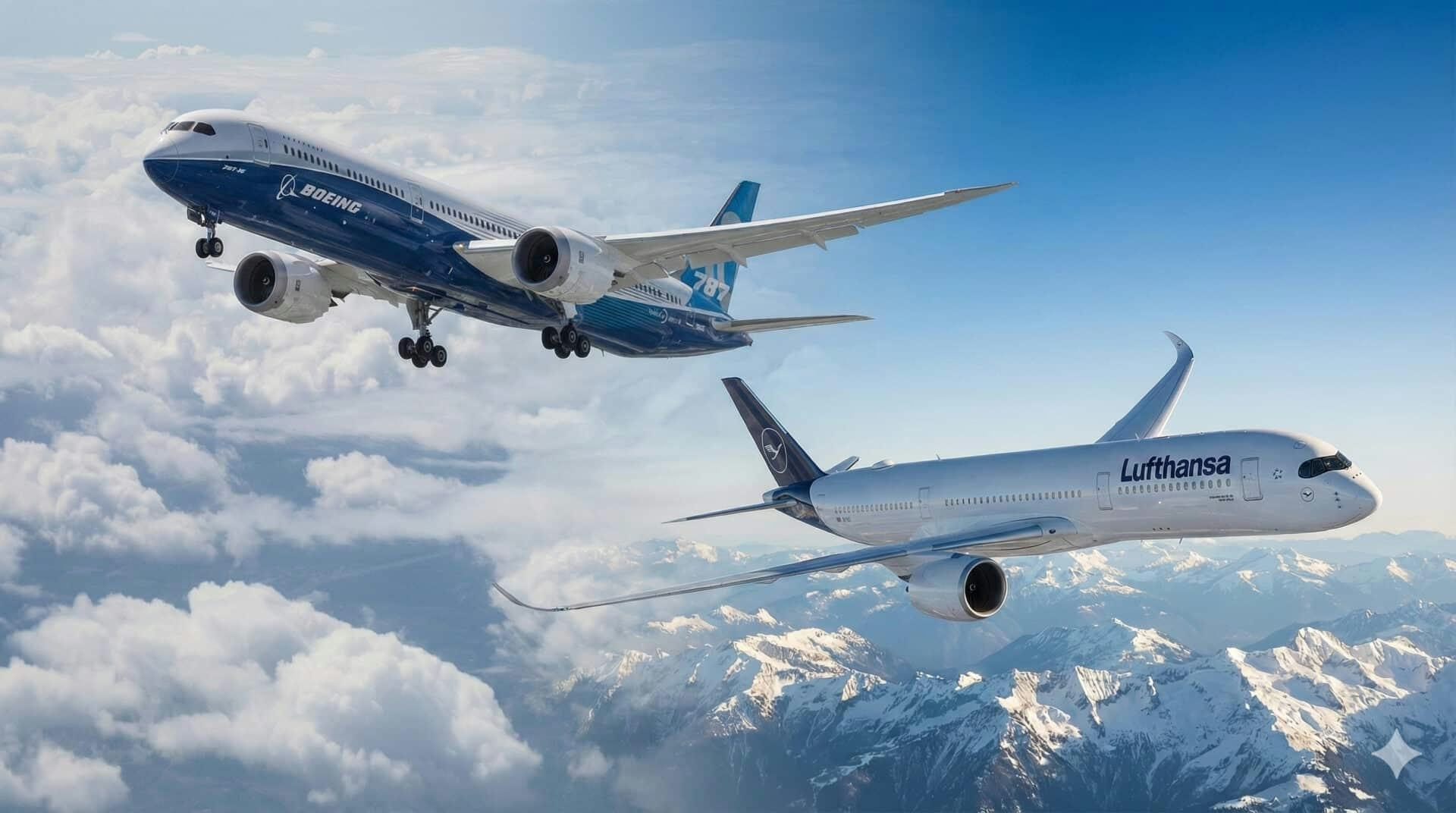
Comparing the Lengths of the Airbus A350-1000 and Boeing 787-10
The Airbus A350-1000 and Boeing 787-10 stand as the largest and most extended variants within their respective widebody aircraft families. Both models are engineered to accommodate high-capacity routes, yet they cater to distinct market segments and present unique advantages for airlines worldwide.
Size and Capacity Differences
The Airbus A350-1000, Airbus’s premier long-haul aircraft, is notably longer than the Boeing 787-10. The A350-1000 measures approximately 242 feet 1 inch (73.8 meters) in length, whereas the 787-10 is shorter at 224 feet (68.3 meters). Some sources report slightly different figures, citing the A350-1000 at 80.8 meters and the 787-10 at 73.7 meters, highlighting the considerable size disparity between the two jets. This additional length allows the A350-1000 to offer greater passenger capacity and increased cargo volume, making it particularly appealing for airlines operating high-demand, ultra-long-haul routes.
Internally, the A350-1000 features a cabin length of 190 feet 5 inches (58.0 meters), surpassing that of the 787-10. This extended cabin space provides airlines with the flexibility to configure seating arrangements that either maximize passenger numbers or enhance premium cabin comfort, depending on market requirements.
Range and Market Positioning
The A350-1000 also outperforms the 787-10 in terms of range, boasting an advertised capability of 9,000 nautical miles compared to the 787-10’s 6,330 nautical miles. This extended range positions the A350-1000 as an ideal choice for premium, ultra-long-haul services, enabling carriers to expand into new international markets. Air Canada, for instance, has emphasized the operational flexibility afforded by the A350-1000’s size and range, which supports the airline’s strategic growth in global long-distance travel.
Conversely, the Boeing 787-10 is optimized for shorter to medium-long haul routes with dense passenger and cargo demand. It is designed to replace aging aircraft such as the 767-400ER, certain 777-200s, and A330-200s on regional international services. By trading some range for increased passenger capacity relative to the 787-9, the 787-10 serves as an efficient solution for high-density routes where range is less critical.
Market Dynamics and Industry Implications
While the Boeing 787 family has enjoyed robust sales and remains popular—particularly the 787-9, which offers the longest range within the Dreamliner series—Boeing’s commercial airliner division continues to face challenges. Airlines frequently evaluate the strengths of both Airbus and Boeing when making fleet decisions. Recent orders, such as Air Canada’s acquisition of eight A350-1000 aircraft, underscore Airbus’s growing competitive advantage in the long-haul widebody market.
As production rates increase to meet rising demand, the choice between the Airbus A350-1000 and Boeing 787-10 will remain a critical factor shaping the future landscape of global air travel. The A350-1000’s superior length, range, and flexibility make it well-suited for long-haul, high-capacity operations, while the 787-10 excels in serving shorter international routes where efficiency and passenger volume are prioritized.

Etihad Airways Suspends Airbus A380 Flights on Key Route

Aditya Birla Group Seeks Approval for Aircraft Leasing in GIFT City

Qatar Airways Highlights Innovation and Connectivity at Arabian Travel Market 2026

Hong Kong's Five-Year Plan Includes Andrew Fan's Aircraft Parts Processing Hub Proposal

ACIA Aero Leasing Delivers ATR72-600 to Air Nostrum

RTX Appoints Jill Albertelli as Head of Pratt & Whitney

TAT Technologies Joins Beyond Aero Hydrogen Aircraft Program

AURAK Study Highlights Barriers to Air Taxi Adoption in Emerging Economies

Xiamen Air Selects Altitude for 787 Maintenance at Heathrow

Etihad and Swissport Extend Global Partnership
